Japchae
Korean Recipe
Overview
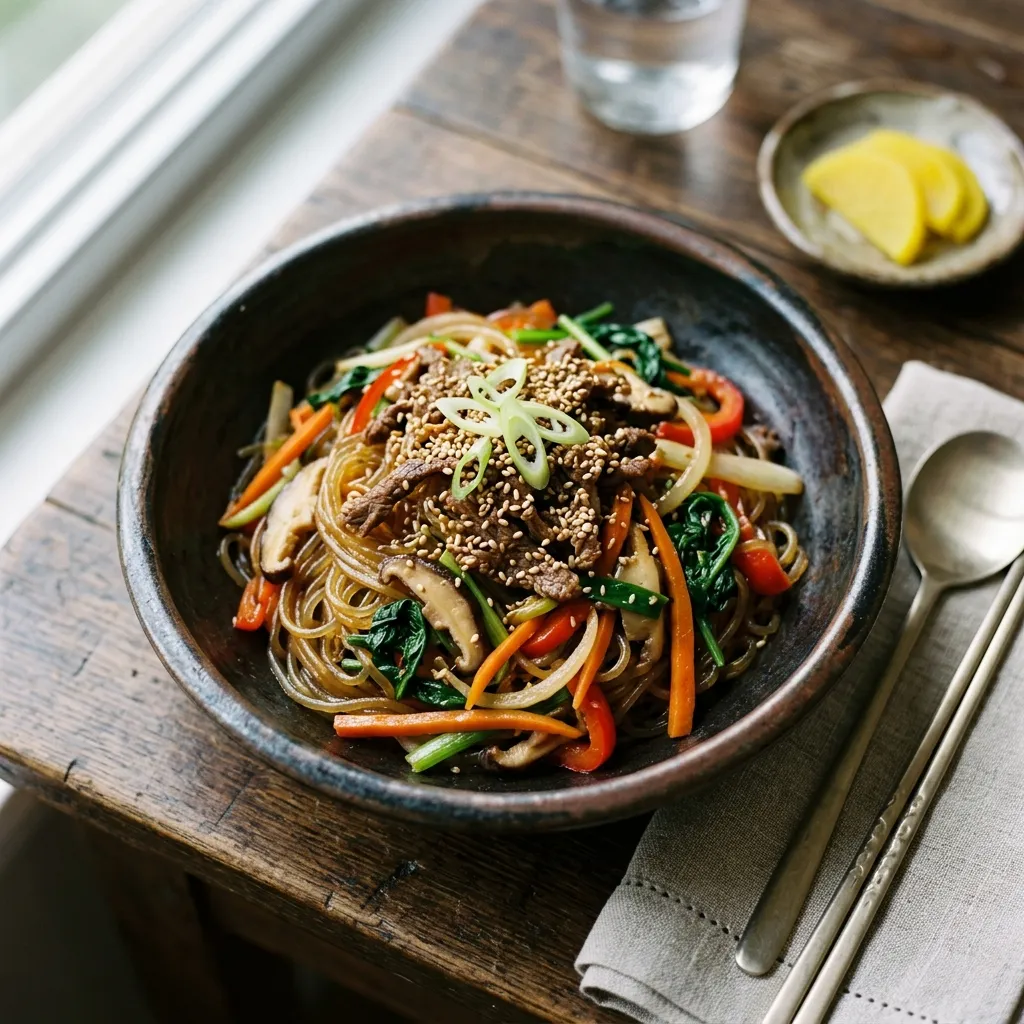
Japchae is a Korean sweet potato glass noodle dish — translucent dangmyeon noodles stir-fried with soy sauce, sesame oil, and a colorful array of vegetables and beef cut into matchsticks. The dish originated in the 17th century during the Joseon dynasty, when court official Yi Chung first prepared it for King Gwanghaegun's palace banquet. That original version contained no noodles — it was a stir-fry of mushrooms and vegetables. Sweet potato noodles were added in the 20th century when dangmyeon became widely available, and the dish evolved into the version Koreans know today. The preparation technique is distinctive and labor-intensive: each vegetable is stir-fried separately to preserve its individual color, texture, and flavor, then everything is tossed together with the noodles at the end. This prevents the vegetables from steaming into a uniform mush and creates the jewel-like visual contrast — red carrot, green spinach, yellow egg, brown mushroom, white onion — that makes japchae a celebration dish served at weddings, holidays, and Chuseok (Korean harvest festival). Ayurvedically, japchae benefits from its sweet potato noodle base. Unlike wheat noodles, dangmyeon are lighter and easier to digest — their slippery, glassy texture reflects their smooth quality (snigdha guna). The sesame oil provides warm unctuousness, the vegetables add a spectrum of rasas, and the modest amount of beef contributes grounding protein without heaviness. This is one of Korean cuisine's more balanced preparations.
Relatively balanced across all three doshas due to the vegetable variety and sweet potato noodle base. Mildly Vata-pacifying from sesame oil and warmth. Neutral to mildly Pitta-calming. Acceptable for Kapha in moderate portions.
Ingredients
- 200 g Sweet potato glass noodles (dangmyeon)
- 150 g Beef sirloin (sliced into thin strips)
- 2 cups Spinach (blanched and squeezed dry)
- 1 medium Carrot (julienned)
- 1 medium Onion (thinly sliced)
- 5 pieces Shiitake mushrooms (stemmed and sliced)
- 1/2 piece Red bell pepper (julienned)
- 3 cloves Garlic (minced)
- 3 tbsp Soy sauce
- 3 tbsp Sesame oil
- 1 tbsp Sugar
- 1 tbsp Sesame seeds (toasted)
- 2 large Egg (separated, made into thin omelets and sliced)
- 1/2 tsp Black pepper
Instructions
- Cook the dangmyeon noodles in boiling water for 6-7 minutes until translucent and chewy. Drain, rinse under cold water, and cut into manageable lengths with scissors. Toss with 1 tablespoon each of soy sauce and sesame oil to prevent sticking.
- Marinate the beef strips in 1 tablespoon soy sauce, 1 teaspoon sesame oil, minced garlic, sugar, and black pepper for 10 minutes.
- Blanch the spinach in boiling water for 30 seconds, then shock in ice water. Squeeze dry thoroughly and season with a pinch of salt and 1/2 teaspoon sesame oil.
- Stir-fry each vegetable separately in a hot pan with a small amount of oil: carrots for 2 minutes, onions for 2 minutes, mushrooms for 3 minutes, bell pepper for 1 minute. Season each lightly with salt. Set each aside on a large platter.
- In the same pan, cook the marinated beef over high heat for 2-3 minutes until browned and just cooked through. Set aside with the vegetables.
- Make thin egg crepes: beat the yolks and whites separately, cook each into a thin omelet in a lightly oiled pan, and slice into thin strips.
- In a large bowl or directly in the pan over low heat, combine the noodles, all vegetables, beef, and remaining soy sauce and sesame oil. Toss everything together using tongs, ensuring the sauce coats every strand and component evenly.
- Transfer to a serving platter, garnish with egg strips and toasted sesame seeds. Japchae is served at room temperature and tastes equally good warm or cool.
Nutrition
These values are estimates calculated from the ingredient list and may vary based on brands, cooking methods, and serving size. Not a substitute for medical or dietary advice.
How This Recipe Affects Each Dosha
Vata
The sesame oil provides warm unctuousness that Vata needs. The sweet potato noodles are smoother and lighter than wheat noodles, which reduces Vata's digestive burden. The combination of cooked vegetables (not raw) with warm seasonings makes this a comfortable dish for Vata constitutions. The beef adds grounding nourishment.
Pitta
Japchae is one of the more Pitta-friendly Korean dishes. The sweet potato noodles have a cooling to neutral virya, the spinach is cooling, and the absence of chili or fermented elements keeps the heat low. The small amount of garlic and black pepper adds mild warmth without aggravation. Sesame oil is mildly heating but tolerable for most Pitta types.
Kapha
The light, smooth quality of glass noodles is easier on Kapha than heavy wheat pasta. The diverse vegetable content adds lightness and variety. However, the sesame oil, sugar, and starchy noodle base can increase Kapha if portions are large. The dish works best for Kapha as a side rather than a main course.
Japchae is gentle on agni. The sesame oil and garlic provide mild digestive warmth without overstimulation. The sweet potato noodles digest more easily than wheat, reducing the load on digestive fire. The individually cooked vegetables retain their integrity, making them easier to break down than a stewed mass.
Nourishes: Rasa (plasma), Rakta (blood), Mamsa (muscle — from beef), Asthi (bone — from sesame seeds' calcium)
Adjustments by Constitution
For Vata Types
Increase sesame oil by 1 tablespoon for added lubrication. Add extra mushrooms and carrots for grounding. Include a pinch of grated ginger in the noodle seasoning. Eat warm rather than at room temperature, and pair with a warm broth.
For Pitta Types
Replace beef with tofu or omit the protein entirely for a lighter dish. Reduce garlic and add extra spinach for its cooling quality. Use sunflower oil instead of sesame oil for a cooler option. Omit the black pepper and increase the sesame seed garnish.
For Kapha Types
Reduce noodles by a third and increase the vegetable ratio. Use only 1 tablespoon sesame oil total. Add extra mushrooms (light and drying) and reduce the carrot (sweet and heavy). Omit the sugar from the seasoning. Add a pinch of black pepper and ginger for metabolic stimulation.
Seasonal Guidance
Japchae works year-round due to its balanced quality. In winter, serve warm with extra sesame oil. In summer, serve at room temperature with lighter vegetable choices (zucchini, green beans). The dish's adaptability to temperature and ingredient variation makes it seasonally versatile.
Best time of day: Lunch or dinner — appropriate as a side dish alongside other Korean foods, or as a light main course with rice
Cultural Context
Japchae carries ceremonial weight in Korean culture. It appears at every major celebration — weddings, first birthday parties (doljanchi), Chuseok, Seollal (Lunar New Year), and ancestor memorial rites (jesa). Its elaborate preparation signals care and effort, and the rainbow of colors is considered auspicious. The dish's 17th-century palace origins give it a prestige that elevates it above everyday Korean cooking, even though the modern version is straightforward to prepare. In many families, the matriarch's japchae recipe is a point of pride, with subtle variations in the soy-to-sesame ratio or the inclusion of particular vegetables marking family identity.
Deeper Context
Origins
Japchae was invented for a banquet in King Gwanghaegun's court in 1608; the original version contained only mixed vegetables (jap = mixed, chae = vegetable). The dangmyeon (sweet potato glass noodle) addition is modern, dating to early 20th century when glass noodles became widely available. The dish retained its celebration-meal status through the Joseon period and became a Lunar New Year tradition across Korean households. Korean diaspora communities preserve japchae as a symbol of Korean festive cookery.
Food as Medicine
Sweet potato glass noodles are gluten-free and low-glycemic compared to wheat noodles. Shiitake provides ergosterol (vitamin D precursor), B-vitamins, and beta-glucan with documented immune-modulating activity. Spinach contributes iron, folate, and vitamin K. The combination is a complete-meal vegetarian preparation when prepared without meat additions.
Ritual & Seasonal Role
Lunar New Year (Seollal) celebration food — appears on nearly every Korean family's New Year table. Wedding meals, 60th-birthday celebrations (hwangap), ancestral rites (jesa), and major celebration contexts. Year-round on Korean restaurant menus. Cultural weight significant in Korean family meal tradition.
Classical Pairings & Cautions
Rice, kimchi, additional side dishes (banchan). Barley tea or makgeolli (rice wine). Cautions: soy allergies through soy sauce; sesame allergies; diabetic monitoring for noodle glycemic content; gluten-free typically (verify soy sauce ingredients); mushroom allergies.
Cross-Tradition View
How other medical and food-wisdom traditions read this dish. Each tradition names the same physiological reality in its own language — the agreements across them are where universal principles live.
Traditional Chinese Medicine
Sweet potato noodles are Spleen-Qi-tonifying; sesame oil is warm-moistening; spinach is Blood-building and moves Liver Qi; shiitake mushrooms build Yin and Kidney essence (classical TCM tonic); soy sauce is salty-warm. A comprehensive Qi-Blood-and-Yin tonic — TCM physicians would class japchae as balanced everyday meal with substantial restoration quality.
Greek Humoral
Hot-wet sanguine-building. A Galenic-suitable complete preparation — the noodle-and-vegetable-and-mushroom combination with sesame oil matches Mediterranean classical food architecture despite the entirely different regional tradition.
Ayurveda
Neutral virya, sweet vipaka. Mixed dosha picture — the balanced ingredients with warming sesame oil suit Vata; the shiitake-soy-sauce combination mildly aggravates Pitta; Kapha mildly aggravated through noodle density. Generally well-tolerated across constitutional types.
Joseon Royal Cuisine
Japchae's origin traces to the 17th-century Joseon royal court during King Gwanghaegun's reign (1608-1623). The original court version was made with mixed vegetables only (no noodles). Sweet potato noodles (dangmyeon) were added in the early 20th century after the glass-noodle format became available. Japchae retains Joseon-era royal-cuisine status and is featured prominently at Korean celebration meals, weddings, and Lunar New Year (Seollal) tables.
Chef's Notes
The individual stir-frying of each component is not optional — it is the technique that makes japchae japchae. Combining everything raw and cooking together produces a one-note, water-logged mess. Cut the noodles with scissors after cooking; long dangmyeon tangles and is difficult to eat. The noodles absorb sauce aggressively — if making ahead, add extra sesame oil and soy sauce before serving, as the dish will taste muted after sitting. Japchae is one of the rare Korean dishes that tastes equally good at room temperature, making it ideal for gatherings and potlucks.
Frequently Asked Questions
Is Japchae good for my dosha?
Relatively balanced across all three doshas due to the vegetable variety and sweet potato noodle base. Mildly Vata-pacifying from sesame oil and warmth. Neutral to mildly Pitta-calming. Acceptable for Kapha in moderate portions. The sesame oil provides warm unctuousness that Vata needs. Japchae is one of the more Pitta-friendly Korean dishes. The light, smooth quality of glass noodles is easier on Kapha than heavy wheat pasta.
When is the best time to eat Japchae?
Lunch or dinner — appropriate as a side dish alongside other Korean foods, or as a light main course with rice Japchae works year-round due to its balanced quality. In winter, serve warm with extra sesame oil. In summer, serve at room temperature with lighter vegetable choices (zucchini, green beans). The dish
How can I adjust Japchae for my constitution?
For Vata types: Increase sesame oil by 1 tablespoon for added lubrication. Add extra mushrooms and carrots for grounding. Include a pinch of grated ginger in the nood For Pitta types: Replace beef with tofu or omit the protein entirely for a lighter dish. Reduce garlic and add extra spinach for its cooling quality. Use sunflower oil
What are the Ayurvedic properties of Japchae?
Japchae has Sweet, Salty, Pungent taste (rasa), Neutral energy (virya), and Sweet post-digestive effect (vipaka). Its qualities (gunas) are Light, Smooth, Warm. It nourishes Rasa (plasma), Rakta (blood), Mamsa (muscle — from beef), Asthi (bone — from sesame seeds' calcium). Japchae is gentle on agni. The sesame oil and garlic provide mild digestive warmth without overstimulation. The sweet potato noodles digest more easily than wheat, reducing the load on digestive fire. The individually cooked vegetables retain their integrity, making them easier to break down than a stewed mass.