Iskender Kebab
Turkish Recipe
Overview
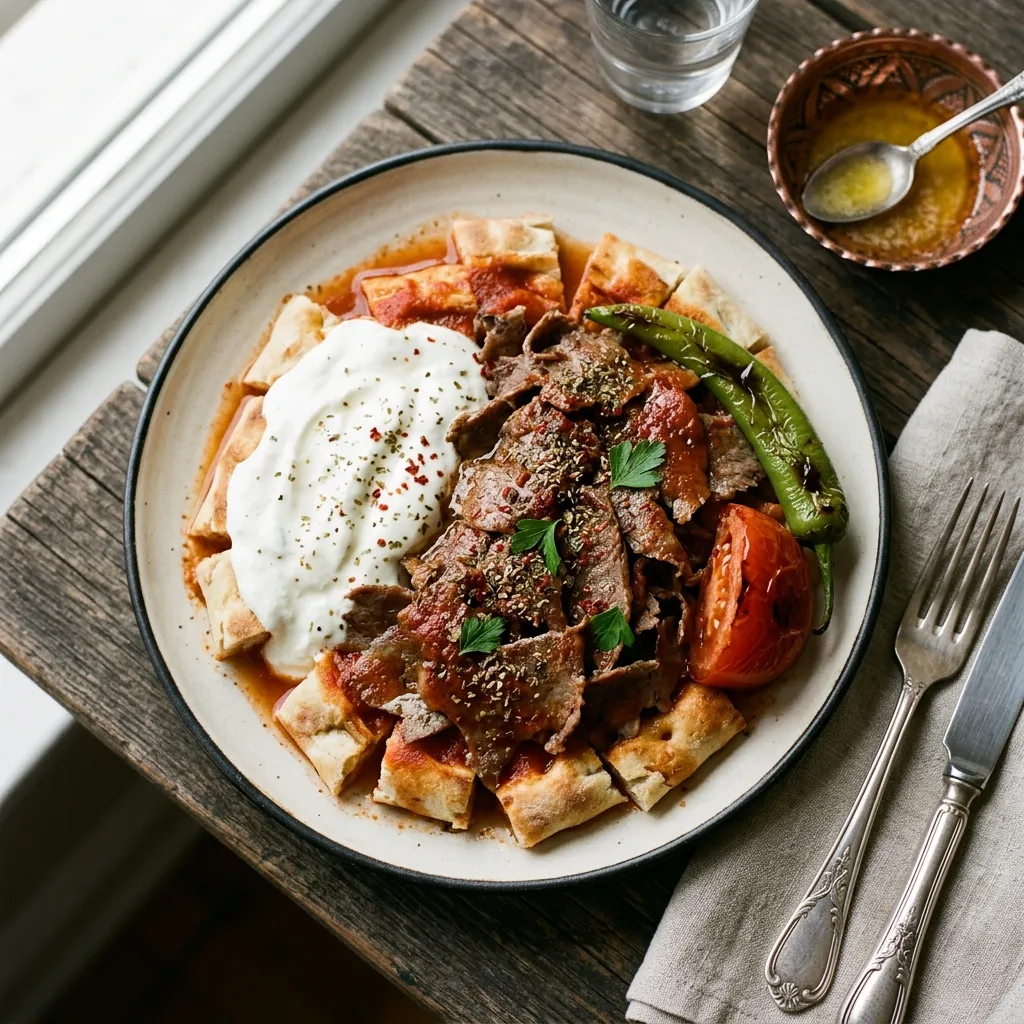
Iskender kebab is a dish from Bursa in northwestern Turkey — thinly sliced doner lamb layered over cubes of pide bread, drenched in tangy tomato sauce, and finished with a cascade of hot melted butter and a side of thick yogurt. Named after Iskender Efendi, the 19th-century Bursa butcher credited with inventing the vertical rotisserie method of cooking meat (doner), this dish is a monument to excess in the best Turkish culinary tradition. The construction is precise and theatrical. A bed of cubed day-old pide bread lines the plate, soaking up tomato sauce and meat juices like a savory bread pudding. Thinly shaved lamb from the doner spit is arranged over the bread. A bright, acidic tomato sauce is ladled across everything. Then, at the table, the waiter pours sizzling, foaming butter over the entire assembly from a small copper pan. A thick dollop of cool yogurt occupies one corner of the plate, providing the only counterpoint to the richness. From an Ayurvedic perspective, this is one of the most intensely nourishing dishes in Turkish cuisine — animal fat, wheat, dairy, and acid combined into a layered, building, deeply rajasic preparation. It demands strong agni, cold weather, and genuine hunger. This is not a casual meal but a deliberate act of deep nourishment.
Deeply pacifies Vata through extreme warmth, oleation, and heavy nourishment. Strongly increases Pitta through red meat, acid, heating spices, and concentrated butter. Strongly increases Kapha through wheat, meat, butter, and dairy combined.
Deeply building and restorative — used traditionally to nourish those weakened by cold, illness, or exhaustion. The concentrated butter and animal protein provide rapid tissue-building energy during recovery.
Ingredients
- 500 g Lamb shoulder or leg (thinly sliced against the grain)
- 2 pieces Day-old pide bread (cut into 2cm cubes)
- 1 cup Plain yogurt (thick, full-fat)
- 4 tbsp Butter
- 4 medium Tomatoes (grated)
- 1 tbsp Tomato paste
- 2 tbsp Olive oil
- 2 cloves Garlic (minced)
- 1 tsp Cumin
- 1 tsp Aleppo pepper flakes
- 1/2 tsp Oregano (dried)
- 1.5 tsp Salt
- 1/2 tsp Black pepper
- 1/2 tsp Sugar
Instructions
- Season the lamb slices with cumin, half the Aleppo pepper, black pepper, and salt. Let marinate for at least 15 minutes at room temperature.
- Make the tomato sauce: heat 1 tablespoon olive oil in a saucepan over medium heat. Add garlic and cook 30 seconds. Add grated tomatoes, tomato paste, remaining Aleppo pepper, oregano, sugar, and a pinch of salt. Simmer for 12-15 minutes until thickened and concentrated.
- Heat a cast iron skillet or grill pan over high heat. Sear the lamb slices in batches, cooking 2-3 minutes per side until browned and slightly charred. Do not overcrowd the pan. Set aside.
- Toast the pide bread cubes in the oven at 180C (350F) for 5 minutes until slightly dried and golden on the edges — they should be dry enough to absorb sauce without dissolving.
- Arrange the pide cubes in a single layer on a serving platter or individual plates. Ladle half the tomato sauce over the bread, letting it soak in.
- Layer the seared lamb slices over the sauced bread. Spoon the remaining tomato sauce over the meat.
- In a small pan, heat the butter over medium-high heat until it melts, foams, and begins to turn golden-brown and fragrant — about 2 minutes. Pour the sizzling butter directly over the lamb and bread.
- Place a generous dollop of thick yogurt on the side of each plate. Serve immediately while the butter is still bubbling.
Nutrition
These values are estimates calculated from the ingredient list and may vary based on brands, cooking methods, and serving size. Not a substitute for medical or dietary advice.
How This Recipe Affects Each Dosha
Vata
This is therapeutic-level Vata pacification — the combination of warm animal protein, generous butter, bread for grounding, and sour tomato sauce addresses every dimension of Vata imbalance simultaneously. The cold yogurt on the side provides a cooling counterpoint without diminishing the overall warming effect.
Pitta
Red lamb, sour tomato sauce, garlic, pungent spices, and concentrated browned butter make this one of the most Pitta-aggravating dishes in Turkish cuisine. The sour yogurt adds additional Pitta-provoking quality. Pitta types should reserve this for the coldest winter days, if at all.
Kapha
The combination of bread, red meat, generous butter, and yogurt creates maximum heaviness. This dish builds every tissue simultaneously and will increase Kapha substantially. Kapha constitutions should eat this rarely and in small portions, or avoid it altogether during spring.
The spiced meat and sour tomato sauce stimulate agni, but the sheer volume of fat (butter plus meat fat) and carbohydrate (bread) demands very strong digestive fire. Browned butter is somewhat easier to digest than raw butter due to the casein breakdown during browning.
Nourishes: Rasa (plasma), Rakta (blood), Mamsa (muscle), Medas (fat), Asthi (bone), Majja (marrow)
Adjustments by Constitution
For Vata Types
The standard recipe is ideal for Vata. Eat slowly and savor. A cup of warm cumin-coriander tea after the meal helps ensure complete digestion of this rich dish.
For Pitta Types
Replace lamb with grilled chicken breast. Make a milder tomato sauce using roasted red peppers instead of raw tomatoes. Use ghee instead of butter and reduce the quantity. Add fresh mint to the yogurt. Omit garlic.
For Kapha Types
Skip the bread base entirely — serve the lamb directly on the plate. Replace butter with a drizzle of olive oil. Reduce the yogurt to 2 tablespoons or omit it. Add extra black pepper and dry ginger to the lamb marinade. Eat as a small portion alongside a crisp green salad.
Seasonal Guidance
This is a deep-winter dish, best when the body's agni is at its peak and craving dense, hot, fatty food to fuel heat production. Too rich for any other season. Even in autumn, the combination of butter, meat, bread, and yogurt may overwhelm digestion.
Best time of day: Lunch, when digestive fire peaks. Too heavy for dinner — the density and fat content will disrupt sleep if eaten late.
Cultural Context
Iskender kebab was created in the 1860s by Iskender Efendi in Bursa, the first Ottoman capital. His innovation was cooking lamb on a vertical rotisserie — a technique that became doner kebab. The family's restaurant, Kebapci Iskender, still operates in Bursa and fiercely guards the original recipe. The dish embodies Ottoman culinary values: layered flavors, generous use of butter, the interplay of hot and cold, and the ritual of tableside butter pouring. It has become one of Turkey's most famous dishes internationally, though purists insist it must be eaten in Bursa to be tasted in its true form.
Deeper Context
Origins
Iskender kebab was invented in 1867 by chef Iskender Efendi in Bursa, Turkey. Iskender Efendi adapted traditional Anatolian horizontal-grilled lamb cuts into a vertical-rotating-spit (döner) technique, creating the precursor to modern global döner kebab cuisine. The Iskender family continues to operate Kebapçı İskender in Bursa since 1867, making it one of Turkey's longest continuously-operated restaurants. The family holds trademark rights to the Iskender name in Turkish law.
Food as Medicine
Lamb provides iron, zinc, B12, and complete protein. Yogurt contributes probiotic content. Tomato offers lycopene. Substantial calorie-dense restoration food for working-class and laboring populations.
Ritual & Seasonal Role
Bursa-regional specialty. Year-round Turkish restaurant staple. Not religiously ceremonial but deeply tied to Turkish culinary identity.
Classical Pairings & Cautions
Cacık, şalgam (fermented turnip juice), Turkish black tea. Cautions: religious lamb restrictions rare; substantial saturated fat and sodium; gluten content in pide bread; lactose sensitivity from yogurt and butter; Kapha substantial aggravation.
Cross-Tradition View
How other medical and food-wisdom traditions read this dish. Each tradition names the same physiological reality in its own language — the agreements across them are where universal principles live.
Traditional Chinese Medicine
Lamb is strongly warming and builds Blood and Yang; butter is warm-moistening; tomato sauce is cool-sour and moves Liver Qi; pide bread is Spleen-Qi-tonifying; yogurt is Yin-building. A comprehensive Yang-and-Blood tonic with Yin balance — TCM physicians would class iskender kebab as winter restoration food for cold-deficient constitutions.
Greek Humoral
Hot-wet sanguine-building aggressively. A Galenic-suitable feast preparation.
Ayurveda
Heating virya, sweet vipaka. Pacifies Vata substantially. Kapha-aggravating through rich butter-bread-meat combination. Pitta mildly aggravated through lamb heat and tomato combination.
Bursa 1867 Iskender Efendi
Iskender kebab was created in 1867 in Bursa, Turkey by chef Iskender Efendi — who adapted the traditional horizontal-grilled lamb cuts into a vertical-rotating-spit technique. The Iskender family descendants have operated Kebapçı İskender restaurant in Bursa continuously since, holding trademark rights to the Iskender name. The specific tomato-sauce-plus-browned-butter-over-sliced-lamb-on-pide presentation is the classical Bursa preparation, distinguishing it from other Turkish döner variations.
Chef's Notes
The butter must be browned, not just melted — the nutty flavor of browned butter (beurre noisette) is essential to the dish's depth. Use day-old bread; fresh bread will dissolve into mush rather than absorbing sauce while holding its shape. In Bursa, true Iskender is made with doner meat sliced from a vertical rotisserie — at home, thinly sliced and seared lamb is the best approximation. The yogurt should be thick and cold — do not warm it. The temperature contrast between hot butter, warm meat, and cold yogurt is part of the dish's design.
Frequently Asked Questions
Is Iskender Kebab good for my dosha?
Deeply pacifies Vata through extreme warmth, oleation, and heavy nourishment. Strongly increases Pitta through red meat, acid, heating spices, and concentrated butter. Strongly increases Kapha through wheat, meat, butter, and dairy combined. This is therapeutic-level Vata pacification — the combination of warm animal protein, generous butter, bread for grounding, and sour tomato sauce addresses every dimension of Vata imbalance simultaneously. Red lamb, sour tomato sauce, garlic, pungent spices, and concentrated browned butter make this one of the most Pitta-aggravating dishes in Turkish cuisine. The combination of bread, red meat, generous butter, and yogurt creates maximum heaviness.
When is the best time to eat Iskender Kebab?
Lunch, when digestive fire peaks. Too heavy for dinner — the density and fat content will disrupt sleep if eaten late. This is a deep-winter dish, best when the body's agni is at its peak and craving dense, hot, fatty food to fuel heat production. Too rich for any other season. Even in autumn, the combination of butte
How can I adjust Iskender Kebab for my constitution?
For Vata types: The standard recipe is ideal for Vata. Eat slowly and savor. A cup of warm cumin-coriander tea after the meal helps ensure complete digestion of this For Pitta types: Replace lamb with grilled chicken breast. Make a milder tomato sauce using roasted red peppers instead of raw tomatoes. Use ghee instead of butter and
What are the Ayurvedic properties of Iskender Kebab?
Iskender Kebab has Sweet, Sour, Pungent, Salty taste (rasa), Heating energy (virya), and Sweet post-digestive effect (vipaka). Its qualities (gunas) are Heavy, Oily, Warm, Dense. It nourishes Rasa (plasma), Rakta (blood), Mamsa (muscle), Medas (fat), Asthi (bone), Majja (marrow). The spiced meat and sour tomato sauce stimulate agni, but the sheer volume of fat (butter plus meat fat) and carbohydrate (bread) demands very strong digestive fire. Browned butter is somewhat easier to digest than raw butter due to the casein breakdown during browning.