Irish Stew
Irish Recipe
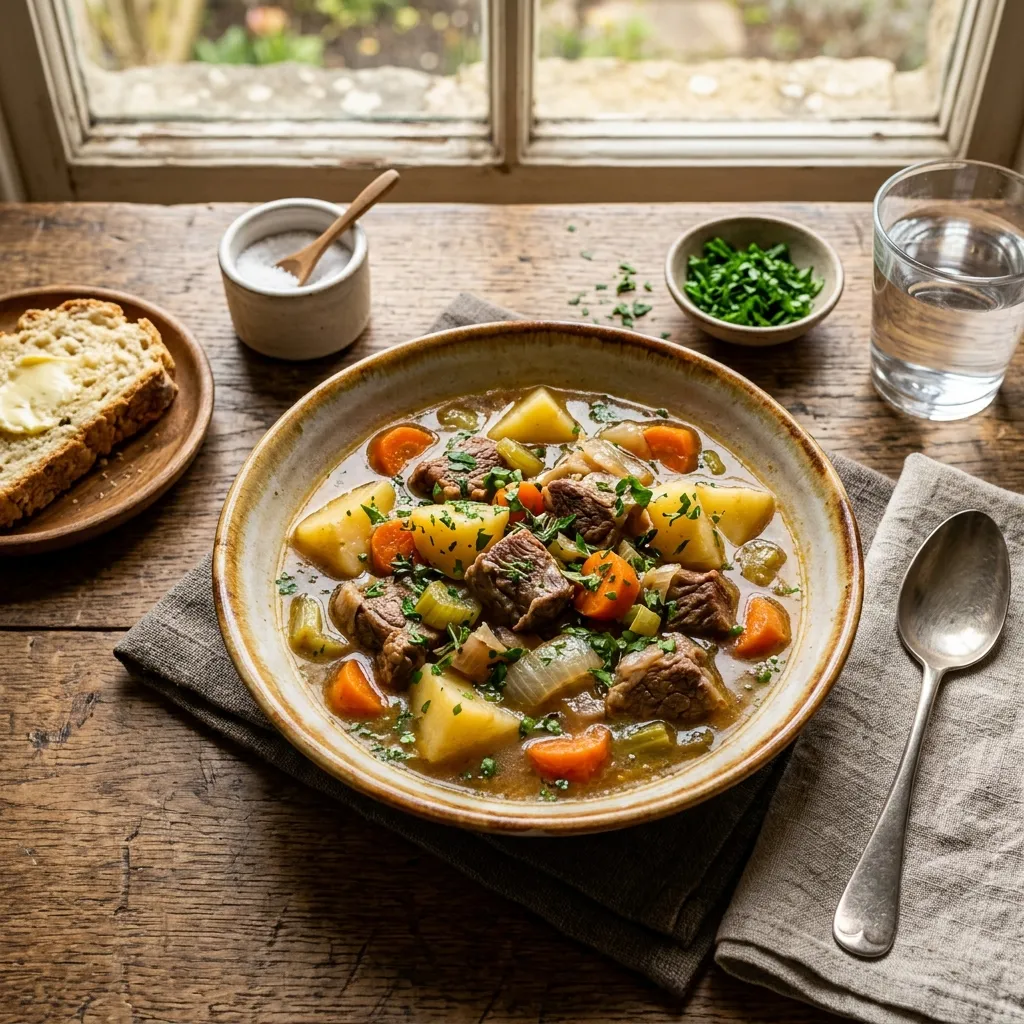
Overview
Irish stew is the country's most recognized dish internationally, with roots stretching back to the early 1800s when it first appeared in written recipes. The original version was a peasant dish of mutton, potatoes, and onions — nothing more — slow-cooked in water over a turf fire until the meat fell from the bone and the potatoes dissolved into a thick, starchy broth. The simplicity was born of poverty: these were the ingredients available to tenant farmers and cottagers in rural Ireland, and the one-pot method required only a hearth and a pot. The debate over what constitutes a 'true' Irish stew generates more heat than any other topic in Irish food culture. Purists insist on mutton (or lamb), potatoes, and onions only — no carrots, no herbs, no thickener. Others accept carrots, parsley, and thyme as standard additions. What everyone agrees on is that Irish stew should not contain beef, barley, or tomato, and that the broth should be thickened naturally by the disintegrating potatoes rather than with flour. Ayurvedically, Irish stew is a deeply nourishing, warming, and heavy dish — the kind of food that sustained people through cold, damp Irish winters and hard physical labour. Lamb and mutton are among the warming meats in Ayurvedic classification, and slow cooking with root vegetables creates a meal that builds strength and counters the cold, wet conditions that aggravate both Vata and Kapha in the Irish climate.
Strongly pacifies Vata with its warm, heavy, moist, and oily qualities. The bone broth provides deep nourishment. Moderately increases Pitta from heating lamb. Moderately increases Kapha from heaviness and starch.
The bone broth provides bioavailable minerals (calcium, magnesium, phosphorus) and collagen that support joint health, gut lining repair, and tissue rebuilding. Traditional Irish medicine used lamb broth as a recovery food after illness, childbirth, and physical exhaustion.
Ingredients
- 1 kg Lamb neck or shoulder (bone-in, cut into large chunks)
- 1 kg Potatoes (peeled — half diced small, half quartered large)
- 3 large Onions (thickly sliced)
- 3 large Carrots (cut into thick rounds)
- 4 sprigs Fresh thyme
- 3 tbsp Fresh parsley (chopped, for garnish)
- 2 leaves Bay leaves
- 750 ml Water or light stock
- 1.5 tsp Salt
- 1 tsp Black pepper
- 30 g Butter (optional, stirred in at end)
Instructions
- Season the lamb pieces generously with salt and pepper.
- Layer the ingredients in a large, heavy pot (cast iron or enamelled Dutch oven). Start with a layer of the small-diced potatoes on the bottom — these will dissolve and thicken the broth. Add half the onions and carrots.
- Place all the lamb pieces on the vegetable layer. Tuck the thyme sprigs and bay leaves between the pieces.
- Add the remaining onions, carrots, and the large-quartered potatoes on top. These top potatoes will hold their shape and provide substance in the finished stew.
- Pour in the water or stock — it should come about three-quarters of the way up the ingredients. Do not fully submerge. Season the top layer with more salt and pepper.
- Bring to a gentle simmer over medium heat. Reduce heat to the lowest setting, cover tightly, and cook for 2 hours. Check occasionally — the liquid should barely bubble. If it boils vigorously, the meat will toughen.
- After 2 hours, the meat should be falling off the bone, the bottom potatoes dissolved, and the top potatoes tender but intact. Remove the bay leaves and thyme sprigs. Stir gently to distribute the thickened broth. Add butter if using.
- Taste for seasoning. Ladle into deep bowls, ensuring each serving gets meat, whole potatoes, and broth. Garnish with chopped parsley and serve with soda bread.
Nutrition
These values are estimates calculated from the ingredient list and may vary based on brands, cooking methods, and serving size. Not a substitute for medical or dietary advice.
How This Recipe Affects Each Dosha
Vata
Irish stew is one of the most Vata-pacifying dishes in Western cooking. The slow-cooked lamb produces a gelatin-rich broth that lubricates dry Vata tissues. The warming quality counters Vata's cold tendency, the moisture counteracts dryness, and the heavy, grounding potatoes and root vegetables provide the earth element that Vata craves. Eating this during a cold, windy evening is deeply calming for the Vata nervous system.
Pitta
Lamb is a heating meat, and the long slow-cooking concentrates its warming energy into the broth. Pitta types with strong digestion can tolerate Irish stew in cool weather, but the heating quality builds with repeated consumption. The root vegetables provide some cooling sweetness, but not enough to offset the lamb's heat for Pitta-dominant individuals.
Kapha
The heaviness of potato, the oily quality of lamb fat, and the dense broth all increase Kapha. However, the warming quality of the lamb and the pungent support of black pepper and thyme prevent the worst Kapha stagnation. This is a better choice for Kapha than cream-based dishes, but portions should still be moderate.
The slow-cooked broth is gentle on digestion — the prolonged cooking partially pre-digests the proteins and softens the starches. The thyme and black pepper provide carminative and agni-kindling support. The bone broth itself supports agni recovery during convalescence.
Nourishes: Mamsa (muscle), Asthi (bone), Majja (nervous/marrow), Rasa (plasma)
Adjustments by Constitution
For Vata Types
The stew suits Vata perfectly as written. Add extra black pepper and a few cumin seeds to the broth. Serve with warm soda bread generously buttered. A small glass of warming red wine alongside enhances the grounding effect.
For Pitta Types
Replace lamb with turkey or chicken thighs, which are significantly cooler. Add fennel bulb (sliced) alongside the carrots. Increase parsley and add fresh dill. Reduce black pepper and omit bay leaf. Serve with a cooling cucumber-mint raita on the side.
For Kapha Types
Use lean lamb leg meat, trimmed of visible fat, and skim the surface fat during cooking. Replace half the potato with turnip and parsnip. Add extra black pepper, a thumb of fresh ginger sliced into the broth, and a pinch of dried thyme for stronger digestive stimulation. Serve in smaller bowls with extra chopped parsley.
Seasonal Guidance
This is a cold-weather dish in its purest sense — designed for the damp, grey winters of the Irish Atlantic coast where wind and rain chill to the bone. The heavy, warming broth counteracts the Vata and Kapha aggravation that the Irish winter climate produces. Not appropriate in summer; switch to lighter seafood dishes for warm weather.
Best time of day: Dinner — the traditional time for the heaviest meal in rural Ireland. Serve between 5 and 7 PM to allow at least 3 hours of digestion before sleep.
Cultural Context
Irish stew is a dish that carries the weight of Irish history. Its simplicity reflects the poverty of tenant farmers under British colonial rule, when families survived on the cheapest cuts of mutton and the potatoes they grew on their small plots. The Great Famine of 1845-1852 — which killed a million people and drove another million to emigrate — made potato-based dishes like stew into symbols of both suffering and resilience. Today, Irish stew appears on every pub menu and at every Irish cultural gathering worldwide. It is the dish that Irish emigrants taught their children to make in Boston, Melbourne, and London — a taste of home that transcended borders.
Deeper Context
Origins
Irish stew's pre-famine form used lamb, onion, and optionally carrot — the essential potato content was added during the potato-dependent 18th and 19th centuries and became canonical during and after the famine. The lamb-vs-beef distinction from English 'cottage pie' emerged in the 19th century as Irish national identity distinguished itself from English cookery. Modern disputes over authentic ingredients persist: purists insist on lamb only, while working-class Irish-diaspora versions often used cheaper beef.
Food as Medicine
Bone broth from the long braise is classical European folk-medicine restorative for the ill, elderly, and postpartum. Thyme is well-documented for respiratory and antimicrobial support — the Irish folk-medicine use of thyme in winter stews has an evidence-based foundation. Lamb provides iron, zinc, and complete protein. The dish is cold-weather restoration food with meaningful therapeutic depth.
Ritual & Seasonal Role
Winter Sunday dinner in Irish households. Saint Patrick's Day (March 17) features Irish stew globally in Irish-diaspora communities. The dish carries Irish-identity weight disproportionate to its actual preparation frequency. Featured on Irish pub menus worldwide as the quintessential Irish dish.
Classical Pairings & Cautions
Soda bread for mopping, a pint of Guinness or Smithwick's ale, boiled cabbage or colcannon alongside. Cautions: religious lamb restrictions (rare but present); gout patients should moderate the meat-and-potato purine load; Kapha and cardiovascular concerns; thyme at culinary doses is safe in pregnancy but concentrated oils are contraindicated.
Cross-Tradition View
How other medical and food-wisdom traditions read this dish. Each tradition names the same physiological reality in its own language — the agreements across them are where universal principles live.
Traditional Chinese Medicine
Lamb is strongly warming — classical TCM's warmest common meat, specifically prescribed for Yang deficiency; potato is Spleen-Qi-tonifying; onion is warm-pungent and disperses cold; carrot is Blood-supporting and moves Liver Qi; thyme is warm-dispersing. A powerful Yang-and-Qi-and-Blood tonic — TCM physicians would class this as winter restoration for cold-deficient constitutions, classically prescribed for elderly and for post-partum recovery.
Greek Humoral
Hot-wet sanguine-building aggressively. Lamb is specifically Galenic-praised for sanguine-melancholic constitutions. Hippocratic and Avicennan sources both endorse lamb stew for thin working populations in cold-damp climates. Ireland's climate is exactly the context Galenic medicine designed these prescriptions for.
Ayurveda
Heating virya, sweet vipaka. Pacifies Vata substantially through lamb warmth, protein, and long-braise unctuousness. Mildly aggravates Kapha through starch-meat heaviness. Mildly aggravates Pitta through warming spice-meat combination. A winter restoration dish for depleted Vata types.
Gaelic & Famine-Era
The Irish national dish. Traditionally made with lamb or mutton (beef versions are called 'cottage pie,' a deliberate cross-British distinction). Pre-famine versions had lamb, onion, and sometimes carrot — the potato integration was post-Columbian and became essential during and after the famine era (1845-1852) when root vegetables stretched diminishing meat supplies. Gaelic herbal tradition includes thyme as one of the 'three great herbs' (lus an ghoraill) with medicinal reputation for respiratory and digestive support.
Chef's Notes
The two-potato method is the traditional technique for achieving a thick, saucy stew without flour. Small-diced potatoes on the bottom break down completely during the long cook, creating a natural starchy thickener, while large-quartered potatoes on top hold their shape and provide texture. Bone-in lamb is essential — the bones release gelatin during the slow simmer, giving the broth body and richness that boneless meat cannot replicate. Do not brown the meat first; traditional Irish stew is not browned, and this gives it its characteristic pale, gentle character distinct from French-style braises.
Frequently Asked Questions
Is Irish Stew good for my dosha?
Strongly pacifies Vata with its warm, heavy, moist, and oily qualities. The bone broth provides deep nourishment. Moderately increases Pitta from heating lamb. Moderately increases Kapha from heaviness and starch. Irish stew is one of the most Vata-pacifying dishes in Western cooking. Lamb is a heating meat, and the long slow-cooking concentrates its warming energy into the broth. The heaviness of potato, the oily quality of lamb fat, and the dense broth all increase Kapha.
When is the best time to eat Irish Stew?
Dinner — the traditional time for the heaviest meal in rural Ireland. Serve between 5 and 7 PM to allow at least 3 hours of digestion before sleep. This is a cold-weather dish in its purest sense — designed for the damp, grey winters of the Irish Atlantic coast where wind and rain chill to the bone. The heavy, warming broth counteracts the Vata a
How can I adjust Irish Stew for my constitution?
For Vata types: The stew suits Vata perfectly as written. Add extra black pepper and a few cumin seeds to the broth. Serve with warm soda bread generously buttered. A For Pitta types: Replace lamb with turkey or chicken thighs, which are significantly cooler. Add fennel bulb (sliced) alongside the carrots. Increase parsley and add f
What are the Ayurvedic properties of Irish Stew?
Irish Stew has Sweet, Salty taste (rasa), Heating energy (virya), and Sweet post-digestive effect (vipaka). Its qualities (gunas) are Heavy, Warm, Moist, Oily. It nourishes Mamsa (muscle), Asthi (bone), Majja (nervous/marrow), Rasa (plasma). The slow-cooked broth is gentle on digestion — the prolonged cooking partially pre-digests the proteins and softens the starches. The thyme and black pepper provide carminative and agni-kindling support. The bone broth itself supports agni recovery during convalescence.