Irish Soda Bread
Irish Recipe
Overview
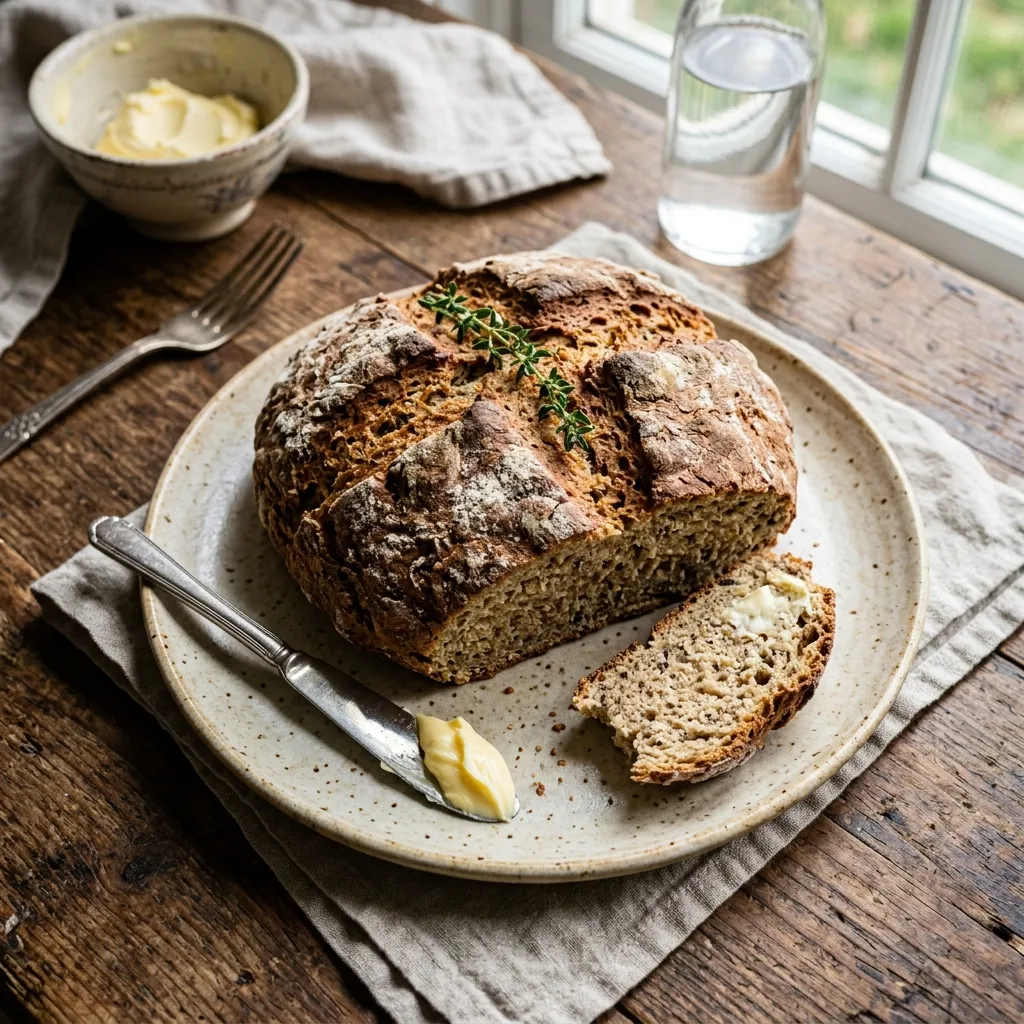
Irish soda bread appeared in the 1830s and 1840s when bicarbonate of soda first became available as a leavening agent in Ireland. The adoption was rapid and logical: Irish wheat was soft (low in gluten), making yeast-risen bread unreliable, but the chemical reaction between bicarbonate of soda and buttermilk produced a reliable rise regardless of flour strength. Within a generation, soda bread had become the daily bread of the entire country, baked in bastible pots over hearth fires in cottages from Cork to Donegal. The traditional recipe contains four ingredients: soft wheat flour, buttermilk, bicarbonate of soda, and salt. Nothing more. The dough is mixed quickly, shaped into a round, scored with a deep cross (to let the heat penetrate the thick centre, and — according to tradition — to let the devil out), and baked in a hot oven for 30-40 minutes. The result has a thick, craggy crust and a soft, slightly crumbly interior with a faintly tangy flavour from the buttermilk. Ayurvedically, soda bread is one of the simpler Western breads to analyse: wheat flour (sweet, heavy, cooling), buttermilk (sour, light, heating), and salt. The absence of sugar, fat, or eggs makes it lighter than most British and American breads. The buttermilk's cultured nature provides a modest probiotic benefit, and its sour taste stimulates agni more than plain water or milk would.
Relatively balanced for all doshas when eaten fresh. The buttermilk provides light, digestive qualities. The wheat can increase Kapha if consumed in excess. The sour taste mildly stimulates Pitta.
Ingredients
- 250 g Wholemeal flour
- 250 g Plain white flour
- 1 tsp Bicarbonate of soda
- 1 tsp Salt
- 400 ml Buttermilk
- 30 g Butter (melted, optional)
- 2 tbsp Rolled oats (for topping, optional)
Instructions
- Preheat the oven to 200°C (400°F). Lightly dust a baking sheet with flour.
- Combine both flours, bicarbonate of soda, and salt in a large bowl. Make a well in the centre.
- Pour in the buttermilk all at once. Using one hand with fingers open like a claw, mix quickly in circular motions until a shaggy, sticky dough forms. Do not knead — overworking develops gluten and makes the bread tough. The entire mixing should take 30 seconds.
- Turn the dough onto a lightly floured surface and shape into a round about 6cm tall. Place on the prepared baking sheet.
- Use a sharp, floured knife to cut a deep cross into the top of the dough — the cuts should go about two-thirds of the way through the loaf. This ensures even baking through the thick centre.
- Scatter oats over the top if using. Bake for 30-35 minutes until the bread is risen, golden, and sounds hollow when tapped on the bottom. The internal temperature should reach 95°C (200°F).
- Cool on a wire rack for at least 15 minutes before slicing. Serve warm with butter.
Nutrition
These values are estimates calculated from the ingredient list and may vary based on brands, cooking methods, and serving size. Not a substitute for medical or dietary advice.
How This Recipe Affects Each Dosha
Vata
Fresh, warm soda bread with butter provides comforting grounding for Vata. The wholemeal flour adds more substance than white alone, and the buttermilk's sour taste supports Vata digestion. However, bread is inherently drying once it cools, and the lack of fat in the dough means it needs butter or accompaniment to avoid aggravating Vata's dry quality.
Pitta
The buttermilk's sour taste is mildly Pitta-increasing, but in the quantity used for bread rather than consumed as a beverage, the effect is modest. The whole wheat provides grounding sweetness that Pitta tolerates well. Moderate portions with cooling accompaniments (fresh cheese, cucumber) work well for Pitta.
Kapha
Wheat bread is inherently Kapha-increasing due to the heavy, sweet, and slightly damp quality of wheat. Soda bread is lighter than yeast bread (no sugar, minimal fat), making it one of the better bread options for Kapha. The wholemeal component adds fibre and astringent quality. Best in small amounts.
The buttermilk provides mild agni support through its sour, cultured quality. The bread itself is relatively neutral — it neither strongly kindles nor dampens digestive fire. When eaten warm with butter, the overall digestive demand is moderate.
Nourishes: Rasa (plasma), Mamsa (muscle)
Adjustments by Constitution
For Vata Types
Serve warm with generous butter and a drizzle of raw honey. Pair with a warm soup — the bread's dry quality is balanced by the soup's moisture. Add a pinch of ground caraway seed to the dough for Vata-supportive digestive warmth.
For Pitta Types
Use white spelt flour instead of wheat for a cooler grain. Serve with fresh goat cheese and sliced cucumber. Reduce salt slightly. Enjoy with a glass of room-temperature milk or mint tea.
For Kapha Types
Replace half the flour with barley flour (lighter and more drying). Add a teaspoon of ground ginger, a half-teaspoon of ground cinnamon, and a pinch of black pepper to the dough. Serve thin slices, toasted, with a scrape of raw honey. Avoid butter.
Seasonal Guidance
Appropriate year-round as an accompaniment to soups and stews. In cold weather, serve warm with butter and hearty dishes. In summer, enjoy in smaller portions with lighter fare like salads and fresh cheese. Reduce consumption in spring when Kapha accumulation makes wheat heavier to digest.
Best time of day: Lunch, as an accompaniment to soup or stew. The bread provides quick energy and substance without the heaviness of a full meal on its own.
Cultural Context
Soda bread is inseparable from Irish identity. It appears on every Irish household table and in every Irish cafe, from Dublin to the smallest Connemara village. The four-ingredient simplicity reflects the poverty and resourcefulness of 19th-century rural Ireland, where families could not afford yeast or refined ingredients but could produce a fresh loaf daily from flour, buttermilk, and soda. The cross scored into the top has both practical (heat penetration) and spiritual (blessing the bread, warding off evil) significance. Regional variations exist: 'brown bread' uses all wholemeal flour, 'white soda' uses all white, and some regions add raisins or caraway seeds. In Northern Ireland, the dough is flattened and cooked on a griddle as 'soda farls.'
Deeper Context
Origins
Soda bread emerged in Ireland in the 1830s and 1840s after bicarbonate of soda became commercially affordable. Prior to sodium bicarbonate's widespread availability, Irish bread was yeast-based and required skill and time that poor households could not reliably sustain. The potato famine (1845-1852) accelerated soda bread's adoption — a reliable bread that worked with minimal ingredients and no fermentation became essential when alternative foods were scarce. American Irish-diaspora communities adapted soda bread into the sweet-raisin variant that diverges from the traditional savory Irish form.
Food as Medicine
Wholemeal flour provides B-vitamins, iron, and fiber; buttermilk adds probiotic content and calcium; oats contribute beta-glucan (documented glucose-modulating and cholesterol-reducing activity). The dish is nutritionally better than equivalent white-flour breads, though substantially limited in protein without accompaniment. A functional everyday bread whose historical role in Irish public health was significant — soda bread contributed to the survival of populations that could not access other grains.
Ritual & Seasonal Role
Daily Irish bread, year-round. Saint Patrick's Day (March 17) features soda bread on both Irish and Irish-diaspora tables. Classical accompaniment to Irish stew, coddle, and any Irish soup or stew. Not religiously ceremonial but one of the most culturally-identified Irish foods globally.
Classical Pairings & Cautions
Butter and jam for breakfast; soup or stew for dinner; cheese and pickles for lunch. Strong Irish tea alongside. Cautions: gluten intolerance precludes traditional wholemeal preparation (gluten-free soda bread substitutions work reasonably well); dairy sensitivity precludes the buttermilk; high sodium load from the bicarbonate; oats gluten cross-contamination affects celiac patients using non-certified oats.
Cross-Tradition View
How other medical and food-wisdom traditions read this dish. Each tradition names the same physiological reality in its own language — the agreements across them are where universal principles live.
Traditional Chinese Medicine
Wholemeal flour is Spleen-Qi-tonifying; buttermilk is Yin-and-Liver-supporting with mild Liver-Qi-moving action; bicarbonate of soda provides chemical leavening (no classical TCM correlate); oats are Spleen-and-Kidney-tonifying. A Spleen-Qi-and-Kidney tonic with Liver-soothing buttermilk accent — appropriate across constitutional types as everyday bread.
Greek Humoral
Hot-dry sanguine-building. A Galenic working-class bread — the wholemeal-and-buttermilk combination matches classical Hippocratic endorsement of whole-grain breads for working populations. The sour buttermilk prevents the dry crust from becoming melancholic-aggravating.
Ayurveda
Neutral-to-mildly-heating virya, sweet vipaka. Pacifies Vata through the buttermilk content. Mildly Kapha-aggravating through flour density. Pitta-neutral. A gentle everyday bread appropriate across constitutional types.
19th-Century Irish Hearth
Soda bread was invented in Ireland in the 1830s and 1840s when bicarbonate of soda became affordable to ordinary households. Prior to this, yeast-risen breads dominated European cookery, but yeast required more skill and time than Irish famine-era households could spare. Soda bread reached mass use during and after the potato famine (1845-1852) as a cheap reliable bread that required no yeast, no kneading, and minimal time. One of the oldest documented quick breads and a classically famine-adapted technology.
Chef's Notes
Speed is everything with soda bread. The moment the buttermilk meets the bicarbonate of soda, carbon dioxide starts forming — if you dawdle, the gas escapes before the bread reaches the oven and the loaf falls flat. Have your oven preheated and your baking sheet ready before you start mixing. Traditional Irish bakers use their hands, not a spoon, because you can feel when the dough is right — wet and shaggy but holding together. The bread is best eaten within hours of baking; it dries out by the next day. Day-old soda bread makes excellent toast or breadcrumbs.
Frequently Asked Questions
Is Irish Soda Bread good for my dosha?
Relatively balanced for all doshas when eaten fresh. The buttermilk provides light, digestive qualities. The wheat can increase Kapha if consumed in excess. The sour taste mildly stimulates Pitta. Fresh, warm soda bread with butter provides comforting grounding for Vata. The buttermilk's sour taste is mildly Pitta-increasing, but in the quantity used for bread rather than consumed as a beverage, the effect is modest. Wheat bread is inherently Kapha-increasing due to the heavy, sweet, and slightly damp quality of wheat.
When is the best time to eat Irish Soda Bread?
Lunch, as an accompaniment to soup or stew. The bread provides quick energy and substance without the heaviness of a full meal on its own. Appropriate year-round as an accompaniment to soups and stews. In cold weather, serve warm with butter and hearty dishes. In summer, enjoy in smaller portions with lighter fare like salads and fresh c
How can I adjust Irish Soda Bread for my constitution?
For Vata types: Serve warm with generous butter and a drizzle of raw honey. Pair with a warm soup — the bread's dry quality is balanced by the soup's moisture. Add a For Pitta types: Use white spelt flour instead of wheat for a cooler grain. Serve with fresh goat cheese and sliced cucumber. Reduce salt slightly. Enjoy with a glass
What are the Ayurvedic properties of Irish Soda Bread?
Irish Soda Bread has Sweet, Sour, Salty taste (rasa), Neutral to Mildly Warming energy (virya), and Sweet post-digestive effect (vipaka). Its qualities (gunas) are Light-to-Moderate, Dry, Warm (fresh from oven). It nourishes Rasa (plasma), Mamsa (muscle). The buttermilk provides mild agni support through its sour, cultured quality. The bread itself is relatively neutral — it neither strongly kindles nor dampens digestive fire. When eaten warm with butter, the overall digestive demand is moderate.