Khao Soi
Thai Recipe
Overview
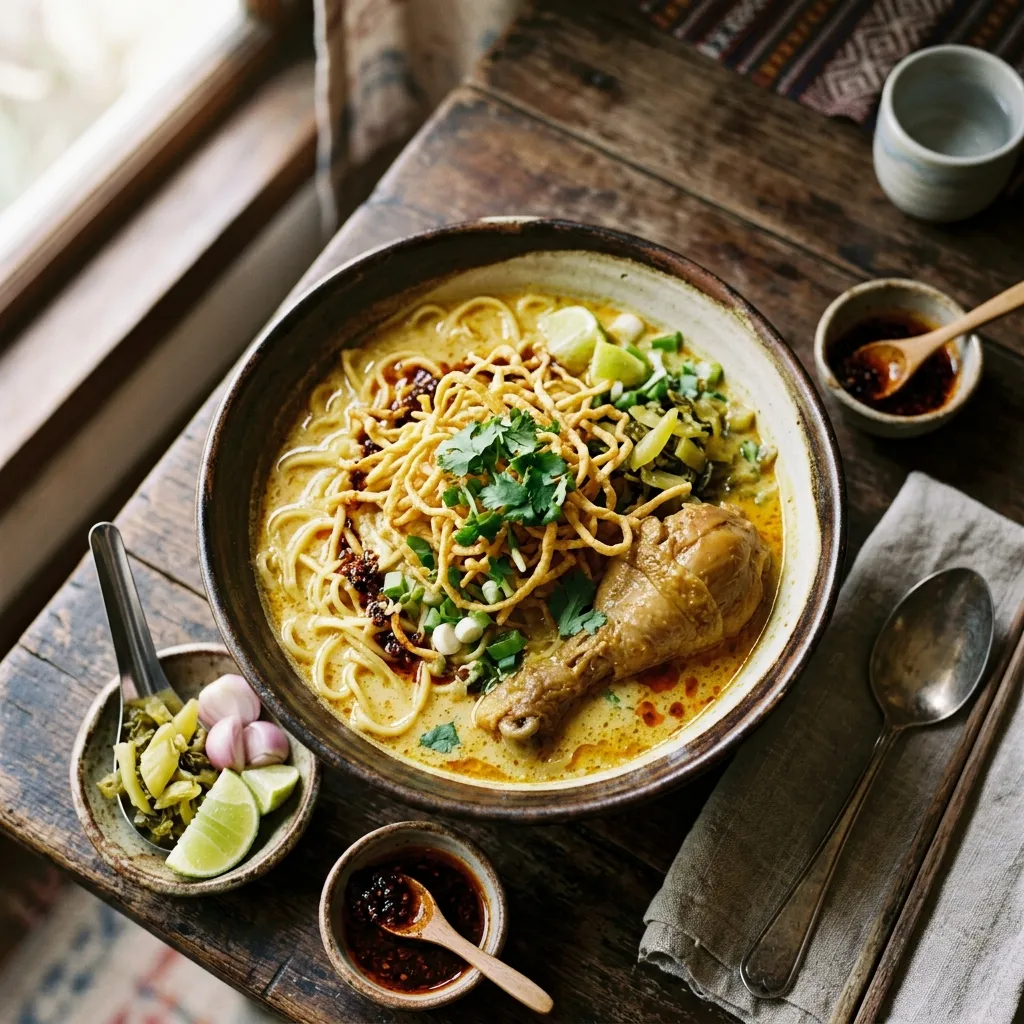
Khao soi is a northern Thai curry noodle soup — egg noodles bathed in a rich coconut curry broth, topped with crispy fried noodles, pickled mustard greens, shallots, and a squeeze of lime. The dish is emblematic of Chiang Mai and the broader Lanna culinary tradition, which draws more from Burmese and Shan State influences than the central Thai cuisine most Westerners know. The curry base combines dried red chili paste with a Burmese-influenced spice blend of coriander, cumin, turmeric, and cardamom — earthier and more complex than the lemongrass-forward curries of Bangkok. The name likely derives from the Shan term "khao swe" (cut rice), and the dish's ancestry traces through the Muslim Yunnanese (Chin Haw) traders who settled in northern Thailand centuries ago. This explains the presence of both Muslim and Buddhist versions — beef or chicken in the former, only chicken in the latter. In Chiang Mai's khao soi shops, the dish is served with a plate of condiments: pickled cabbage, raw shallots, chili oil, and lime wedges. Ayurvedically, khao soi is a study in heating, heavy nourishment. The coconut milk provides unctuous sweetness, the curry paste delivers intense pungent heat, and the egg noodles add wheat-based heaviness. The fried noodle garnish contributes additional dry heat and crunch. This is powerful cold-weather medicine — deeply warming, richly caloric, and designed to sustain energy through the cooler mountain climate of northern Thailand.
Strongly pacifies Vata with warmth, oil, and grounding heaviness. Increases Pitta due to intense spice heat and fried components. May aggravate Kapha through heaviness and oiliness.
Khao soi's combination of warming spices, rich broth, and substantial noodles makes it restorative food for recovery from cold, exhaustion, or periods of underweight. The turmeric and curry spices provide anti-inflammatory support within a calorie-dense vehicle.
Ingredients
- 400 g Fresh egg noodles (divided — 300g for boiling, 100g for frying)
- 4 pieces Chicken drumsticks (or boneless thighs)
- 800 ml Coconut milk (2 cans full-fat)
- 3 tbsp Red curry paste (Thai red curry paste)
- 2 tsp Curry powder (Thai or Madras style)
- 1/2 tsp Turmeric powder
- 3 tbsp Fish sauce
- 1 tbsp Palm sugar (grated)
- 1 tbsp Soy sauce
- 2 cups Vegetable oil (for frying noodle garnish)
- 1/4 cup Pickled mustard greens (chopped)
- 3 small Shallots (thinly sliced)
- 1 whole Lime (cut into wedges)
- 2 tbsp Fresh cilantro (for garnish)
- 2 tbsp Chili oil (for serving)
Instructions
- Heat 2 cups of vegetable oil in a small pot to 180C (350F). Drop small nests of egg noodles (about 100g worth) into the oil and fry until golden and crispy, about 2 minutes. Drain on a wire rack and set aside — these become the crunchy topping.
- In a large pot or wok, heat 1 tablespoon of oil over medium heat. Add the red curry paste, curry powder, and turmeric. Fry for 2-3 minutes, stirring constantly, until the paste is fragrant and darkened.
- Pour in half the coconut milk (about 400ml) and stir to dissolve the paste. Let this simmer for 3-4 minutes until the oil begins to separate from the coconut milk — the same cracking technique used in green curry.
- Add the chicken pieces and turn to coat in the curry base. Cook for 5 minutes, browning lightly on each side.
- Add the remaining coconut milk, fish sauce, soy sauce, and palm sugar. Bring to a gentle simmer and cook for 15-18 minutes until the chicken is cooked through and the broth is rich and fragrant. Taste and adjust seasoning — the broth should be simultaneously creamy, salty, sweet, and spicy.
- While the curry simmers, bring a separate pot of water to a boil and cook the remaining 300g of egg noodles according to package directions (usually 2-3 minutes). Drain and divide among serving bowls.
- Ladle the hot curry broth and chicken over the noodles in each bowl. Top with a nest of crispy fried noodles, chopped pickled mustard greens, sliced shallots, and fresh cilantro.
- Serve with lime wedges and chili oil on the side. Each diner adjusts acidity (lime), salt (fish sauce), and heat (chili oil) at the table.
Nutrition
These values are estimates calculated from the ingredient list and may vary based on brands, cooking methods, and serving size. Not a substitute for medical or dietary advice.
How This Recipe Affects Each Dosha
Vata
Khao soi is among the most Vata-pacifying noodle soups: warm broth, oily coconut milk, substantial egg noodles, and grounding chicken provide everything Vata craves. The warming spice blend drives warmth into the core. The unctuous quality of the coconut curry lubricates dry Vata tissues. This is ideal food for cold, dry conditions that aggravate Vata.
Pitta
The red curry paste, dry spices, and fried noodle garnish create significant heat. Pitta types will find this challenging during warm weather or periods of inflammation. The coconut milk provides some cooling buffer, and the lime and pickled greens add complexity, but the dominant energetic is heating.
Kapha
The heavy egg noodles, rich coconut milk, and oily fried garnish make khao soi difficult for Kapha. It is dense, caloric, and creates the kind of post-meal heaviness that Kapha already struggles with. The spice heat helps somewhat, but the heavy, oily base overwhelms the benefit.
The curry paste spices — chili, cumin, coriander, turmeric — are all agni-kindling. The coconut milk moderates the intensity, creating sustained digestive warmth rather than a sharp spike. The combination supports digestion of the heavy noodles and protein. However, the overall richness can overwhelm weak agni.
Nourishes: Rasa (plasma), Rakta (blood), Mamsa (muscle), Meda (fat)
Adjustments by Constitution
For Vata Types
This is already well-suited for Vata. Add extra grated ginger for digestive support. Use the full-fat coconut milk without any reduction. Eat warm and slowly, savoring the broth. Pair with the pickled mustard greens, whose sour quality aids Vata digestion.
For Pitta Types
Reduce curry paste to 1.5 tablespoons. Use light coconut milk for a less heavy broth. Replace fried noodle garnish with a handful of crispy shallots (less oil-heavy). Add extra lime and increase the pickled greens for cooling balance. Substitute chicken breast for thighs to reduce fat.
For Kapha Types
Replace egg noodles with rice noodles (lighter) or zucchini noodles. Use light coconut milk cut with chicken broth for a thinner, less oily soup. Skip the fried noodle garnish entirely. Increase the spice paste for more metabolic heat. Serve a smaller portion with extra raw shallots and lime.
Seasonal Guidance
Khao soi is cold-weather food by design — it originated in the cooler mountain climate of northern Thailand. In autumn and winter, the warming, heavy, oily qualities are deeply nourishing and appropriate. Avoid in summer when the heating spices and coconut richness compound Pitta-season heat.
Best time of day: Lunch when agni is strong enough to process the rich coconut broth and heavy noodles — this is too heavy for a late dinner
Cultural Context
Khao soi is inseparable from Chiang Mai's identity as a culinary capital. The dish reflects the northern Thai (Lanna) kingdom's historical connections to Burma, Laos, and the Shan States — regions where similar curry noodle soups exist under different names. In Chiang Mai, dedicated khao soi restaurants have been operating for generations, some as modest shophouses where a single family recipe defines the business. The annual Chiang Mai Food Festival features khao soi competitions. The Muslim-origin version (using beef) and the Buddhist version (using chicken) coexist peacefully, reflecting northern Thailand's multicultural culinary heritage.
Deeper Context
Origins
Khao soi descends from Chinese-Muslim (Hui) Yunnanese traders who operated caravans along the Yunnan-Myanmar-Northern Thailand silk-route during the medieval and early-modern period. The dish crystallized in Chiang Mai (northern Thai kingdom of Lanna) through Yunnanese-Muslim influence blending with Burmese and local Thai cookery. The distinctive pickled-mustard-greens accompaniment and crispy-noodle garnish mark the Hui-Muslim heritage. Chiang Mai remains the epicenter of authentic khao soi preparation.
Food as Medicine
Turmeric provides anti-inflammatory curcumin; coconut milk contributes medium-chain triglycerides; pickled mustard greens offer fermentation-related probiotics. Red curry paste components (galangal, lemongrass, garlic, shallots, chilies) provide diverse phytonutrients. A therapeutically-balanced traditional preparation.
Ritual & Seasonal Role
Northern Thai signature dish. Year-round. Featured prominently at Chiang Mai food tourism. Not religiously ceremonial but culturally essential to Northern Thai identity.
Classical Pairings & Cautions
Pickled mustard greens, shallots, lime wedge, crispy noodle topping, chili oil. Thai iced tea. Cautions: gluten content in egg noodles; shellfish-derived fish sauce; Pitta aggravation; coconut allergies; FODMAP issues from garlic and shallots; pork or beef in the protein may have religious restrictions.
Cross-Tradition View
How other medical and food-wisdom traditions read this dish. Each tradition names the same physiological reality in its own language — the agreements across them are where universal principles live.
Traditional Chinese Medicine
Egg noodles are Spleen-Qi-tonifying; coconut milk is Yin-building; red curry paste is hot-pungent and disperses cold; turmeric moves Blood; pickled mustard greens are sour-cool and move Liver Qi. A comprehensive Qi-Yin-and-Blood-moving preparation — TCM physicians would recognize the dish as balanced restoration food.
Greek Humoral
Hot-wet sanguine-building. A Galenic-suitable rich preparation.
Ayurveda
Heating virya, pungent vipaka. Pacifies Vata substantially through coconut-milk unctuousness. Aggravates Pitta through chili and curry spice combination. Mild Kapha aggravation.
Northern Thai & Chinese-Muslim Yunnanese
Khao soi is classical Northern Thai (Chiang Mai, Chiang Rai) cuisine with direct Chinese-Muslim (Hui) and Burmese influences — the dish reflects the Yunnan-Myanmar-Northern Thailand trade route where Muslim Chinese caravans historically operated. The curry-and-noodle architecture with pickled mustard greens reflects Islamic Chinese cooking that spread through the Burmese highlands into Northern Thailand. Chiang Mai's khao soi tradition preserves this Hui-Muslim Chinese heritage.
Chef's Notes
The contrast between soft boiled noodles below and crispy fried noodles on top is the signature of khao soi — do not skip the fried noodle garnish. For the most authentic flavor, seek out khao soi paste from a Thai grocery rather than substituting red curry paste (which lacks the dry spice component). If using drumsticks, score the meat to the bone so the curry permeates. The pickled mustard greens are essential — their sharp sourness cuts the coconut richness. Leftover broth stores well for 3 days refrigerated; the fried noodles must be made fresh.
Frequently Asked Questions
Is Khao Soi good for my dosha?
Strongly pacifies Vata with warmth, oil, and grounding heaviness. Increases Pitta due to intense spice heat and fried components. May aggravate Kapha through heaviness and oiliness. Khao soi is among the most Vata-pacifying noodle soups: warm broth, oily coconut milk, substantial egg noodles, and grounding chicken provide everything Vata craves. The red curry paste, dry spices, and fried noodle garnish create significant heat. The heavy egg noodles, rich coconut milk, and oily fried garnish make khao soi difficult for Kapha.
When is the best time to eat Khao Soi?
Lunch when agni is strong enough to process the rich coconut broth and heavy noodles — this is too heavy for a late dinner Khao soi is cold-weather food by design — it originated in the cooler mountain climate of northern Thailand. In autumn and winter, the warming, heavy, oily qualities are deeply nourishing and appropri
How can I adjust Khao Soi for my constitution?
For Vata types: This is already well-suited for Vata. Add extra grated ginger for digestive support. Use the full-fat coconut milk without any reduction. Eat warm and For Pitta types: Reduce curry paste to 1.5 tablespoons. Use light coconut milk for a less heavy broth. Replace fried noodle garnish with a handful of crispy shallots (
What are the Ayurvedic properties of Khao Soi?
Khao Soi has Pungent, Sweet, Salty, Sour taste (rasa), Heating energy (virya), and Pungent post-digestive effect (vipaka). Its qualities (gunas) are Heavy, Oily, Warm. It nourishes Rasa (plasma), Rakta (blood), Mamsa (muscle), Meda (fat). The curry paste spices — chili, cumin, coriander, turmeric — are all agni-kindling. The coconut milk moderates the intensity, creating sustained digestive warmth rather than a sharp spike. The combination supports digestion of the heavy noodles and protein. However, the overall richness can overwhelm weak agni.