Healing Bone Broth
Fusion Recipe
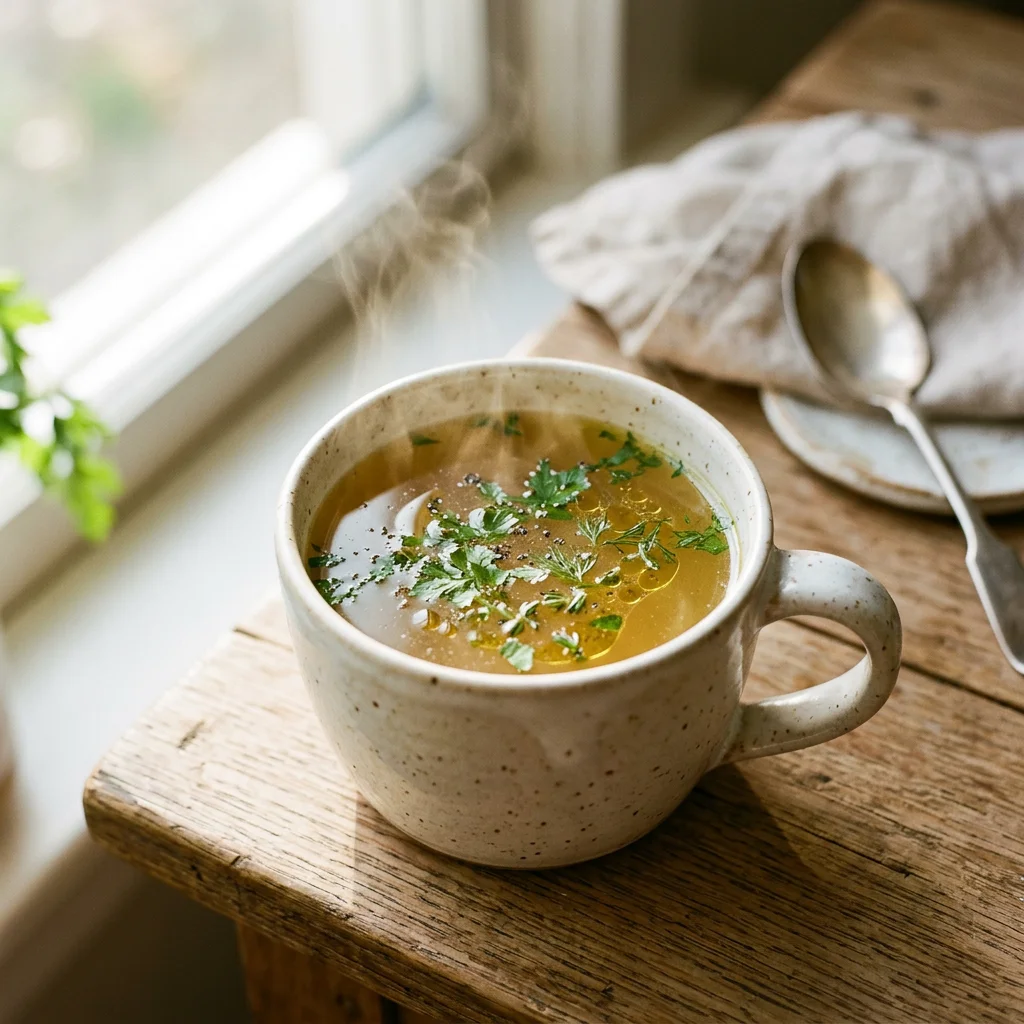
Overview
Bone broth exists in every healing tradition on earth for the same reason: it works. Chinese medicine calls it the foundation of yin restoration. European grandmothers prescribed it for colds and convalescence long before science confirmed its collagen, gelatin, and mineral content. Jewish penicillin — chicken soup — is not folklore but observed medicine. This version draws on all of these traditions, infusing a slow-simmered bone broth with ginger and turmeric for their anti-inflammatory and digestive properties, and vegetables for mineral depth. From an Ayurvedic perspective, bone broth occupies a unique and sometimes debated position. Traditional Ayurveda includes meat broths (mamsa rasa) as powerful therapeutics for debilitated patients, those recovering from illness, and individuals with severe Vata aggravation. The broth is considered easier to digest than whole meat because the long cooking process pre-digests the proteins and extracts the minerals into a liquid form the body can absorb with minimal digestive effort. It nourishes the deepest dhatus — bone (asthi), marrow (majja), and reproductive tissue (shukra) — which are the tissues most depleted during chronic illness, stress, or exhaustion. The ginger and turmeric are not trendy additions — they serve a precise Ayurvedic function. Ginger kindles agni to ensure the broth's rich nutrients are absorbed rather than creating ama. Turmeric provides broad anti-inflammatory support and helps purify the blood (rakta dhatu). Together with the vegetables, they transform a simple stock into a complete healing food.
Strongly pacifies Vata with its warm, oily, heavy, and nourishing qualities. Increases Pitta mildly due to the heating virya. Kapha types should consume in moderation.
Used therapeutically for illness recovery, postpartum restoration, joint pain, gut lining repair, and deep Vata pacification. Mamsa rasa (meat broth) is recommended in Ayurvedic texts for patients who are debilitated, underweight, or recovering from surgery. The collagen supports gut integrity, joint health, and skin elasticity. Daily consumption for 2-4 weeks is a common therapeutic protocol.
Ingredients
- 2 lbs Mixed bones (beef marrow bones, chicken backs, or a mix — roasted bones yield deeper flavor)
- 2 tbsp Apple cider vinegar (draws minerals from the bones)
- 12 cups Water (enough to cover bones by 2 inches)
- 3 inches Fresh ginger (sliced into coins, unpeeled)
- 2 inches Fresh turmeric (sliced, or 1 tsp ground)
- 2 medium Carrots (roughly chopped)
- 3 stalks Celery (roughly chopped)
- 1 large Onion (halved, skin on for color)
- 6 cloves Garlic (smashed)
- 1 tsp Black peppercorns (whole)
- 2 whole Bay leaves
- 1-2 tsp Salt (added at the end, to taste)
- 1/4 cup Fresh parsley (added in last 30 minutes)
Instructions
- For deeper flavor, roast the bones first: spread on a baking sheet and roast at 220C (425F) for 25-30 minutes until browned. This step is optional but produces a significantly richer broth.
- Place the bones in a large stockpot or slow cooker. Add the apple cider vinegar and cold water. Let sit for 30 minutes before turning on the heat — the acid begins drawing minerals from the bones.
- Bring to a very gentle simmer over medium heat. As foam rises to the surface, skim it off thoroughly. This foam contains impurities that cloud the broth and can give it an off taste.
- Once the broth is at a bare simmer (small bubbles barely breaking the surface), add the ginger, turmeric, carrots, celery, onion, garlic, peppercorns, and bay leaves.
- Reduce heat to the lowest possible setting. The broth should barely move — a strong boil produces cloudy, greasy broth. Cover and simmer for a minimum of 8 hours (chicken bones) or up to 24 hours (beef bones).
- Add the parsley in the last 30 minutes of cooking.
- Strain through a fine-mesh sieve into jars or a large bowl, pressing gently on the solids to extract all liquid. Discard the bones and spent vegetables.
- Season with salt to taste. Let cool, then refrigerate. A layer of fat will solidify on top — this is liquid gold. Leave it on for storage (it acts as a seal) and stir it back in when reheating, or remove it if you prefer a leaner broth.
Nutrition
These values are estimates calculated from the ingredient list and may vary based on brands, cooking methods, and serving size. Not a substitute for medical or dietary advice.
How This Recipe Affects Each Dosha
Vata
Bone broth is one of the most powerful Vata-pacifying foods available. The warm, oily, heavy, and liquid qualities are the direct antidote to Vata's cold, dry, light, and mobile nature. The deep nourishment of the asthi (bone) and majja (marrow) dhatus addresses Vata's tendency to deplete these deeper tissues over time. During Vata season or Vata crises (anxiety, insomnia, joint pain, weight loss), daily bone broth is therapeutic.
Pitta
The heating quality of bone broth can aggravate Pitta, especially with the ginger and black pepper. However, the sweet rasa and sweet vipaka are Pitta-balancing. Pitta types can benefit from bone broth in cooler months or during recovery, but should not make it a daily summer habit. The turmeric and vegetables help moderate the overall heating effect.
Kapha
The heavy, oily, and liquid qualities can increase Kapha congestion. However, the warming spices and heating virya partially counteract this. Kapha types benefit most from a lighter version — chicken broth rather than beef, with extra ginger and pepper, consumed warm in small portions rather than as full bowls.
The ginger and black pepper actively kindle agni, ensuring the rich nutrients in the broth are properly absorbed. The liquid form reduces the digestive burden — the body receives dense nourishment without the work of breaking down solid food. This makes bone broth ideal for periods when agni is weak (illness recovery, post-surgery, elderly digestion).
Nourishes: Rasa (plasma), Rakta (blood), Mamsa (muscle), Meda (fat tissue), Asthi (bone), Majja (marrow/nervous tissue)
Adjustments by Constitution
For Vata Types
Add a generous pinch of nutmeg and a cinnamon stick during cooking. Stir in a tablespoon of ghee before serving. Include marrow bones specifically — the marrow is the most Vata-nourishing part. Drink a warm mug in the morning and another before bed during Vata season.
For Pitta Types
Reduce ginger by half and omit black pepper. Add fennel seeds and a stick of licorice root to the broth for cooling. Use chicken bones rather than beef (chicken is lighter and less heating). Add cooling vegetables like zucchini and leafy greens. Garnish with fresh cilantro rather than parsley.
For Kapha Types
Use chicken bones only (lighter than beef). Double the ginger and add a generous pinch of cayenne. Include astragalus root or shiitake mushrooms for immune support without heaviness. Skim all fat from the surface after refrigeration. Drink in small mugs rather than large bowls, and always serve hot.
Seasonal Guidance
Bone broth is at its most therapeutic during autumn and winter when Vata dosha peaks and the body craves deep, warming nourishment. Making a large batch and sipping it daily through the cold months is one of the simplest and most effective health practices available. In spring, lighten the broth with extra vegetables and reduce the cooking time. In summer, most people do not need bone broth — reserve it for illness recovery or switch to lighter vegetable broths.
Best time of day: Morning on an empty stomach as a warm elixir, or alongside lunch and dinner as a base for soups and stews. Ayurveda recommends meat broths earlier in the day when agni is stronger.
Cultural Context
Every food culture with access to animal bones developed a tradition of long-simmered broth, because the practice reveals itself through need: illness, cold weather, scarcity. Chinese tong sui (bone soups) are prescribed by TCM practitioners for kidney yin deficiency — the same pattern Ayurveda describes as Vata depletion of the deeper dhatus. Vietnamese pho begins with a bone broth simmered for hours with star anise and ginger. French cuisine built its entire sauce system on bone stocks. Korean seolleongtang (ox bone soup) simmers for over 24 hours until the broth turns milky white with collagen. The modern "bone broth trend" is not new — it is the rediscovery of one of humanity's oldest healing foods.
Deeper Context
Origins
Bone broth is universally ancient — every meat-eating culture produces long-simmered bone broth as convalescent food and as flavor base. The modern branded 'healing bone broth' as a distinct wellness product emerged in the late 2000s and early 2010s through the paleo and functional-medicine movements, the Weston A. Price Foundation (founded 1999), and the GAPS diet protocol (Campbell-McBride, 2004). The marketing packaging is new; the food is as old as human cookery.
Food as Medicine
Modern research validates bone broth for several distinct benefits: gelatin and glycine support gut-lining integrity; proline and glycine contribute to collagen synthesis; minerals (calcium, magnesium, phosphorus, potassium) are extracted by the vinegar's acidic action; fat-soluble vitamins from marrow and connective tissue are released into the broth. Clinical use in gut-healing, post-surgical recovery, and autoimmune protocols has accumulated substantial evidence through the 2010s functional-medicine period.
Ritual & Seasonal Role
Daily or weekly preparation in households practicing traditional-foods cookery. Meal-prep integration through freezer storage. Weekly sipping-cup consumption as a wellness practice. Winter peak. Not religiously ceremonial; very culturally ritualized within wellness and paleo subcultures, and within traditional-foods advocacy communities.
Classical Pairings & Cautions
Sipped plain from a mug as a morning or afternoon tonic; used as the base for soups, stews, and braises. Cautions: bone sourcing matters substantially — industrial-farmed bones carry heavy-metal accumulation; histamine intolerance is a real issue for a subset of patients with long-simmered broths (long cookery increases histamine content); sodium modulation matters for cardiovascular patients; religious restrictions on specific animal bones apply (Hindu, Muslim, Jewish, some Buddhist traditions); vegetarian approximations exist but do not provide the gelatin-and-glycine therapeutic content that makes bone broth distinct.
Cross-Tradition View
How other medical and food-wisdom traditions read this dish. Each tradition names the same physiological reality in its own language — the agreements across them are where universal principles live.
Traditional Chinese Medicine
Bones build Kidney Jing (Essence) substantially — marrow particularly is a classical Jing-tonic in TCM materia medica; ginger is warm-dispersing; turmeric moves Blood; carrots support Blood and Liver; apple cider vinegar is sour-warm and moves Liver Qi while also extracting minerals from the bones. A comprehensive Essence-Blood-Qi tonic — the archetypal TCM restoration food. Classical Chinese medicine prescribes bone broth for post-partum, post-surgery, and serious chronic illness recovery.
Greek Humoral
Hot-wet sanguine-building. The Galenic convalescent broth par excellence — long-simmered bone broth with aromatic vegetables appears in Hippocratic, Galenic, Byzantine, and medieval European healing texts continuously. Moses Maimonides specifically recommended bone broths for consumptives. The Western medical tradition for bone broth is unbroken from antiquity to modernity, temporarily obscured by 20th-century processed-food culture.
Ayurveda
Heating virya, sweet vipaka. Tridoshic as a classical mamsa rasa (meat broth) when properly prepared with warming spices. Considered heavy/tamasic by strict vegetarian Ayurvedic traditions but medicinally recommended in classical meat-eating Ayurvedic postpartum and convalescent protocols. Charaka and Sushruta both reference bone-broth preparations for specific therapeutic contexts.
Weston Price & GAPS Modern Movement
The modern 'healing bone broth' as a branded wellness dish is a creation of the Weston A. Price Foundation (founded 1999) and the GAPS diet protocol (Dr. Natasha Campbell-McBride, 2004). Modern mainstream popularization dates to 2010s paleo and functional-medicine movements. The historical roots across every meat-eating culture are ancient; what is new is the self-aware health-branded packaging of a preparation that grandmothers across cultures made without comment.
Chef's Notes
A properly made bone broth gels when refrigerated — this gel is collagen, and it is the sign of a successful broth. If your broth does not gel, you either used too much water relative to bones, boiled too hard (which breaks down gelatin), or did not cook long enough. Chicken feet and pig trotters produce the most collagen-rich broth, though any bones will work. The apple cider vinegar is not optional — without acid, the minerals remain locked in the bones. You will not taste the vinegar in the finished broth. For daily drinking, warm a mugful and sip it as you would tea — this is how it is used therapeutically across many cultures.
Frequently Asked Questions
Is Healing Bone Broth good for my dosha?
Strongly pacifies Vata with its warm, oily, heavy, and nourishing qualities. Increases Pitta mildly due to the heating virya. Kapha types should consume in moderation. Bone broth is one of the most powerful Vata-pacifying foods available. The heating quality of bone broth can aggravate Pitta, especially with the ginger and black pepper. The heavy, oily, and liquid qualities can increase Kapha congestion.
When is the best time to eat Healing Bone Broth?
Morning on an empty stomach as a warm elixir, or alongside lunch and dinner as a base for soups and stews. Ayurveda recommends meat broths earlier in the day when agni is stronger. Bone broth is at its most therapeutic during autumn and winter when Vata dosha peaks and the body craves deep, warming nourishment. Making a large batch and sipping it daily through the cold months is
How can I adjust Healing Bone Broth for my constitution?
For Vata types: Add a generous pinch of nutmeg and a cinnamon stick during cooking. Stir in a tablespoon of ghee before serving. Include marrow bones specifically — t For Pitta types: Reduce ginger by half and omit black pepper. Add fennel seeds and a stick of licorice root to the broth for cooling. Use chicken bones rather than bee
What are the Ayurvedic properties of Healing Bone Broth?
Healing Bone Broth has Sweet, Salty taste (rasa), Heating energy (virya), and Sweet post-digestive effect (vipaka). Its qualities (gunas) are Warm, Oily, Heavy, Smooth, Liquid. It nourishes Rasa (plasma), Rakta (blood), Mamsa (muscle), Meda (fat tissue), Asthi (bone), Majja (marrow/nervous tissue). The ginger and black pepper actively kindle agni, ensuring the rich nutrients in the broth are properly absorbed. The liquid form reduces the digestive burden — the body receives dense nourishment without the work of breaking down solid food. This makes bone broth ideal for periods when agni is weak (illness recovery, post-surgery, elderly digestion).