Harira
Moroccan Recipe
Overview
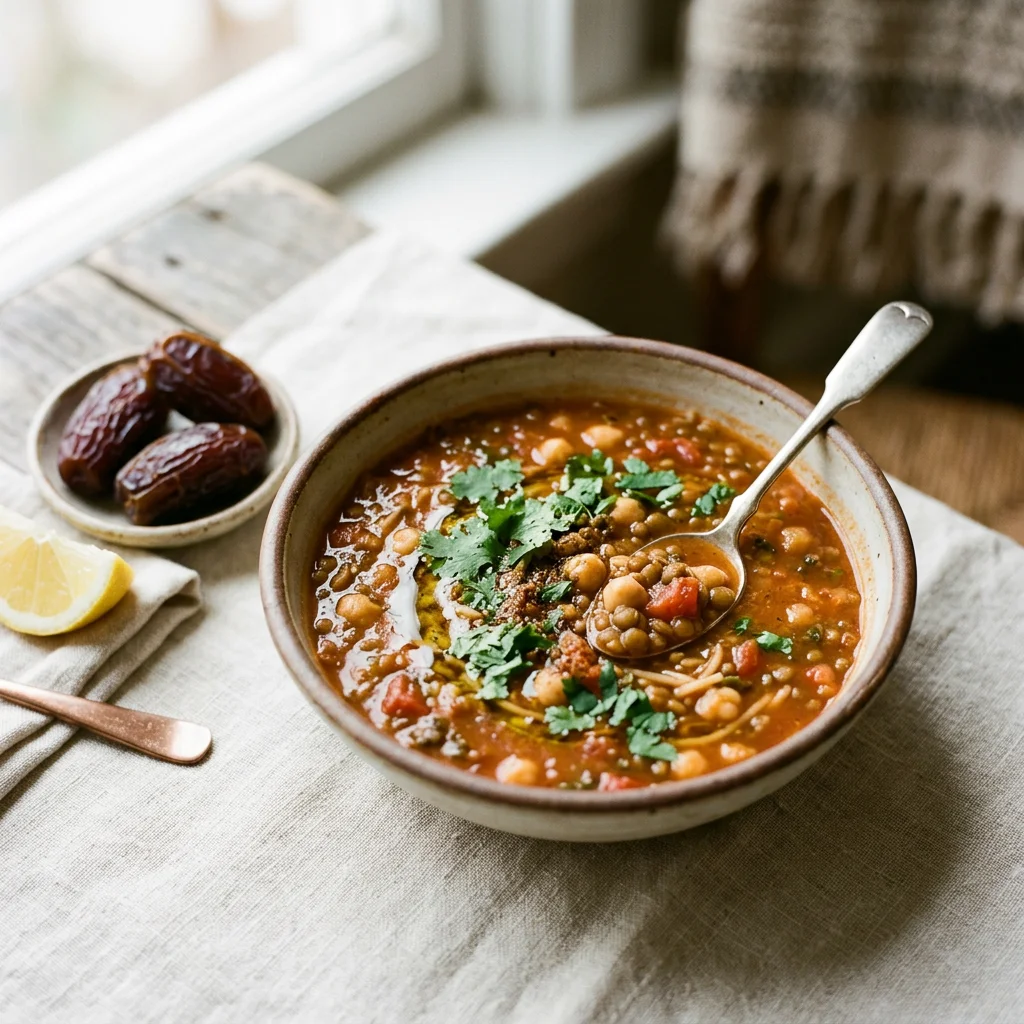
Harira is Morocco's most sacred soup — a rich, velvety broth of lentils, chickpeas, and tomatoes thickened with flour and eggs, perfumed with saffron, ginger, and fresh herbs. It is the dish that breaks the fast each evening during Ramadan, and its preparation is a daily ritual that fills entire neighborhoods with its aroma as sunset approaches. The first spoonful after a day of fasting is considered one of life's most deeply satisfying moments, and harira is engineered for exactly this purpose — nourishing without shocking a resting digestive system. Outside of Ramadan, harira remains a beloved everyday soup, particularly during the cooler months. It appears at celebrations, after funerals, and as a restorative for anyone who is unwell. Every Moroccan family has its own recipe, and the variations are endless — some add vermicelli noodles, others use lamb, some finish with a beaten egg stirred into the hot broth to create silky ribbons. What remains constant is the base: lentils for earthiness, chickpeas for body, tomatoes for acidity, and a generous hand with fresh cilantro and parsley. Ayurvedically, harira is a masterful digestive reset food. The combination of lentils and chickpeas provides complete protein while the warming spices — ginger, cinnamon, turmeric — gradually rekindle agni after a period of rest. The tomato base adds sour rasa that stimulates appetite, and the saffron brings a subtle cooling quality that prevents the spices from being too aggressive on a sensitive stomach. It is functionally similar to kitchari in its intent: a complete, balanced, easy-to-process meal designed to support the body during a transition.
Pacifies Vata strongly. Balances Kapha when spice levels are adequate. Mildly increases Pitta due to tomato and heating spices, though saffron and lemon moderate this.
Traditional recovery food after fasting, illness, or childbirth. Used to rekindle agni gently after periods of digestive rest. The combination of warming spices with easily digestible legumes makes it ideal for convalescence.
Ingredients
- 3 tbsp Olive oil
- 1 large Onion (finely diced)
- 2 medium Celery stalks (diced)
- 3 cloves Garlic (minced)
- 1 tbsp Fresh ginger (grated)
- 1 tsp Ground turmeric
- 1/2 tsp Ground cinnamon
- 1 tsp Ground cumin
- 1/4 tsp Saffron threads (steeped in 2 tbsp warm water)
- 1 can (400g) Crushed tomatoes
- 3/4 cup Brown lentils (rinsed)
- 1 can (400g) Chickpeas (drained and rinsed)
- 1/3 cup Fresh cilantro (finely chopped)
- 1/3 cup Fresh parsley (finely chopped)
- 2 tbsp Lemon juice
- 1 tsp Honey
Instructions
- Heat the olive oil in a large heavy-bottomed pot over medium heat. Add the onion and celery and cook, stirring occasionally, until softened and lightly golden, about 8 minutes.
- Add the garlic and ginger and stir for 1 minute. Add the turmeric, cinnamon, and cumin, stirring the spices into the aromatics until fragrant, about 30 seconds.
- Add the crushed tomatoes and stir well, scraping up any browned bits from the bottom of the pot. Cook for 3-4 minutes until the tomatoes begin to darken and concentrate.
- Add the lentils, 6 cups of water, and the saffron with its soaking liquid. Bring to a boil, then reduce heat to low, cover, and simmer for 30 minutes until the lentils are tender.
- Add the chickpeas, half of the cilantro, and half of the parsley. Continue simmering uncovered for 20 minutes, stirring occasionally. The soup should thicken naturally as the lentils break down.
- Stir in the lemon juice and honey. Taste and adjust seasoning — the soup should balance earthy, sour, and subtly sweet notes. If too thick, add hot water to reach a velvety but pourable consistency.
- Ladle into bowls and garnish generously with the remaining fresh cilantro and parsley. Serve with warm bread, lemon wedges, and dates on the side — the traditional Ramadan accompaniment.
Nutrition
These values are estimates calculated from the ingredient list and may vary based on brands, cooking methods, and serving size. Not a substitute for medical or dietary advice.
How This Recipe Affects Each Dosha
Vata
Harira is deeply Vata-pacifying. The warm, soupy consistency, the combination of legume proteins, and the unctuous olive oil base address Vata's core needs for warmth, moisture, and grounding. The saffron and ginger gently kindle a Vata-type digestive fire that tends toward irregularity, while the lentils and chickpeas provide sustained energy without the heaviness of meat.
Pitta
The tomato base and warming spices make this moderately Pitta-aggravating, though the saffron provides a cooling counterbalance. The sweet vipaka of the lentils and chickpeas helps settle Pitta over time. Best enjoyed during cooler months when Pitta is naturally lower, and in moderate portions during summer.
Kapha
The warming spices and light, soupy quality work well for Kapha, stimulating digestion and preventing the stagnation that legumes can sometimes cause. The pungent and astringent rasas are beneficial. However, the quantity of starchy legumes means Kapha types should enjoy moderate portions and ensure the spice level is robust.
Specifically designed to rekindle agni gently after a period of fasting or digestive rest. The warming spices activate without overwhelming, while the easily digestible lentils give agni something to work with without taxing it. The saffron protects the stomach lining even as the spices stimulate secretions.
Nourishes: Rasa (plasma), Rakta (blood), Mamsa (muscle)
Adjustments by Constitution
For Vata Types
Add a tablespoon of argan oil drizzled over each bowl at serving. Include a pinch of black pepper and extra ginger. Serve with dates soaked in warm orange blossom water for a deeply grounding accompaniment. The sour rasa from extra lemon helps kindle Vata's variable appetite.
For Pitta Types
Reduce ginger by half and omit the cinnamon. Increase saffron to 1/2 teaspoon — its cooling virya counterbalances the heating qualities. Replace tomatoes with roasted red bell peppers for a sweeter, less acidic base. Add extra fresh cilantro and a splash of rosewater at serving.
For Kapha Types
Add a teaspoon of harissa paste for extra pungency that cuts through Kapha's heaviness. Reduce chickpeas by half and increase lentils, which are lighter. Use only 1 tablespoon of olive oil. Add a generous pinch of black pepper and a squeeze of lemon in each bowl to further stimulate agni.
Seasonal Guidance
Ideal during cooler months and particularly during any period of fasting, cleansing, or recovery. In autumn and winter, increase ginger and cinnamon for extra warmth. In spring, lighten by adding fresh greens like spinach in the last few minutes. During Ramadan (which rotates through the seasons), adjust spice levels to match the ambient temperature — lighter during summer fasts, more robust during winter ones.
Best time of day: Evening — traditionally consumed at sunset to break the fast. Also excellent as a warming lunch. The gentle spice blend and soupy consistency make it suitable even for light dinners.
Cultural Context
Harira is inseparable from Ramadan in Morocco — the first food to touch the lips after a day of fasting, preceded only by dates and milk. The soup appears in Moroccan food culture dating back centuries, with regional variations from Fez to Marrakech to the Rif Mountains. In many neighborhoods, families send bowls of harira to neighbors, and communal pots are prepared at mosques for those who cannot cook. Beyond Ramadan, harira is the soup of solace — made for the ill, the grieving, the cold, and the simply hungry. It represents Moroccan hospitality at its most fundamental: a bowl of something warm, offered freely.
Deeper Context
Origins
Harira descends from pre-Islamic Berber peasant cookery — the legume-and-grain soup architecture is ancient Maghrebi food. The Islamic Ramadan calendar (established 7th century CE) crystallized harira's role as the classical iftar soup for breaking the dawn-to-dusk fast. During Ramadan, harira consumption across Morocco reaches extraordinary scale — nearly every household prepares it daily for 30 consecutive evenings. Regional variations exist across Morocco, Algeria, and Tunisia with slight differences in lentil-to-chickpea ratios.
Food as Medicine
Legume-and-grain complete protein complementation. Saffron provides mood-elevating and anti-inflammatory compounds; tomato contributes lycopene; cilantro offers chlorophyll and traditional heavy-metal-chelation reputation. The dish is specifically formulated for fast-breaking — the combination of protein, carbohydrate, and moderate acidity gently restores blood sugar and hydration after 14+ hours of fasting.
Ritual & Seasonal Role
Ramadan iftar (sunset meal breaking the daily fast) across the Maghreb. Year-round availability but peak during the lunar month of Ramadan. Wedding meals, funeral meals, family gatherings. One of the most ritually-significant Maghrebi preparations.
Classical Pairings & Cautions
Dates, chebakia (sesame-honey sweet pastries), hard-boiled eggs, bread (khobz). Mint tea afterward. Cautions: FODMAP issues from legumes; gluten-containing versions may include vermicelli or flour thickener; sodium modulation; saffron at high doses is uterine-stimulating (culinary quantities safe); religious Ramadan-fast observance is required for the traditional iftar context.
Cross-Tradition View
How other medical and food-wisdom traditions read this dish. Each tradition names the same physiological reality in its own language — the agreements across them are where universal principles live.
Traditional Chinese Medicine
Lentils are Spleen-Qi-tonifying; chickpeas build Kidney essence; saffron moves Heart Blood; tomato is cool-sour and moves Liver Qi; cilantro clears Heat. A comprehensive Qi-Blood-and-Essence tonic — TCM physicians would class harira as genuine restoration food for post-fasting depletion.
Greek Humoral
Hot-wet sanguine-building. Classical Galenic-suitable legume soup — the bean-grain-spice architecture matches Mediterranean complete-meal prescriptions.
Ayurveda
Heating virya, sweet vipaka. Pacifies Vata substantially through protein and warmth. Mild Pitta aggravation through tomato and heat. Kapha-neutral.
Maghrebi Ramadan
Harira is the classical Moroccan Ramadan iftar soup — served at sunset to break the dawn-to-dusk fast during the month of Ramadan. Every observant Moroccan household prepares harira daily during Ramadan, making it one of the most consistently-prepared dishes in Maghrebi cuisine. Pre-Islamic Berber origins; the Islamic Ramadan calendar crystallized its role as fast-breaking food. Served with dates and sweet pastries (chebakia) to restore blood sugar after the fast.
Chef's Notes
The key to great harira is patience — the long simmer allows the lentils to partially dissolve, creating a naturally thick, silky base without needing a roux. Some cooks add 2 tablespoons of flour mixed with water in the last 10 minutes for extra body, or stir in a beaten egg just before serving to create rich ribbons throughout the soup. For a heartier version, brown 200g of diced lamb shoulder with the onions at the start. Harira freezes beautifully and tastes even better the next day, making it ideal for batch cooking during Ramadan or any time you want a nourishing soup on hand.
Frequently Asked Questions
Is Harira good for my dosha?
Pacifies Vata strongly. Balances Kapha when spice levels are adequate. Mildly increases Pitta due to tomato and heating spices, though saffron and lemon moderate this. Harira is deeply Vata-pacifying. The tomato base and warming spices make this moderately Pitta-aggravating, though the saffron provides a cooling counterbalance. The warming spices and light, soupy quality work well for Kapha, stimulating digestion and preventing the stagnation that legumes can sometimes cause.
When is the best time to eat Harira?
Evening — traditionally consumed at sunset to break the fast. Also excellent as a warming lunch. The gentle spice blend and soupy consistency make it suitable even for light dinners. Ideal during cooler months and particularly during any period of fasting, cleansing, or recovery. In autumn and winter, increase ginger and cinnamon for extra warmth. In spring, lighten by adding fres
How can I adjust Harira for my constitution?
For Vata types: Add a tablespoon of argan oil drizzled over each bowl at serving. Include a pinch of black pepper and extra ginger. Serve with dates soaked in warm or For Pitta types: Reduce ginger by half and omit the cinnamon. Increase saffron to 1/2 teaspoon — its cooling virya counterbalances the heating qualities. Replace tomat
What are the Ayurvedic properties of Harira?
Harira has Sweet, Sour, Pungent, Astringent taste (rasa), Heating energy (virya), and Sweet post-digestive effect (vipaka). Its qualities (gunas) are Warm, Moist, Light, Slightly Oily. It nourishes Rasa (plasma), Rakta (blood), Mamsa (muscle). Specifically designed to rekindle agni gently after a period of fasting or digestive rest. The warming spices activate without overwhelming, while the easily digestible lentils give agni something to work with without taxing it. The saffron protects the stomach lining even as the spices stimulate secretions.