Gyoza
Japanese Recipe
Overview
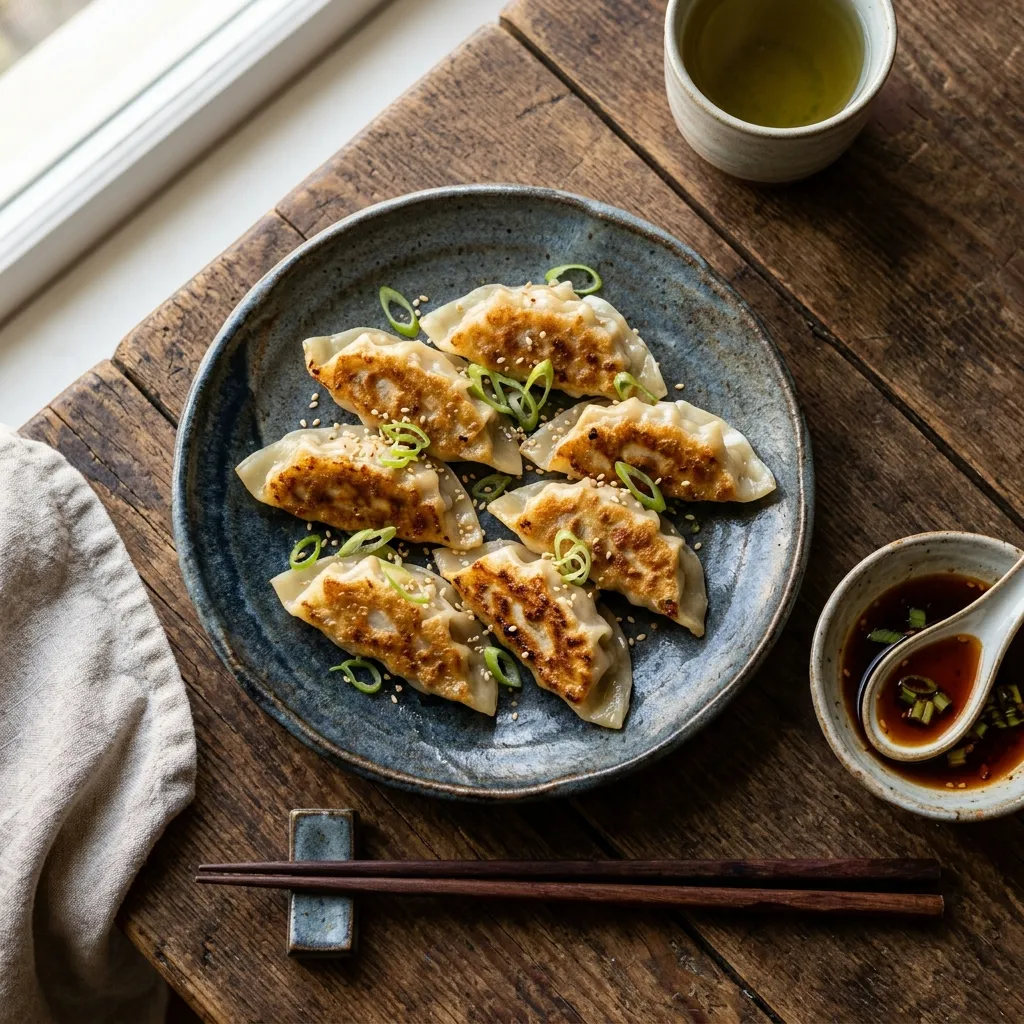
Gyoza are crescent-shaped dumplings filled with seasoned ground pork and cabbage, pan-fried until the bottoms form a crisp golden crust while the tops steam to a tender, translucent finish. The technique — called yaki-gyoza — produces a contrast between crunchy base and delicate wrapper that defines this dish. Japanese gyoza descend from Chinese jiaozi but diverged significantly: Japanese fillings use more garlic and ginger, the wrappers are thinner, and pan-frying is the dominant cooking method rather than boiling or deep-frying. Gyoza became widespread in Japan after World War II, when soldiers returning from Manchuria brought back the dumpling-making tradition. Street vendors and ramen shops adopted the format, and by the 1960s gyoza had become a standard side dish or bar snack across the country. Utsunomiya and Hamamatsu compete annually for the title of Japan's gyoza capital, each city consuming over 3,000 yen per household annually. Ayurvedically, gyoza present a complex profile. The wheat wrapper is heavy and sweet, the pork filling is heating and nourishing, and the aromatic trio of garlic, ginger, and sesame oil stimulates agni powerfully. The pan-frying adds dry heat and crispness. This is a grounding, satisfying food — best in cooler months when the body needs fuel and the digestive fire burns strong.
Strongly pacifies Vata with warmth, oil, and grounding heaviness. Increases Pitta due to heating spices and fried preparation. May aggravate Kapha through heaviness and oil content.
Ingredients
- 300 g Ground pork (not too lean — 20% fat ideal)
- 2 cups Napa cabbage (finely chopped and squeezed dry)
- 3 cloves Garlic (minced)
- 1 tbsp Fresh ginger (grated)
- 3 stalks Scallions (finely sliced)
- 1 tbsp Soy sauce
- 1 tsp Sesame oil
- 1/4 tsp White pepper
- 40 pieces Gyoza wrappers (store-bought round wrappers)
- 2 tbsp Vegetable oil (for pan-frying)
- 1/3 cup Water (for steaming)
- 2 tbsp Rice vinegar (for dipping sauce)
- 1 tsp Chili oil (optional, for dipping sauce)
Instructions
- Salt the chopped napa cabbage with 1/2 teaspoon salt and let it sit for 10 minutes. Squeeze out all excess moisture through a clean kitchen towel — this prevents soggy filling.
- Combine the ground pork, drained cabbage, garlic, ginger, scallions, soy sauce, sesame oil, and white pepper in a bowl. Mix in one direction (clockwise) for 2 minutes until the filling becomes sticky and cohesive. This develops myosin proteins that bind the filling together.
- Place a heaping teaspoon of filling in the center of each gyoza wrapper. Dip your finger in water and moisten the edge of the wrapper's upper half.
- Fold the wrapper in half and create 5-6 pleats along the top edge, pressing each pleat against the flat bottom edge to seal. The finished dumpling should curve into a crescent with a flat bottom that will sit upright in the pan.
- Heat vegetable oil in a large non-stick skillet over medium-high heat. Arrange gyoza flat-side down in tight rows — they can touch. Fry without moving for 2 minutes until the bottoms turn golden brown.
- Pour the water into the pan and immediately cover with a tight-fitting lid. The steam will erupt — this is expected. Steam for 5 minutes until the wrappers turn translucent and the water evaporates.
- Remove the lid and continue cooking for another 1-2 minutes to re-crisp the bottoms. The oil should sizzle audibly as the remaining moisture burns off.
- Mix rice vinegar, a splash of soy sauce, and chili oil for the dipping sauce. Slide the gyoza onto a plate bottom-side up to showcase the golden crust. Serve immediately.
Nutrition
These values are estimates calculated from the ingredient list and may vary based on brands, cooking methods, and serving size. Not a substitute for medical or dietary advice.
How This Recipe Affects Each Dosha
Vata
Gyoza are deeply grounding for Vata. The warm, oily, heavy qualities counter Vata's cold, dry, light nature. The wheat wrapper provides stability, the pork filling offers substantial nourishment, and the garlic-ginger combination warms the core. The combination of textures — crispy bottom, soft top — also satisfies Vata's need for sensory completeness.
Pitta
The garlic, ginger, white pepper, and pan-frying all add heat, making gyoza somewhat aggravating for Pitta types. The pork itself has a heating virya. Pitta individuals can tolerate gyoza in cooler weather but should moderate intake during summer or when experiencing inflammation, acid reflux, or skin irritation.
Kapha
The wheat wrapper, oily cooking method, and heavy pork filling make gyoza challenging for Kapha. They contribute qualities Kapha already has in excess — heaviness, oiliness, and density. However, the pungent spices (garlic, ginger, pepper) do stimulate Kapha's sluggish digestion, partially offsetting the heaviness.
The garlic, ginger, and white pepper strongly stimulate agni. However, the heavy wheat wrapper and dense pork filling require robust digestive fire to process fully. Best eaten when agni is at its peak — around midday.
Nourishes: Rasa (plasma), Mamsa (muscle), Meda (fat)
Adjustments by Constitution
For Vata Types
Serve with warm miso soup to add liquid warmth. Include extra ginger in the filling. A dipping sauce with grated daikon and ponzu adds digestive support. Eat at lunch when agni is strongest — the heavy filling needs robust digestive fire to process.
For Pitta Types
Replace pork with shrimp or chicken breast for a lighter, less heating filling. Reduce garlic by half and omit white pepper. Use cucumber and shiso leaf in the dipping sauce for cooling effect. Steam the gyoza entirely rather than pan-frying to eliminate the dry heat.
For Kapha Types
Replace pork with turkey or chicken and increase the cabbage-to-meat ratio. Add extra ginger and a pinch of black pepper to the filling. Steam rather than pan-fry, and serve with a pungent ponzu-ginger dipping sauce. Eat a smaller portion — 6-8 pieces rather than 10-12.
Seasonal Guidance
Gyoza are ideal autumn and winter food — the heavy, warm, oily qualities counter the cold, dry, light qualities of Vata season. In spring, the heaviness can contribute to Kapha congestion. In summer, the heating spices and fried preparation add unwanted Pitta heat.
Best time of day: Lunch or early dinner when digestive fire is strong enough to handle the heavy filling and fried wrapper
Cultural Context
Gyoza occupy a unique space in Japanese food culture — they are simultaneously everyday home cooking and izakaya (bar) food. Most Japanese households have a family gyoza recipe, and making gyoza together is a common weekend activity. In Utsunomiya, the self-proclaimed gyoza capital of Japan, over 200 specialty restaurants serve nothing but gyoza in dozens of variations. The dish arrived from China in the 1940s but was quickly adapted to Japanese tastes: thinner wrappers, more garlic, and the signature pan-fry-then-steam technique that Chinese cooking uses less frequently.
Deeper Context
Origins
Gyoza was introduced to Japan by soldiers returning from the Japanese occupation of Manchuria (1931-1945), bringing Chinese jiaozi technique to Japanese domestic cookery. The Japanese adaptation developed thinner wrappers, heavier garlic content, and more aggressive pan-frying than the Chinese original. Post-WWII reconstruction cemented gyoza as Japanese comfort food, and Utsunomiya city in Tochigi prefecture established itself as the gyoza capital through concentrated restaurant culture and dedicated gyoza research institutes. The dish is less than a century old in Japanese tradition, but deeply integrated now.
Food as Medicine
Pork-cabbage-ginger-garlic combination provides substantial protein, vitamin K, vitamin C, and allium compounds. The cabbage contributes cruciferous glucosinolates. The ginger adds anti-inflammatory and digestive-supporting gingerols. A classical sustaining-working-meal with accidental therapeutic accents.
Ritual & Seasonal Role
Year-round. Not religiously ceremonial but deeply integrated into Japanese family-meal tradition. Sunday-family gyoza-making is a cultural pattern in many Japanese households. Featured at izakaya, ramen shops, and specialty gyoza restaurants globally.
Classical Pairings & Cautions
Rice, miso soup, beer or sake. Soy-sauce-vinegar-chili-oil dipping sauce. Cautions: gluten intolerance precludes wheat wrappers; soy allergies (soy sauce dipping); religious pork restrictions; garlic and FODMAP sensitivity; sodium load from soy sauce substantial.
Cross-Tradition View
How other medical and food-wisdom traditions read this dish. Each tradition names the same physiological reality in its own language — the agreements across them are where universal principles live.
Traditional Chinese Medicine
Pork is Yin-building and cool-sweet; Napa cabbage is cool-sweet and moistens; garlic and ginger are warm-pungent and disperse cold; sesame oil is warm-moistening. A Yin-building Qi-moving preparation — TCM physicians would class this as a classical Qi-and-Yin tonic with dispersing correction, similar to its Chinese jiaozi ancestor.
Greek Humoral
Hot-wet with balanced cold-wet cabbage correction. Galenic-suitable dumpling preparation — the pork-cabbage-aromatic architecture matches classical convalescent food prescriptions.
Ayurveda
Heating virya, pungent vipaka. Pacifies Vata through warmth and unctuousness. Kapha mildly aggravated through pork fat. Pitta-neutral through the balanced ingredient profile. Pork is classically heavy and tamasic.
Chinese Origin (Manchurian)
Gyoza is a Japanese adaptation of Chinese jiaozi — specifically brought to Japan by soldiers returning from the Japanese occupation of Manchuria in the 1930s-40s. The Japanese version differs from Chinese jiaozi through thinner wrappers, more aggressive pan-frying (yakigyoza), and more garlic content. Post-WWII Japanese reconstruction era firmly established gyoza as Japanese comfort food, despite its recent Chinese origin. Utsunomiya city in Tochigi prefecture markets itself as the gyoza capital of Japan.
Chef's Notes
The key to crispy gyoza is a hot pan and patience — do not move the dumplings once placed. If you want a connected crispy skirt (hanetsuki gyoza), mix 1 teaspoon of flour into the steaming water before adding it. Uncooked gyoza freeze beautifully on a parchment-lined tray; once frozen solid, transfer to a bag. Cook from frozen by adding 2 extra minutes of steaming time. Leftover filling makes excellent rice bowl topping when stir-fried loose.
Frequently Asked Questions
Is Gyoza good for my dosha?
Strongly pacifies Vata with warmth, oil, and grounding heaviness. Increases Pitta due to heating spices and fried preparation. May aggravate Kapha through heaviness and oil content. Gyoza are deeply grounding for Vata. The garlic, ginger, white pepper, and pan-frying all add heat, making gyoza somewhat aggravating for Pitta types. The wheat wrapper, oily cooking method, and heavy pork filling make gyoza challenging for Kapha.
When is the best time to eat Gyoza?
Lunch or early dinner when digestive fire is strong enough to handle the heavy filling and fried wrapper Gyoza are ideal autumn and winter food — the heavy, warm, oily qualities counter the cold, dry, light qualities of Vata season. In spring, the heaviness can contribute to Kapha congestion. In summer,
How can I adjust Gyoza for my constitution?
For Vata types: Serve with warm miso soup to add liquid warmth. Include extra ginger in the filling. A dipping sauce with grated daikon and ponzu adds digestive suppo For Pitta types: Replace pork with shrimp or chicken breast for a lighter, less heating filling. Reduce garlic by half and omit white pepper. Use cucumber and shiso le
What are the Ayurvedic properties of Gyoza?
Gyoza has Sweet, Pungent, Salty taste (rasa), Heating energy (virya), and Pungent post-digestive effect (vipaka). Its qualities (gunas) are Heavy, Oily, Warm. It nourishes Rasa (plasma), Mamsa (muscle), Meda (fat). The garlic, ginger, and white pepper strongly stimulate agni. However, the heavy wheat wrapper and dense pork filling require robust digestive fire to process fully. Best eaten when agni is at its peak — around midday.