Guacamole
Mexican Recipe
Overview
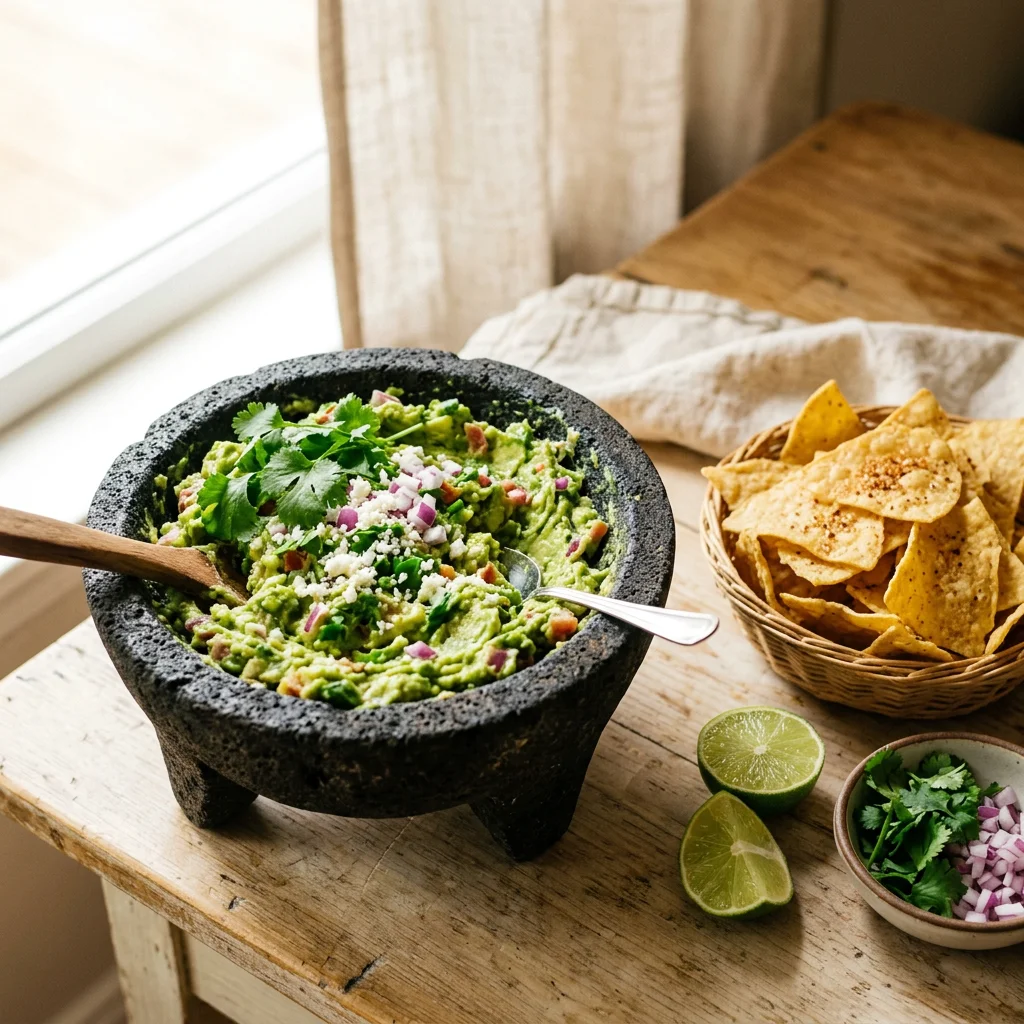
Guacamole is perhaps the most famous Mexican preparation in the world, and for good reason — ripe avocados mashed with lime, salt, cilantro, and chile create something that is simultaneously simple and extraordinary. The word comes from the Nahuatl ahuacamolli, meaning "avocado sauce," and the dish has been prepared in Mesoamerica for over 500 years. What began as a staple of Aztec cuisine has become a global phenomenon, though the authentic version bears little resemblance to the over-complicated, ingredient-heavy versions found in many restaurants. True Mexican guacamole is about the avocado. Everything else exists to enhance it, not compete with it. The lime provides acid contrast and prevents browning. The salt draws out the avocado's natural richness. The serrano chile adds a green, sharp heat. Cilantro provides herbal brightness. And raw white onion contributes a pungent crunch that plays against the buttery smoothness. Some regions add tomato; others consider it heresy. The key is that the avocado remains the star, never buried under additions. Ayurvedically, guacamole is a remarkable food. Avocado is among the most nourishing fruits — sweet, heavy, oily, and cooling, with a sweet post-digestive effect that builds all seven dhatus. The lime and chile balance its heaviness by stimulating agni, while the cilantro adds a cooling counterpoint to the chile. The overall preparation is deeply satisfying in a way that signals genuine tissue nourishment, not just caloric density.
Excellent for pacifying Vata and Pitta. Can increase Kapha due to heaviness and oiliness.
Ingredients
- 3 large Ripe avocados (should yield to gentle pressure)
- 2 whole Lime (juiced)
- 1/4 cup White onion (finely diced)
- 1/4 cup Fresh cilantro (finely chopped)
- 1 small Serrano chile (finely minced, seeds removed for less heat)
- 1 tsp Sea salt
- 1 small Roma tomato (optional, seeded and diced)
Instructions
- Cut the avocados in half, remove the pits, and scoop the flesh into a wide bowl.
- Add the lime juice and salt immediately. Using a fork, mash the avocado to your preferred texture — some like it smooth, others chunky with visible pieces.
- Fold in the diced onion, minced serrano, and cilantro. Add the tomato if using.
- Taste and adjust salt, lime, and chile to your preference. The guacamole should be bright with lime, savory with salt, and gently warm from the chile.
- Serve immediately with warm tortilla chips or alongside tacos, tostadas, or any Mexican meal.
- Press plastic wrap directly onto the surface if storing briefly — contact with air causes browning, though fresh is always best.
Nutrition
These values are estimates calculated from the ingredient list and may vary based on brands, cooking methods, and serving size. Not a substitute for medical or dietary advice.
How This Recipe Affects Each Dosha
Vata
Outstanding for Vata. Avocado is one of the best foods for Vata constitution — heavy, oily, smooth, and nourishing, with a sweet taste that directly counters Vata's light, dry, rough qualities. The lime and chile add enough digestive stimulation to prevent stagnation. This is one of the most Vata-friendly preparations in any cuisine.
Pitta
Very good for Pitta. Avocado is cooling with a sweet post-digestive effect that soothes Pitta's heat. The lime adds pleasant sour taste, and the cilantro is one of the most Pitta-cooling herbs. The only concern is the chile, which should be reduced for very sensitive Pitta types.
Kapha
The heavy, oily, cool qualities of avocado are precisely what Kapha should moderate. While nourishing, guacamole can promote sluggishness, weight gain, and congestion in Kapha-dominant individuals. Small amounts as a condiment are fine; large bowls are not.
Mild effect on agni. The heavy, cool quality of avocado can slightly dampen digestive fire, which is why the lime and chile are essential — they provide the digestive stimulation needed to process the rich, oily avocado. Without acid and spice, avocado can sit heavily. The combination in guacamole is self-balancing.
Nourishes: Rasa (plasma), Mamsa (muscle), Meda (fat), Majja (nerve), Shukra (reproductive)
Adjustments by Constitution
For Vata Types
This preparation is already ideal for Vata. For extra grounding, serve with warm corn tortilla chips rather than cold ones. Add a pinch of ground cumin for additional digestive warmth.
For Pitta Types
Omit or reduce the serrano chile. Increase the cilantro and lime. Add a few diced cucumber pieces for extra cooling. This makes a particularly Pitta-soothing version for hot summer days.
For Kapha Types
Use only 1.5 avocados instead of 3. Increase the serrano chile and add a minced clove of garlic. Include extra lime juice and raw onion. Add diced radish for pungent crunch. Serve with raw vegetable sticks instead of chips.
Seasonal Guidance
Guacamole is best in spring and summer when its cooling, heavy quality balances the heat. In Mexico, the best avocados are available from spring through autumn, aligning naturally with the season when cooling foods are most beneficial. In autumn and winter, the cold quality can aggravate Vata — if serving in cool weather, add extra lime and chile to compensate, and pair with warming dishes like soups or grilled meats rather than eating it cold on its own. The cooling nature makes it a natural companion to spicy, heating main courses in any season.
Best time of day: Midday or early afternoon as part of the main meal
Cultural Context
Guacamole is one of the oldest preparations in the Americas, dating to the Aztec period and likely earlier. The Aztecs considered avocados a sacred food associated with fertility and strength. Spanish conquistadors documented the preparation in the 16th century, noting that the Aztecs mashed avocados with tomatoes and chiles. The dish remained regional for centuries before its global spread in the late 20th century, driven largely by Mexican immigration to the United States and the Super Bowl chip-and-dip tradition. In Mexico, guacamole is not an appetizer but an accompaniment — it appears alongside tacos, enchiladas, grilled meats, and eggs, serving as a cooling, enriching counterpart to spicier and drier preparations.
Deeper Context
Origins
Avocado (Persea americana) is native to central Mexico and Guatemala, domesticated over 7,000 years ago. Guacamole's name derives directly from Nahuatl 'ahuaca-mulli' (avocado sauce). The Spanish Codex Florentino (Bernardino de Sahagún, 1577) documents Aztec use of the fruit and the sauce preparation. Modern guacamole with tomato, cilantro, lime, and chile stabilized in 20th-century tourist-era Mexican cuisine, but the avocado-salsa base is continuous from pre-Columbian Nahua practice.
Food as Medicine
Avocado provides monounsaturated fat (oleic acid), fiber, potassium, folate, and carotenoids. The avocado-and-lime combination enhances iron absorption from accompanying foods through the vitamin-C-plus-fat synergy. Cilantro has preliminary research support for heavy-metal chelation. A therapeutically-dense traditional preparation with modern nutritional validation.
Ritual & Seasonal Role
Year-round Mexican food. Featured at every Mexican celebration from Cinco de Mayo to Day of the Dead to birthdays. The Super Bowl Sunday has become one of the largest single-day guacamole consumption events in the US, with approximately 150 million pounds of avocados consumed. Cultural-identity weight significant in Mexican and Mexican-American food tradition.
Classical Pairings & Cautions
Tortilla chips, fresh tortillas, tacos, tostadas. Margaritas or Mexican beer. Cautions: avocado allergies (severe and rising in prevalence — related to latex allergy); high potassium contraindicates advanced renal disease; capsaicin aggravation from serrano; raw onion FODMAP issues; lactose-free, gluten-free, vegan-friendly by default.
Cross-Tradition View
How other medical and food-wisdom traditions read this dish. Each tradition names the same physiological reality in its own language — the agreements across them are where universal principles live.
Traditional Chinese Medicine
Avocado is cool-sweet and Yin-building, moistening Liver Blood; lime is cool-sour and moves Liver Qi; cilantro is cool-pungent and clears Heat; serrano chile is hot-pungent and disperses cold; onion is warm-pungent. A Yin-building Liver-Qi-moving preparation with dispersing balance — TCM physicians would class this as appropriate Liver-blood-deficient dry-constitution food.
Greek Humoral
Cool-wet avocado with hot-dry chile-and-allium correction. Classical Galenic-balanced summer preparation — the combination of fatty moistening fruit with pungent heat matches Hippocratic summer-dietetic prescriptions.
Ayurveda
Cooling virya, sweet vipaka. Pacifies Pitta substantially through the avocado's cool-unctuous quality. Mildly Kapha-aggravating through fat content. Vata mixed — the unctuousness helps, the chile and raw ingredients can aggravate. A summer Pitta-pacifying preparation.
Aztec Sacred Food
Avocado (ahuacatl in Nahuatl, meaning 'testicle' for the fruit's shape and perceived fertility association) was sacred Aztec food associated with the god Quetzalcoatl. Nahua ritual use included fertility, postpartum, and ceremonial contexts. Traditional Nahua preparations included avocado-leaf teas for menstrual support. Modern guacamole stabilized in 20th-century tourist-era Mexican cuisine, but the avocado-salsa underlying architecture (ahuaca-mulli, 'avocado sauce' in Nahuatl) is directly Aztec.
Chef's Notes
The avocado must be perfectly ripe — underripe gives a waxy, bland result, while overripe turns brown and tastes oxidized. Press gently near the stem; it should yield with slight pressure. Mexican cooks traditionally use a molcajete (stone mortar) to make guacamole, which creates a superior texture by crushing rather than mashing, releasing more oils from the avocado. If you have one, grind the salt, chile, and onion first into a paste, then add the avocado. Do not add sour cream, mayonnaise, garlic powder, or cumin — these are not traditional and mask the avocado. Guacamole should be made fresh and eaten within an hour. The pit-in-the-bowl trick does not prevent browning; only lime juice and surface contact with plastic wrap help.
Frequently Asked Questions
Is Guacamole good for my dosha?
Excellent for pacifying Vata and Pitta. Can increase Kapha due to heaviness and oiliness. Outstanding for Vata. Very good for Pitta. The heavy, oily, cool qualities of avocado are precisely what Kapha should moderate.
When is the best time to eat Guacamole?
Midday or early afternoon as part of the main meal Guacamole is best in spring and summer when its cooling, heavy quality balances the heat. In Mexico, the best avocados are available from spring through autumn, aligning naturally with the season when
How can I adjust Guacamole for my constitution?
For Vata types: This preparation is already ideal for Vata. For extra grounding, serve with warm corn tortilla chips rather than cold ones. Add a pinch of ground cumi For Pitta types: Omit or reduce the serrano chile. Increase the cilantro and lime. Add a few diced cucumber pieces for extra cooling. This makes a particularly Pitta-s
What are the Ayurvedic properties of Guacamole?
Guacamole has Sweet, Sour, Pungent, Salty taste (rasa), Cooling energy (virya), and Sweet post-digestive effect (vipaka). Its qualities (gunas) are Heavy, Cool, Oily, Smooth. It nourishes Rasa (plasma), Mamsa (muscle), Meda (fat), Majja (nerve), Shukra (reproductive). Mild effect on agni. The heavy, cool quality of avocado can slightly dampen digestive fire, which is why the lime and chile are essential — they provide the digestive stimulation needed to process the rich, oily avocado. Without acid and spice, avocado can sit heavily. The combination in guacamole is self-balancing.