Hobak Juk (Sweet Pumpkin Porridge)
Korean Recipe
Overview
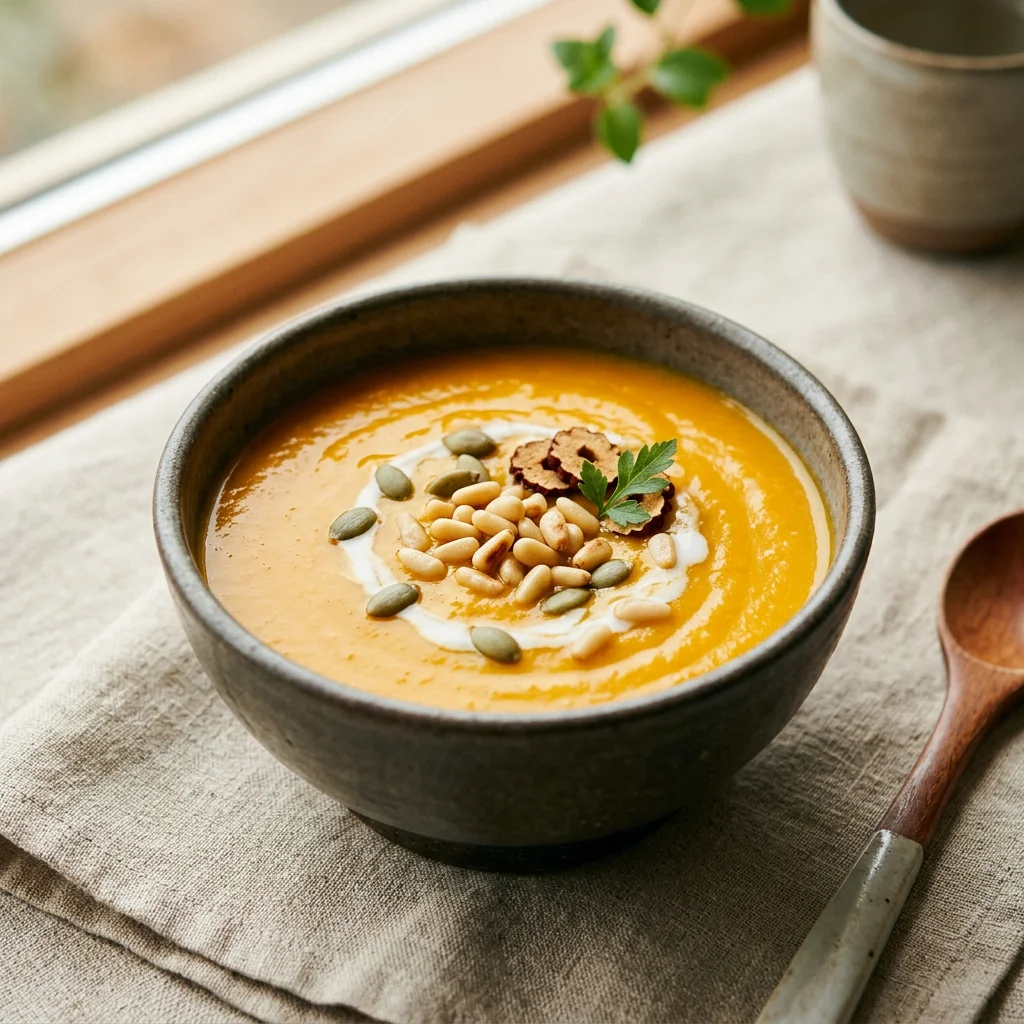
Hobak juk is Korea's golden comfort food — a silky, sweet porridge made by simmering pumpkin or kabocha squash until it melts into a thick, velvety base studded with small chewy rice balls (saealsim). This porridge is considered one of Korea's finest healing foods, traditionally prepared for the elderly, the ill, and anyone whose digestion needs gentle support. Its sweet flavor, smooth texture, and warm orange color evoke a deep sense of nurture that transcends mere nutrition. In Ayurvedic terms, hobak juk is a near-perfect Vata-pacifying food. Pumpkin carries the sweet rasa with cooling virya, but when cooked into porridge with rice flour and a touch of salt, the preparation transforms it into a warming, grounding, and deeply nourishing meal. The sweet taste dominates — building rasa dhatu (plasma) and providing immediate comfort to a nervous system under stress. The natural sugars in kabocha are complex enough to provide sustained energy without the spike-and-crash pattern of refined sweeteners. The small rice flour dumplings floating in the porridge add a playful textural element while serving a medicinal purpose: they slow the absorption of the pumpkin's natural sugars and add the grounding heaviness that Vata types need. This is comfort food with intelligence — designed by generations of Korean grandmothers who understood instinctively what Ayurveda teaches systematically.
Strongly pacifies Vata. Mildly pacifies Pitta. May increase Kapha due to sweet, heavy, moist qualities.
Ingredients
- 800 g Kabocha squash or sweet pumpkin (peeled, seeded, cubed)
- 4 cups Water
- 1/2 cup Sweet rice flour (chapssal-garu) (for rice dumplings)
- 3 tbsp Hot water (for dumplings)
- 2 tbsp Rice flour (regular, for thickening)
- 1/2 tsp Sea salt
- 1 tbsp Raw sugar or honey (optional, adjust to taste)
- 2 tbsp Pine nuts (for garnish)
Instructions
- Place cubed pumpkin in a large pot with 4 cups of water. Bring to a boil, then reduce heat and simmer until the pumpkin is completely soft and falling apart, about 20 minutes.
- While the pumpkin cooks, make the rice dumplings (saealsim): mix sweet rice flour with hot water, 1 tablespoon at a time, kneading until a smooth, pliable dough forms. Roll into tiny balls about 1 cm in diameter.
- Once the pumpkin is soft, use a potato masher or immersion blender to puree it directly in the pot until completely smooth. For an extra-silky texture, press through a fine mesh strainer.
- Return the pureed porridge to medium heat. Mix 2 tablespoons of regular rice flour with 3 tablespoons of cold water to create a slurry. Stir this into the porridge to thicken.
- Drop the rice dumplings into the simmering porridge one by one. Cook until they float to the surface, about 3 minutes. They will turn translucent when done.
- Season with salt and optional sweetener. The porridge should taste primarily of pumpkin with a gentle sweetness — it should not taste sugary.
- Ladle into bowls and garnish with pine nuts. Serve warm.
Nutrition
These values are estimates calculated from the ingredient list and may vary based on brands, cooking methods, and serving size. Not a substitute for medical or dietary advice.
How This Recipe Affects Each Dosha
Vata
This is an exceptional Vata-pacifying food. Every quality opposes Vata: warm counters cold, heavy counters light, moist counters dry, smooth counters rough. The dominant sweet taste builds tissue and calms the nervous system. The simple preparation makes it easy to digest even when Vata has compromised agni. One of the best recovery foods for Vata depletion.
Pitta
The sweet taste and mildly cooling nature of pumpkin soothe Pitta without aggravating it. This is a gentle, non-inflammatory food that provides nourishment without heat. The absence of pungent or sour elements makes it safe during Pitta flare-ups. However, the heaviness may not be ideal for Pitta types with already slow digestion.
Kapha
The sweet, heavy, moist, and smooth qualities are everything Kapha needs to avoid. This porridge will increase Kapha if consumed regularly or in large quantities. It builds tissue — beneficial when Kapha types are depleted, but problematic during periods of congestion, sluggishness, or weight gain.
Gently supportive of weak or compromised agni. The smooth, pureed texture bypasses much of the mechanical work of digestion, allowing agni to focus on absorption. The natural sweetness provides readily available energy without requiring intense digestive effort. Best suited for convalescence, morning consumption, or periods when digestion is delicate. Not the best choice for building strong agni — it accommodates weakness rather than challenging it.
Nourishes: Rasa (plasma), Mamsa (muscle), Meda (fat), Majja (nerve)
Adjustments by Constitution
For Vata Types
This porridge needs no adjustment for Vata — it is already ideal. For extra grounding, stir in a teaspoon of ghee at the end. A small pinch of cinnamon and fresh ginger powder warms the preparation further and supports Vata digestion.
For Pitta Types
Serve at a warm rather than hot temperature. Replace honey with a small amount of raw sugar if sweetening. Add a pinch of cardamom for its cooling, digestive quality. The recipe as written is already quite Pitta-friendly.
For Kapha Types
Halve the rice dumplings or omit them entirely. Add a 1-inch piece of fresh ginger (sliced) to the pot while simmering the pumpkin, removing before pureeing. Stir in 1/4 teaspoon of dried ginger powder and a pinch of black pepper at the end. Reduce serving size and eat as a small breakfast rather than a main meal.
Seasonal Guidance
Hobak juk is at its peak in autumn and early winter, when fresh pumpkins and kabocha squash are in season and the body begins craving warm, sweet, grounding foods. This is precisely when Vata begins to accumulate, making this porridge a natural seasonal remedy. In late winter, it continues to serve as a nourishing breakfast that builds strength depleted by cold. Avoid making this a staple in spring, when Kapha needs lighter, more stimulating foods, or in the heat of summer unless you are recovering from illness.
Best time of day: Morning breakfast or mid-afternoon snack, when its sweet, heavy qualities support rather than suppress digestion
Cultural Context
Hobak juk belongs to Korea's rich porridge (juk) tradition, which includes over thirty varieties ranging from savory to sweet, medicinal to celebratory. Korean porridge culture predates written history and shares deep parallels with the congee traditions of China and the kanji traditions of Ayurvedic medicine — all three independently developed the same insight that slow-cooked grain porridges are among the most healing foods available. Hobak juk specifically is associated with harvest gratitude, grandmother's kitchen, and the Korean concept of sonmat — the taste that comes from a cook's loving hands. It is served on the first day of moving into a new home as a blessing, its golden color symbolizing prosperity and warmth.
Deeper Context
Origins
Hobak-juk descends from ancient Korean peasant-and-temple cookery. The squash-and-rice combination is pre-Columbian in Korea (Korean squash varieties are old Asian cultivars, not the New World Cucurbita moschata that dominates modern kabocha) though some modern recipes do use imported kabocha. Korean Buddhist temple food (sachal eumsik) preserved the preparation through centuries as a fasting-compatible, nourishing, and gentle dish appropriate for monks, elderly practitioners, and convalescent patients.
Food as Medicine
Kabocha squash provides substantial beta-carotene, vitamin A, vitamin C, potassium, and fiber. Pine nuts (jat in Korean) contribute healthy fats, magnesium, and zinc. Sweet rice flour adds easily-digestible carbohydrate. The dish is classical Korean postpartum food for the 21-day samchilil confinement period, recognized as gentle, warming, and nourishing for recovering women.
Ritual & Seasonal Role
Autumn harvest dish (October-November squash peak). Winter consumption through stored squash. Postpartum staple across Korean traditional care. Korean Buddhist temple breakfast. Dongji winter solstice features red-bean porridge primarily, but kabocha porridge appears at the same seasonal observances.
Classical Pairings & Cautions
Served alone as complete convalescent meal, or with kimchi and nori alongside. Barley tea or ginseng tea. Cautions: pine nut allergies (tree-nut family); rice allergies (rare); diabetic monitoring for the starch load; Kapha aggravation in winter weight-gain phases; typically gluten-free when sweet rice flour is used exclusively.
Cross-Tradition View
How other medical and food-wisdom traditions read this dish. Each tradition names the same physiological reality in its own language — the agreements across them are where universal principles live.
Traditional Chinese Medicine
Kabocha squash is sweet-warm and Spleen-Qi-tonifying substantially — one of TCM's most prized Spleen-supporting vegetables; sweet rice flour is Spleen-Qi-tonifying and builds Yin; pine nuts build Yin and Kidney essence. A concentrated Spleen-Qi-and-Kidney-essence tonic — TCM physicians would class this as ideal convalescent food for post-illness Spleen deficiency.
Greek Humoral
Hot-wet sanguine-melancholic balance. A Galenic convalescent porridge — the classical Greek and Byzantine use of squash-and-grain preparations for the sick and the elderly matches hobak-juk's traditional Korean role precisely.
Ayurveda
Warming virya, sweet vipaka. Pacifies Vata substantially through unctuousness and warmth. Pacifies Pitta through the sweet-cooling pumpkin. Kapha mildly aggravated through the sweet-heavy combination. A classical Vata-and-Pitta-pacifying preparation.
Korean Buddhist Temple
Hobak-juk is a classical Korean temple cuisine (sachal eumsik) dish — Chogye-order Buddhist and Won-Buddhist temples serve this as breakfast porridge and as food for elderly lay patrons. Traditional Korean postpartum food (sanhujori) for the first 21 days of confinement (samchilil). The winter solstice (dongji) is traditionally celebrated with red-bean porridge (patjuk), but kabocha porridge features prominently in autumn-harvest Korean traditions.
Chef's Notes
Kabocha squash (danhobak) gives the best results — it is denser, sweeter, and more flavorful than Western pumpkin varieties. If using butternut squash as a substitute, reduce the water slightly as it has higher moisture content. The rice dumplings should be small — about the size of a marble — so they cook through quickly and provide gentle textural pops rather than heavy dough chunks. Korean tradition holds that hobak juk should be thick enough to coat the back of a spoon but thin enough to pour. Adjust with water as needed. This porridge thickens considerably as it cools, so serve it slightly thinner than your target consistency.
Frequently Asked Questions
Is Hobak Juk (Sweet Pumpkin Porridge) good for my dosha?
Strongly pacifies Vata. Mildly pacifies Pitta. May increase Kapha due to sweet, heavy, moist qualities. This is an exceptional Vata-pacifying food. The sweet taste and mildly cooling nature of pumpkin soothe Pitta without aggravating it. The sweet, heavy, moist, and smooth qualities are everything Kapha needs to avoid.
When is the best time to eat Hobak Juk (Sweet Pumpkin Porridge)?
Morning breakfast or mid-afternoon snack, when its sweet, heavy qualities support rather than suppress digestion Hobak juk is at its peak in autumn and early winter, when fresh pumpkins and kabocha squash are in season and the body begins craving warm, sweet, grounding foods. This is precisely when Vata begins t
How can I adjust Hobak Juk (Sweet Pumpkin Porridge) for my constitution?
For Vata types: This porridge needs no adjustment for Vata — it is already ideal. For extra grounding, stir in a teaspoon of ghee at the end. A small pinch of cinnamo For Pitta types: Serve at a warm rather than hot temperature. Replace honey with a small amount of raw sugar if sweetening. Add a pinch of cardamom for its cooling, di
What are the Ayurvedic properties of Hobak Juk (Sweet Pumpkin Porridge)?
Hobak Juk (Sweet Pumpkin Porridge) has Sweet, Slightly Salty taste (rasa), Warming energy (virya), and Sweet post-digestive effect (vipaka). Its qualities (gunas) are Heavy, Warm, Moist, Smooth, Oily. It nourishes Rasa (plasma), Mamsa (muscle), Meda (fat), Majja (nerve). Gently supportive of weak or compromised agni. The smooth, pureed texture bypasses much of the mechanical work of digestion, allowing agni to focus on absorption. The natural sweetness provides readily available energy without requiring intense digestive effort. Best suited for convalescence, morning consumption, or periods when digestion is delicate. Not the best choice for building strong agni — it accommodates weakness rather than challenging it.