Enchiladas Rojas
Mexican Recipe
Overview
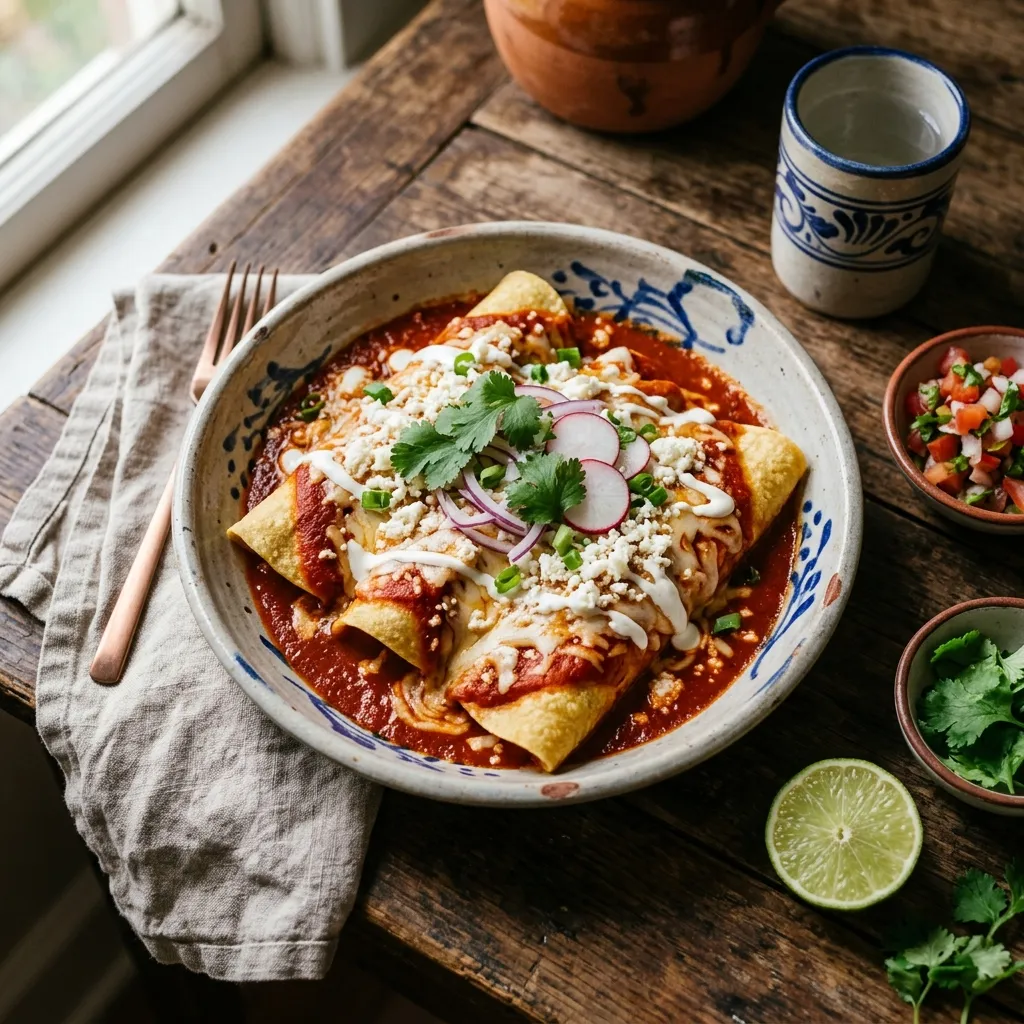
Enchiladas predate the Spanish conquest — the Aztecs wrapped tortillas around small fish and other fillings, bathing them in chili sauce. The word "enchilada" derives from the Nahuatl "chilli" and the Spanish "enchilar," meaning to season with chili. The red version (rojas) uses a sauce built from dried guajillo and ancho chilies, which are toasted, rehydrated, and blended into a smooth, brick-red puree with garlic and cumin. This sauce is the soul of the dish; the filling is secondary. The traditional method involves briefly frying corn tortillas in oil to make them pliable, dipping them through the warm chili sauce, filling them with shredded chicken or cheese, rolling them tightly, and arranging them seam-side down in a baking dish. More sauce is poured over the top, followed by crumbled queso fresco, sliced onion, and Mexican crema. The assembled enchiladas are baked just long enough to heat through and meld the flavors. Ayurvedically, enchiladas rojas deliver intense pungent rasa from the dried chilies, balanced by the sweet, grounding quality of corn tortillas and the cooling effect of crema and cheese. The dish is heating overall, with a complex spice profile that stimulates digestive fire and promotes circulation.
Stimulates agni and circulation. Reduces Kapha through pungent heat. Increases Pitta due to chilies and sour elements. Moderately calms Vata through warmth and oil, though the drying quality of corn can be an issue.
Ingredients
- 12 medium Corn tortillas
- 6 whole Dried guajillo chilies (stemmed and seeded)
- 2 whole Dried ancho chili (stemmed and seeded)
- 3 cloves Garlic
- 1 tsp Cumin
- 1/2 tsp Dried oregano (Mexican oregano)
- 1 cup Chicken broth
- 1 tbsp White vinegar
- 1 tsp Salt
- 500 g Cooked chicken (shredded, from poached or roasted chicken)
- 3 tbsp Vegetable oil (for frying tortillas)
- 120 g Queso fresco (crumbled)
- 4 tbsp Mexican crema or sour cream
- 1/2 medium White onion (thinly sliced into rings)
- 1/4 cup Fresh cilantro (chopped)
Instructions
- Toast the guajillo and ancho chilies in a dry skillet over medium heat for 30-45 seconds per side until they puff slightly and become fragrant. Be careful not to burn them — burned chilies produce bitter sauce.
- Place the toasted chilies in a bowl, cover with boiling water, and soak for 15 minutes until softened. Drain, reserving 1/2 cup of the soaking liquid.
- Transfer the softened chilies to a blender with the garlic, cumin, oregano, chicken broth, vinegar, salt, and reserved soaking liquid. Blend until completely smooth. Strain through a fine-mesh sieve to remove any remaining skin or seeds, pressing with a spoon to extract all the liquid.
- Pour the sauce into a saucepan and simmer over medium heat for 10 minutes, stirring occasionally, until it thickens slightly and the raw garlic flavor mellows. Taste and adjust salt.
- Preheat the oven to 375F / 190C. Heat the vegetable oil in a small skillet over medium heat. Briefly fry each corn tortilla for 5-10 seconds per side — just long enough to make it pliable, not crispy. Drain on paper towels.
- Dip each fried tortilla through the warm chili sauce to coat both sides. Place a line of shredded chicken down the center, roll tightly, and place seam-side down in a lightly greased baking dish. Repeat until all tortillas are filled.
- Pour the remaining sauce evenly over the rolled enchiladas, making sure the edges and ends are covered to prevent drying.
- Bake for 15-18 minutes until the sauce is bubbling and the enchiladas are heated through. Top with crumbled queso fresco, drizzles of crema, sliced onion rings, and fresh cilantro. Serve immediately.
Nutrition
These values are estimates calculated from the ingredient list and may vary based on brands, cooking methods, and serving size. Not a substitute for medical or dietary advice.
How This Recipe Affects Each Dosha
Vata
The warm, oily qualities of the fried tortillas and the rich sauce provide some Vata calming. However, corn is lighter and drier than wheat, and the pungent chilies can be overstimulating. The chicken filling adds needed heaviness and protein. Crema and cheese provide oleation. Overall a mixed effect — moderately balancing with adjustments.
Pitta
Dried guajillo and ancho chilies are moderately hot, and the cumulative effect of chili sauce, cumin, and garlic creates substantial Pitta provocation. The cooling crema and queso fresco offset some heat, but this remains a challenging dish for Pitta constitutions during warm months or inflammatory conditions.
Kapha
The pungent chili sauce is excellent for Kapha — it stimulates digestion, moves stagnation, and generates internal heat. Corn tortillas are lighter than wheat. The shredded chicken is leaner than red meat. Kapha types should go easy on the crema and cheese but can enjoy the rest freely.
Strongly stimulates agni through the dried chili sauce, cumin, and garlic. The combination of multiple pungent ingredients creates a cumulative digestive fire-kindling effect that promotes absorption and reduces ama.
Nourishes: Rasa (plasma), Rakta (blood), Mamsa (muscle)
Adjustments by Constitution
For Vata Types
Use flour tortillas instead of corn for their softer, more lubricating quality. Add extra crema and queso. Reduce the chili quantity in the sauce by a third. Include avocado slices on top for additional grounding oleation. Mix shredded sweet potato into the chicken filling.
For Pitta Types
Replace the chili sauce with a tomatillo-based salsa verde, which is milder and less heating. Use shredded zucchini and white beans as the filling instead of chicken. Top generously with cooling crema and fresh cilantro. Omit cumin and use coriander seeds instead.
For Kapha Types
Skip the crema and use a minimal amount of cheese. Add black beans and wilted greens to the filling for extra fiber. Make the sauce spicier with an arbol chili or chipotle for deeper pungent heat. Top with raw radish slices and shredded cabbage for their cutting, drying qualities.
Seasonal Guidance
Best suited to cooler months when the heating quality of the chili sauce warms the body from within. The heavy, spiced nature matches autumn and winter's need for warming nourishment. In spring, the dish is still appropriate if portions are moderate. Summer calls for a lighter preparation — switch to enchiladas verdes with a tomatillo sauce.
Best time of day: Dinner, when the satisfying warmth of the dish helps the body settle. Also appropriate for a hearty lunch.
Cultural Context
Enchiladas represent an unbroken culinary line from pre-Columbian Mexico to the present. Friar Bernardino de Sahagun documented Aztec enchilada-like preparations in the 16th-century Florentine Codex. Each Mexican state has its own enchilada tradition: Oaxaca has enmoladas (mole sauce), Yucatan has papadzules (pumpkin seed sauce), and Michoacan has enchiladas placeras served flat with vegetables. The rolled, baked enchilada commonly known outside Mexico is primarily a northern Mexican and Tex-Mex convention.
Deeper Context
Origins
The corn-tortilla-and-chili-sauce architecture is ancient Mesoamerican, documented continuously for millennia. The specific enchilada format (rolled tortilla with filling, covered in sauce) appears in 19th-century Mexican cookbooks but the underlying practice is much older. Guajillo chilies are a specific dried-Mirasol-chile variety essential to red enchilada sauce. The chicken-and-cheese filling reflects post-contact European integration — pre-Columbian versions used turkey, beans, squash, or small game.
Food as Medicine
Nixtamalized corn tortillas provide niacin and calcium that non-nixtamalized corn preparations lack — a pre-Columbian technology with substantial public-health implications. Guajillo chili capsaicin supports metabolic activity; the antioxidant flavonoids in red chilies have modern research support for cardiovascular health. The combination is nutritionally substantial despite its comfort-food reputation.
Ritual & Seasonal Role
Year-round Mexican everyday food. Not religiously ceremonial, though featured at Mexican celebrations, quinceañeras, and Day of the Dead traditions. The dish is one of the most internationally-recognized Mexican preparations.
Classical Pairings & Cautions
Rice (arroz rojo), refried beans (frijoles refritos), a side salad. Agua de jamaica or Mexican beer. Cautions: gluten-free by default (corn tortillas); lactose sensitivity precludes queso fresco and crema; capsaicin aggravation; religious chicken restrictions rare; allium FODMAP sensitivity in some preparations.
Cross-Tradition View
How other medical and food-wisdom traditions read this dish. Each tradition names the same physiological reality in its own language — the agreements across them are where universal principles live.
Traditional Chinese Medicine
Corn tortillas (nixtamalized) are Spleen-Qi-tonifying; guajillo chilies are hot-pungent and disperse cold; shredded chicken is Qi-building and warming; queso fresco is Yin-building and salty; Mexican crema is cool and Yin-building. A comprehensive Qi-and-Yin-building preparation with dispersing heat — TCM physicians would class this as appropriate for Qi-deficient cold patterns.
Greek Humoral
Hot-dry with cool-wet crema balance. A Galenic-suitable restoration preparation — the chili-chicken combination generates sanguine humor substantially. Appropriate for melancholic-phlegmatic types in cold weather.
Ayurveda
Heating virya, pungent vipaka. Pacifies Vata through warmth and protein. Aggravates Pitta through the chili-and-cheese combination. Kapha-reducing through the heat and spice. A winter-restoration Mexican preparation.
Pre-Columbian Nixtamalization
Guajillo chilies and nixtamalized corn tortillas are ancient Mesoamerican. Nixtamalization (lime-water soaking of corn) is the pre-Columbian Mesoamerican technology that releases niacin from corn, preventing pellagra — the technology was not transmitted with maize cultivation to Europe and Africa, causing massive pellagra epidemics in 18th-20th century European and American corn-dependent populations. Enchiladas rojas (red enchiladas) are the ancient corn-and-chili architecture; chicken and cheese are post-contact additions.
Chef's Notes
The sauce-to-tortilla ratio is critical — there must be enough sauce to coat every surface generously, including a pool in the dish that the tortillas can absorb during baking. Skimping on sauce produces dry, tough enchiladas. The brief frying step is not optional; raw corn tortillas crack when rolled and turn mushy from the wet sauce. For a vegetarian version, fill with roasted zucchini, black beans, and sauteed onions. The sauce can be made up to 3 days ahead and refrigerated.
Frequently Asked Questions
Is Enchiladas Rojas good for my dosha?
Stimulates agni and circulation. Reduces Kapha through pungent heat. Increases Pitta due to chilies and sour elements. Moderately calms Vata through warmth and oil, though the drying quality of corn can be an issue. The warm, oily qualities of the fried tortillas and the rich sauce provide some Vata calming. Dried guajillo and ancho chilies are moderately hot, and the cumulative effect of chili sauce, cumin, and garlic creates substantial Pitta provocation. The pungent chili sauce is excellent for Kapha — it stimulates digestion, moves stagnation, and generates internal heat.
When is the best time to eat Enchiladas Rojas?
Dinner, when the satisfying warmth of the dish helps the body settle. Also appropriate for a hearty lunch. Best suited to cooler months when the heating quality of the chili sauce warms the body from within. The heavy, spiced nature matches autumn and winter's need for warming nourishment. In spring, the d
How can I adjust Enchiladas Rojas for my constitution?
For Vata types: Use flour tortillas instead of corn for their softer, more lubricating quality. Add extra crema and queso. Reduce the chili quantity in the sauce by a For Pitta types: Replace the chili sauce with a tomatillo-based salsa verde, which is milder and less heating. Use shredded zucchini and white beans as the filling ins
What are the Ayurvedic properties of Enchiladas Rojas?
Enchiladas Rojas has Pungent, Sweet, Sour taste (rasa), Heating energy (virya), and Pungent post-digestive effect (vipaka). Its qualities (gunas) are Warm, Oily, Light to Moderate. It nourishes Rasa (plasma), Rakta (blood), Mamsa (muscle). Strongly stimulates agni through the dried chili sauce, cumin, and garlic. The combination of multiple pungent ingredients creates a cumulative digestive fire-kindling effect that promotes absorption and reduces ama.