Elote (Mexican Street Corn)
Mexican Recipe
Overview
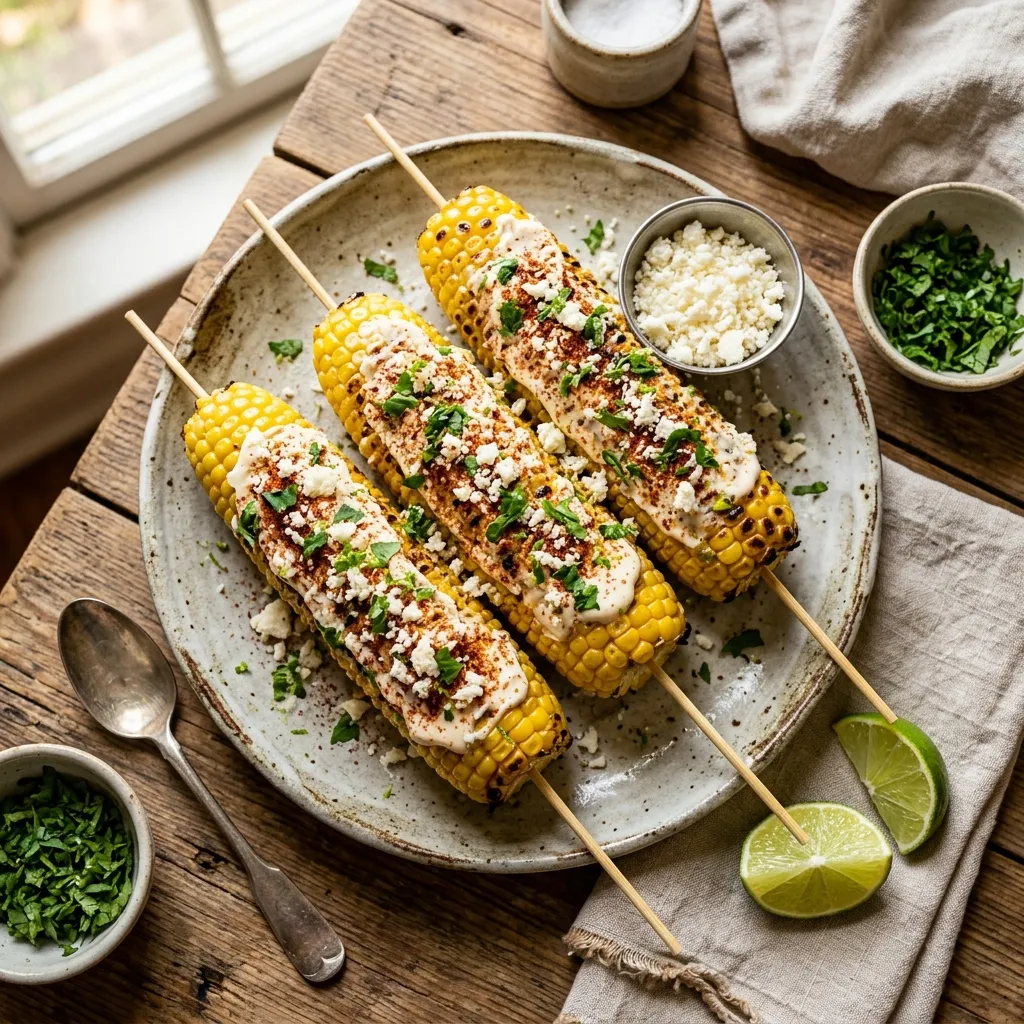
Elote is the Spanish word for corn on the cob, but in practice it refers specifically to Mexican street corn — grilled or boiled ears slathered with a mixture of mayonnaise or crema, rolled in cotija cheese, dusted with chili powder (tajin or chile piquin), and finished with lime juice. The dish is sold from carts and stalls across Mexico, where an elotero (corn vendor) is a fixture of every neighborhood, plaza, and market. The preparation takes less than five minutes once the corn is cooked, and the flavor combination — creamy, salty, spicy, sour, and sweet from the caramelized corn — is extraordinary in its completeness. Corn was domesticated in the Balsas River valley of Mexico approximately 9,000 years ago, and it remains the backbone of Mexican cuisine. Elote is distinct from esquites (also called elote en vaso), which uses the same toppings on loose corn kernels served in a cup. The on-the-cob version is superior for grilling because the direct heat caramelizes the sugars on the kernels, adding a smoky dimension that loose kernels cannot achieve. From an Ayurvedic standpoint, fresh corn is sweet, light, and slightly drying. The crema adds heavy, cooling, oily qualities. Chili powder brings pungent heat. Lime contributes sour digestive stimulus. The combined effect is a balanced snack that provides all six rasas in a single bite when eaten with attention to the layered flavors.
A balanced snack that touches all three doshas mildly. The sweet corn and dairy calm Vata. The chili and lime stimulate Pitta. The lightness of corn prevents excessive Kapha aggravation. Best in moderation for all types.
Ingredients
- 4 ears Fresh corn on the cob (husked)
- 4 tbsp Mayonnaise or Mexican crema
- 80 g Cotija cheese (finely crumbled)
- 2 tsp Chili powder or tajin seasoning
- 2 tbsp Fresh lime juice
- 2 tbsp Fresh cilantro (finely chopped, optional)
- to taste Salt
- 1 tbsp Butter (melted, optional)
Instructions
- Preheat a grill to medium-high heat, or heat a grill pan over high heat. If you do not have access to a grill, the corn can also be boiled in salted water for 6-8 minutes or roasted under a broiler.
- Grill the corn ears directly over the heat, turning every 2-3 minutes, until charred in spots on all sides — about 10-12 minutes total. The goal is dark brown grill marks with some blackened kernels, not uniformly pale yellow corn. The caramelization is where the flavor lives.
- While the corn grills, set up the toppings: have the mayonnaise or crema in a small bowl, the crumbled cotija on a plate, the chili powder in a shaker, and lime wedges at the ready.
- Remove the corn from the grill. If desired, brush with a thin coat of melted butter while still hot.
- Using a brush or the back of a spoon, spread a generous layer of mayonnaise or crema over each ear, coating all sides. The fat acts as the adhesive for the toppings.
- Roll the coated corn in the crumbled cotija cheese, pressing gently so the cheese adheres. Dust generously with chili powder or tajin, squeeze lime juice over the top, and sprinkle with chopped cilantro. Serve immediately on a stick or with a corn holder.
Nutrition
These values are estimates calculated from the ingredient list and may vary based on brands, cooking methods, and serving size. Not a substitute for medical or dietary advice.
How This Recipe Affects Each Dosha
Vata
Fresh corn is lighter than wheat or rice and slightly drying, which is not ideal for Vata. However, the crema and cheese add the oleation and heaviness Vata needs, and the warm temperature is soothing. The chili powder provides warming stimulation. Overall mildly beneficial for Vata when prepared with generous toppings.
Pitta
The chili powder and lime juice create pungent and sour stimulation that can aggravate Pitta. Fresh corn itself is fairly neutral for Pitta, and the dairy toppings provide cooling balance. Pitta types should go easy on the chili and generous with the crema to keep the dish in balance.
Kapha
Fresh corn is one of the lighter grains, and the grilling process adds dryness and warmth. The chili powder stimulates Kapha-type digestion. The cheese and mayo add some heaviness, but in the small quantities used here, the effect is manageable. A reasonable snack for Kapha types.
The chili powder and lime juice stimulate appetite and digestive fire. Grilled corn is easier to digest than boiled corn because the surface caramelization begins breaking down starches. The small quantity of dairy does not significantly burden agni.
Nourishes: Rasa (plasma)
Adjustments by Constitution
For Vata Types
Double the crema or mayonnaise for extra oleation. Add a sprinkle of cumin powder alongside the chili for digestive warmth. Use a milder chili powder to avoid overstimulation. Serve warm — do not let the corn cool to room temperature.
For Pitta Types
Skip the chili powder entirely and use sumac or mild smoked paprika instead for flavor without heat. Replace mayonnaise with plain yogurt for its cooling probiotic quality. Add extra lime and cilantro, both of which are Pitta-soothing.
For Kapha Types
Reduce the crema to a thin coat and skip the butter. Double the chili powder and add cayenne for extra fire. Use the minimum amount of cheese. The grilled, spicy version without heavy toppings is the most Kapha-appropriate preparation.
Seasonal Guidance
Peak corn season runs from mid-summer through early autumn, and this is the ideal time for elote — the corn is at its sweetest and most nutritious. The light, warm preparation suits summer evenings when something satisfying but not heavy is needed. In autumn, increase the chili and add a drizzle of melted butter for extra warming.
Best time of day: Afternoon snack or as a side dish with lunch or dinner
Cultural Context
Eloteros are part of Mexico's informal economy and social fabric — they occupy the same street corners for decades, becoming neighborhood fixtures. In Mexico City, the call of "eloootes" echoing through residential streets signals the vendor's approach. The tradition extends to the Mexican diaspora: elote carts are common in cities with large Mexican populations across the United States. The dish has also been embraced by non-Mexican food culture, appearing on restaurant menus as "Mexican street corn" — a designation that, while accurate, strips away the cultural specificity of the elotero tradition.
Deeper Context
Origins
Corn domestication occurred in Mesoamerica approximately 9,000 years ago from the wild grass teosinte. Grilled corn on the cob with chili and lime is pre-Columbian Mesoamerican street food. The modern elote format (with cheese, mayonnaise or crema, and cotija) developed during the 20th century as European dairy ingredients became integrated into Mexican street-vendor culture. Elote is distinguished from esquites (corn kernels served in a cup, typically without the cob) as a street-food category.
Food as Medicine
Fresh corn provides fiber, B-vitamins, and beta-carotene in the colored-kernel varieties. Chili capsaicin supports metabolic rate and mucus clearing. Lime vitamin C supports iron absorption and provides antioxidant activity. Cilantro in some variations provides chlorophyll and traditional folk-medicine reputation for heavy-metal chelation. A nutritionally decent street-food.
Ritual & Seasonal Role
Summer street-food peak (June-September when corn is freshest). Year-round at Mexican street-vendor stalls using stored or frozen corn. Cultural icon of Mexican street-food tradition; features prominently in Mexican-American food identity.
Classical Pairings & Cautions
Served alone as snack; agua fresca or horchata alongside. Cautions: corn allergies (rare); lactose sensitivity affects cheese and crema; capsaicin aggravation; commercial mayonnaise-based versions add substantial fat and potentially sugar; gluten-free by default.
Cross-Tradition View
How other medical and food-wisdom traditions read this dish. Each tradition names the same physiological reality in its own language — the agreements across them are where universal principles live.
Traditional Chinese Medicine
Fresh corn is sweet-neutral and Spleen-Qi-tonifying; cotija cheese is Yin-building and salty; chili powder is hot-pungent and disperses cold; lime is cool-sour and moves Liver Qi; crema is cool and Yin-building. A Qi-building preparation with balanced dispersing-and-sour accents — TCM physicians would class this as appropriate summer street food across constitutional types.
Greek Humoral
Neutral to slightly heating. A Galenic-suitable summer grain preparation — the corn-and-cheese combination with spice-and-acid finish matches classical Mediterranean summer dietetics, despite the New World origin of all primary ingredients.
Ayurveda
Heating virya (from chili and grilling), sweet vipaka. Mixed doshas — corn and cheese are mildly Kapha-aggravating; chili aggravates Pitta; the lime and cilantro balance. A summer street-food that works for most constitutional types in moderation.
Mesoamerican Three Sisters
Corn (maize) is the sacred Mesoamerican crop — at the center of Aztec and Maya creation myths. The Popol Vuh (Maya sacred text) describes humans made from corn masa after previous attempts with mud and wood failed. Grilled corn on the cob is pre-Columbian; the modern elote street-food format with cheese, cream, and chili-lime is post-contact. The cheese and cream are European additions; the lime-chili finish is pre-Columbian.
Chef's Notes
The best elote starts with the freshest corn possible — sugar begins converting to starch within hours of harvest. Farmers market corn eaten the same day is a different food from week-old supermarket corn. If cotija cheese is unavailable, feta is the closest substitute in texture and saltiness. The chili-lime-cheese combination works on many grilled vegetables — try it on grilled zucchini, cauliflower, or sweet potato. For esquites (off-the-cob version), cut the grilled kernels off and toss in a bowl with the same toppings plus a squeeze of extra lime.
Frequently Asked Questions
Is Elote (Mexican Street Corn) good for my dosha?
A balanced snack that touches all three doshas mildly. The sweet corn and dairy calm Vata. The chili and lime stimulate Pitta. The lightness of corn prevents excessive Kapha aggravation. Best in moderation for all types. Fresh corn is lighter than wheat or rice and slightly drying, which is not ideal for Vata. The chili powder and lime juice create pungent and sour stimulation that can aggravate Pitta. Fresh corn is one of the lighter grains, and the grilling process adds dryness and warmth.
When is the best time to eat Elote (Mexican Street Corn)?
Afternoon snack or as a side dish with lunch or dinner Peak corn season runs from mid-summer through early autumn, and this is the ideal time for elote — the corn is at its sweetest and most nutritious. The light, warm preparation suits summer evenings wh
How can I adjust Elote (Mexican Street Corn) for my constitution?
For Vata types: Double the crema or mayonnaise for extra oleation. Add a sprinkle of cumin powder alongside the chili for digestive warmth. Use a milder chili powder For Pitta types: Skip the chili powder entirely and use sumac or mild smoked paprika instead for flavor without heat. Replace mayonnaise with plain yogurt for its cool
What are the Ayurvedic properties of Elote (Mexican Street Corn)?
Elote (Mexican Street Corn) has Sweet, Sour, Pungent, Salty taste (rasa), Neutral to Slightly Heating energy (virya), and Sweet post-digestive effect (vipaka). Its qualities (gunas) are Light, Slightly Oily, Warm. It nourishes Rasa (plasma). The chili powder and lime juice stimulate appetite and digestive fire. Grilled corn is easier to digest than boiled corn because the surface caramelization begins breaking down starches. The small quantity of dairy does not significantly burden agni.