Edamame with Sea Salt
Japanese Recipe
Overview
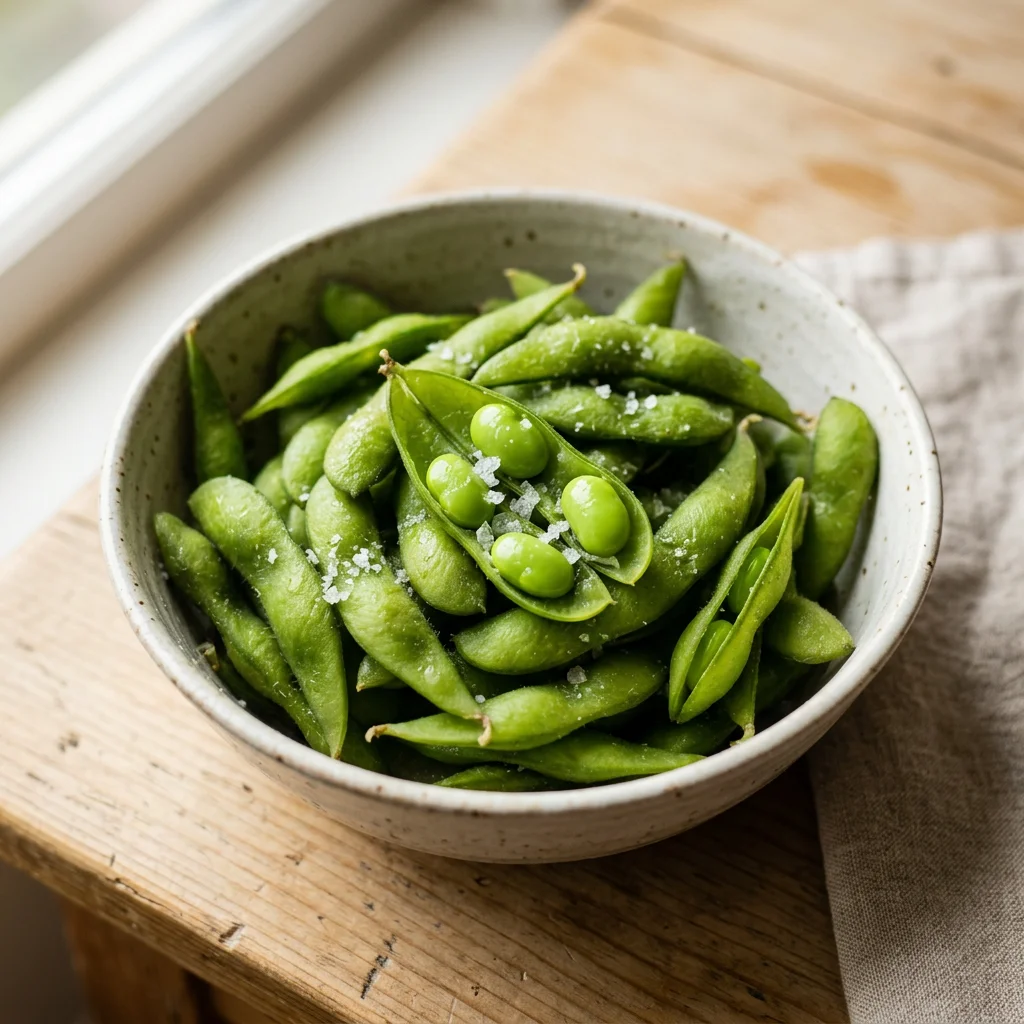
Edamame — young, green soybeans still in their fuzzy pods — boiled briefly in salted water and served warm with a sprinkle of coarse sea salt. This is one of the simplest and most ubiquitous foods in Japanese dining, appearing on izakaya tables as the default appetizer before anything else arrives. The eating ritual is tactile and satisfying: squeeze the pod between your fingers, pop the beans into your mouth, and discard the shell. Unlike mature soybeans, which are dense, hard, and require extensive cooking, edamame are harvested young — soft, sweet, and bright green. This early harvest means they retain a fresh, vegetal flavor closer to snap peas than to the heavy earthiness of dried soybeans. The brief boiling time (4-5 minutes) preserves their color, crunch, and nutritional integrity. From an Ayurvedic perspective, edamame offer an interesting case study. Mature soybeans are considered heavy, difficult to digest, and Vata-aggravating in Ayurvedic nutrition. But young, green soybeans are lighter, sweeter, and far easier on digestion — their youth changes their energetic profile significantly. Combined with the brief cooking and mineral-rich sea salt, edamame become a balanced, protein-rich snack that most constitutions can enjoy.
Balances Pitta due to cooling, sweet quality. Acceptable for Kapha in moderation due to lightness. May mildly aggravate Vata due to astringent taste and cooling energy.
Ingredients
- 400 g Edamame in pods (fresh or frozen)
- 6 cups Water (for boiling)
- 1 tbsp Salt (for the boiling water)
- 1/2 tsp Coarse sea salt (for finishing, flaky if possible)
Instructions
- If using frozen edamame, do not thaw — cook directly from frozen for the best texture.
- Bring a large pot of water to a rolling boil. Add 1 tablespoon of salt to the water.
- Add the edamame and boil for 4-5 minutes for frozen, 5-6 minutes for fresh. The beans should be tender but still have a slight bite — test one by squeezing a bean from its pod.
- Drain immediately. Do not rinse — the residual salt from the cooking water contributes to flavor.
- Transfer to a serving bowl and sprinkle with coarse sea salt while still hot. Toss gently.
- Serve warm or at room temperature. Provide a small empty bowl for discarded pods.
Nutrition
These values are estimates calculated from the ingredient list and may vary based on brands, cooking methods, and serving size. Not a substitute for medical or dietary advice.
How This Recipe Affects Each Dosha
Vata
Young soybeans are far lighter than mature soybeans but still carry some of the astringent, Vata-aggravating quality inherent to legumes. The cooling energy and light quality are not ideal for Vata. However, edamame are tolerable for Vata in small amounts, especially when served warm and well-salted — salt being the primary Vata-pacifying taste.
Pitta
The cooling energy, sweet taste, and green, fresh quality make edamame naturally suited to Pitta. The protein content provides sustenance without heating the system. The light quality does not burden Pitta's strong digestion. A good snack choice for Pitta constitutions, especially in warm weather.
Kapha
Edamame's light quality and moderate protein make them acceptable for Kapha. They are lighter than most legumes and don't create the heavy, dense feeling that beans often produce. The astringent taste is Kapha-clearing. The only concern is the slightly cooling energy — Kapha prefers warming — but this is minor.
Neutral to mildly taxing on agni. Green soybeans are easier to digest than mature soybeans, but legumes in general require functional digestive fire. The brief cooking and simple preparation help, as does the sea salt. Best as a small snack rather than a large portion.
Nourishes: Rasa (plasma), Mamsa (muscle)
Adjustments by Constitution
For Vata Types
Toss with warm sesame oil, grated ginger, and a generous pinch of sea salt after draining. Serve warm, not at room temperature. The sesame oil adds the oiliness and warmth that Vata needs, and the ginger kindles digestive fire to handle the legume.
For Pitta Types
The standard preparation is already ideal for Pitta. For extra cooling, squeeze fresh lime juice over the edamame. Sprinkle with mild furikake (seaweed-sesame seasoning) for mineral depth. Avoid spicy garlic preparations.
For Kapha Types
Toss with shichimi togarashi (seven-spice powder) for pungent warmth. Add a light dusting of grated yuzu zest for its aromatic, stimulating quality. Serve warm. A pinch of black pepper helps kindle agni for processing the legume protein.
Seasonal Guidance
Edamame are a summer legume — fresh edamame are harvested in late summer and are at their sweetest and most tender during this season. Their cooling energy makes them naturally suited to warm weather when the body benefits from cooling, protein-rich foods. In spring, they help lighten the diet as the body transitions from heavy winter eating. In autumn and winter, serve warm and well-spiced to compensate for the cooling energy, or choose warming snack alternatives instead.
Best time of day: Afternoon snack or pre-dinner appetizer. The light, protein-rich quality sustains energy between meals without heaviness.
Cultural Context
Edamame have been eaten in Japan for over a thousand years — the earliest written record dates to 1275. The name means "stem beans" (eda = stem, mame = bean), referring to the traditional practice of selling the branches with pods still attached. In summer, street vendors sold edamame branches the way popcorn is sold today. Edamame became the default izakaya snack because they pair well with beer, arrive quickly, and give hands something to do while conversation flows. Their recent global popularity has introduced millions of people worldwide to this staple that Japanese people have enjoyed since the Kamakura period.
Deeper Context
Origins
Edamame cultivation in Japan dates to at least the 8th century CE, with references in the Man'yoshu poetry anthology. The practice of eating young green soybeans before full maturity is distinctly East Asian — mainland Chinese cuisine includes similar preparations (maodou). Modern global edamame popularity traces to 1990s Japanese restaurant expansion in Western countries and to 2000s superfood marketing. The Okinawan centenarian diet research (starting with the 1975 Japanese Centenarian Study) made soy consumption a focus of longevity research.
Food as Medicine
Young soybeans (edamame) provide complete protein, substantial folate, vitamin K, iron, and isoflavones with documented phytoestrogenic activity. Okinawan Blue Zone research attributes part of the region's longevity to daily soy consumption. The minimal preparation (boiled or steamed, lightly salted) preserves nutrients well. One of the most clearly therapeutically-validated simple Japanese dishes.
Ritual & Seasonal Role
Summer staple — young soybeans peak availability July through September. Izakaya (Japanese pub) appetizer standard year-round using frozen product. Not religiously ceremonial. Featured globally as Japanese-restaurant entry-point appetizer.
Classical Pairings & Cautions
Beer (the classical Japanese pub pairing), sake, sparkling water. Cautions: soy allergies (major contraindication); estrogen-sensitive cancers are a complicated area — soy isoflavone effects are typically protective but individual medical guidance varies; thyroid medication dosing may interact with goitrogenic soy compounds; sodium modulation for cardiovascular patients.
Cross-Tradition View
How other medical and food-wisdom traditions read this dish. Each tradition names the same physiological reality in its own language — the agreements across them are where universal principles live.
Traditional Chinese Medicine
Edamame (young soybeans) are sweet-neutral and build Kidney essence while tonifying Spleen Qi; sea salt is salty-cool and softens hardness. A Kidney-essence-and-Spleen-Qi tonic — TCM physicians would class young soybeans as gentle accessible protein appropriate across constitutional types.
Greek Humoral
Neutral temperament. A Galenic-suitable legume-and-salt appetizer — the simplicity reflects the Hippocratic valuation of minimal preparation for young fresh vegetables.
Ayurveda
Cooling virya, sweet vipaka. Pacifies Pitta through the cool-sweet quality. Mildly Kapha-aggravating through soy heaviness. Vata-neutral with salt present. Soy in classical Ayurveda is tamas-promoting but well-tolerated as occasional food.
Okinawan Longevity
Edamame is central to Okinawan traditional cuisine — the Japanese Okinawan prefecture holds one of the world's five documented Blue Zones (longest-lived populations, alongside Sardinia, Ikaria, Nicoya, and Loma Linda). Okinawan centenarians consume soy regularly in multiple fermented and fresh forms. The Blue Zone Okinawan diet is one of the most-studied traditional-diet longevity patterns globally.
Chef's Notes
The difference between good edamame and mediocre edamame is entirely about not overcooking. At 4-5 minutes, the beans have a pleasant pop and fresh sweetness. At 7-8 minutes, they become mushy and starchy. Taste-test at 4 minutes. For a flavor variation common in izakayas, toss the drained edamame with garlic, chili flakes, and sesame oil (garlic edamame). Another popular preparation is spiced edamame with shichimi togarashi. Fresh edamame in season (late summer) are noticeably sweeter and more delicate than frozen — seek them out at farmers' markets if possible.
Frequently Asked Questions
Is Edamame with Sea Salt good for my dosha?
Balances Pitta due to cooling, sweet quality. Acceptable for Kapha in moderation due to lightness. May mildly aggravate Vata due to astringent taste and cooling energy. Young soybeans are far lighter than mature soybeans but still carry some of the astringent, Vata-aggravating quality inherent to legumes. The cooling energy, sweet taste, and green, fresh quality make edamame naturally suited to Pitta. Edamame's light quality and moderate protein make them acceptable for Kapha.
When is the best time to eat Edamame with Sea Salt?
Afternoon snack or pre-dinner appetizer. The light, protein-rich quality sustains energy between meals without heaviness. Edamame are a summer legume — fresh edamame are harvested in late summer and are at their sweetest and most tender during this season. Their cooling energy makes them naturally suited to warm weather
How can I adjust Edamame with Sea Salt for my constitution?
For Vata types: Toss with warm sesame oil, grated ginger, and a generous pinch of sea salt after draining. Serve warm, not at room temperature. The sesame oil adds th For Pitta types: The standard preparation is already ideal for Pitta. For extra cooling, squeeze fresh lime juice over the edamame. Sprinkle with mild furikake (seawee
What are the Ayurvedic properties of Edamame with Sea Salt?
Edamame with Sea Salt has Sweet, Astringent, Salty taste (rasa), Cooling energy (virya), and Sweet post-digestive effect (vipaka). Its qualities (gunas) are Light, Cool, Slightly Oily. It nourishes Rasa (plasma), Mamsa (muscle). Neutral to mildly taxing on agni. Green soybeans are easier to digest than mature soybeans, but legumes in general require functional digestive fire. The brief cooking and simple preparation help, as does the sea salt. Best as a small snack rather than a large portion.