Dublin Coddle
Irish Recipe
Overview
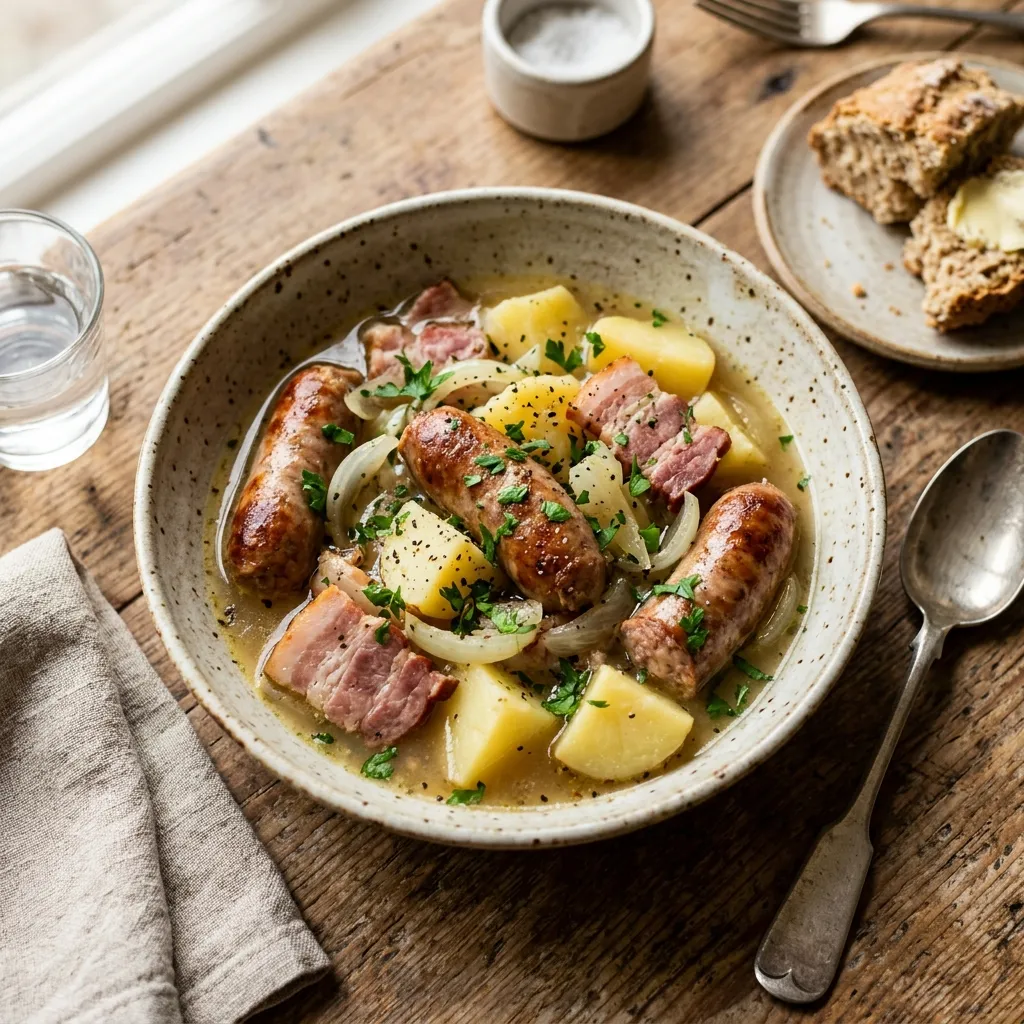
Dublin coddle is the capital city's signature dish — a one-pot stew of pork sausages, bacon rashers, potatoes, and onions, slow-simmered in their own juices until everything collapses into a pale, savoury broth. The word 'coddle' comes from the verb meaning to cook gently below boiling, and that slow, gentle method is the entire philosophy of the dish. Coddle was traditionally prepared on Thursday and Saturday nights — Thursday because Catholic families ate fish on Friday and needed to use up their meat, Saturday because the leftover broth served as a hangover cure after Saturday night at the pub. The dish is polarizing. Its admirers — predominantly Dubliners born and raised — consider it the ultimate comfort food, a taste of home that no other dish can replicate. Its detractors see it as bland, pale, and textureless. The truth lies in the quality of the sausages and bacon: with good butcher's sausages and dry-cured back bacon, coddle develops a deep, porky savour that no amount of browning or spicing could improve. With cheap supermarket sausages, it is, admittedly, watery and dull. Ayurvedically, coddle is a warm, moist, heavy dish that gently nourishes without the aggressive heat of roasted or fried preparations. The slow cooking breaks down the meat's proteins into an easily digestible form, and the potatoes dissolve into a starchy, soothing broth. The lack of browning means there are no bitter, burnt, or crispy elements — the entire dish is soft, smooth, and warming.
Pacifies Vata effectively with warm, moist, soft, heavy qualities. The gentle cooking method produces an easy-to-digest broth. Moderately increases Pitta due to pork and salt. Increases Kapha due to heaviness, moisture, and starchy potato.
The slow-cooked broth is gentle enough for convalescence and provides easily digestible protein and starch. The warming, moist qualities counter the cold and dryness associated with illness recovery, particularly respiratory conditions common in Dublin's damp climate.
Ingredients
- 8 links Pork sausages (good-quality butcher sausages)
- 8 rashers Back bacon rashers (cut into large pieces)
- 1 kg Potatoes (peeled and thickly sliced)
- 2 large Onions (thickly sliced)
- 3 tbsp Fresh parsley (chopped, plus extra for garnish)
- 3 sprigs Fresh thyme
- 1 leaf Bay leaf
- 500 ml Chicken stock or water
- 1 tsp Salt
- 1 tsp Black pepper
- 20 g Butter (optional, for finishing)
Instructions
- Bring a pot of water to a boil. Blanch the sausages for 30 seconds — this removes excess surface fat and prevents the broth from becoming greasy. Drain and cut each sausage in half.
- Layer the ingredients in a heavy, lidded pot (Dutch oven or similar). Start with a layer of sliced potato on the bottom, then a layer of onion, then the sausage halves and bacon pieces. Season each layer with salt, pepper, and chopped parsley.
- Repeat the layering, finishing with a final layer of potato on top. Tuck the thyme sprigs and bay leaf between layers.
- Pour in the stock or water — it should come about halfway up the layers. The potatoes and meat will release additional liquid as they cook.
- Bring to a gentle simmer over medium heat. Reduce to the lowest possible heat, cover tightly, and cook for 2 hours. The liquid should barely tremble — coddle that boils vigorously will disintegrate into mush.
- After 2 hours, the potatoes should be very tender, the sausages plump and soft, and the broth milky and thick from the dissolved starch. Remove the bay leaf and thyme sprigs.
- Taste for seasoning and add a knob of butter if desired. Ladle into deep bowls, ensuring each serving has sausage, bacon, potato, and plenty of broth. Garnish with fresh parsley.
- Serve with buttered soda bread for soaking up the broth.
Nutrition
These values are estimates calculated from the ingredient list and may vary based on brands, cooking methods, and serving size. Not a substitute for medical or dietary advice.
How This Recipe Affects Each Dosha
Vata
Dublin coddle is profoundly Vata-pacifying. The long, gentle simmer produces a broth that is warm, moist, and soft — three qualities that directly counteract Vata's cold, dry, and rough nature. The starchy dissolved potato creates a soothing coating effect in the gut. The meat is so tender from the slow cooking that it requires almost no digestive effort. This is excellent food for cold, windy Dublin evenings.
Pitta
Pork sausage and cured bacon carry heating, salty qualities that accumulate in this slow-cooked dish. The broth concentrates the pork fat and salt over two hours of simmering. Pitta types can manage an occasional serving in cool weather but should avoid making it a regular dinner. The lack of spices beyond pepper and herbs keeps it from being aggressively heating.
Kapha
The soft, moist, heavy nature of coddle — potato starch in broth, fatty sausage, rich bacon — exemplifies the qualities that slow Kapha metabolism. The absence of any pungent or bitter counterbalance (no chili, no leafy greens) means the dish sits in Kapha territory unmitigated. Portions should be small, and the broth should be defatted.
The slow-cooked broth is gentle on agni — the proteins and starches are partially broken down by the long cooking process, requiring less digestive effort than raw or quickly cooked equivalents. The thyme and pepper provide mild agni support. Overall, coddle is a digestively gentle dish.
Nourishes: Rasa (plasma), Mamsa (muscle), Meda (fat), Asthi (bone)
Adjustments by Constitution
For Vata Types
Coddle is well-suited to Vata as written. Add a few whole black peppercorns and a clove of garlic to the layering for extra warmth. Serve with warm soda bread liberally buttered. A cup of fennel tea afterward assists digestion.
For Pitta Types
Replace pork sausages with chicken sausages and use unsmoked bacon. Reduce salt. Add sliced fennel bulb and a handful of fresh peas in the last 15 minutes. Garnish with fresh dill instead of parsley.
For Kapha Types
Use chicken or turkey sausages and lean bacon. Replace half the potato with turnip slices. Add mustard seeds, extra black pepper, and a thumb of sliced fresh ginger to the layers. Skim the surface fat before serving. Serve with toasted soda bread rather than buttered.
Seasonal Guidance
A dish for cold, dark evenings. The warm, moist broth and soft, comforting texture are ideal when the body is exposed to cold wind and damp — conditions that aggravate both Vata and Kapha. Not a summer dish under any circumstances.
Best time of day: Dinner — traditionally Thursday or Saturday evening in Dublin households. The soft, easily digestible nature makes it acceptable for evening eating despite its heaviness, provided the portion is moderate.
Cultural Context
Dublin coddle is fiercely local — it is a city dish, not a rural one, associated specifically with Dublin's working-class inner-city neighbourhoods. It carries strong associations with the Liberties, Stoneybatter, and Smithfield — areas where generations of working families developed their own coddle traditions. Jonathan Swift (author of Gulliver's Travels and Dean of St Patrick's Cathedral) reportedly enjoyed coddle, as did the playwright Sean O'Casey. The dish is rarely found outside Dublin on restaurant menus, and even within the city, it appears primarily at traditional pubs and family tables rather than in fashionable restaurants. For Dubliners living abroad, coddle is the taste of home that no other Irish dish can replicate.
Deeper Context
Origins
Dublin coddle emerged in 17th and 18th century Dublin as urban working-class cookery — the pork-and-bacon-plus-potato-plus-onion format reflects the economic constraints of Dublin tenement households. The name 'coddle' derives from French 'caudle' (to gently boil or parboil). Jonathan Swift (1667-1745), James Joyce (1882-1941), and Seamus Heaney (1939-2013) all wrote about coddle, giving the humble dish unusual literary cultural weight.
Food as Medicine
Not therapeutically designed. The long simmering extracts collagen and minerals from the sausage-and-bacon content. Thyme provides carvacrol and thymol (well-documented antimicrobial activity) — the historical Dublin use of thyme in rainy-cold-weather cookery has an accidentally evidence-based foundation. The dish functions as calorie-dense winter sustenance rather than health food.
Ritual & Seasonal Role
Rainy-day and winter-day home cooking. Saturday and Sunday family meal in traditional Dublin households. Not religiously ceremonial but tied to Dublin working-class identity and to Irish-diaspora domestic memory. Literary weight from Swift-Joyce-Heaney references exceeds the dish's culinary complexity.
Classical Pairings & Cautions
Crusty brown soda bread, Guinness or strong tea. Cautions: religious pork restrictions (Jewish, Muslim, Hindu, some Buddhist, Adventist); sodium load substantial from sausage and bacon; nitrates and nitrites in cured pork; Kapha aggravation in winter weight-gain phases; the classical recipe lacks green vegetables — a side of cabbage or greens is a modern addition.
Cross-Tradition View
How other medical and food-wisdom traditions read this dish. Each tradition names the same physiological reality in its own language — the agreements across them are where universal principles live.
Traditional Chinese Medicine
Pork sausage is Yin-salty and builds fluids; back bacon is Yin-building-salty; potato is Spleen-Qi-tonifying; onion is warm-pungent and disperses cold; thyme is warm-dispersing. A Yin-building Qi-tonic with warming-dispersing accent — TCM physicians would recognize Dublin coddle as classical urban-working-class sustenance food for cold-damp Irish climates.
Greek Humoral
Hot-wet sanguine-building. The long-simmered preparation matches Galenic endorsement of slow cookery for making hard meats digestible for weak-fire constitutions. Appropriate for melancholic-phlegmatic Dublin working-class constitutions during the cold-damp winter months.
Ayurveda
Heating virya, sweet vipaka. Pacifies Vata substantially through protein, fat, and warmth. Aggravates Kapha through pork-and-potato heaviness. Pork is heavy and tamasic in classical Ayurveda — Dublin coddle is winter-restoration food rather than daily household eating.
Dublin Working-Class
Specifically a Dublin working-class dish — simmered all day on the hearth, associated with rain-day home meals and with the tenement-era Dublin tradition of making one pot stretch for extended family. Pork and bacon were historically the cheapest meats available to Dublin's poor, and the coddle architecture stretched them through potato-and-onion extension. Jonathan Swift reportedly enjoyed coddle in the 1720s; James Joyce references coddle in Ulysses (1922). Seamus Heaney wrote about it. The dish has literary-cultural weight disproportionate to its preparation simplicity.
Chef's Notes
Coddle is not a dish you can rush. The two-hour gentle simmer is what transforms ordinary sausages, bacon, and potatoes into something silky and deeply flavoured. Higher heat produces a different dish — tougher sausages, broken potatoes, and a thin broth. The blanching step is optional but recommended: it removes the grey scum that cheap sausages release and produces a cleaner, clearer broth. The best coddle uses dry-cured back bacon (not streaky) and high-meat-content sausages from a butcher. Dublin's coddle devotees have strong opinions about which butchers produce coddle-worthy sausages — Hafner's and Superquinn are frequently mentioned.
Frequently Asked Questions
Is Dublin Coddle good for my dosha?
Pacifies Vata effectively with warm, moist, soft, heavy qualities. The gentle cooking method produces an easy-to-digest broth. Moderately increases Pitta due to pork and salt. Increases Kapha due to heaviness, moisture, and starchy potato. Dublin coddle is profoundly Vata-pacifying. Pork sausage and cured bacon carry heating, salty qualities that accumulate in this slow-cooked dish. The soft, moist, heavy nature of coddle — potato starch in broth, fatty sausage, rich bacon — exemplifies the qualities that slow Kapha metabolism.
When is the best time to eat Dublin Coddle?
Dinner — traditionally Thursday or Saturday evening in Dublin households. The soft, easily digestible nature makes it acceptable for evening eating despite its heaviness, provided the portion is moderate. A dish for cold, dark evenings. The warm, moist broth and soft, comforting texture are ideal when the body is exposed to cold wind and damp — conditions that aggravate both Vata and Kapha. Not a summe
How can I adjust Dublin Coddle for my constitution?
For Vata types: Coddle is well-suited to Vata as written. Add a few whole black peppercorns and a clove of garlic to the layering for extra warmth. Serve with warm so For Pitta types: Replace pork sausages with chicken sausages and use unsmoked bacon. Reduce salt. Add sliced fennel bulb and a handful of fresh peas in the last 15 min
What are the Ayurvedic properties of Dublin Coddle?
Dublin Coddle has Sweet, Salty taste (rasa), Warming energy (virya), and Sweet post-digestive effect (vipaka). Its qualities (gunas) are Heavy, Warm, Moist, Soft. It nourishes Rasa (plasma), Mamsa (muscle), Meda (fat), Asthi (bone). The slow-cooked broth is gentle on agni — the proteins and starches are partially broken down by the long cooking process, requiring less digestive effort than raw or quickly cooked equivalents. The thyme and pepper provide mild agni support. Overall, coddle is a digestively gentle dish.