Dosa
Indian Recipe
Overview
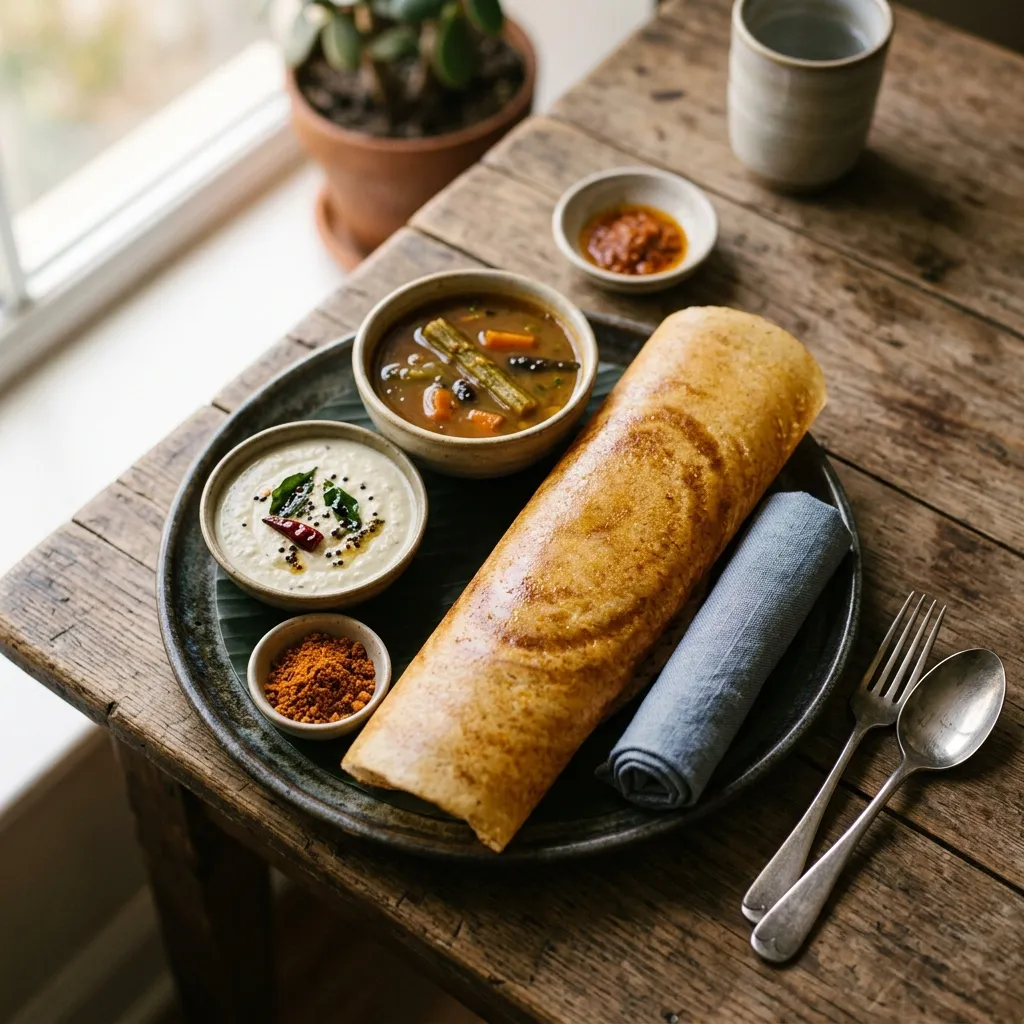
Dosa is a thin, crispy crepe made from a fermented batter of rice and black gram (urad dal), spread paper-thin on a hot griddle and cooked until golden and lacy. It is the cornerstone of South Indian breakfast — served with sambar (lentil vegetable stew) and coconut chutney, this combination forms what many consider the most nutritionally complete vegetarian breakfast on earth. The fermentation process, which takes 8-12 hours, is not merely for flavor: it breaks down phytic acid in the rice and dal, increases B vitamin content, and produces the natural carbon dioxide that makes the batter rise and the cooked dosa airy. Dosa's origins trace to the Tamil and Karnataka regions, with written references appearing as early as the 1st century CE in Sangam-era Tamil literature. The dish migrated north through Indian restaurants in the 20th century and is now eaten nationwide, though South Indians maintain — with justification — that the best dosas still come from Tamil Nadu, Karnataka, and Kerala. Variations number in the hundreds: masala dosa (stuffed with spiced potatoes), rava dosa (made with semolina), set dosa (thick and spongy), neer dosa (paper-thin rice crepe), and paper dosa (impossibly thin and crispy, sometimes 2 feet in diameter). Ayurvedically, the fermentation of dosa batter is significant. Fermented foods are considered agni-deepana (fire-kindling) — they pre-digest the grains, making nutrients more accessible and reducing the digestive burden. The rice contributes sweet rasa and cooling virya, while the urad dal adds heavy, nourishing quality. The cooking method — spreading thin and crisping on a hot surface — adds light, dry qualities that prevent the batter from becoming heavy and congesting.
Balances Kapha through light, dry, crispy quality. The fermentation aids all doshas by pre-digesting the grains. May mildly increase Vata if eaten without oil or accompaniments.
Fermented dosa batter provides natural probiotics and B vitamins produced during fermentation. The rice-dal combination creates a complete protein. In Ayurvedic dietary therapy, fermented grain preparations are recommended for rebuilding agni after illness, as they nourish without overtaxing weak digestion.
Ingredients
- 2 cups Parboiled rice (idli rice) (soaked 4-6 hours)
- 1/2 cup Urad dal (black gram, split and husked) (soaked 4-6 hours)
- 1 tsp Fenugreek seeds (soaked with the dal)
- 1 tsp Salt
- 1-1.5 cups Water (for grinding to batter consistency)
- 2 tbsp Sesame oil (or ghee, for cooking each dosa)
- 2 cups Potato filling (for masala dosa) (optional — boiled potatoes tempered with mustard seeds, curry leaves, turmeric, and onion)
- 2 cups Sambar (for serving)
- 1 cup Coconut chutney (for serving)
Instructions
- Soak the parboiled rice in water for 4-6 hours. Separately soak the urad dal and fenugreek seeds together for the same duration. Both should absorb water and become soft.
- Grind the urad dal and fenugreek first in a wet grinder or high-powered blender with minimal water until extremely fluffy and light — this should take 15-20 minutes in a grinder or 5 minutes in a blender. The dal batter should be airy and billowy. Scrape into a large bowl.
- Grind the soaked rice with enough water to make a slightly gritty batter — it should not be as smooth as the dal. The slight texture is essential for a crispy dosa. Combine with the dal batter.
- Add salt and mix by hand, using your fingers to fold the batters together. The warmth of your hands helps activate the fermentation. Transfer to a large vessel (the batter will double in volume) and cover loosely.
- Ferment for 8-12 hours in a warm place (27-30C is ideal). The batter is ready when it has risen noticeably, smells slightly sour, and shows bubbles on the surface. In cold climates, place the batter inside a turned-off oven with the light on.
- To cook: heat a cast iron tava or non-stick griddle over medium-high heat. Test readiness by sprinkling water — it should sizzle and evaporate immediately. Pour 1/3 cup batter in the center and spread in rapid concentric circles using the back of a ladle, from center outward, creating a thin, even circle.
- Drizzle 1/2 teaspoon of sesame oil around the edges. Cook until the bottom turns golden brown and crispy and the top surface dries out, about 2-3 minutes. Do not flip — a proper dosa is cooked on one side only.
- For masala dosa, place a line of the spiced potato filling across the center and fold the dosa over it. Serve immediately on a plate with sambar and coconut chutney.
Nutrition
These values are estimates calculated from the ingredient list and may vary based on brands, cooking methods, and serving size. Not a substitute for medical or dietary advice.
How This Recipe Affects Each Dosha
Vata
Plain dosa can be drying and light for Vata — the thin, crispy texture lacks the moisture and unctuousness Vata needs. However, when served with ghee, sambar (warm, soupy), and coconut chutney (oily, sweet), the complete meal becomes much more Vata-appropriate. The fermented batter is easier on Vata's digestion than unfermented rice-dal preparations.
Pitta
Dosa is well-tolerated by Pitta. The rice base is cooling and sweet, the fermentation is mild, and the cooking method is neutral (griddle, not deep-frying). The slight sourness from fermentation is generally tolerable for Pitta. Coconut chutney adds further cooling. Pitta types should moderate the sambar's spiciness.
Kapha
Dosa is among the best grain-based foods for Kapha. The thin, crispy, dry, light qualities are exactly what Kapha needs. The fermentation reduces the heaviness of the grains. The absence of deep-frying keeps the oil content low. Kapha types should choose plain dosa over masala dosa (the potato filling adds unwanted heaviness) and use only a thin smear of oil on the griddle.
Fermented dosa batter is one of Ayurveda's best examples of how preparation method transforms a food's digestive impact. The fermentation pre-digests the rice and dal starches and proteins, producing a food that kindles agni rather than burdening it. The crispy cooking method adds the light, dry qualities that further support easy digestion.
Nourishes: Rasa (plasma), Mamsa (muscle — from the complete protein of rice + dal combination)
Adjustments by Constitution
For Vata Types
Cook with generous ghee rather than sesame oil — the dosa should be richly golden and slightly oily. Serve with warm sambar (the liquid warmth balances dosa's dryness). Choose masala dosa for the added grounding of potato. Add extra coconut chutney for its sweet, oily quality. Eat warm — cold dosa is much more Vata-aggravating.
For Pitta Types
Use coconut oil on the griddle for a cooler cooking fat. Pair with mild coconut chutney (increase coconut, reduce green chili) and a not-too-spicy sambar. Avoid adding hot pickles or podi (spice powder) that many South Indian restaurants offer alongside. Plain or masala dosa are both fine for Pitta.
For Kapha Types
Keep the dosa thin and extra crispy — spread the batter as thin as possible. Use minimal oil on the griddle. Skip the masala filling and eat the plain dosa with sambar (the warm, spiced lentil broth stimulates Kapha's digestion). Add a fiery green chili chutney for metabolic heat.
Seasonal Guidance
Dosa is appropriate year-round, which is why it serves as daily breakfast across South India regardless of season. In winter, add extra ghee and serve with hot sambar for warmth. In summer, the relatively cooling nature of rice and coconut chutney keeps the meal comfortable. In spring, the light, dry quality helps clear Kapha congestion.
Best time of day: Breakfast or lunch — dosa is a morning food in South India, eaten between 7-10am when agni is building for the day
Cultural Context
Dosa is not merely a food in South India — it is an identity marker, a daily ritual, and a quiet source of regional pride. Tamil Nadu, Karnataka, Andhra Pradesh, and Kerala each claim their own dosa tradition, and the differences between a Tamil dosa and a Karnataka dosa are discussed with the seriousness others reserve for wine. The dosa economy is significant: India has over 75,000 dedicated dosa restaurants, and the art of dosa-making is a recognized skill. Sarvana Bhavan, which began as a single dosa shop in Chennai in 1981, now operates 80+ locations across 20 countries — making South Indian breakfast arguably the most successfully exported vegetarian cuisine on earth.
Deeper Context
Origins
Dosa appears in first-millennium Tamil Sangam literature as dhosai — a fermented-grain pancake predating Sanskrit classical food writing and frequently cited as one of the world's oldest continuously-eaten fermented grain dishes. The technique has close parallels in Ethiopian injera and Yemeni lahoh, suggesting either deep antiquity or Indian Ocean trade diffusion of a shared fermentation logic. Tamil inscriptions at Chola-period temples reference dosa as daily temple food.
Food as Medicine
The fermentation creates beneficial lacto-bacteria and reduces phytic acid in the urad dal, making minerals bioavailable. Classical Siddha (Tamil Ayurvedic) medicine prescribes dosa during convalescence from fever, for weak digestion, and as a first solid food for post-diarrheal recovery. The ghee-roast variant doubles as a medium-chain-fat vehicle for delivering medicated ghee preparations in south Indian home medicine.
Ritual & Seasonal Role
South Indian breakfast staple with daily rather than ceremonial weight. Associated with Chidambaram temple food traditions and with the Tamil domestic practice of offering the first batter pour to Nataraja in some households. Specifically appears in south Indian wedding tiffin menus as breakfast of the following day, when lighter food is needed after celebration-meal richness.
Classical Pairings & Cautions
Always paired with sambar and coconut chutney — the three together form a complete amino-acid-balanced meal that no dish alone provides. Ghee-roast variants add a medium-chain fat vehicle. Cautions: the soft interior is hard on Vata without extra ghee; diabetics should limit due to fermentation-accelerated starch availability; those with active yeast overgrowth or candida issues may not tolerate the fermentation.
Cross-Tradition View
How other medical and food-wisdom traditions read this dish. Each tradition names the same physiological reality in its own language — the agreements across them are where universal principles live.
Traditional Chinese Medicine
The fermented rice-urad batter is neutral-cool before cooking and tonifies Spleen after the fermentation has pre-digested the grains — the natural lacto-bacteria perform what TCM calls the Spleen's own transformation work, making dosa ideal for Spleen-deficient patients who cannot handle raw or heavy grains. The hot griddle-cook shifts the thermal profile to neutral. Classical TCM prescribes fermented grain cakes during recovery from chronic Stomach disharmony.
Greek Humoral
Neutral temperament due to the fermentation's mellowing of the grain's native qualities; the crispy edge shifts toward hot-dry. Recommended for cold-wet (phlegmatic) temperaments. A pure sattvic food by Galenic reading — simple, balanced, easily digested, free of heavy fats. Fermented grain cakes have parallels in the Hippocratic corpus as recommended for digestive convalescence.
Unani Tibb
Mizaj mutadil (balanced) — a rare neutral food in hakim dietetics. Prescribed during convalescence when other grains are too heavy or too provocative, and for those rebuilding digestion after fever. The fermented preparation has functional parallels in Unani kanji concepts, and dosa is treated by south Indian hakims as a naturally-pre-digested grain suitable across most mizaj categories.
Tibetan Sowa Rigpa
Light, warm, easy-to-digest. Suits all three humors (nyes pa gsum) in moderate portions. Tibetan medicine regards fermented grain preparations with general favor — the breakdown of anti-nutrients during fermentation makes dosa one of the safest grain preparations across constitutional types and across the gentle-digestion populations (post-illness, elderly, children).
Chef's Notes
Dosa batter quality depends on three variables: the ratio of rice to dal (4:1 is standard), the fineness of grinding, and the fermentation environment. The urad dal must be ground until light and fluffy — underground dal produces flat, tough dosas. Parboiled rice (not raw rice) gives the best crispness. Cast iron is the traditional cooking surface; if using non-stick, you sacrifice some browning. The spreading technique takes practice — the motion must be quick and confident, completed in 2-3 seconds before the batter sets. Leftover batter keeps in the refrigerator for 3 days, becoming more sour (and many cooks prefer the tangier flavor of older batter).
Frequently Asked Questions
Is Dosa good for my dosha?
Balances Kapha through light, dry, crispy quality. The fermentation aids all doshas by pre-digesting the grains. May mildly increase Vata if eaten without oil or accompaniments. Plain dosa can be drying and light for Vata — the thin, crispy texture lacks the moisture and unctuousness Vata needs. Dosa is well-tolerated by Pitta. Dosa is among the best grain-based foods for Kapha.
When is the best time to eat Dosa?
Breakfast or lunch — dosa is a morning food in South India, eaten between 7-10am when agni is building for the day Dosa is appropriate year-round, which is why it serves as daily breakfast across South India regardless of season. In winter, add extra ghee and serve with hot sambar for warmth. In summer, the relati
How can I adjust Dosa for my constitution?
For Vata types: Cook with generous ghee rather than sesame oil — the dosa should be richly golden and slightly oily. Serve with warm sambar (the liquid warmth balance For Pitta types: Use coconut oil on the griddle for a cooler cooking fat. Pair with mild coconut chutney (increase coconut, reduce green chili) and a not-too-spicy sam
What are the Ayurvedic properties of Dosa?
Dosa has Sweet, Sour, Astringent taste (rasa), Neutral energy (virya), and Sweet post-digestive effect (vipaka). Its qualities (gunas) are Light, Dry, Warm (from cooking). It nourishes Rasa (plasma), Mamsa (muscle — from the complete protein of rice + dal combination). Fermented dosa batter is one of Ayurveda's best examples of how preparation method transforms a food's digestive impact. The fermentation pre-digests the rice and dal starches and proteins, producing a food that kindles agni rather than burdening it. The crispy cooking method adds the light, dry qualities that further support easy digestion.