Crêpes
French Recipe
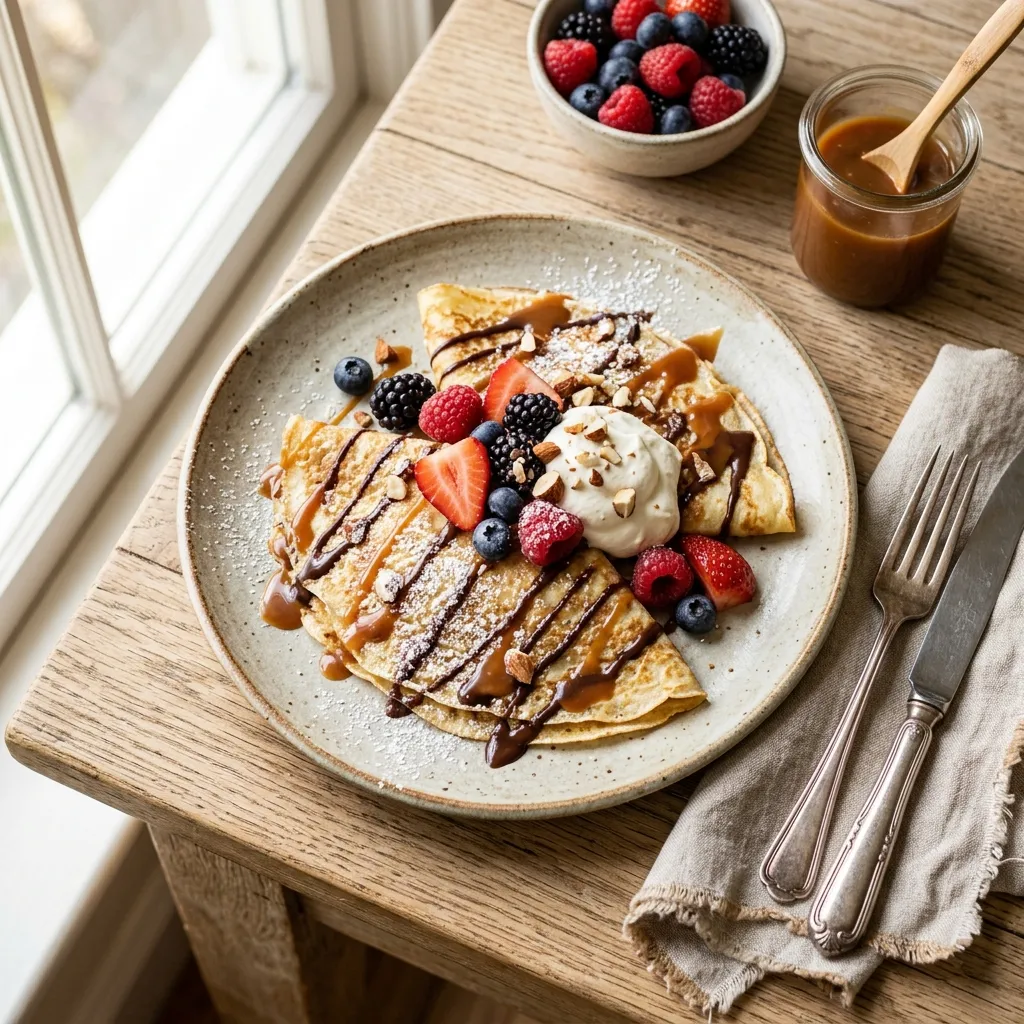
Overview
Crêpes trace back to 13th-century Brittany, in northwestern France, where buckwheat galettes were a staple food for a population that could not grow wheat in the region's cool, wet climate. When white wheat flour eventually became available, Bretons developed the thinner, sweeter crêpe alongside the heartier buckwheat galette. February 2nd — La Chandeleur (Candlemas) — is France's national crêpe day, when tradition holds that flipping a crêpe in your right hand while holding a gold coin in your left brings prosperity for the coming year. The batter is deceptively simple: flour, eggs, milk, a pinch of salt, and melted butter, whisked together and rested for at least an hour to allow the gluten to relax and the starch granules to fully hydrate. This rest is not optional — batter used immediately produces tough, rubbery crêpes rather than the tissue-thin, lace-edged rounds that define the dish. The cooking technique requires a very hot, lightly greased pan and a thin, even pour that is immediately swirled to coat the surface before the batter sets. Ayurvedically, the basic crêpe is a vehicle rather than a complete dish — its properties shift dramatically depending on the filling. The plain batter carries predominantly madhura rasa from the flour, milk, and eggs, with guru (heavy) and snigdha (oily) gunas from the dairy and egg content. Filled with butter and sugar, the crêpe becomes extremely kapha-increasing. Filled with fruit, it introduces lighter and more varied qualities.
The plain crêpe is predominantly kapha-increasing through its combination of wheat, dairy, eggs, and sugar. The madhura rasa and guru-snigdha gunas pacify vata well. Pitta is minimally affected by the basic preparation, though fillings alter this significantly.
Ingredients
- 1 cup All-purpose flour
- 2 whole Large eggs
- 1 cup Whole milk
- 1/2 cup Water
- 2 tablespoons Melted butter (plus more for the pan)
- 1 tablespoon Sugar
- 1/4 teaspoon Salt
- 1 teaspoon Vanilla extract (for sweet crêpes)
- 1 tablespoon Lemon juice (for serving)
- 2 tablespoons Powdered sugar (for serving)
Instructions
- Whisk together the flour, sugar, and salt in a large bowl. Make a well in the center and crack the eggs into it. Begin whisking from the center, gradually incorporating flour from the edges. This method prevents lumps more effectively than dumping everything together.
- Slowly pour in the milk while whisking, then add the water and melted butter. Whisk until smooth — the batter should be the consistency of heavy cream, thin enough to pour easily but not watery. Stir in the vanilla extract.
- Cover the batter and rest it in the refrigerator for at least 1 hour, or up to overnight. During this rest, the gluten relaxes (producing tender rather than chewy crêpes), the starch granules fully hydrate (producing even cooking), and small air bubbles dissipate (producing smooth surfaces).
- When ready to cook, stir the batter gently — it will have thickened during resting. If it is thicker than heavy cream, thin it with a tablespoon of milk at a time. The batter should flow freely and coat the pan in a thin, even layer.
- Heat an 8-10 inch nonstick skillet or well-seasoned crêpe pan over medium-high heat. Brush with a thin film of melted butter using a pastry brush or folded paper towel — too much butter causes the batter to pool and cook unevenly.
- Pour 3 tablespoons of batter into the center of the hot pan, then immediately tilt and rotate the pan in a circular motion to spread the batter into a thin, even circle that reaches the edges. This swirling motion must happen in the first 2-3 seconds before the batter sets.
- Cook the crêpe for 60-90 seconds until the edges turn golden, begin to curl away from the pan, and the surface appears dry and set. Loosen the edge with a thin spatula, then flip by sliding the spatula under the center and turning it quickly — or flip it with a confident wrist flick if you are practiced.
- Cook the second side for 30-45 seconds — it will develop golden spots (called the 'leopard pattern') but will not brown as evenly as the first side. This is normal and expected. This second side is traditionally the inside of the fold.
- Stack the finished crêpes on a plate, separated by nothing — they will not stick when freshly made. Keep warm by covering with a clean towel. Continue with the remaining batter, re-buttering the pan every 3-4 crêpes.
- Serve immediately: fold each crêpe in quarters, drizzle with fresh lemon juice, and dust with powdered sugar. Alternatively, fill with Nutella, fresh berries, jam, or whipped cream before folding.
Nutrition
These values are estimates calculated from the ingredient list and may vary based on brands, cooking methods, and serving size. Not a substitute for medical or dietary advice.
How This Recipe Affects Each Dosha
Vata
The soft, warm, well-cooked nature of crêpes is soothing for vata. The wheat, eggs, milk, and butter all contribute grounding, nourishing madhura rasa. The snigdha (oily) quality from butter and eggs counteracts vata's dryness. Crêpes filled with warm fruit compote, honey, or almond butter are particularly vata-balancing. The main consideration is that wheat can be difficult for some vata types — if grain sensitivity is present, buckwheat galettes (the Breton original) may be better tolerated due to buckwheat's easier digestibility for certain constitutions.
Pitta
Plain crêpes are relatively neutral for pitta — the sweet taste and cooling virya of the dairy-wheat combination are calming rather than aggravating. The concern for pitta lies entirely in the fillings: citrus, chocolate, and acidic fruits increase pitta, while sweet fruits, cream, and mild preparations balance it. The butter used in cooking adds a small amount of heat but is generally well-tolerated by pitta in this quantity. Overall, crêpes with appropriate fillings make a pleasant, non-aggravating breakfast for pitta types.
Kapha
Crêpes are problematic for kapha at every level. The refined wheat flour, cow's milk, eggs, butter, and sugar represent a concentrated dose of earth and water elements. Every component increases heaviness, congestion, and kapha accumulation. The sweet taste dominates completely, and sweetness is the primary taste that increases kapha. Even the cooking method — gentle, low-temperature — produces food that is soft and easy to eat in excess. Kapha types who eat crêpes will likely notice increased mucus production, sluggishness, and dullness afterward.
Plain crêpes provide minimal digestive stimulation — the batter contains no spices or pungent elements. The refined flour cooks quickly but offers little agni support. This makes pairing with warming spices (cinnamon, cardamom, ginger) particularly important to aid digestion of the wheat-dairy-egg combination.
Nourishes: rasamamsameda
Adjustments by Constitution
For Vata Types
Fill crêpes with warm stewed apples and cinnamon, which provide additional warming and grounding qualities. Add a pinch of cardamom to the batter for digestive support. Drizzle with warm honey (not hot — heated honey becomes difficult to digest). A small amount of almond butter spread inside adds healthy fat and protein. Eat crêpes warm, never cold from the refrigerator.
For Pitta Types
Fill with sweet, cooling fruits: ripe pears, sweet berries, or fresh figs. Use coconut milk in place of half the cow's milk in the batter for cooling properties. Add a pinch of cardamom and rose water to the batter. Avoid citrus fillings and chocolate. Fresh whipped cream (unsweetened) is a good pitta-balancing accompaniment. Maple syrup is preferable to honey for pitta as it is less heating.
For Kapha Types
Replace wheat flour with buckwheat flour for a lighter, more astringent base — this returns to the original Breton galette and is significantly less kapha-increasing. Use almond milk instead of cow's milk and reduce butter to a minimum. Omit the sugar from the batter. Fill with sautéed apples spiced with cinnamon, ginger, and clove — these warming spices counteract the heaviness of the grain. Skip cream-based fillings entirely. A drizzle of raw honey is preferable to sugar as it carries heating, scraping qualities that reduce kapha.
Seasonal Guidance
Crêpes are appropriate year-round in moderation, with fillings adjusted to the season. In winter, warm fruit compotes and warming spices make crêpes deeply satisfying. In spring and summer, lighter fruit fillings and minimal sugar keep the dish seasonally appropriate. Avoid heavy, cream-based fillings in spring when kapha is already elevated.
Best time of day: Morning is ideal for sweet crêpes, providing sustained energy from the protein and fat combination. The body's morning agni can handle the wheat-dairy combination better than evening digestion. Avoid eating crêpes late at night — the heaviness will sit in the stomach.
Cultural Context
Crêpes are among the most democratic of French foods, sold from street carts and elaborate crêperies alike. In Brittany, where the tradition originated, crêperies serve both sweet wheat crêpes and savory buckwheat galettes as a complete meal — galette as the main course, crêpe for dessert, accompanied by cidre (hard cider). La Chandeleur on February 2nd remains France's most universally observed food tradition, crossing all regional and class boundaries. The crêpe's simplicity has made it a global food, though the technique of achieving tissue-thin results from such a basic batter remains a matter of genuine skill.
Deeper Context
Origins
Crêpes are documented in Breton (Brittany) cookery from the 12th-13th centuries onward, with buckwheat (blé noir) as the original grain — wheat versions are a later medieval and early-modern innovation. Buckwheat suited Brittany's cool, acidic soils where wheat struggled. La Chandeleur (February 2, Catholic Candlemas) is the traditional French crêpe day, on which households flip crêpes while holding a coin for the coming year's prosperity — a pre-Christian Celtic light-returning festival absorbed into Catholic practice.
Food as Medicine
Not therapeutically designed. Easily-digestible carbohydrate-and-fat combination used across pediatric and convalescent nutrition in French tradition. Breton buckwheat galettes are complete-protein by amino-acid composition (buckwheat contains all essential amino acids, unlike most grains) and function as surprisingly balanced peasant nutrition. The wheat-flour sweet crêpe dilutes this nutritional advantage.
Ritual & Seasonal Role
La Chandeleur (February 2) is the national French crêpe festival. Shrove Tuesday (Mardi Gras) is a secondary French crêpe occasion, paralleling British Pancake Day. Bretagne crêperies serve crêpes year-round as the regional café-restaurant format. Weekend family breakfast across France.
Classical Pairings & Cautions
Sugar and lemon juice (classical), Nutella, fresh fruit, chocolate sauce, salted caramel. Savory buckwheat versions with ham, egg, cheese, or mushroom. Coffee or cider. Cautions: gluten intolerance precludes wheat-flour versions (buckwheat galettes are gluten-free when prepared from pure buckwheat); dairy and egg allergies; sugar load in sweet versions; Kapha types should favor the thinner savory preparations.
Cross-Tradition View
How other medical and food-wisdom traditions read this dish. Each tradition names the same physiological reality in its own language — the agreements across them are where universal principles live.
Traditional Chinese Medicine
Flour is Spleen-Qi-tonifying; egg builds Yin and Blood; milk is cool-Yin-building; butter is warm-moistening. A Yin-and-Qi-building gentle preparation. TCM physicians would recognize crêpes as children's food by classical diagnostic standards — easily digested, nourishing across deficiency patterns, and appropriate for convalescence.
Greek Humoral
Hot-wet sanguine-building. Galenic children's and convalescent food — the combination of grain, egg, milk, and cooked fat reflects the classical Hippocratic prescription for weak digestion. Appropriate across most temperaments; melancholic types benefit particularly from the sanguine-building quality.
Ayurveda
Cooling virya (mild), sweet vipaka. Pacifies Vata through unctuousness and warmth. Mildly aggravates Kapha through the flour-milk combination. A gentle dish appropriate for most constitutional types — similar in principle to Indian cheela or dosa, without the fermentation.
Breton Celtic
Crêpes originated in Brittany (Bretagne) as a Celtic buckwheat-based peasant food — the original galette bretonne was buckwheat, and the modern wheat-flour crêpe sucrée is a later innovation. La Chandeleur (February 2) is the traditional French crêpe festival, merging Catholic Candlemas with older pre-Christian Celtic light-returning observances. Brittany's crêperies preserve the Celtic heritage distinct from broader French cookery — buckwheat galettes are savory and served with lard, wheat crêpes are sweet and served with butter.
Chef's Notes
The water in this batter is important — it produces a lighter, more delicate crêpe than an all-milk batter. The first crêpe from any batch is traditionally sacrificed to calibrate the pan temperature and batter consistency; the French call this the 'crêpe du chat' (the cat's crêpe). If your crêpes are tearing when flipped, the batter may be too thin or the pan may be too hot. If they are thick and doughy, add more liquid and increase the heat. A properly made crêpe should be thin enough to read newsprint through it — an exaggeration, but not by much.
Frequently Asked Questions
Is Crêpes good for my dosha?
The plain crêpe is predominantly kapha-increasing through its combination of wheat, dairy, eggs, and sugar. The madhura rasa and guru-snigdha gunas pacify vata well. Pitta is minimally affected by the basic preparation, though fillings alter this significantly. The soft, warm, well-cooked nature of crêpes is soothing for vata. Plain crêpes are relatively neutral for pitta — the sweet taste and cooling virya of the dairy-wheat combination are calming rather than aggravating. Crêpes are problematic for kapha at every level.
When is the best time to eat Crêpes?
Morning is ideal for sweet crêpes, providing sustained energy from the protein and fat combination. The body's morning agni can handle the wheat-dairy combination better than evening digestion. Avoid eating crêpes late at night — the heaviness will sit in the stomach. Crêpes are appropriate year-round in moderation, with fillings adjusted to the season. In winter, warm fruit compotes and warming spices make crêpes deeply satisfying. In spring and summer, lighter fr
How can I adjust Crêpes for my constitution?
For Vata types: Fill crêpes with warm stewed apples and cinnamon, which provide additional warming and grounding qualities. Add a pinch of cardamom to the batter for For Pitta types: Fill with sweet, cooling fruits: ripe pears, sweet berries, or fresh figs. Use coconut milk in place of half the cow's milk in the batter for cooling
What are the Ayurvedic properties of Crêpes?
Crêpes has madhura taste (rasa), sheeta energy (virya), and madhura post-digestive effect (vipaka). Its qualities (gunas) are guru,snigdha. It nourishes rasa,mamsa,meda. Plain crêpes provide minimal digestive stimulation — the batter contains no spices or pungent elements. The refined flour cooks quickly but offers little agni support. This makes pairing with warming spices (cinnamon, cardamom, ginger) particularly important to aid digestion of the wheat-dairy-egg combination.