Couscous with Seven Vegetables
Moroccan Recipe
Overview
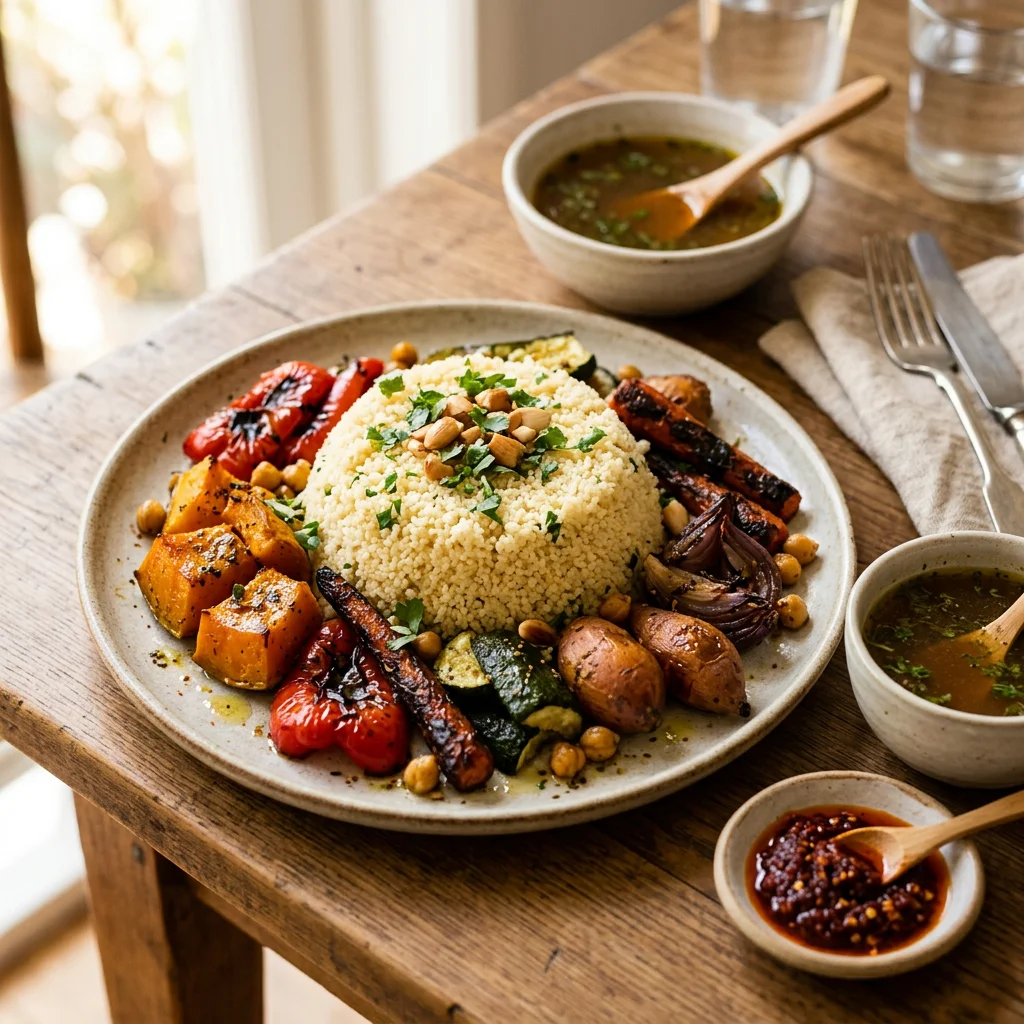
Couscous with seven vegetables is Morocco's most ceremonial dish — served every Friday after midday prayers, at weddings, at naming ceremonies, and whenever a family gathers to mark something worth celebrating. The number seven holds deep significance in Moroccan culture, and the vegetables are chosen not just for flavor but for the symbolic completeness the number represents. Each household selects its own seven from the seasonal abundance: turnips, carrots, cabbage, zucchini, pumpkin, tomatoes, onions, chickpeas, fava beans, and more. The preparation is an act of devotion that often takes the entire Friday morning. The couscous itself — hand-rolled semolina steamed multiple times in a couscoussier over the simmering vegetable broth — is a technique that requires patience and rhythm. The grains are steamed, raked apart, moistened with broth, and steamed again, up to three times, until each grain is separate, fluffy, and perfumed with the rising vapors. The vegetables cook slowly in a saffron-ginger broth below, each one added according to its cooking time so that everything finishes together. Ayurvedically, this dish is a study in balanced nutrition. The seven-vegetable tradition naturally creates a spectrum of rasas (tastes) and nutritional profiles in a single meal. Root vegetables provide grounding sweet rasa, tomatoes add sour, turnips contribute pungent and bitter notes, and the chickpeas bring astringent quality. The saffron-ginger broth acts as an anupana — a carrier vehicle that enhances the bioavailability of nutrients from every vegetable. The couscous itself, being steamed wheat, is lighter than bread and absorbs the medicinal broth like a sponge.
Balances Vata well with warmth and moisture. The variety of vegetables provides a natural spectrum of qualities that makes this dish relatively tridoshic. May increase Kapha if consumed in large quantities due to the grain base.
Ingredients
- 500 g Couscous (medium grain)
- 4 tbsp Olive oil
- 2 large Onions (quartered)
- 4 cloves Garlic (whole)
- 1 tbsp Fresh ginger (grated)
- 1/2 tsp Saffron threads (steeped in warm water)
- 1 tsp Ground turmeric
- 1/2 tsp Ground cinnamon
- 3 medium Carrots (cut into large chunks)
- 2 medium Turnips (quartered)
- 2 medium Zucchini (cut into thick rounds)
- 300 g Butternut squash (large cubes)
- 1/4 head Cabbage (cut into wedges)
- 1 can (400g) Chickpeas (drained and rinsed)
- 2 medium Tomatoes (quartered)
- 1/2 cup Fresh cilantro (tied in a bundle)
Instructions
- Place the onions, garlic, ginger, olive oil, saffron with soaking liquid, turmeric, cinnamon, cilantro bundle, and 2 liters of water in the bottom of a couscoussier or large stockpot. Season generously with salt and black pepper. Bring to a boil, then reduce to a steady simmer.
- After 15 minutes of simmering the broth, add the carrots, turnips, and butternut squash — the hardest vegetables that need the longest cooking time. Continue simmering for 20 minutes.
- Meanwhile, prepare the couscous. Place the dry couscous in a large shallow bowl. Drizzle with 1 tablespoon of olive oil and a pinch of salt. Add warm water gradually, raking the grains with your fingers to separate them and prevent clumping.
- Set the couscous in the steamer basket (or a cheesecloth-lined colander) over the simmering broth. Steam uncovered for 20 minutes. Remove, rake the grains apart again, sprinkle with a little water, and return to steam for another 15 minutes. Repeat once more for a total of three steamings.
- Add the cabbage, tomatoes, and chickpeas to the broth 30 minutes before the vegetables are finished. Add the zucchini during the last 15 minutes — it cooks quickly and should remain slightly firm.
- Mound the couscous on a large communal platter, creating a well in the center. Arrange the vegetables artfully over and around the couscous. Remove the cilantro bundle.
- Ladle the saffron broth generously over the couscous, allowing it to soak in. Serve the remaining broth in a separate bowl so each person can moisten their portion as they wish.
- Present at the center of the table with small bowls of harissa on the side for those who want heat.
Nutrition
These values are estimates calculated from the ingredient list and may vary based on brands, cooking methods, and serving size. Not a substitute for medical or dietary advice.
How This Recipe Affects Each Dosha
Vata
The warm broth-soaked couscous, slow-cooked root vegetables, and olive oil create deeply Vata-pacifying conditions. The saffron-ginger broth is warm and moist — precisely what Vata needs. The variety of vegetables ensures multiple nutrient profiles are represented, preventing the nutritional gaps that can aggravate Vata over time.
Pitta
The saffron and turmeric both have cooling post-digestive effects that temper the warming ginger and cinnamon. The sweet root vegetables (squash, carrots) are naturally Pitta-friendly. The absence of heavy chili heat makes this gentler than many Moroccan dishes for Pitta types, though the overall warming nature means moderation during summer.
Kapha
The wheat-based couscous and starchy vegetables add heaviness that Kapha types should balance carefully. However, the warming spices and the pungent quality of turnips and ginger help counteract this. Kapha types benefit from generous harissa alongside and smaller portions of the grain itself.
The ginger-saffron broth is a gentle agni stimulant that also acts as a carrier medium, enhancing absorption of nutrients from the diverse vegetables. The three-steaming process makes the couscous lighter and easier to digest than regular wheat preparations. The variety of vegetables ensures the digestive system encounters multiple types of fiber and nutrients, which promotes healthy peristalsis.
Nourishes: Rasa (plasma), Rakta (blood), Mamsa (muscle), Meda (fat), Asthi (bone)
Adjustments by Constitution
For Vata Types
Drizzle each portion with argan oil at serving for extra unctuousness. Add a few Medjool dates to the broth during the last 15 minutes. Use extra saffron and ginger — both warm and stimulate Vata's variable digestive fire. Serve with a small bowl of preserved lemon on the side for its appetite-stimulating sour rasa.
For Pitta Types
Increase saffron and reduce ginger. Replace turnips with sweet potatoes for a less pungent vegetable selection. Add fresh mint to the garnish. Omit harissa on the side — instead offer a cooling cucumber-yogurt sauce with orange blossom water.
For Kapha Types
Replace couscous with barley couscous (lighter grain) or serve a smaller grain portion with more vegetables. Increase turnips and cabbage, which are lighter and more pungent. Add a generous teaspoon of harissa directly to the broth. Reduce olive oil and omit any butter that some recipes call for at serving.
Seasonal Guidance
Traditionally a year-round Friday dish, but best in cooler months when the warming broth and heavy grain base are most appropriate. In spring and summer, emphasize lighter vegetables (zucchini, green beans, artichokes) and reduce the starchy root vegetables. Increase saffron in summer for its cooling post-digestive effect. In winter, add quince or dried fruits to the broth for extra sweetness and warmth.
Best time of day: Lunch — this is the traditional Friday midday meal in Morocco, served after prayers when the family gathers. The substantial grain and vegetable combination requires strong midday agni to digest well.
Cultural Context
Friday couscous is the anchor of Moroccan family life. The entire week flows toward it — shopping at the souk for the freshest vegetables, the morning spent hand-rolling the grain, the slow building of the broth. In traditional households, the eldest woman presides over the couscoussier while daughters and daughters-in-law prepare vegetables and set the table. The dish is served on a single large platter from which everyone eats with their right hand, forming small balls of couscous and vegetables. Guests are always welcome at the Friday table — refusing to share couscous is considered deeply inhospitable. UNESCO inscribed couscous on its Intangible Cultural Heritage list in 2020, recognizing it as a shared tradition across the Maghreb.
Deeper Context
Origins
Couscous has continuous use in the Maghreb for at least 900 years — the earliest documented references appear in 12th-13th century Andalusian cookbooks, reflecting the Berber-Andalusian-Arab culinary culture of the medieval Maghreb. UNESCO designated couscous (collectively across Morocco, Algeria, Tunisia, Libya) as Intangible Cultural Heritage in 2020. The seven-vegetables format reflects Berber numerical symbolism. Friday-couscous after Jumu'ah congregational prayer is cross-Maghreb tradition dating to the medieval period.
Food as Medicine
Couscous-and-chickpea combination provides complete protein. Saffron has substantial modern research for mood support (comparable to low-dose SSRIs in some studies) and antioxidant activity. The seven-vegetables architecture ensures phytonutrient diversity. Ginger supports digestion. A genuinely therapeutic traditional family meal with substantial nutritional depth.
Ritual & Seasonal Role
Friday after Jumu'ah prayer — the defining Friday-family-meal tradition across the Maghreb. Weddings, Ramadan iftar tables, funeral meals, major family celebrations. Year-round. The preparation is multigenerational family activity, with grandmothers teaching younger women the proper technique for rolling and steaming couscous.
Classical Pairings & Cautions
Additional vegetable accompaniments, meat (lamb, chicken, or beef — typically served on top), harissa on the side for heat, buttermilk (lben) or mint tea alongside. Cautions: gluten intolerance precludes semolina couscous (some gluten-free alternatives use rice or sorghum couscous); FODMAP sensitivity from chickpeas and some vegetables; saffron in high doses is uterine-stimulating; the preparation is time-intensive (2-4 hours traditional).
Cross-Tradition View
How other medical and food-wisdom traditions read this dish. Each tradition names the same physiological reality in its own language — the agreements across them are where universal principles live.
Traditional Chinese Medicine
Couscous (semolina wheat) is Spleen-Qi-tonifying; saffron moves Heart Blood and opens Heart meridian; seven vegetables contribute variable Qi-and-Blood support; chickpeas build Kidney essence; ginger warms and disperses. A comprehensive Qi-Blood-and-Essence tonic with Heart-Shen-calming saffron — TCM physicians would recognize Moroccan couscous as genuinely therapeutic communal meal.
Greek Humoral
Hot-wet sanguine-building. Galenic-suitable complete preparation — the grain-legume-vegetable-spice architecture matches classical Mediterranean complete-meal prescriptions, with saffron providing melancholic-dispelling heat.
Ayurveda
Heating virya, sweet vipaka. Pacifies Vata substantially through warmth and unctuousness. Mildly Kapha-aggravating through couscous and chickpea density. Pitta-neutral. The saffron adds classical mood-elevating and blood-moving accent.
Maghrebi Friday Tradition
Couscous is the national dish of Morocco, Algeria, Tunisia, and Libya. UNESCO listed it as Intangible Cultural Heritage in 2020 as a shared heritage across all four Maghreb nations. The seven vegetables (typically carrot, turnip, zucchini, pumpkin, cabbage, chickpeas, and one other) reflect the Berber numerical symbolism of seven as a sacred-and-complete number. Friday couscous is cross-Maghreb Muslim tradition — the dish follows Jumu'ah (Friday congregational prayer) as the communal family meal, bringing extended family together in a tradition that has stable continuity across a millennium.
Chef's Notes
The three-steaming method is what separates extraordinary couscous from ordinary — each steaming makes the grains lighter and fluffier. If using instant couscous, you can reconstitute it with the hot broth, but the texture will be denser. A couscoussier is ideal, but a colander lined with cheesecloth set over a stockpot works well — seal the junction with a damp kitchen towel to prevent steam from escaping around the edges. The vegetables should be cut large and rustic; this is a generous, abundant dish, not a refined one. Tradition says the number of vegetables must be odd — seven is standard, but five or nine are acceptable.
Frequently Asked Questions
Is Couscous with Seven Vegetables good for my dosha?
Balances Vata well with warmth and moisture. The variety of vegetables provides a natural spectrum of qualities that makes this dish relatively tridoshic. May increase Kapha if consumed in large quantities due to the grain base. The warm broth-soaked couscous, slow-cooked root vegetables, and olive oil create deeply Vata-pacifying conditions. The saffron and turmeric both have cooling post-digestive effects that temper the warming ginger and cinnamon. The wheat-based couscous and starchy vegetables add heaviness that Kapha types should balance carefully.
When is the best time to eat Couscous with Seven Vegetables?
Lunch — this is the traditional Friday midday meal in Morocco, served after prayers when the family gathers. The substantial grain and vegetable combination requires strong midday agni to digest well. Traditionally a year-round Friday dish, but best in cooler months when the warming broth and heavy grain base are most appropriate. In spring and summer, emphasize lighter vegetables (zucchini, green
How can I adjust Couscous with Seven Vegetables for my constitution?
For Vata types: Drizzle each portion with argan oil at serving for extra unctuousness. Add a few Medjool dates to the broth during the last 15 minutes. Use extra saff For Pitta types: Increase saffron and reduce ginger. Replace turnips with sweet potatoes for a less pungent vegetable selection. Add fresh mint to the garnish. Omit ha
What are the Ayurvedic properties of Couscous with Seven Vegetables?
Couscous with Seven Vegetables has Sweet, Pungent, Sour, Astringent, Bitter taste (rasa), Heating energy (virya), and Sweet post-digestive effect (vipaka). Its qualities (gunas) are Warm, Moist, Heavy, Slightly Oily. It nourishes Rasa (plasma), Rakta (blood), Mamsa (muscle), Meda (fat), Asthi (bone). The ginger-saffron broth is a gentle agni stimulant that also acts as a carrier medium, enhancing absorption of nutrients from the diverse vegetables. The three-steaming process makes the couscous lighter and easier to digest than regular wheat preparations. The variety of vegetables ensures the digestive system encounters multiple types of fiber and nutrients, which promotes healthy peristalsis.