Cornbread
American Recipe
Overview
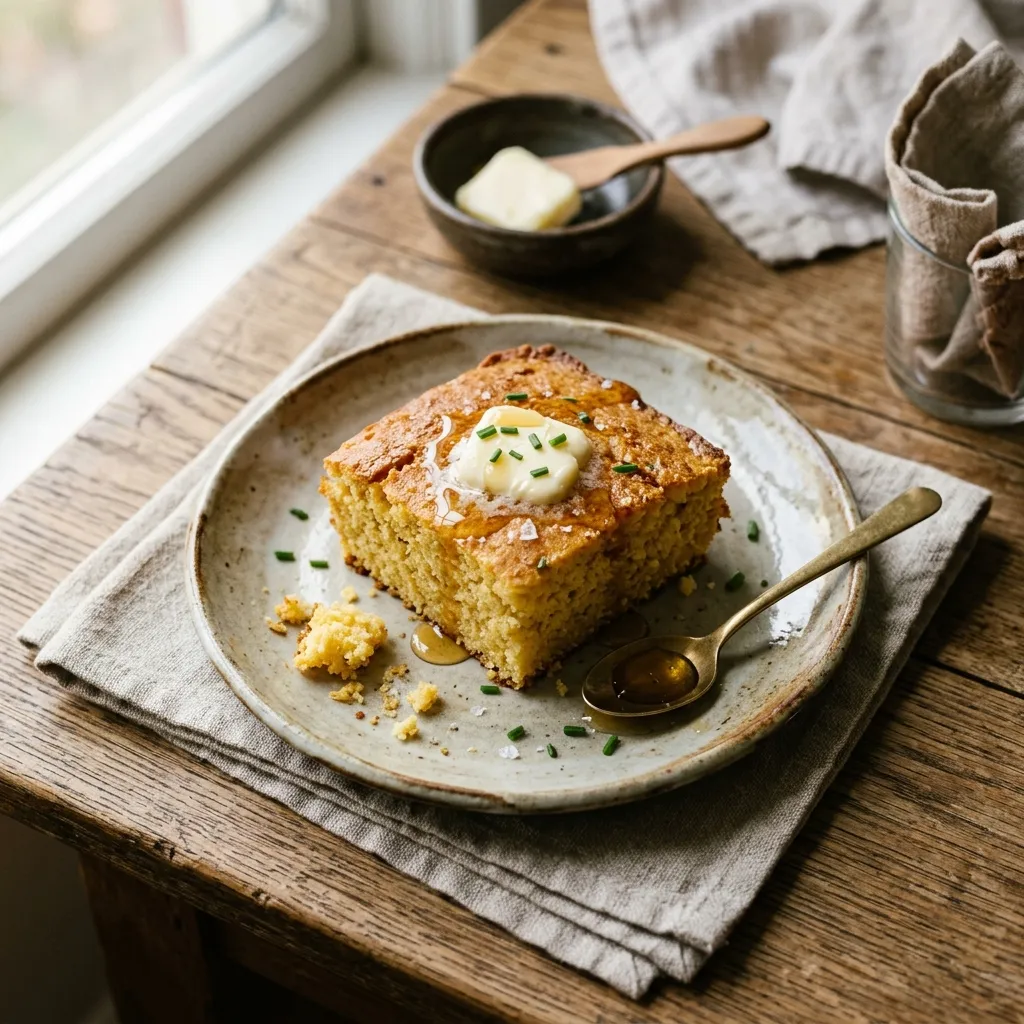
Cornbread predates European colonization of North America by several thousand years — Indigenous peoples throughout the continent ground dried corn into meal and baked it in various forms, from the ashcakes of the Southeast to the piki bread of the Hopi. The Southern American version, baked in a preheated cast-iron skillet with bacon drippings or butter, produces a bread with a shattering golden crust and a tender, slightly crumbly interior that serves as the backbone of Southern meals. The Northern-Southern divide in cornbread is a genuine culinary difference rooted in corn variety. Southern cornbread uses white or yellow cornmeal with little or no sugar and no wheat flour, relying on the natural sweetness of the corn itself. Northern cornbread adds sugar and wheat flour, producing something closer to corn cake. This recipe takes the Southern approach — cornmeal-forward, lightly sweetened, and dependent on the hot skillet for its characteristic crust. Ayurvedically, corn is sweet and astringent with a heating energy and pungent post-digestive effect — unusual among grains, which are typically cooling. This heating quality makes cornbread more stimulating to agni than wheat bread, while the dry, light nature of cornmeal creates a bread that is less kapha-aggravating than flour-based alternatives. The buttermilk in the batter adds sour taste and beneficial cultures that further support digestion.
Mildly increases vata due to the dry, light, and rough qualities of cornmeal. Mildly increases pitta through corn's inherent heating energy. The light and dry nature makes this one of the least kapha-aggravating breads, making it a better grain choice for kapha types than wheat bread.
Cornbread's light, dry, and heating qualities make it useful for kapha conditions involving excess mucus, heaviness, or sluggish digestion. As a bread substitute, it provides starchy satisfaction with less kapha-aggravating weight than wheat. Not therapeutic for vata conditions where heavier, moister grains are indicated.
Ingredients
- 1.5 cups yellow cornmeal (medium grind, stone-ground preferred)
- 0.5 cup all-purpose flour
- 1 tablespoon baking powder
- 0.5 teaspoon baking soda
- 0.75 teaspoon sea salt
- 2 tablespoons sugar (optional, reduce or omit for true Southern style)
- 1.25 cups buttermilk
- 2 large eggs
- 4 tablespoons unsalted butter (3 tablespoons melted for batter, 1 tablespoon for skillet)
Instructions
- Place a 10-inch cast-iron skillet in the oven and preheat to 425°F (220°C). The skillet must be screaming hot before the batter goes in — this is what creates the signature crust. Allow at least 15 minutes of preheating.
- Whisk together cornmeal, flour, baking powder, baking soda, salt, and sugar in a large bowl. The ratio of cornmeal to flour here (3:1) keeps the corn flavor dominant while providing just enough gluten structure to hold the bread together.
- In a separate bowl, whisk buttermilk, eggs, and 3 tablespoons of melted butter until combined. The buttermilk's acid reacts with the baking soda to produce carbon dioxide, which creates the bread's rise — this reaction begins immediately upon mixing, so work quickly from this point.
- Pour the wet ingredients into the dry ingredients and stir with a wooden spoon or spatula until just combined. The batter will be slightly lumpy — this is correct. Overmixing develops gluten and produces a tough, chewy cornbread rather than a tender, crumbly one. Stop stirring the moment no dry flour is visible.
- Carefully remove the hot skillet from the oven. Add the remaining tablespoon of butter and swirl to coat the bottom and sides as it melts and sizzles. Pour the batter into the hot skillet — it should audibly sizzle on contact. This immediate searing is what forms the crust.
- Return the skillet to the oven and bake for 20-25 minutes until the top is golden and a toothpick inserted in the center comes out clean. The edges should be deeply golden and pulling slightly away from the skillet walls.
- Let the cornbread cool in the skillet for 5 minutes before slicing into wedges. Serve warm with butter. Cornbread is best eaten within a few hours of baking — it stales quickly due to the low gluten content, though leftover cornbread crumbles well for stuffing or cornbread salad.
Nutrition
These values are estimates calculated from the ingredient list and may vary based on brands, cooking methods, and serving size. Not a substitute for medical or dietary advice.
How This Recipe Affects Each Dosha
Vata
Cornbread's dry, light, and rough qualities run counter to vata's needs. Cornmeal lacks the moist, heavy, and sticky qualities of wheat that ground vata dosha. The crumbly texture indicates low cohesion — a quality that mirrors vata's tendency toward instability. However, the sweet taste, warm preparation, and addition of butter and buttermilk partially offset these drying qualities. Vata types can eat cornbread when it's served warm with generous butter, but it should not replace wheat bread as a regular staple.
Pitta
Corn's heating virya and pungent vipaka make cornbread mildly pitta-aggravating — a distinction from most grains, which are cooling. The heating quality is moderate rather than intense, so pitta types can tolerate cornbread in reasonable portions, especially during cooler months. The buttermilk's cooling quality and the sweet taste of the corn provide some pitta pacification. More problematic when served alongside other heating foods like chili or barbecue, where the cumulative heat becomes significant.
Kapha
Cornbread is among the most kapha-friendly bread options in American cuisine. The light, dry qualities of cornmeal counteract kapha's heavy, moist tendencies. The heating energy stimulates digestion, and the low gluten content means less of the sticky, mucus-forming quality that wheat bread carries. The crumbly texture reflects a drying action that helps clear kapha accumulation in the digestive tract. The main kapha concern is the butter and sugar — reduce or eliminate both for a truly kapha-balancing preparation.
Cornbread has a mildly stimulating effect on agni due to corn's heating energy and pungent vipaka. The light, dry quality is easier for agni to process than dense wheat bread. The buttermilk contributes beneficial bacteria and acids that support the digestive environment. Overall, cornbread is a digestively lighter grain preparation that does not heavily tax agni.
Nourishes: rasamamsa
Adjustments by Constitution
For Vata Types
Increase butter to 5 tablespoons in the batter and add 2 tablespoons of honey. Replace half the cornmeal with wheat flour (reversing the ratio) for a moister, more cohesive bread. Add a pinch of cardamom and cinnamon for warming sweetness. Serve with ghee and a drizzle of warm honey. Eating cornbread alongside a soup or stew, where it can absorb moisture, significantly improves its vata compatibility.
For Pitta Types
Replace butter with ghee in both the batter and the skillet for a cooler fat. Add 1 tablespoon of shredded coconut to the batter for cooling sweet taste. Serve alongside cooling foods — a cucumber salad, yogurt, or mild beans rather than chili or barbecue. Increase the sugar slightly to 3 tablespoons, as sweet taste directly pacifies pitta.
For Kapha Types
Eliminate the sugar entirely and reduce butter to 1 tablespoon in the batter. Replace buttermilk with a mix of water and a splash of lemon juice. Add 1 teaspoon each of ground ginger and black pepper to the batter for metabolic stimulation. Use the skillet-searing method with only a thin coating of oil. Serve a small wedge alongside a spicy vegetable soup rather than as a standalone starch. The goal is to maintain the light, dry qualities that benefit kapha while minimizing the sweet and oily additions.
Seasonal Guidance
Best suited to cooler months when the heating energy of corn supports the body's need for internal warmth. The dry, light quality is less problematic in fall and winter when agni is naturally stronger and the body is building reserves. Less appropriate in summer when the heating energy adds to ambient pitta.
Best time of day: Ideal as a lunch or early dinner accompaniment. The light quality means it does not sit as heavily as wheat bread for evening meals, but the heating energy is best utilized when agni is active rather than winding down.
Cultural Context
Corn was domesticated from teosinte grass in central Mexico approximately 9,000 years ago and spread throughout the Americas, becoming the foundational grain of dozens of civilizations. The nixtamalization process — soaking corn in alkaline solution — was a Mesoamerican innovation that dramatically increases the bioavailability of niacin and amino acids, preventing pellagra in corn-dependent populations. American cornbread does not use nixtamalized corn (that produces masa for tortillas), which means it lacks this nutritional advantage. Cast-iron skillet cornbread became synonymous with Southern identity during the 19th century, when corn was the affordable staple grain and cast iron was the universal cooking vessel.
Deeper Context
Origins
Cornbread's lineage runs through Cherokee, Creek, and Choctaw breads, adapted by colonial Southern cooks — both African-American and European-American — into the buttermilk-based skillet preparation that dominates today. The sweet-vs-not-sweet cornbread debate maps regionally: Southern cornbread is traditionally unsweetened, Northern versions add sugar. The regional difference reflects 19th-century grain-milling economics as much as cultural preference.
Food as Medicine
Corn has a vast Indigenous American medicinal literature — used for digestive complaints, postpartum nutrition, and convalescence. The Indigenous practice of nixtamalization (soaking corn in lime water to make tortillas and hominy) releases niacin and prevents pellagra; the Southern cornbread tradition lost this knowledge and contributed to pellagra epidemics across the American South in the early 20th century. Non-nixtamalized cornbread is nutritionally inferior to its Mesoamerican ancestor.
Ritual & Seasonal Role
Year-round Southern staple rather than ceremonial, but carries strong associations with Sunday dinner, church suppers, and family reunions. African-American tradition features cornbread at New Year's Day meals alongside black-eyed peas and collard greens for luck and prosperity. In Appalachian tradition, soul bread and cathead biscuits are cornbread's cousins and carry overlapping family-recipe lineages.
Classical Pairings & Cautions
Served with butter and honey, alongside greens, pinto beans, or chili. Soaked in milk or buttermilk as a supper dish (cornbread and milk) in Southern and Appalachian tradition. Cautions: corn allergies; the refined-cornmeal form has a high glycemic index; Vata imbalance requires substantial added butter; celiac patients can use the dish if cornmeal is certified gluten-free, though cross-contamination during milling is common.
Cross-Tradition View
How other medical and food-wisdom traditions read this dish. Each tradition names the same physiological reality in its own language — the agreements across them are where universal principles live.
Traditional Chinese Medicine
Cornmeal is sweet-neutral, tonifies Spleen Qi and benefits the Stomach — one of TCM's most neutral grains, appropriate across deficiency patterns. Buttermilk is cool-sour, builds Yin and soothes the Liver. Butter is warm-wet and Spleen-tonifying. Eggs are Yin-and-Blood-building. The dish functions as a Spleen-Qi-building quickbread with mild Liver-cooling properties — appropriate for hot-weather digestive issues and summer heat.
Greek Humoral
Neutral-wet cornmeal becomes hot-dry in baking; buttermilk cold-wet; butter hot-wet; eggs wet. Averages to hot-wet temperament — sanguine-building. Appropriate year-round with seasonal adjustment (more buttermilk in summer, more butter in winter). A solid Galenic-balanced quickbread that Hippocratic physicians would have recognized as well-constructed.
Ayurveda
Heating virya, pungent vipaka. Corn is classically Vata-aggravating through dryness, mitigated by the buttermilk and butter. Pacifies Kapha through dryness and warmth; mildly aggravates Pitta through baking heat. The buttermilk is crucial — without it, the dish becomes a significant Vata-aggravator and loses much of its tolerability across constitutional types.
Indigenous Southeastern
Cornmeal breads are central to Cherokee, Creek, and Choctaw traditional cookery — the direct ancestors of Southern US cornbread. Indigenous preparations included bean bread, sweet cornbread, and ash-cooked cornmeal cakes. The Three Sisters planting system (corn, beans, squash) supplied the ingredient base; cornbread is the single most culturally-continuous dish from pre-contact Southeastern Indigenous cookery to modern Southern American tables.
Chef's Notes
Stone-ground cornmeal retains the germ and hull, providing more corn flavor, fiber, and nutrients than degerminated commercial varieties. If you cannot find buttermilk, substitute 1.25 cups of whole milk mixed with 1 tablespoon of white vinegar — let it sit 5 minutes before using. For a richer cornbread, replace the butter with bacon drippings in both the batter and the skillet — this is the traditional Southern method.
Frequently Asked Questions
Is Cornbread good for my dosha?
Mildly increases vata due to the dry, light, and rough qualities of cornmeal. Mildly increases pitta through corn's inherent heating energy. The light and dry nature makes this one of the least kapha-aggravating breads, making it a better grain choice for kapha types than wheat bread. Cornbread's dry, light, and rough qualities run counter to vata's needs. Corn's heating virya and pungent vipaka make cornbread mildly pitta-aggravating — a distinction from most grains, which are cooling. Cornbread is among the most kapha-friendly bread options in American cuisine.
When is the best time to eat Cornbread?
Ideal as a lunch or early dinner accompaniment. The light quality means it does not sit as heavily as wheat bread for evening meals, but the heating energy is best utilized when agni is active rather than winding down. Best suited to cooler months when the heating energy of corn supports the body's need for internal warmth. The dry, light quality is less problematic in fall and winter when agni is naturally stronger
How can I adjust Cornbread for my constitution?
For Vata types: Increase butter to 5 tablespoons in the batter and add 2 tablespoons of honey. Replace half the cornmeal with wheat flour (reversing the ratio) for a For Pitta types: Replace butter with ghee in both the batter and the skillet for a cooler fat. Add 1 tablespoon of shredded coconut to the batter for cooling sweet tas
What are the Ayurvedic properties of Cornbread?
Cornbread has sweet,astringent,sour taste (rasa), heating energy (virya), and pungent post-digestive effect (vipaka). Its qualities (gunas) are light,dry,warm. It nourishes rasa,mamsa. Cornbread has a mildly stimulating effect on agni due to corn's heating energy and pungent vipaka. The light, dry quality is easier for agni to process than dense wheat bread. The buttermilk contributes beneficial bacteria and acids that support the digestive environment. Overall, cornbread is a digestively lighter grain preparation that does not heavily tax agni.