Coq au Vin
French Recipe
Overview
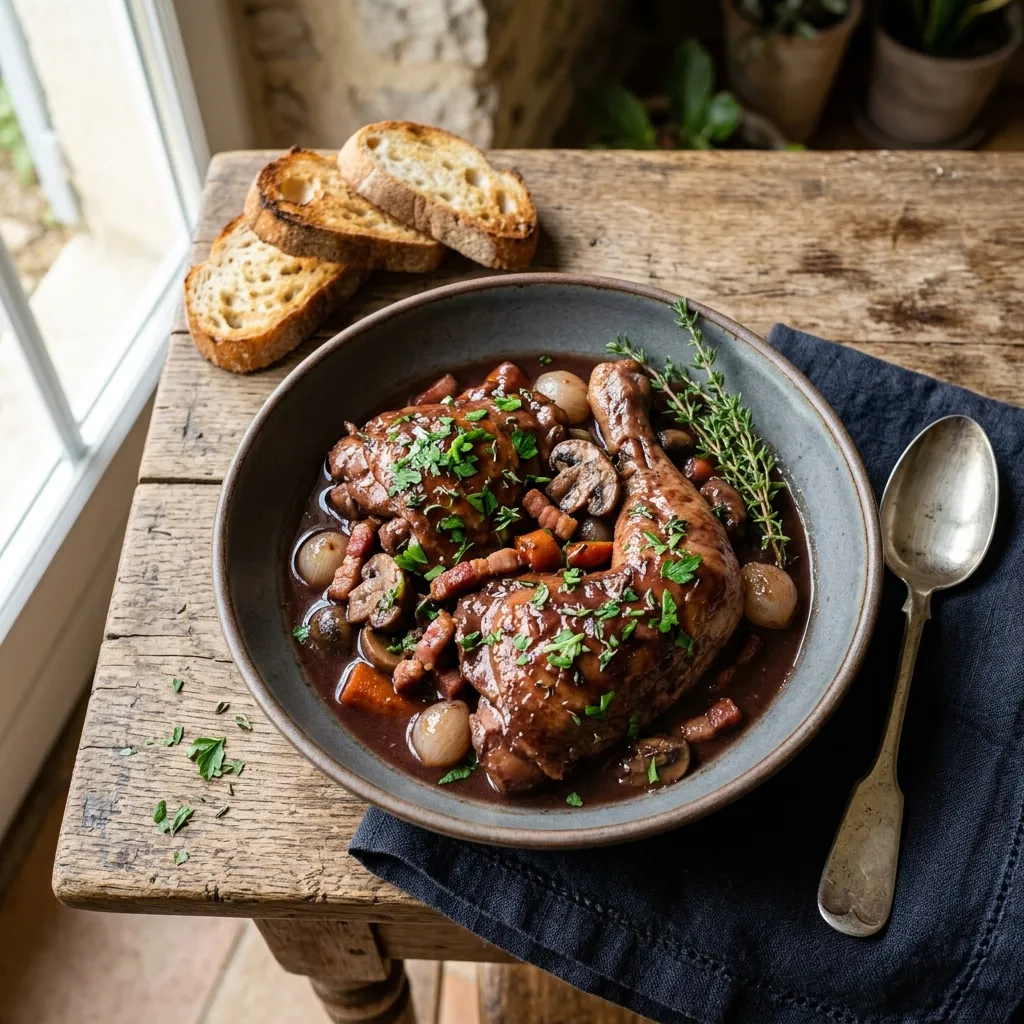
Coq au vin — rooster braised in wine — was born from the practical problem of making tough, old roosters edible. Young chickens were too valuable for their egg production to slaughter, so French farmhouse cooks developed the technique of marinating and slow-braising aged birds in local wine to break down their dense, fibrous muscle tissue. The acid in the wine, combined with hours of low-temperature cooking, transforms an otherwise unchewable bird into tender, deeply flavored meat that falls from the bone. The dish varies dramatically by region: in Burgundy, it is made with red Burgundy wine; in Alsace, with Riesling; in the Jura, with vin jaune; in Auvergne, with the local gamay. Julia Child's 1961 recipe in 'Mastering the Art of French Cooking' popularized the Burgundy version internationally, and it has become the default. The traditional garnish of pearl onions, mushrooms, and lardons adds textural contrast and additional umami depth to the wine-enriched braising liquid. Ayurvedically, coq au vin is a warming, building, deeply nourishing preparation. The long braising process breaks down the chicken's connective tissue into gelatin, creating a broth rich in amino acids that support joint and gut health. The red wine marinade adds astringent and heating qualities. The overall dish is guru (heavy), ushna (warming), and snigdha (oily) — a powerful vata-pacifying combination that also increases pitta and kapha in excess.
Coq au vin is deeply warming and building, making it strongly vata-pacifying through its heavy, oily, hot qualities. The wine, garlic, and long-cooked meat increase pitta moderately. The overall heaviness and richness increase kapha, though less dramatically than purely dairy-based dishes.
The gelatin-rich braising liquid provides direct support for joint tissue, gut lining repair, and connective tissue health. This makes coq au vin a therapeutic food for individuals recovering from surgery, dealing with joint inflammation, or needing to rebuild tissue after illness. The slow-cooked chicken is among the most digestible forms of animal protein.
Ingredients
- 1 whole Whole chicken (3.5-4 pounds, cut into 8 pieces (or use legs and thighs))
- 1 bottle Red Burgundy wine (750ml, Pinot Noir preferred)
- 6 ounces Thick-cut bacon (cut into 1/4-inch lardons)
- 1 cup Pearl onions (peeled, or thawed frozen)
- 8 ounces Cremini mushrooms (quartered)
- 2 large Carrots (cut into 1-inch pieces)
- 4 cloves Garlic (smashed)
- 2 tablespoons Tomato paste
- 1 cup Chicken broth
- 3 tablespoons All-purpose flour
- 3 tablespoons Butter (divided)
- 4 sprigs Fresh thyme
- 2 whole Bay leaves
- 3 tablespoons Fresh parsley (chopped, for garnish)
- 1.5 teaspoons Salt
- 1 teaspoon Black pepper (freshly ground)
- 3 tablespoons Cognac (optional, for flambéing)
Instructions
- Pat the chicken pieces thoroughly dry with paper towels — moisture prevents browning. Season generously on all sides with salt and pepper. Dry, well-seasoned chicken is the foundation of the dish; wet chicken will steam rather than sear.
- Cook the lardons in a large Dutch oven over medium heat until the fat renders and the pieces turn golden, about 7 minutes. Remove with a slotted spoon, leaving the rendered fat in the pot.
- Working in batches to avoid crowding, brown the chicken pieces skin-side down in the bacon fat over medium-high heat. Cook 4-5 minutes per side until deeply golden — not pale blond but genuinely browned. This sear develops the flavor base for the entire dish. Transfer to a plate.
- Pour off all but 2 tablespoons of fat from the pot. Sauté the pearl onions and carrots for 5 minutes until they begin to color. Add the garlic and cook 1 minute. Stir in the tomato paste and cook for 2 minutes until it darkens slightly — this caramelization removes the raw, tinny taste of the paste.
- If using cognac, pour it into the pot and carefully ignite with a long match. Let the flames burn out naturally — the flambé burns off the alcohol while leaving behind a concentrated essence. Once the flames subside, sprinkle the flour over the vegetables and stir for 1 minute.
- Pour in the entire bottle of wine and the chicken broth, scraping up all browned bits from the bottom. Add the thyme sprigs and bay leaves. Return the chicken pieces and lardons to the pot. The liquid should come about three-quarters up the chicken — add more broth if needed.
- Bring to a gentle simmer, then cover and reduce heat to low. Cook for 1 hour, turning the chicken once halfway through. The simmer should be lazy — occasional bubbles breaking the surface, not a rolling boil.
- While the chicken braises, sauté the quartered mushrooms in 1 tablespoon of butter over high heat until golden, about 5 minutes. Season lightly with salt. Set aside.
- After 1 hour, remove the chicken pieces to a plate. Increase heat and reduce the braising liquid by one-third, about 10 minutes. The sauce should coat a spoon and have a glossy, wine-dark sheen. Whisk in the remaining 2 tablespoons of butter for richness and body. Remove the thyme sprigs and bay leaves.
- Return the chicken and add the sautéed mushrooms. Heat through for 5 minutes. Taste the sauce and adjust seasoning. Serve in shallow bowls, spooning the sauce, mushrooms, pearl onions, and lardons over and around each chicken piece. Garnish with chopped parsley.
Nutrition
These values are estimates calculated from the ingredient list and may vary based on brands, cooking methods, and serving size. Not a substitute for medical or dietary advice.
How This Recipe Affects Each Dosha
Vata
This is an outstanding vata-pacifying dish. The slow-braised chicken provides warm, moist, heavy nourishment that directly addresses vata's cold, dry, light tendencies. The gelatin extracted from the bones and connective tissue during braising specifically supports vata's joints and digestive lining. The root vegetables (carrots, onions) add grounding earth-element energy. The wine's astringent quality is offset by the overall richness. The butter-enriched sauce provides the snigdha (oily) quality vata requires. Served over mashed potatoes or with bread, this becomes a deeply stabilizing vata meal.
Pitta
The red wine braising liquid carries significant heating and acidic qualities that increase pitta. Garlic is one of the more pitta-aggravating aromatics. The browned meat surfaces — while delicious — carry additional fire-element energy from the Maillard reaction. The tomato paste adds acidity. For pitta, this dish works best in cooler weather when the body can handle additional internal heat, and in moderate portions. The mushrooms provide a mild cooling and astringent counterbalance. The sweet carrots and pearl onions offer some pitta-calming madhura rasa.
Kapha
While less kapha-aggravating than cream and cheese-based French dishes, coq au vin still increases kapha through its heaviness, oiliness, and rich sauce. The chicken provides dense animal protein that builds tissue — beneficial in deficit, problematic in kapha excess. The butter-enriched sauce and rendered bacon fat add significant oiliness. The flour used to thicken the sauce increases the dish's earth-element density. However, the wine's astringent quality and the garlic's pungency provide some kapha-reducing action. The mushrooms also carry lightness and astringency that partially counterbalance.
The herbs (thyme, bay leaf), garlic, and black pepper in this dish provide meaningful agni stimulation. The long braising process also pre-digests the protein, making it more accessible even to moderate digestive fire. However, the volume and richness of the full dish still require substantial agni to process without creating heaviness.
Nourishes: rasaraktamamsaasthi
Adjustments by Constitution
For Vata Types
Coq au vin is already excellent for vata. To optimize, serve over a bed of buttered egg noodles or mashed potatoes for maximum grounding. Add 1/2 teaspoon of ground cumin to the sauce for additional warmth and carminative support. Ensure you eat the sauce — do not leave it behind, as the gelatin-rich liquid is the most nourishing part for vata. A small cup of warm ginger tea 20 minutes before eating will prepare digestion for this rich meal.
For Pitta Types
Replace the red wine with a dry white wine (like Riesling) or reduce red wine to 1 cup and supplement with 2 cups of mild vegetable broth — this dramatically reduces the heating and astringent qualities. Omit the garlic and add fennel instead. Replace the tomato paste with a tablespoon of sweet white miso mixed in at the end. Skip the cognac flambé. Add a generous handful of fresh cilantro as a finishing herb instead of parsley. Use chicken breast instead of thighs for a leaner, less heating preparation.
For Kapha Types
Remove the skin from all chicken pieces before browning to eliminate the rendered fat. Skip the bacon entirely — use olive oil for browning instead. Increase the mushroom quantity to 1 pound and add a variety including shiitake and maitake for their lightness and immune-supporting properties. Replace the butter with a splash of olive oil. Skip the flour thickening — let the sauce reduce naturally. Add 1/2 teaspoon each of black pepper and dried ginger to the braising liquid. Serve without starch — pair with steamed green beans or bitter greens.
Seasonal Guidance
Coq au vin is a cold-weather celebration dish, best served when temperatures drop and the body naturally increases its digestive capacity. Fall and winter provide the ideal context for the dish's warming, building, heavy qualities. In spring, it becomes too heavy as the body needs to shed winter accumulation. In summer, it is inappropriate — too heating, too heavy, too rich.
Best time of day: Dinner is traditional and appropriate, as the dish is typically served as a main course for evening meals in France. However, the heaviness means eating at least 3 hours before sleep. An early dinner (around 18:00-19:00) allows adequate digestion time.
Cultural Context
Coq au vin represents the soul of French farmhouse cooking — la cuisine paysanne — where tough, inexpensive ingredients were transformed through technique and time into something extraordinary. Julius Caesar reportedly encountered a version when Gauls presented him a rooster as an insult; he responded by inviting them to dinner and serving it braised in wine. While likely apocryphal, the story captures the dish's essence of transformation. Julia Child's recipe in 'Mastering the Art of French Cooking' (1961) made coq au vin a household name in America. In Burgundy, the dish remains deeply tied to regional identity and the wine culture that defines the area.
Deeper Context
Origins
Coq au vin descends from medieval Gallic and Burgundian peasant cookery, where tough old roosters were rendered edible by long wine braising. The origin legend (Caesar-era Gaul) is apocryphal but captures the French cultural identification of rooster-in-wine with deep pre-Roman heritage. Escoffier formalized the technique in Le Guide Culinaire (1903). Julia Child's 1961 Mastering the Art of French Cooking introduced the dish to American home cooks and permanently shifted American perception of French home cooking from unattainable haute cuisine to achievable technique.
Food as Medicine
Bone broth from the braise provides gelatin and minerals. Red wine contributes resveratrol and other polyphenols with modern research support for cardiovascular benefit. The long cookery extracts collagen and fat-soluble vitamins from chicken bones and skin. Mushrooms add substantial Yin-and-Kidney-essence-building compounds with classical Chinese and modern nutritional recognition. The dish is accidentally well-composed as concentrated nourishment for winter-labor recovery.
Ritual & Seasonal Role
Sunday dinner, dinner parties, French bistro staples. Winter peak. Not religiously ceremonial but closely tied to French culinary identity and home-cooking tradition. A dish that signals competence in French domestic cookery — Julia Child's American introduction of it specifically elevated the dish as a symbol of learnable French technique.
Classical Pairings & Cautions
The same Burgundy wine used in the braise, served alongside. Crusty bread, buttered egg noodles or boiled potatoes, a simple green salad. Cautions: alcohol remains modestly present after standard cooking times — patients avoiding all alcohol should use extended reduction or non-alcoholic red-wine substitute; religious chicken restrictions are rare; bacon and pork restrictions apply for several traditions; gout patients should moderate the meat-and-wine combination.
Cross-Tradition View
How other medical and food-wisdom traditions read this dish. Each tradition names the same physiological reality in its own language — the agreements across them are where universal principles live.
Traditional Chinese Medicine
Chicken is Qi-building; red wine is Blood-moving (sweet-bitter in TCM reading); mushroom builds Yin and Kidney essence; bacon is Yin-building and salty; pearl onion is warm-pungent and disperses cold. A comprehensive Qi-Blood-Yin tonic — TCM physicians would recognize the long wine-braise as appropriate Blood-moving restoration, with the mushroom adding substantial Yin-and-Essence support.
Greek Humoral
Hot-wet sanguine-building. The wine content shifts temperament toward sanguine-with-melancholic-undertone, which classical Galenic physicians considered ideal for sustained work and for thinking professions. A bourgeois-dining preparation that nonetheless traces directly to peasant hearth cookery.
Ayurveda
Heating virya, sweet vipaka. Pacifies Vata through protein and the wine-warmed broth; Pitta mildly aggravated through the wine and bacon combination; Kapha mildly aggravated through the chicken-mushroom-bacon heaviness. Alcohol in classical Ayurveda is a medhya (mind-affecting) substance — the long cookery evaporates most of the alcohol while retaining the flavor-and-mood-supporting compounds.
Burgundian
Coq au vin is the classic Burgundy peasant preparation — a tough old rooster tenderized by a long red-wine braise (Pinot Noir traditionally). The origin legend traces to ancient Gaul, where Caesar's army supposedly received a rooster as a symbol of defiance from a local chieftain, and the Romans returned it cooked in wine. Julia Child's Mastering the Art of French Cooking (1961) introduced the dish to American home cooks; Escoffier had formalized the technique earlier in his 1903 Le Guide Culinaire.
Chef's Notes
Use a wine you would drink — cheap, harsh wine produces a cheap, harsh sauce. A decent Pinot Noir or Burgundy in the $12-15 range is ideal. The browning of the chicken is the most critical step; weak browning produces a thin, pale sauce no matter what you do afterward. If you can marinate the chicken pieces in the wine overnight in the refrigerator (with the herbs and garlic), the flavor penetration will be noticeably deeper — just be sure to pat the chicken bone-dry before browning. Traditional coq au vin used rooster, which needed 3-4 hours of braising; modern chicken needs only 1 hour.
Frequently Asked Questions
Is Coq au Vin good for my dosha?
Coq au vin is deeply warming and building, making it strongly vata-pacifying through its heavy, oily, hot qualities. The wine, garlic, and long-cooked meat increase pitta moderately. The overall heaviness and richness increase kapha, though less dramatically than purely dairy-based dishes. This is an outstanding vata-pacifying dish. The red wine braising liquid carries significant heating and acidic qualities that increase pitta. While less kapha-aggravating than cream and cheese-based French dishes, coq au vin still increases kapha through its heaviness, oiliness, and rich sauce.
When is the best time to eat Coq au Vin?
Dinner is traditional and appropriate, as the dish is typically served as a main course for evening meals in France. However, the heaviness means eating at least 3 hours before sleep. An early dinner (around 18:00-19:00) allows adequate digestion time. Coq au vin is a cold-weather celebration dish, best served when temperatures drop and the body naturally increases its digestive capacity. Fall and winter provide the ideal context for the dish's warm
How can I adjust Coq au Vin for my constitution?
For Vata types: Coq au vin is already excellent for vata. To optimize, serve over a bed of buttered egg noodles or mashed potatoes for maximum grounding. Add 1/2 teas For Pitta types: Replace the red wine with a dry white wine (like Riesling) or reduce red wine to 1 cup and supplement with 2 cups of mild vegetable broth — this drama
What are the Ayurvedic properties of Coq au Vin?
Coq au Vin has madhura,kashaya,lavana taste (rasa), ushna energy (virya), and madhura post-digestive effect (vipaka). Its qualities (gunas) are guru,snigdha,ushna. It nourishes rasa,rakta,mamsa,asthi. The herbs (thyme, bay leaf), garlic, and black pepper in this dish provide meaningful agni stimulation. The long braising process also pre-digests the protein, making it more accessible even to moderate digestive fire. However, the volume and richness of the full dish still require substantial agni to process without creating heaviness.