Cooling Mint Raita
Indian Recipe
Overview
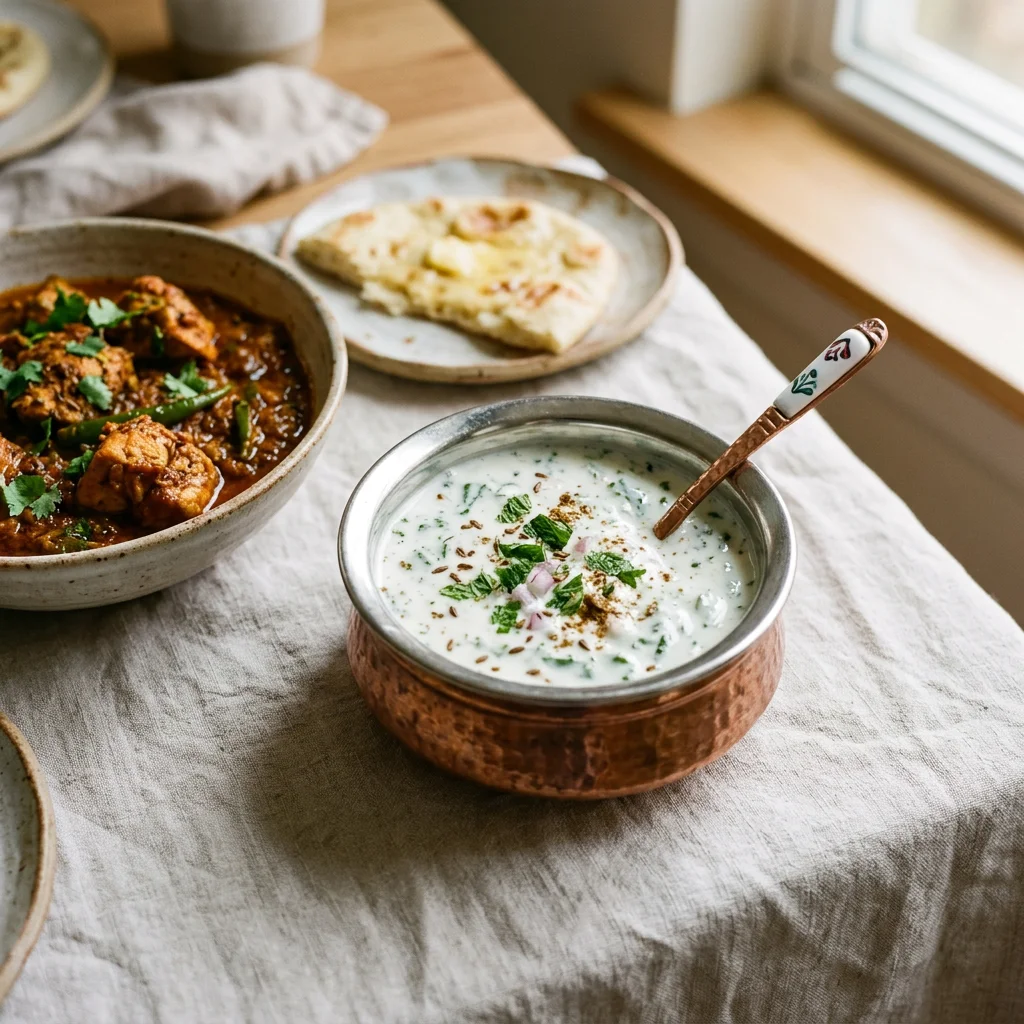
Where the classic cucumber raita is a simple, everyday condiment, this mint-forward variation is a deliberate cooling medicine — designed for the moments when Pitta is running high, a spicy meal needs a serious counterbalance, or a hot day demands something more potent than plain yogurt with cucumber. The generous quantity of fresh mint transforms this from a passive side dish into an active cooling agent. Mint (pudina) is one of Ayurveda's premier Pitta-pacifying herbs. Its cooling virya is immediate — you feel it the moment it touches the tongue. Combined with grated cucumber that has been thoroughly squeezed of excess water, whisked into creamy yogurt, and seasoned with roasted cumin that supports digestion without adding heat, this raita becomes a condiment with genuine therapeutic function. The distinction from a standard cucumber raita lies in the proportions and intention. Here, mint is not a garnish of two leaves — it is a primary ingredient, enough to turn the mixture pale green. A touch of raw sugar rounds the flavor and reduces any bitterness from the mint. The result is something closer to a chutney-raita hybrid: thick, intensely herbal, and powerfully cooling.
Strongly cools Pitta. The bitter quality of mint adds a dimension that regular cucumber raita lacks. May increase Kapha if consumed in large amounts. Mixed for Vata — small amounts at room temperature are acceptable.
Ingredients
- 1.5 cups Plain yogurt (thick, full-fat)
- 1/2 cup Fresh mint leaves (packed, roughly chopped)
- 1 small Cucumber (peeled, seeded, and grated)
- 1 tsp Roasted cumin powder
- 1/2 tsp Salt
- 1/4 tsp Black salt (kala namak) (optional)
- 1/2 tsp Raw sugar (or jaggery, to round the flavor)
- 2 tbsp Fresh cilantro (finely chopped)
- 1/4 whole Green chili (minced, optional — omit for Pitta)
Instructions
- Grate the cucumber and squeeze firmly in a clean cloth or between your palms to remove all excess water. Set aside.
- In a blender or with a mortar and pestle, briefly pulse or pound the mint leaves with a tablespoon of the yogurt to break them down into a coarse paste. You want flecks of mint throughout, not a smooth puree.
- Whisk the remaining yogurt until smooth and lump-free.
- Fold in the mint paste, squeezed cucumber, roasted cumin, salt, black salt, sugar, cilantro, and green chili if using.
- Taste and adjust — it should be distinctly minty, slightly tangy, and just barely sweet.
- Refrigerate for at least 15 minutes before serving to let the mint infuse the yogurt fully. The flavor deepens significantly with resting.
Nutrition
These values are estimates calculated from the ingredient list and may vary based on brands, cooking methods, and serving size. Not a substitute for medical or dietary advice.
How This Recipe Affects Each Dosha
Vata
The cold, heavy qualities of yogurt and mint can aggravate Vata in excess. However, the roasted cumin and the sour quality of yogurt offer some balancing. Vata types should use this as a small condiment (2-3 tablespoons maximum) alongside a warm, oily meal — never as a standalone dish.
Pitta
This is Pitta medicine in condiment form. Mint is one of the strongest cooling herbs available, cucumber is quintessentially Pitta-pacifying, and the sweet taste of yogurt directly counteracts Pitta heat. During summer or periods of Pitta aggravation, this raita should appear at every meal.
Kapha
The heavy, cold, mucus-promoting qualities of yogurt are Kapha-aggravating. The mint provides some lightness and its pungent vipaka helps, but the overall effect still leans toward increasing Kapha. Kapha types should substitute buttermilk for yogurt and keep portions minimal.
The roasted cumin and black salt support agni, and mint has a mild digestive stimulant effect. However, the cold temperature of the preparation slows agni overall. This is why it functions best as a side condiment to a warm, well-spiced meal rather than eaten alone.
Nourishes: Rasa (plasma), Asthi (bone)
Adjustments by Constitution
For Vata Types
Bring to room temperature before serving. Add a generous pinch of black pepper and a tiny pinch of asafoetida. Increase the roasted cumin to 1.5 teaspoons. Consider adding a small amount of grated ginger. Use as a small side, not a main component.
For Pitta Types
Already ideal for Pitta. For maximum cooling, add 1/2 teaspoon of rose water and a tablespoon of pomegranate seeds. Increase the mint. Skip the green chili entirely. This is one of the few preparations Pitta types can enjoy freely.
For Kapha Types
Replace yogurt with churned buttermilk (1 part yogurt, 3 parts water, blended and strained). Add extra black pepper, a pinch of dry ginger powder, and extra roasted cumin. Serve at room temperature. Use sparingly.
Seasonal Guidance
This is a summer condiment above all else. During the hottest months, it belongs alongside every meal as a cooling counterbalance. In spring, use sparingly due to Kapha season — switch to buttermilk-based preparations. In autumn and winter, minimize or avoid entirely; cold yogurt preparations during Vata season can aggravate digestion and increase cold symptoms. If craving raita in cold months, bring to room temperature and add warming spices.
Best time of day: Lunch, as a side condiment. Avoid at dinner and never eat yogurt-based preparations at night per Ayurvedic guidelines — nighttime consumption increases Kapha and mucus formation.
Cultural Context
Mint raita is a fixture at Indian celebrations and formal meals, where a spread of rich, spiced dishes demands a serious cooling counterpart. In many households, the distinction between everyday raita (cucumber, lightly spiced) and special raita (heavily herbed, sometimes with fruit or nuts) marks the difference between weeknight dinner and a feast. The mint-forward version traces especially to Hyderabadi and Lucknowi cuisine, where intensely spiced biryanis and kebabs require an equally intense cooling agent. The Mughal influence is evident — Persian and Central Asian cuisines also pair yogurt-herb sauces with their richest meat dishes, a practice rooted in the same intuitive understanding of thermal food balance that Ayurveda formalized.
Deeper Context
Origins
Raita as a curd-based condiment is documented in medieval Ayurvedic texts as takra-based preparations (takra being a specific Ayurvedic buttermilk). The addition of fresh mint alongside cumin reflects Mughal-era Indo-Persian culinary influence, where fresh herb finishes became common in royal kitchens in the 16th and 17th centuries. The dish sits at the intersection of ancient Ayurvedic dairy science and medieval Persian aromatics.
Food as Medicine
Traditionally served with biryani and heavily-spiced meat dishes to prevent the heat of the main dish from triggering acidity — the mint specifically targets what classical Ayurveda calls amla-pitta (sour reflux pitta). Also given to children during summer fevers and to new mothers in south Indian tradition after the first month of postpartum confinement, when cooling foods return to the diet.
Ritual & Seasonal Role
Not ceremonial, despite being a permanent fixture in north Indian and Pakistani wedding tables. Peak-summer condiment across the subcontinent; absent from most winter menus. In some regions associated with the Chaitra Navratri fast period, when cooling dairy preparations replace heating foods during the nine-day spring observance.
Classical Pairings & Cautions
Natural match with biryani, pulao, paratha, samosa, kebab, and any heavily-spiced rice preparation. Never combined with fish or with hot milk in classical Ayurveda (both are viruddha ahara — incompatible combinations that are believed to generate ama). Cautions: Kapha-aggravating if eaten cold at night; those with chronic sinus congestion should limit; lactose-intolerant populations cannot consume the yogurt base.
Cross-Tradition View
How other medical and food-wisdom traditions read this dish. Each tradition names the same physiological reality in its own language — the agreements across them are where universal principles live.
Traditional Chinese Medicine
Yogurt is sweet-sour and builds Yin fluids; mint is cool and dispersing, moving Liver Qi and clearing Heat; cucumber is cool and moistening, clearing Summer Heat specifically. The combination is ideal for Liver Fire headaches, summer heat exhaustion, and Heart Fire insomnia. Aggravates Spleen dampness if taken at night or in damp climates — a morning or noon preparation only.
Greek Humoral
Archetypally cold-wet, pure phlegmatic dish. Mint supplies a hot-dry corrective that prevents the dish from being digestively oppressive. In Galenic pharmacology, mint-curd-cucumber preparations were used to cool fevers, calm inflamed stomachs, and blunt the heat of acidic summer fruits. Contraindicated for melancholic and phlegmatic constitutions except in true heat illness.
Unani Tibb
Cold in the second degree, wet in the first — sardi-tar mizaj. Prescribed by hakims for ghalaba-e-safra (excess yellow bile) and for summer heat illnesses including heatstroke and bilious fever. The mint prevents the phlegm-generating tendency of plain yogurt-cucumber preparations, making this the hakim's preferred summer form. Never prescribed in winter or in known phlegmatic patients.
Tibetan Sowa Rigpa
Cool, sweet, soft, oily. A direct Bile (mKhris-pa) pacifier in Tibetan dietetics. Mint's aromatic pungency makes this acceptable to Phlegm (Bad-kan) types in moderation and small portions; Wind (rLung) types should warm the raita to room temperature first, add a pinch of salt and cumin, and skip entirely during cold-windy weather.
Chef's Notes
The quality of the mint makes or breaks this raita. Use the freshest, most aromatic mint you can find — spearmint is ideal, peppermint is too medicinal. Do not skip squeezing the cucumber; watery raita is a failed raita. If you want a smoother, more chutney-like version, blend the mint fully with the yogurt — this creates a vibrant green condiment that looks stunning on the plate. The raw sugar is a small but important addition; it softens any bitterness from the mint and gives the raita a more rounded, complete flavor. This keeps well for a day in the refrigerator but the mint will darken — stir before serving.
Frequently Asked Questions
Is Cooling Mint Raita good for my dosha?
Strongly cools Pitta. The bitter quality of mint adds a dimension that regular cucumber raita lacks. May increase Kapha if consumed in large amounts. Mixed for Vata — small amounts at room temperature are acceptable. The cold, heavy qualities of yogurt and mint can aggravate Vata in excess. This is Pitta medicine in condiment form. The heavy, cold, mucus-promoting qualities of yogurt are Kapha-aggravating.
When is the best time to eat Cooling Mint Raita?
Lunch, as a side condiment. Avoid at dinner and never eat yogurt-based preparations at night per Ayurvedic guidelines — nighttime consumption increases Kapha and mucus formation. This is a summer condiment above all else. During the hottest months, it belongs alongside every meal as a cooling counterbalance. In spring, use sparingly due to Kapha season — switch to buttermilk-b
How can I adjust Cooling Mint Raita for my constitution?
For Vata types: Bring to room temperature before serving. Add a generous pinch of black pepper and a tiny pinch of asafoetida. Increase the roasted cumin to 1.5 teasp For Pitta types: Already ideal for Pitta. For maximum cooling, add 1/2 teaspoon of rose water and a tablespoon of pomegranate seeds. Increase the mint. Skip the green
What are the Ayurvedic properties of Cooling Mint Raita?
Cooling Mint Raita has Sweet, Astringent, Bitter taste (rasa), Cooling energy (virya), and Pungent post-digestive effect (vipaka). Its qualities (gunas) are Heavy, Oily, Cool, Smooth. It nourishes Rasa (plasma), Asthi (bone). The roasted cumin and black salt support agni, and mint has a mild digestive stimulant effect. However, the cold temperature of the preparation slows agni overall. This is why it functions best as a side condiment to a warm, well-spiced meal rather than eaten alone.