Congee (Jook)
Chinese Recipe
Overview
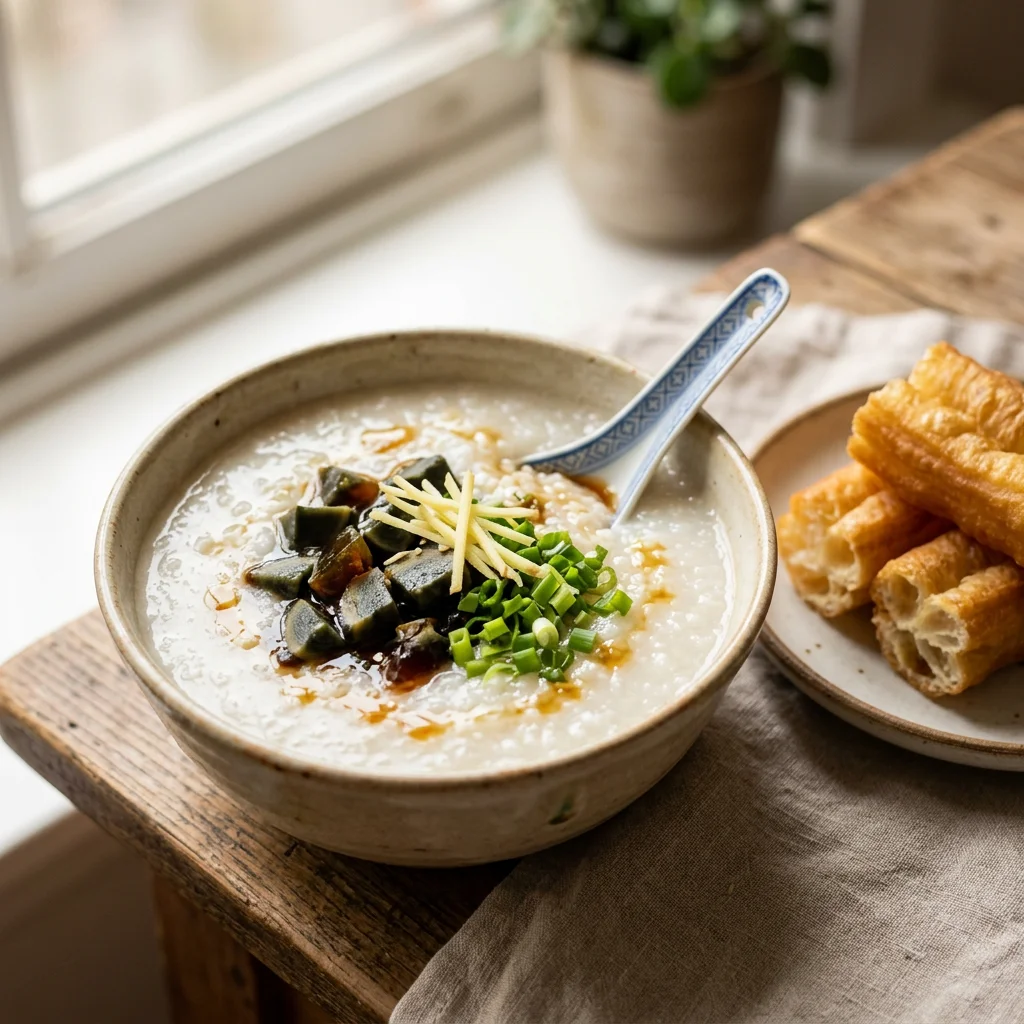
Congee — known as jook in Cantonese, zhou in Mandarin, and okayu in Japanese — is rice cooked in a vast excess of water until the grains dissolve into a silky, porridge-like consistency. It is the oldest and most fundamental healing food in the Chinese culinary tradition, the Chinese equivalent of kitchari in Ayurveda: a food so easy to digest that it is prescribed for infants, the elderly, the ill, and anyone whose digestive system needs rest and repair. Where kitchari combines rice and mung dal as a complete protein reset, congee achieves a similar therapeutic purpose through the radical simplicity of rice and water alone. The parallels between congee in Traditional Chinese Medicine (TCM) and kitchari in Ayurveda are striking and not coincidental — both emerged from ancient medical systems that understood food as primary medicine. In TCM, congee is said to tonify the qi (vital energy) of the Spleen and Stomach, the organs responsible for digestion and the transformation of food into usable energy. A weak Spleen-Stomach system (analogous to low agni in Ayurveda) is the root cause of fatigue, bloating, loose stools, and general depletion. Congee addresses this directly by presenting rice in its most broken-down, pre-digested form — the body expends almost no energy to extract its nourishment. The Chinese physician Sun Simiao (581-682 CE) wrote extensively about medicinal congee, prescribing specific ingredient additions for specific conditions: ginger congee for cold, goji berry congee for eye health, mung bean congee for detoxification. Ayurvedically, plain rice congee is light, warm, sweet, and easy to digest — qualities that pacify Vata and support weak agni. Like kitchari, it is one of the few foods suitable during illness, fasting recovery, or digestive reset. The long cooking process breaks down the rice starches into easily assimilable form, making it therapeutic for anyone with compromised digestion, post-surgical recovery, or chronic fatigue. It is the universal healing food — prescribed across 5,000 years of Asian medical tradition for exactly the conditions that Ayurveda addresses with kitchari.
Tridoshic in its plain form — suitable for all constitutions, like kitchari. Pacifies Vata through warmth, moisture, and ease of digestion. Neutral for Pitta. Acceptable for Kapha due to lightness, though its sweet quality requires balancing.
Primary food during digestive recovery, illness, post-surgical healing, and qi depletion. Used in TCM food therapy identically to how kitchari is used in Ayurvedic panchakarma: as a gentle, easily digestible food that allows the body to redirect energy from digestion to healing. Specific medicinal additions (astragalus, goji, ginger, dates) turn plain congee into targeted therapeutic preparations.
Ingredients
- 1 cup Jasmine rice or short-grain rice (rinsed)
- 10 cups Water or light chicken stock (or a combination)
- 2 inches Fresh ginger (sliced into coins)
- 1 tsp Salt (or to taste)
- 1 tsp Sesame oil (for drizzling)
- 3 whole Scallions (thinly sliced)
- 1/4 tsp White pepper
- 1 whole Century egg (optional, diced)
- 1 tbsp Dried goji berries (optional, for nourishment)
- 4 whole Chinese dried dates (jujubes) (optional, for qi tonification)
Instructions
- Rinse the rice until the water runs mostly clear. For an even silkier congee, soak the rice for 30 minutes before cooking, or freeze the rinsed rice overnight — the expanded ice crystals help the grains break down faster during cooking.
- Bring the water or stock to a boil in a heavy-bottomed pot. Add the rice and ginger slices. If using dried dates or goji berries, add them now.
- Return to a boil, then reduce heat to a gentle simmer. Cook uncovered or with the lid slightly ajar, stirring occasionally — every 10-15 minutes is sufficient — for 60-90 minutes.
- The congee is done when the rice has completely dissolved into the liquid and the consistency is thick, creamy, and porridge-like. It should flow slowly from a ladle, not sit in a stiff mound. If too thick, add hot water to thin. If too thin, simmer longer.
- Season with salt and white pepper. Remove the ginger slices if you prefer (or leave them for extra warmth).
- Ladle into bowls and drizzle with sesame oil. Top with sliced scallions, diced century egg if using, and any other desired toppings.
- Serve immediately. Congee thickens as it sits — have a kettle of hot water nearby to thin individual bowls to preference.
Nutrition
These values are estimates calculated from the ingredient list and may vary based on brands, cooking methods, and serving size. Not a substitute for medical or dietary advice.
How This Recipe Affects Each Dosha
Vata
Congee is one of the finest Vata-pacifying foods in existence. Its warm, soft, liquid, oily (when finished with sesame oil) qualities directly counteract Vata's cold, dry, rough nature. The long cooking process pre-digests the rice, meaning even the weakest Vata digestion can absorb its nutrients. The ginger slices add warmth without intensity. Like kitchari, congee is the food to reach for when Vata is severely imbalanced — during anxiety, insomnia, weight loss, constipation, or exhaustion.
Pitta
Plain rice congee is cooling and sweet enough to be neutral or mildly beneficial for Pitta. The white rice base carries none of the heating quality of brown rice or other whole grains. The ginger provides gentle digestive support without excessive heat. Pitta types can enjoy congee freely, especially during recovery or when digestion feels sensitive.
Kapha
The sweet taste and liquid quality can increase Kapha if consumed in large quantities or without balancing additions. However, the lightness of well-cooked congee — it is mostly water — makes it far less Kapha-aggravating than standard cooked rice. With the addition of warming spices (ginger, black pepper, cinnamon) and pungent toppings (scallions, chili oil), congee becomes acceptable and even beneficial for Kapha digestion.
Congee is the gentlest food for weak agni — it requires almost no digestive effort to break down and absorb. The ginger slices provide mild agni support without the intensity of a full spice blend. For severely depleted digestion (post-illness, post-surgery, chronic digestive weakness), plain congee is the first food to reintroduce, just as kitchari is in Ayurvedic practice. It rebuilds agni gently from the ground up.
Nourishes: Rasa (plasma), Rakta (blood), Mamsa (muscle)
Adjustments by Constitution
For Vata Types
Cook the congee in rich chicken or pork bone broth instead of water. Add extra ginger and a cinnamon stick during cooking. Finish with a generous drizzle of sesame oil and a soft-boiled egg. Include dried dates and goji berries for blood and qi nourishment. Serve warm and eat slowly — this is deep Vata medicine.
For Pitta Types
Cook in plain water rather than stock. Omit the white pepper. Finish with cooling toppings: fresh cilantro, cucumber slices, steamed greens, or a drizzle of coconut milk. Include goji berries for their cooling, blood-nourishing quality. Reduce or omit ginger if Pitta is acutely aggravated.
For Kapha Types
Use a thinner ratio (1:12 rice to water) for a lighter consistency. Add extra ginger — up to a 3-inch piece — plus black pepper, and a pinch of turmeric during cooking. Top with spicy chili oil, pickled vegetables, and pungent scallions. Skip the sesame oil drizzle. Consider mixing in a handful of mung beans for added lightness and protein.
Seasonal Guidance
Like kitchari, congee is appropriate year-round because its therapeutic simplicity transcends seasonal concerns. In winter, cook it with warming additions — ginger, cinnamon, star anise, bone broth. In spring, keep it lighter and add mung beans or barley for their Kapha-clearing properties. In summer, serve it at a milder temperature with cooling toppings — cucumber, cilantro, cold-marinated greens. In autumn, enrich it with sweet potato, dates, and sesame for Vata-grounding nourishment. The beauty of congee, like kitchari, is its infinite adaptability — the base remains constant while seasonal and constitutional additions make it appropriate for anyone, anytime.
Best time of day: Breakfast in Chinese tradition, mirroring kitchari's recommendation for lunch in Ayurveda. Both choices align food simplicity with the body's digestive rhythm — Chinese medicine emphasizes that the Spleen-Stomach is most receptive in the morning.
Cultural Context
Congee is the bedrock of Chinese food therapy — a tradition stretching back at least 2,500 years. The Huangdi Neijing (Yellow Emperor's Classic of Internal Medicine, ~200 BCE) references rice gruel as medicine. The physician Zhang Zhongjing (150-219 CE) prescribed congee as part of recovery protocols in the Shang Han Lun. Li Shizhen's monumental Bencao Gangmu (Comperta of Materia Medica, 1578) lists dozens of medicinal congee recipes with specific ingredient combinations for specific conditions. This is identical to the Ayurvedic tradition of using kitchari as a therapeutic base — both systems understood that the simplest, most digestible food is often the most powerful medicine. In modern China, congee remains the food that mothers make when children are sick, that hospitals serve for recovery, and that elderly people eat for longevity — it is, like kitchari, both the humblest and most essential food in its tradition.
Deeper Context
Origins
Congee has more than 2,000 years of continuous preparation in China — references appear in the Huangdi Neijing (the foundational TCM classic, compiled between 475 BCE and 220 CE), and Han dynasty medical texts discuss rice-water therapy at length. The dish predates writing in its informal household form. Regional variations exist across China (Cantonese jook is looser, Shanghai congee is thicker), Japan (okayu), Korea (juk), Vietnam (cháo), and Thailand (jok).
Food as Medicine
The classic East Asian sick-food. First solid food for infants across multiple cultures. Postpartum convalescent dish across China, Japan, Korea, and Vietnam. The long cooking breaks down rice starch into readily-absorbed sugars and small peptides that weak digestion can process when other foods cannot. Ginger addresses nausea and cold-digestion; goji berries add liver-and-eye support; sesame oil provides fat-soluble vitamin delivery.
Ritual & Seasonal Role
Illness, postpartum confinement, winter breakfast. Not religiously ceremonial but universal convalescent food across East Asian cultures. Widely eaten as daily breakfast in southern Chinese communities. Congee shops in Hong Kong, Singapore, and Chinatowns worldwide serve breakfast congee as a morning specialty.
Classical Pairings & Cautions
Pickled vegetables, preserved tofu, dried shredded pork (rou song), century egg, scallions, cilantro, chili oil. Cautions: the low fiber content means minimal glycemic modulation — diabetic patients should add substantial protein and fat toppings; sodium load from condiments can be substantial; goji berry interacts with warfarin; soft texture requires slower eating to feel satiety.
Cross-Tradition View
How other medical and food-wisdom traditions read this dish. Each tradition names the same physiological reality in its own language — the agreements across them are where universal principles live.
Greek Humoral
Hot-wet. The Galenic convalescent-food archetype — slowly-cooked grain-in-water preparations have parallel Greek and Roman traditions (ptisáne in Greek, hordeáte in Roman cookery). Used across Mediterranean medical practice for the same indications that East Asian practice assigns: illness, convalescence, pediatric first foods, and gentle feeding after fasting.
Japanese Kanpo
Okayu is the Japanese equivalent with nearly identical medicinal use — served to the sick, to postpartum women during the first week of confinement, and as first solid food for infants. Goji berry (called kuko in Japanese) crosses into both Chinese and Japanese materia medica with shared indications for liver and eye support. The dish is one of the most continuously-shared preparations across East Asian food-as-medicine traditions.
Unani Tibb
Rice-gruel preparations are classical Unani convalescent food. Kashk (similar concept to congee) appears in Ibn Sina's Canon as appropriate for the sick, the very young, and the very old. Zanjabeel (ginger) is a core hakim digestive stimulant. The combination of soft rice and warming spice matches traditional hakim convalescent prescriptions precisely.
Ayurveda
Warming virya (from ginger), sweet vipaka. Tridoshic in the Chinese plain form — approaches kitchari's balance across all three doshas. A classical TCM-Ayurveda convergence point where two independent medical traditions arrived at nearly identical convalescent preparations. The ginger and goji provide just enough Qi-and-Blood-moving quality to avoid damp accumulation.
Chef's Notes
The ratio of rice to water determines the consistency: 1:8 yields a thick porridge, 1:10 yields a flowing, soupy consistency preferred for healing. Stirring occasionally is important — it agitates the grains and helps them release starch, creating creaminess. For a richer base, cook the congee in homemade chicken stock, pork stock, or even turkey stock after the holidays. The freezing trick (freezing rinsed rice overnight) dramatically reduces cook time to about 40 minutes. Popular toppings beyond the basics: shredded chicken, pork floss (rou song), crispy fried shallots, preserved duck egg, pickled vegetables, or a raw egg cracked into the hot congee and stirred until set. In medicinal applications, specific ingredients are simmered directly into the congee: astragalus root for immune support, lotus seed for calm, red dates for blood building.
Frequently Asked Questions
Is Congee (Jook) good for my dosha?
Tridoshic in its plain form — suitable for all constitutions, like kitchari. Pacifies Vata through warmth, moisture, and ease of digestion. Neutral for Pitta. Acceptable for Kapha due to lightness, though its sweet quality requires balancing. Congee is one of the finest Vata-pacifying foods in existence. Plain rice congee is cooling and sweet enough to be neutral or mildly beneficial for Pitta. The sweet taste and liquid quality can increase Kapha if consumed in large quantities or without balancing additions.
When is the best time to eat Congee (Jook)?
Breakfast in Chinese tradition, mirroring kitchari's recommendation for lunch in Ayurveda. Both choices align food simplicity with the body's digestive rhythm — Chinese medicine emphasizes that the Spleen-Stomach is most receptive in the morning. Like kitchari, congee is appropriate year-round because its therapeutic simplicity transcends seasonal concerns. In winter, cook it with warming additions — ginger, cinnamon, star anise, bone broth. I
How can I adjust Congee (Jook) for my constitution?
For Vata types: Cook the congee in rich chicken or pork bone broth instead of water. Add extra ginger and a cinnamon stick during cooking. Finish with a generous driz For Pitta types: Cook in plain water rather than stock. Omit the white pepper. Finish with cooling toppings: fresh cilantro, cucumber slices, steamed greens, or a driz
What are the Ayurvedic properties of Congee (Jook)?
Congee (Jook) has Sweet taste (rasa), Neutral energy (virya), and Sweet post-digestive effect (vipaka). Its qualities (gunas) are Light, Warm, Soft, Liquid. It nourishes Rasa (plasma), Rakta (blood), Mamsa (muscle). Congee is the gentlest food for weak agni — it requires almost no digestive effort to break down and absorb. The ginger slices provide mild agni support without the intensity of a full spice blend. For severely depleted digestion (post-illness, post-surgery, chronic digestive weakness), plain congee is the first food to reintroduce, just as kitchari is in Ayurvedic practice. It rebuilds agni gently from the ground up.