Colcannon
Irish Recipe
Overview
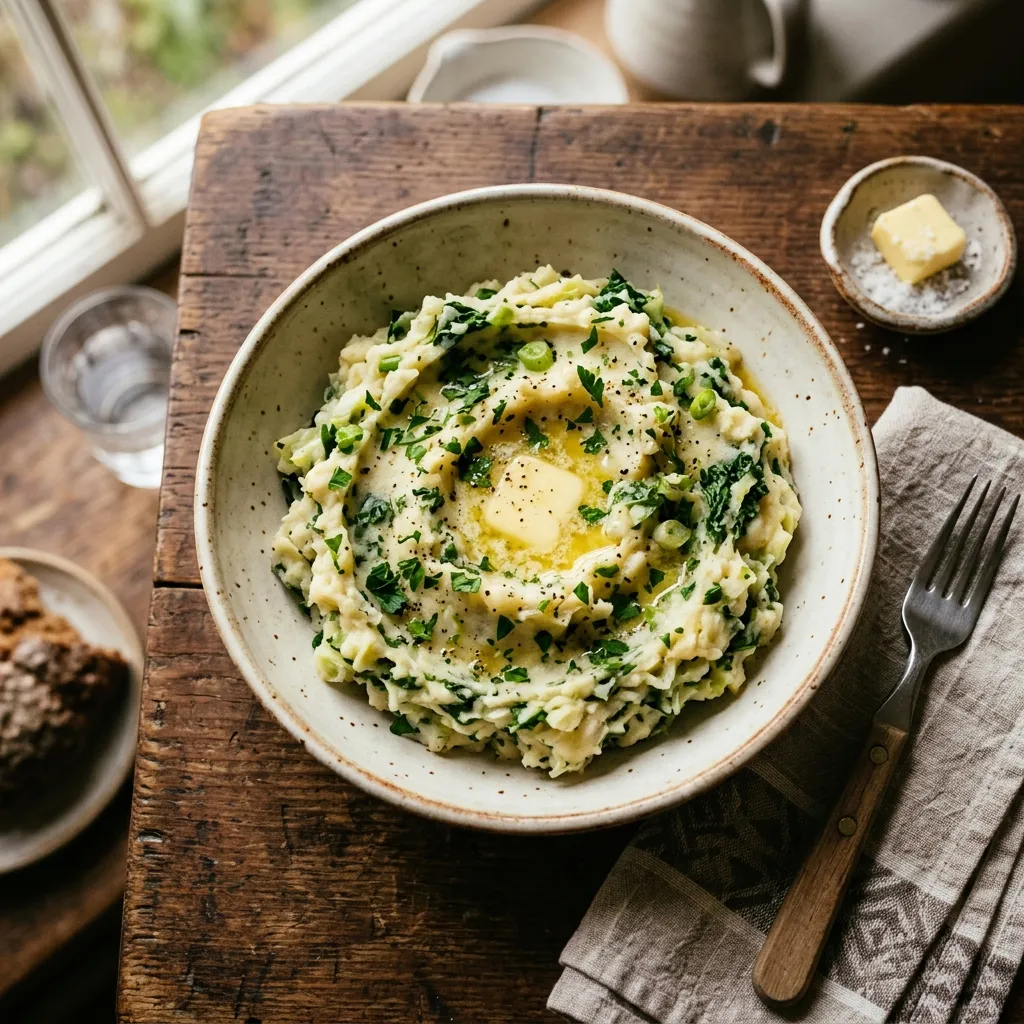
Colcannon — from the Irish 'cal ceannann' meaning white-headed cabbage — is one of Ireland's oldest surviving dishes, with documented references stretching back to at least the 18th century. It combines mashed potatoes with cooked cabbage or kale, enriched with butter, milk, and often spring onions (scallions). The dish was so central to Irish life that it has its own folk song: 'Did you ever eat Colcannon, made with lovely pickled cream? With the greens and scallions mingled like a picture in a dream.' The preparation is deliberately unfussy. Potatoes are boiled and mashed to a smooth consistency, then folded together with softened cabbage or kale that has been cooked separately in butter. Spring onions are warmed in milk until just softened, and the flavoured milk is beaten into the potato. The final step is the traditional 'well' — a hollow pressed into the centre of the mound, into which a generous knob of butter is placed to melt. Ayurvedically, colcannon is a study in how the bitter, astringent quality of cruciferous greens can lighten and balance the heavy, sweet nature of potato and dairy. The cabbage or kale introduces a Kapha-reducing element that plain mashed potato lacks, while the spring onions provide mild pungent stimulation. The result is more balanced than straight mashed potato, though still predominantly sweet, heavy, and grounding.
Pacifies Vata with warm, moist, heavy, oily qualities. The cabbage adds Pitta and Kapha-balancing bitter taste. Moderately increases Kapha despite the greens, due to potato and dairy dominance.
Ingredients
- 1 kg Floury potatoes (peeled and quartered)
- 300 g Green cabbage or curly kale (finely shredded)
- 80 g Butter (plus extra for serving)
- 6 pieces Spring onions (scallions) (thinly sliced)
- 150 ml Whole milk
- 1 tsp Salt
- 1/2 tsp White pepper
- 1/4 tsp Nutmeg (freshly grated)
Instructions
- Boil the potatoes in generously salted water for 15-18 minutes until completely tender. Drain well and return to the pot. Let steam dry over low heat for 2 minutes.
- While potatoes cook, bring a separate pot of salted water to a boil. Add the shredded cabbage or kale and cook for 3-4 minutes until just tender but still bright green. Drain thoroughly and press out excess water with the back of a spoon.
- Warm the milk and spring onions together in a small saucepan over low heat for 3-4 minutes. Do not boil — you want the scallions to soften and flavour the milk gently.
- Mash the potatoes until smooth using a potato masher or ricer. Add 50g of the butter and beat until melted and incorporated.
- Pour in the warm scallion milk and beat vigorously until the mash is light and fluffy.
- Fold in the drained cabbage or kale. Season with salt, white pepper, and freshly grated nutmeg. Stir until the greens are evenly distributed.
- Transfer to a warm serving dish. Make a well in the centre and place the remaining butter in the hollow. Serve immediately, scooping each portion to include some of the melting butter.
Nutrition
These values are estimates calculated from the ingredient list and may vary based on brands, cooking methods, and serving size. Not a substitute for medical or dietary advice.
How This Recipe Affects Each Dosha
Vata
Warm, buttery mashed potato is deeply comforting for Vata, and the addition of cooked greens adds mineral content without the raw, rough quality that Vata cannot tolerate. The spring onions provide gentle warmth, the nutmeg adds carminative support, and the overall texture is smooth and grounding. A well-suited Vata side dish.
Pitta
The sweet potato, cooling butter, and mild greens sit comfortably with Pitta. Cabbage is cooling and detoxifying, which supports Pitta balance. Spring onions are mildly pungent but not enough to significantly increase heat. This is one of the more Pitta-friendly British comfort foods.
Kapha
The potato and butter base is inherently Kapha-increasing, but the cabbage or kale partially offsets this with bitter and astringent qualities that stimulate metabolism and reduce water retention. The net effect is moderately Kapha-increasing — better than plain mashed potato but still heavy for Kapha constitutions in large portions.
The spring onions and nutmeg provide gentle digestive stimulation, while the butter aids absorption of nutrients from the greens. The overall effect on agni is neutral — the dish is easy to digest when eaten warm but does not strongly kindle or suppress digestive fire.
Nourishes: Rasa (plasma), Mamsa (muscle), Asthi (bone via calcium from greens)
Adjustments by Constitution
For Vata Types
Use extra butter and add a generous pinch of black pepper and ground cumin to the mash. Choose cabbage over kale — it is softer and easier for Vata to digest. Serve warm as a bed for a stew or braised meat.
For Pitta Types
Use ghee instead of butter for a cooler fat. Choose cabbage over kale. Add fresh dill or parsley instead of spring onions. Reduce nutmeg and season with a pinch of coriander instead.
For Kapha Types
Replace half the potato with mashed cauliflower or turnip. Use goat milk instead of cow's milk and reduce butter to 1 tablespoon. Choose kale over cabbage for its stronger bitter quality. Add extra black pepper, a pinch of dried ginger, and increase the spring onion for pungent balance.
Seasonal Guidance
A cold-weather dish that provides warmth and grounding during the darkest months. Traditionally associated with Halloween (Samhain) in Ireland, when it is served as part of the feast. In spring, reduce potato proportion and increase the greens for a lighter version as the body moves out of winter heaviness.
Best time of day: Dinner, as a side dish or main with additional protein. Also works as a hearty lunch alongside soup.
Cultural Context
Colcannon is one of the dishes that defines Irish food culture — simple, inexpensive, and deeply tied to the land. Potatoes and cabbage were the two crops that sustained rural Ireland through centuries of poverty, and their combination in colcannon represents both necessity and ingenuity. The Halloween tradition of hiding tokens in the colcannon dates to at least the 19th century and connects the dish to the Celtic festival of Samhain, when the boundary between worlds was believed to thin. Today, colcannon appears in Irish households year-round but reaches its cultural peak on October 31st, when it is prepared with particular care and ceremony.
Deeper Context
Origins
Colcannon's name comes from Gaelic 'cál ceannann' (white-headed cabbage). The cabbage-and-potato-with-butter combination represents post-Columbian adaptation of ancient Celtic cál-and-onion preparations to include the newly-arrived New World potato. The dish stabilized in 18th-19th century Irish rural cookery and spread through the Irish diaspora to Northern England, Scotland, and North American Irish immigrant communities. Halloween divination charm-baking preserved continuously through the modern era.
Food as Medicine
The cabbage-and-potato combination provides vitamin C (historically critical for Irish populations), potassium, fiber, and glucosinolates from the cruciferous cabbage. Nutmeg at culinary doses is a classical sleep aid and digestive calmative across European and Ayurvedic medicine (myristicin is the active compound, with dose-dependent effects — culinary doses are safe and mildly sedating). Spring onion provides allium compounds. A surprisingly well-composed preparation for what is essentially peasant cookery.
Ritual & Seasonal Role
Halloween (October 31) charm-divination dish across Irish tradition. Year-round Irish home cooking. Saint Patrick's Day (March 17) tradition in Irish diaspora communities. Featured at traditional Irish pub menus globally. The Halloween tradition is preserved more actively than many older Irish food rituals.
Classical Pairings & Cautions
Roast meat, sausages, bacon, corned beef. Strong tea or Irish stout. Cautions: cruciferous goitrogens affect thyroid function at very high doses (cooking substantially reduces); nutmeg in excess is psychoactive (myristicin) — culinary quantities are safe but medicinal doses are contraindicated in pregnancy; dairy sensitivity; high potassium contraindicates advanced renal disease; Kapha aggravation in winter.
Cross-Tradition View
How other medical and food-wisdom traditions read this dish. Each tradition names the same physiological reality in its own language — the agreements across them are where universal principles live.
Traditional Chinese Medicine
Potato is Spleen-Qi-tonifying; cabbage is cool-bitter and clears Heat from the Liver; butter is warm-moistening; spring onion is warm-pungent and dispersing; nutmeg is warm-aromatic and calms Shen. A Qi-building Liver-clearing preparation with Shen-calming accent — TCM physicians would class this as appropriate for winter Spleen-Qi-deficiency with Liver-Qi-stagnation, particularly for anxious constitutions.
Greek Humoral
Hot-wet sanguine-building with cold-wet cabbage balance. Galenic winter peasant fare — the Hippocratic endorsement of cabbage-and-starch-with-warming-fat combinations specifically addresses cold-wet laboring populations needing dampness-clearing alongside sustained calories.
Ayurveda
Neutral-to-warming virya, sweet vipaka. Mild Kapha aggravation from potato-butter; partly corrected by cabbage-and-spring-onion warming. Nutmeg adds classical Vata-pacifying Shen-calming quality — Ayurveda also recognizes nutmeg (jaiphal) for sleep support and for calming the restless mind.
Celtic Samhain
Colcannon has Halloween (Samhain) divination tradition — charms buried in the mash predict the diner's fortune for the coming year. A ring predicts marriage; a thimble predicts spinsterhood; a button predicts bachelorhood; a coin predicts wealth. The name derives from Gaelic 'cál ceannann' (white-headed cabbage). The dish spans rural Irish regional cookery with slight variations between Ulster, Munster, and Leinster traditions.
Chef's Notes
The choice between cabbage and kale changes the character of the dish — cabbage produces a milder, sweeter colcannon, while kale gives a more robust, slightly bitter version. Both are traditional. The potatoes must be completely dry before mashing; wet potatoes produce a gluey consistency. A potato ricer gives the smoothest results. The butter well in the centre is non-negotiable in traditional preparation — each bite is dipped into the melted butter as you eat. On Halloween, it is traditional to hide small prizes in the colcannon: a ring (marriage), a thimble (spinsterhood), a button (bachelorhood), and a coin (wealth).
Frequently Asked Questions
Is Colcannon good for my dosha?
Pacifies Vata with warm, moist, heavy, oily qualities. The cabbage adds Pitta and Kapha-balancing bitter taste. Moderately increases Kapha despite the greens, due to potato and dairy dominance. Warm, buttery mashed potato is deeply comforting for Vata, and the addition of cooked greens adds mineral content without the raw, rough quality that Vata cannot tolerate. The sweet potato, cooling butter, and mild greens sit comfortably with Pitta. The potato and butter base is inherently Kapha-increasing, but the cabbage or kale partially offsets this with bitter and astringent qualities that stimulate metabolism and reduce water retention.
When is the best time to eat Colcannon?
Dinner, as a side dish or main with additional protein. Also works as a hearty lunch alongside soup. A cold-weather dish that provides warmth and grounding during the darkest months. Traditionally associated with Halloween (Samhain) in Ireland, when it is served as part of the feast. In spring, reduc
How can I adjust Colcannon for my constitution?
For Vata types: Use extra butter and add a generous pinch of black pepper and ground cumin to the mash. Choose cabbage over kale — it is softer and easier for Vata to For Pitta types: Use ghee instead of butter for a cooler fat. Choose cabbage over kale. Add fresh dill or parsley instead of spring onions. Reduce nutmeg and season wi
What are the Ayurvedic properties of Colcannon?
Colcannon has Sweet, Bitter, Mildly Pungent taste (rasa), Neutral to Warming energy (virya), and Sweet post-digestive effect (vipaka). Its qualities (gunas) are Heavy, Moist, Smooth, Warm. It nourishes Rasa (plasma), Mamsa (muscle), Asthi (bone via calcium from greens). The spring onions and nutmeg provide gentle digestive stimulation, while the butter aids absorption of nutrients from the greens. The overall effect on agni is neutral — the dish is easy to digest when eaten warm but does not strongly kindle or suppress digestive fire.