Cobb Salad
American Recipe
Overview
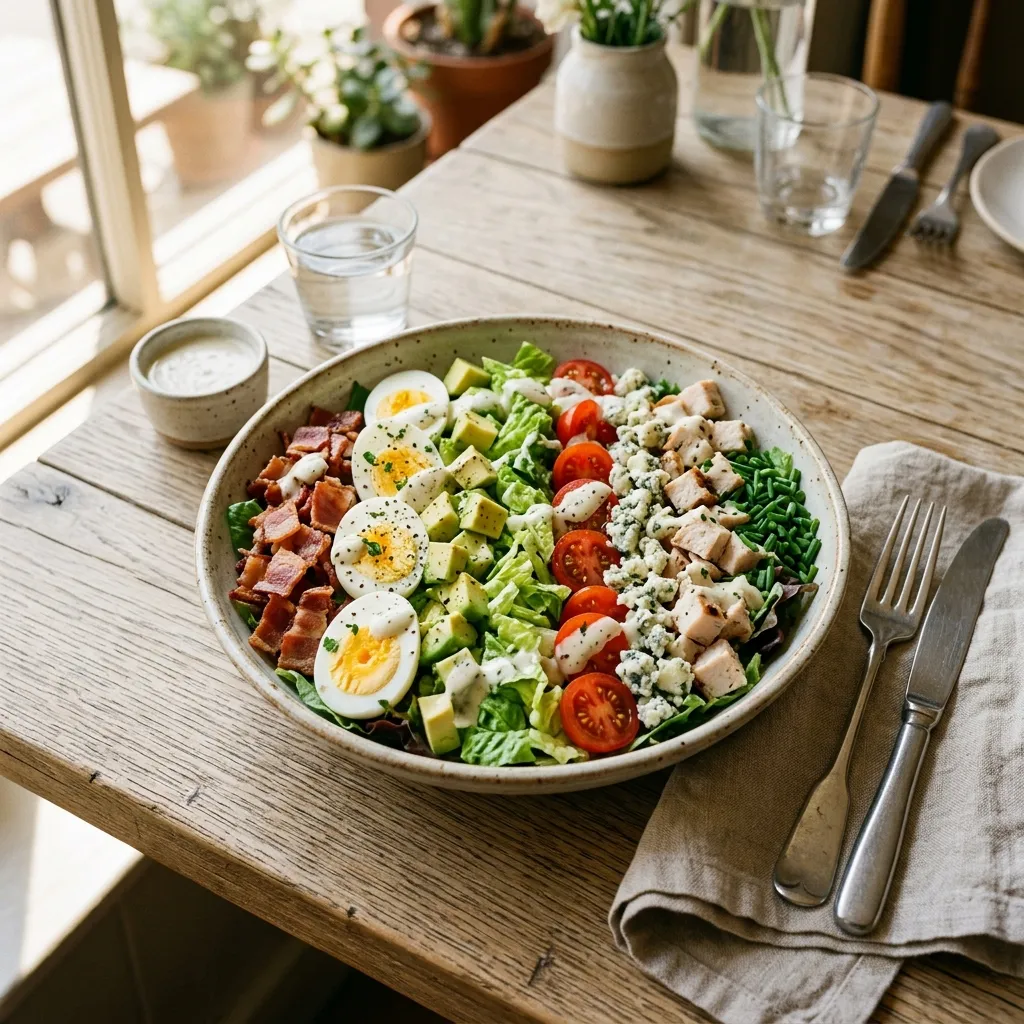
Robert Cobb, owner of the Hollywood Brown Derby restaurant, assembled the first Cobb salad around midnight in 1937, reportedly using whatever he found in the kitchen refrigerator. The combination — chopped lettuce, tomato, chicken breast, hard-boiled egg, avocado, bacon, blue cheese, and chives dressed with red wine vinaigrette — became the restaurant's signature dish and entered the canon of American composed salads. The traditional presentation arranges each ingredient in neat rows across the plate, a visual style that became as recognizable as the flavor itself. From an Ayurvedic standpoint, the Cobb salad is a complex preparation combining multiple rasas and energetics. It contains sweet (chicken, egg, avocado), sour (vinaigrette, tomato), salty (bacon, blue cheese), pungent (chives, mustard in the vinaigrette), and bitter (lettuce) — five of the six tastes in a single dish. This range of tastes makes it surprisingly balanced despite its richness. The mixture of raw and cooked components, however, creates the food-combining challenge that Ayurveda calls viruddhahara (incompatible combinations), particularly the union of cheese with raw vegetables. The salad's protein density — chicken, egg, bacon, and cheese in one dish — makes it deeply nourishing for mamsa and meda dhatus, but taxes digestion proportionally. The avocado provides stabilizing, sweet, cooling energy that partially offsets the heating bacon and cheese. For a composed salad, it delivers remarkable nutritive complexity, though Ayurveda would suggest simplifying the ingredient list for those with weak agni.
The Cobb salad's multi-ingredient complexity provides all five tastes, which Ayurveda considers ideal for satisfaction, but the aggregate heaviness, oiliness, and heat favor vata pacification while challenging pitta and kapha when consumed regularly.
The Cobb salad's protein density and complete amino acid profile from multiple sources make it useful for tissue rebuilding during recovery from surgery, extended illness, or intense physical training. The combination of animal protein with avocado's healthy fats supports sustained energy without blood sugar spikes.
Ingredients
- 1 large head romaine lettuce (chopped into 1/2-inch pieces)
- 2 small boneless skinless chicken breast (about 12 oz total)
- 4 slices bacon (cooked crisp and crumbled)
- 2 large hard-boiled eggs (peeled and diced)
- 1 large avocado (ripe, diced)
- 1 large tomato (seeded and diced)
- 1/3 cup blue cheese (crumbled)
- 2 tablespoons fresh chives (finely sliced)
- 3 tablespoons olive oil
- 1.5 tablespoons red wine vinegar
- 1 teaspoon Dijon mustard
- 1 small clove garlic (minced)
- 1/2 teaspoon salt
- 1/4 teaspoon black pepper
- 1 teaspoon lemon juice
Instructions
- Season the chicken breasts with salt and pepper on both sides. Heat 1 tablespoon olive oil in a skillet over medium-high heat. Cook the chicken for 6-7 minutes per side until the internal temperature reaches 165°F and the exterior is golden. Let rest for 5 minutes before dicing into 1/2-inch cubes. Cutting immediately releases the juices and dries the meat.
- While chicken cooks, place eggs in a saucepan and cover with cold water by 1 inch. Bring to a rolling boil, then immediately remove from heat, cover, and let sit for 10 minutes. Transfer to an ice bath for 5 minutes, then peel and dice.
- Cook the bacon in a skillet over medium heat until crisp on both sides, about 4-5 minutes per side. Drain on paper towels, then crumble into small pieces once cool enough to handle.
- Make the vinaigrette: whisk together the remaining 2 tablespoons olive oil, red wine vinegar, Dijon mustard, minced garlic, lemon juice, salt, and pepper in a small bowl until emulsified. Taste and adjust acid-to-oil ratio — the dressing should be tangy enough to cut through the rich toppings.
- Wash and thoroughly dry the romaine lettuce. Wet lettuce dilutes the dressing and makes the salad watery. Chop into 1/2-inch pieces and spread across the bottom of a large shallow bowl or platter.
- Dice the avocado and tomato into pieces roughly the same size as the chicken — visual uniformity is part of the Cobb's appeal. Seed the tomato first by cutting it in half and scooping out the gel and seeds with a spoon.
- Arrange the toppings in neat parallel rows across the bed of lettuce: chicken, bacon, egg, avocado, tomato, and blue cheese. Scatter the chives across the top.
- Serve the vinaigrette on the side or drizzle it evenly over the entire salad just before eating. Toss at the table if preferred — the composed presentation is traditional but mixing ensures every bite has every element.
Nutrition
These values are estimates calculated from the ingredient list and may vary based on brands, cooking methods, and serving size. Not a substitute for medical or dietary advice.
How This Recipe Affects Each Dosha
Vata
The Cobb salad provides exceptional vata pacification through its heavy, oily, and protein-dense composition. Avocado, egg, and chicken each deliver sweet rasa and grounding energy. The oil-based dressing adds moisture. Five of six tastes are present, which deeply satisfies vata's need for dietary variety and prevents the restless hunger that drives vata to snack. However, the raw lettuce and tomato base introduces cold and light qualities that may disturb vata digestion if the salad is consumed in large quantities or during cold weather.
Pitta
Multiple heating elements converge in the Cobb: bacon, blue cheese (fermented), vinegar, mustard, garlic, and tomato all increase pitta. The sour rasa from vinegar and tomato stimulates bile production. Blue cheese, as a fermented dairy product, is among the most pitta-aggravating foods in Ayurveda. The avocado and egg provide some cooling offset, and the lettuce base is mildly cooling, but the overall thermal signature tilts decisively toward heat. Pitta types will manage this salad better at lunch than dinner, and better in winter than summer.
Kapha
The dense protein loading — four animal proteins in one dish — combined with the oily dressing and fatty avocado creates significant heaviness that slows kapha metabolism. Blue cheese and bacon both promote congestion through their salty, heavy, and moist qualities. The raw lettuce provides some countervailing lightness and bitter rasa, but its proportion to the heavy toppings is unfavorable for kapha. The salad's satiety value is genuinely useful for kapha types who tend to overeat, but the specific composition needs modification.
The Cobb salad's ingredient complexity demands strong agni. Multiple protein sources (chicken, egg, bacon, cheese) each require different enzymatic processing, and combining them in a single meal taxes the digestive system. The vinaigrette's acidity and the pungent chives provide some digestive support, but those with variable or weak agni should consider simplifying by removing one or two protein sources.
Nourishes: Rasa (plasma), Rakta (blood), Mamsa (muscle), Meda (fat), Asthi (bone)
Adjustments by Constitution
For Vata Types
Serve the chicken warm rather than chilled to reduce the overall cold quality of the raw salad base. Replace the red wine vinaigrette with a warm lemon-tahini dressing for additional moisture and warmth. Add a sprinkle of ground cumin over the finished salad to support digestion of the complex food combination. Reduce the raw tomato and increase the avocado. Eating the salad at room temperature rather than straight from the refrigerator significantly improves vata compatibility.
For Pitta Types
Replace blue cheese with fresh mozzarella or goat cheese, both of which are cooler and less fermented. Swap bacon for sliced turkey breast to reduce heating and oily qualities. Use a dressing of olive oil, lime juice, and fresh mint instead of the mustard-garlic vinaigrette. Add diced cucumber in place of tomato. Increase the lettuce portion and include cooling vegetables like shredded raw beet or jicama. Fresh cilantro as a garnish instead of chives provides strong pitta-cooling action.
For Kapha Types
Omit the avocado and blue cheese entirely — both add heaviness and moisture that kapha does not need. Replace bacon with smoked turkey for a leaner protein. Use a dressing of apple cider vinegar with a small amount of honey and plenty of black pepper instead of oil-based vinaigrette. Double the lettuce and add peppery greens like arugula and radish sprouts for their pungent, drying, and metabolism-stimulating qualities. Keep the egg and chicken but reduce portions by one-third.
Seasonal Guidance
Best suited to late spring and summer when lighter, composed meals replace heavy cooked dishes and the raw vegetable base feels appropriate. In autumn and winter, the cold raw preparation may be too cooling — consider serving the chicken warm on top and adding roasted vegetables to the mix. Reduce blue cheese and bacon in summer when pitta is elevated.
Best time of day: Serve at lunch when agni is at its daily peak. The protein density and complex ingredient combination require maximum digestive capacity. As an early dinner, it works if consumed by 6 PM to allow several hours of digestion before sleep.
Cultural Context
The Brown Derby restaurant in Hollywood, where Robert Cobb created this salad in 1937, was frequented by film stars and studio executives, which helped the dish gain fame quickly. Sid Grauman (of Grauman's Chinese Theatre) is said to have been the first customer to eat it. The salad spread from Hollywood to country clubs and upscale restaurants through the 1950s and 1960s, eventually reaching diners and chain restaurants. Its composed presentation — ingredients in rows rather than tossed — reflected mid-century American dining aesthetics that prized visual order.
Deeper Context
Origins
Cobb salad was invented at Hollywood's Brown Derby restaurant in 1937 by owner Robert Cobb, who supposedly assembled the salad from refrigerator leftovers at midnight to feed a hungry theater owner. The legend adds dramatic weight but the dish was likely a deliberate menu development. Brown Derby formalized the composition — diced protein stripes visible on a bed of chopped romaine — that defined the style and spread through American restaurant culture over the following decades.
Food as Medicine
Not therapeutically designed, but accidentally well-balanced — substantial protein (chicken, bacon, egg), fat (avocado, cheese, bacon), minerals (blue cheese, bacon), and greens (romaine). The combination functions as a nearly-complete meal without supporting starch. Modern ketogenic and paleo dietary movements have rediscovered the Cobb salad as an appropriate format for low-carbohydrate high-protein eating.
Ritual & Seasonal Role
Not ceremonial. A lunch-and-dinner restaurant staple, year-round. Associated with mid-20th-century Hollywood restaurant culture (the Brown Derby was a legendary film-industry gathering place) and with the American composed-salad tradition broadly. Appears on airline meals, hotel lunch menus, and country-club dining rooms with unusual consistency for a dish not yet a century old.
Classical Pairings & Cautions
Served with blue cheese or red wine vinaigrette, a basket of bread, iced tea or white wine. Cautions: high sodium (bacon, blue cheese, cured ingredients); cholesterol load from the egg-bacon-blue-cheese combination; multiple allergen intersections (dairy, tree nut if walnuts added, egg, pork); religious restrictions on pork and cheese affect the standard form.
Cross-Tradition View
How other medical and food-wisdom traditions read this dish. Each tradition names the same physiological reality in its own language — the agreements across them are where universal principles live.
Traditional Chinese Medicine
Chicken is Qi-building; bacon is Yin-building-salty; avocado is Yin-moistening; blue cheese is cool-Yin-building; egg is Yin-and-Blood-building; romaine is Heat-clearing. An unusually complete dish in TCM terms — simultaneously builds Qi, Blood, Yin, and fluids while clearing Heart-and-Liver Heat via the lettuce. A rare single-preparation full constitutional support.
Greek Humoral
Hot-wet chicken and egg, hot-dry bacon, cold-wet avocado and romaine, cold-wet blue cheese. Averages to hot-wet temperament with enough cold-wet balance to avoid choleric excess — a Galenic-balanced preparation by happy accident. Sanguine-building for melancholic and phlegmatic types; summer-appropriate for all temperaments.
Ayurveda
Heating virya, sweet vipaka. Very mixed dosha picture due to ingredient diversity. Avocado and romaine are Pitta-pacifying; bacon and egg are Pitta-aggravating; blue cheese is Kapha-aggravating; chicken is Vata-pacifying. A dish designed to please rather than to constitutional-align, which makes it a poor therapeutic choice and a decent social one.
Mediterranean Composed Salad
The composed-salad tradition of the northern Mediterranean (Italian insalata composta, French salade composée, Catalan xató) is the ancestor of American composed salads like Cobb. The Cobb-salad format — ingredients in visible stripes on a bed of lettuce — mirrors French service conventions. Brown Derby's Robert Cobb was drawing on Mediterranean presentation logic in 1937, whether he named it as such or not.
Chef's Notes
The Cobb salad succeeds or fails on ingredient quality and proper preparation of each component. Every element must be prepared separately and at its best — rubbery chicken, undercooked bacon, or a mealy avocado ruins the whole dish. Poaching the chicken instead of pan-searing yields moister meat if you tend to overcook. Roquefort is the traditional blue cheese, but Gorgonzola dolce works well for those who find Roquefort too aggressive. The salad does not store well once assembled — the lettuce wilts and the avocado oxidizes within hours. Prepare components in advance and assemble at serving time. Adding watercress or endive to the lettuce base adds bitter complexity that the original version sometimes lacks.
Frequently Asked Questions
Is Cobb Salad good for my dosha?
The Cobb salad's multi-ingredient complexity provides all five tastes, which Ayurveda considers ideal for satisfaction, but the aggregate heaviness, oiliness, and heat favor vata pacification while challenging pitta and kapha when consumed regularly. The Cobb salad provides exceptional vata pacification through its heavy, oily, and protein-dense composition. Multiple heating elements converge in the Cobb: bacon, blue cheese (fermented), vinegar, mustard, garlic, and tomato all increase pitta. The dense protein loading — four animal proteins in one dish — combined with the oily dressing and fatty avocado creates significant heaviness that slows kapha metabolism.
When is the best time to eat Cobb Salad?
Serve at lunch when agni is at its daily peak. The protein density and complex ingredient combination require maximum digestive capacity. As an early dinner, it works if consumed by 6 PM to allow several hours of digestion before sleep. Best suited to late spring and summer when lighter, composed meals replace heavy cooked dishes and the raw vegetable base feels appropriate. In autumn and winter, the cold raw preparation may be too c
How can I adjust Cobb Salad for my constitution?
For Vata types: Serve the chicken warm rather than chilled to reduce the overall cold quality of the raw salad base. Replace the red wine vinaigrette with a warm lemo For Pitta types: Replace blue cheese with fresh mozzarella or goat cheese, both of which are cooler and less fermented. Swap bacon for sliced turkey breast to reduce h
What are the Ayurvedic properties of Cobb Salad?
Cobb Salad has Sweet, Sour, Salty, Pungent, Bitter taste (rasa), Heating energy (virya), and Sweet post-digestive effect (vipaka). Its qualities (gunas) are Heavy, Oily, Dense. It nourishes Rasa (plasma), Rakta (blood), Mamsa (muscle), Meda (fat), Asthi (bone). The Cobb salad's ingredient complexity demands strong agni. Multiple protein sources (chicken, egg, bacon, cheese) each require different enzymatic processing, and combining them in a single meal taxes the digestive system. The vinaigrette's acidity and the pungent chives provide some digestive support, but those with variable or weak agni should consider simplifying by removing one or two protein sources.