Ceviche
Peruvian Recipe
Overview
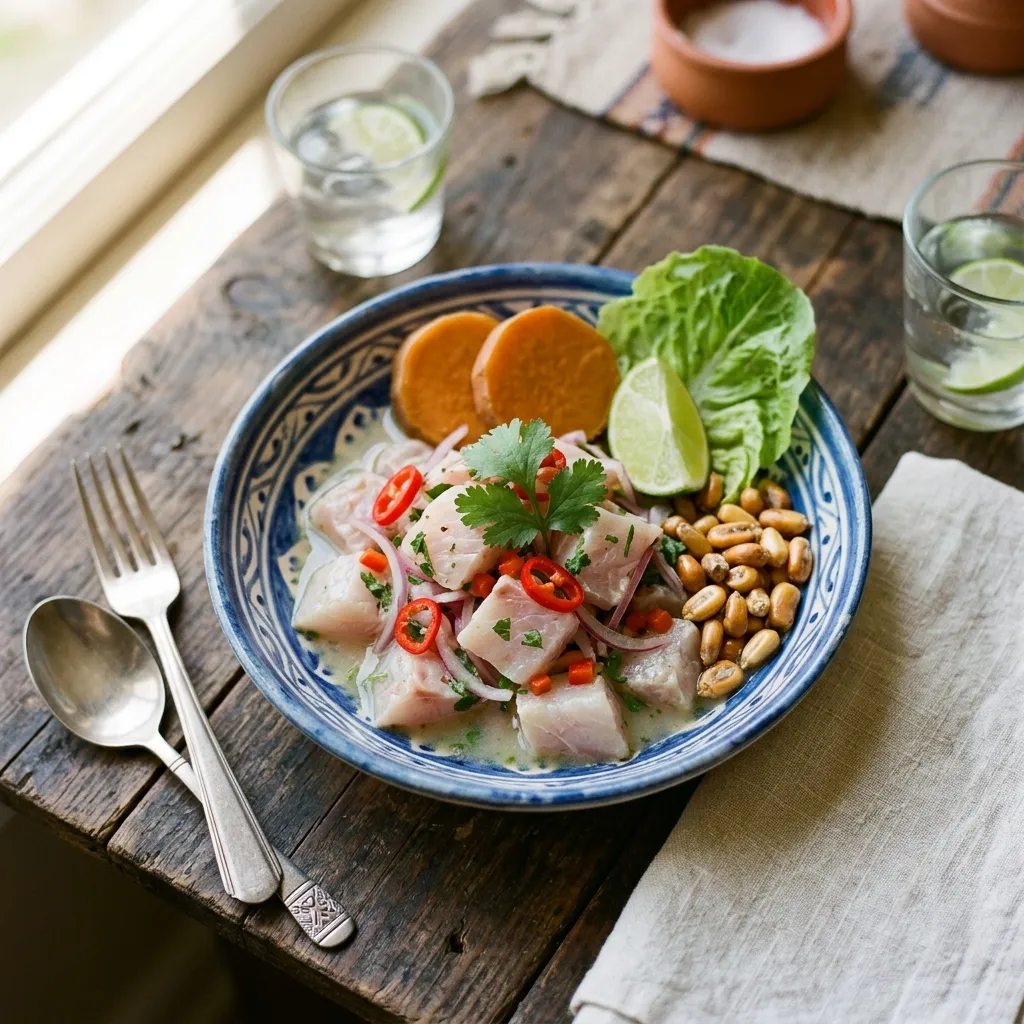
Ceviche is Peru's national dish — raw fresh fish cut into cubes and "cooked" in a bath of fresh lime juice, combined with thin-sliced red onion, aji peppers, salt, and cilantro. The acid in the lime denatures the fish protein, turning it opaque and firm in a process called citric acid denaturation. Peruvian ceviche is defined by its freshness and speed — the fish sits in lime juice for only minutes, not hours, resulting in a silky, barely-cured texture that preserves the ocean's flavor. The liquid that collects at the bottom of the ceviche bowl — called leche de tigre (tiger's milk) — is considered as important as the fish itself. This cloudy, intensely flavored citrus brine, infused with fish juices, chili heat, and aromatics, is served in a shot glass alongside the ceviche as a traditional hangover cure and appetizer. Peruvian cevicherias open at lunchtime and close by evening — ceviche is a daytime food, eaten when the fish is freshest. Ayurvedically, ceviche is a complex preparation. Raw fish is considered heavy and difficult to digest in most Ayurvedic frameworks, but the citric acid provides a form of external digestion that partially breaks down proteins before they enter the body. The intense sour and pungent tastes strongly stimulate agni. This is a Pitta-provoking dish — sour, spicy, and stimulating — but its lightness and freshness make it less burdensome than cooked heavy meals.
Increases Pitta significantly through concentrated sour taste, chili heat, and raw fish. Aggravates Vata through cold, light, raw quality. The sharp, stimulating nature can benefit sluggish Kapha digestion in moderation.
Leche de tigre is traditionally used as a digestive stimulant and hangover remedy. The concentrated citric acid and fish enzymes in the curing liquid are believed to restart sluggish digestion and clear alcohol-related toxins.
Ingredients
- 500 g Fresh firm white fish (sea bass, sole, or corvina, cut into 2cm cubes)
- 3/4 cup Fresh lime juice (about 8-10 limes, freshly squeezed)
- 1 medium Red onion (halved and very thinly sliced)
- 1 tbsp Aji amarillo paste (or 1 fresh aji amarillo, seeded and minced)
- 3 tbsp Fresh cilantro (roughly chopped)
- 1 clove Garlic (minced)
- 1 tsp Fresh ginger (finely grated)
- 1 tsp Salt
- 1 medium Sweet potato (boiled and sliced, for serving)
- 1 ear Corn on the cob (boiled, kernels removed, for serving)
Instructions
- Ensure the fish is sashimi-grade fresh — this is the single most important factor. Cut into even 2cm cubes and keep refrigerated until ready to use.
- Soak the sliced red onion in ice water for 5 minutes to mellow its sharpness. Drain and pat dry.
- Combine the lime juice, aji amarillo paste, minced garlic, grated ginger, and salt in a non-reactive bowl (glass or ceramic). Stir to dissolve the salt and distribute the chili evenly.
- Add the fish cubes to the lime mixture. Toss gently to coat every piece. Let the fish cure for 3-5 minutes only — no longer. The exterior should turn opaque while the center remains slightly translucent.
- Add the drained red onion and cilantro. Toss gently once more.
- Serve immediately in shallow bowls, spooning the leche de tigre (the lime-fish juice) generously over and around the fish. Arrange boiled sweet potato slices and corn on the side.
- Serve an extra shot glass of leche de tigre on the side for drinking.
Nutrition
These values are estimates calculated from the ingredient list and may vary based on brands, cooking methods, and serving size. Not a substitute for medical or dietary advice.
How This Recipe Affects Each Dosha
Vata
Raw, cold, and light — three qualities that aggravate Vata. The lime acid and chili provide stimulation but do not compensate for the raw, uncooked nature of the dish. The sweet potato and corn sides are the most Vata-appropriate elements. Vata types should eat ceviche in small portions and only when digestion is strong.
Pitta
Concentrated lime acid, chili peppers, garlic, raw onion, and the sharp quality of raw fish make this one of the most Pitta-provoking preparations. The sour vipaka ensures the heating effect lingers. Pitta types should avoid during summer and Pitta flares.
Kapha
The light, sharp, stimulating qualities cut through Kapha stagnation effectively. The sour and pungent tastes kindle agni, and the absence of cooking fat keeps the dish from creating heaviness. This is the most Kapha-appropriate dosha for ceviche, particularly in warm weather.
Powerfully stimulates agni through concentrated sour and pungent tastes. The lime acid and chili heat prime digestive secretions immediately. However, the raw fish itself requires strong agni to process — this dish is a paradox of strong stimulation combined with demanding raw material.
Nourishes: Rasa (plasma), Rakta (blood), Mamsa (muscle)
Adjustments by Constitution
For Vata Types
Increase the ginger and add a pinch of black pepper. Choose a fattier fish like salmon for more oleation. Serve with extra sweet potato — its warm, sweet, heavy quality counterbalances the raw, cold fish. Eat at room temperature rather than cold, and keep the portion small.
For Pitta Types
Reduce the lime juice curing time to 2 minutes for minimum acid exposure. Omit the aji amarillo or replace with a tiny amount of mild sweet pepper. Add extra cilantro — which is cooling — and use coconut cream in the leche de tigre. Replace red onion with mild shallot.
For Kapha Types
Add extra aji amarillo and a squeeze of fresh ginger juice for stronger digestive stimulation. Skip the sweet potato and corn sides — serve with crisp lettuce cups instead. Add thinly sliced radish for extra pungency.
Seasonal Guidance
Best in summer when the body tolerates cold, raw food and when fish is freshest. The cooling nature provides relief from heat. Avoid in winter when cold, raw food suppresses agni and aggravates Vata. In spring, acceptable if agni is strong.
Best time of day: Midday lunch, when digestive fire peaks and the body can best handle raw fish. Traditional cevicherias close by 4pm for this reason.
Cultural Context
Ceviche predates the Spanish conquest of Peru — coastal peoples were curing fish in fruit acids (tumbo, passion fruit) long before limes arrived with the Spanish. The modern lime-based preparation evolved in Lima's cevicherias during the 20th century, and Peruvian ceviche was recognized by UNESCO as Intangible Cultural Heritage. The leche de tigre tradition — drinking the curing liquid — has roots in pre-Columbian fishing communities who believed the brine contained the ocean's vitality. Peru's best cevicherias are lunch-only establishments that buy fish at dawn and serve it by noon.
Deeper Context
Origins
Ceviche traces to pre-Columbian Andean coastal cuisine with at least 2,000 years of continuous fish-and-acid preparation. Pre-Columbian versions used tumbo (native Andean citrus) or chicha (fermented corn beer) as the acid; the Spanish colonial arrival in the 16th century introduced Persian lime which gradually replaced the native acids. The dish received national-heritage status in Peru in 2004, and June 28 is officially National Ceviche Day (Día del Ceviche). UNESCO acknowledged Peruvian ceviche as Intangible Cultural Heritage.
Food as Medicine
Raw fish acid-'cooked' by lime provides highly-bioavailable omega-3 fatty acids, iodine, and selenium. Vitamin C from lime enhances iron absorption from the fish. Capsaicin from aji amarillo supports metabolic function. The dish is nutritionally exceptional when prepared with fresh high-quality fish.
Ritual & Seasonal Role
Summer Peruvian dish, year-round in Lima restaurant culture. National Ceviche Day (June 28). Peruvian Independence Day meals (July 28). Featured globally as signature Peruvian dish.
Classical Pairings & Cautions
Sweet potato (camote), toasted Andean corn (cancha), choclo (large-kernel corn). Pisco sour or Inca Kola. Cautions: raw-fish food safety concerns — pregnancy, immunocompromised, and young children should avoid; parasite risk requires sushi-grade or previously-frozen fish; mercury content varies by species; fish allergies severe; acid aggravation in GERD and peptic ulcer.
Cross-Tradition View
How other medical and food-wisdom traditions read this dish. Each tradition names the same physiological reality in its own language — the agreements across them are where universal principles live.
Traditional Chinese Medicine
White fish is Yin-building and cool-sweet; lime is cool-sour and moves Liver Qi; aji amarillo is hot-pungent and disperses cold; red onion is warm-pungent; cilantro is cool and clears Heat. A cool Yin-building Liver-Qi-moving preparation — TCM physicians would class ceviche as summer food with specific Liver-Qi-stagnation indications.
Greek Humoral
Cold-wet with hot-dry chile-and-onion correction. A Galenic summer preparation — the fish-and-acid combination reflects Mediterranean classical raw-fish traditions (Italian crudo, Greek karpaccio precursors).
Ayurveda
Cooling virya, pungent vipaka. Pacifies Pitta through the fish-and-lime cooling. Mild Vata aggravation through raw preparation. Kapha-reducing through acid and spice.
Pre-Columbian Andean Inca
Ceviche is pre-Columbian Andean — archaeological and ethnobotanical evidence suggests 2,000+ years of continuous lime/citrus-and-fish preparation along the Peruvian coast. The pre-Columbian version used tumbo (a native Andean citrus fruit) or chicha (fermented corn beer) as the acid; Spanish colonial arrival introduced lime which took over. Peru declared ceviche National Heritage Cuisine in 2004, and the Peruvian government formally celebrates National Ceviche Day on June 28.
Chef's Notes
The fish must be impeccably fresh — buy from a fishmonger you trust and use it the same day. Peruvian ceviche cures for minutes, not hours; over-cured ceviche becomes rubbery and loses its silkiness. The traditional acid is key lime (limon sutil), smaller and more aromatic than common Persian limes. Aji amarillo provides a fruity, medium heat that is specific to Peruvian cuisine — Thai chili or habanero are not substitutes. The sweet potato and corn garnishes are not optional; their mild sweetness balances the sharp acidity of the ceviche. Never use metal bowls — acid reacts with metal and creates off-flavors.
Frequently Asked Questions
Is Ceviche good for my dosha?
Increases Pitta significantly through concentrated sour taste, chili heat, and raw fish. Aggravates Vata through cold, light, raw quality. The sharp, stimulating nature can benefit sluggish Kapha digestion in moderation. Raw, cold, and light — three qualities that aggravate Vata. Concentrated lime acid, chili peppers, garlic, raw onion, and the sharp quality of raw fish make this one of the most Pitta-provoking preparations. The light, sharp, stimulating qualities cut through Kapha stagnation effectively.
When is the best time to eat Ceviche?
Midday lunch, when digestive fire peaks and the body can best handle raw fish. Traditional cevicherias close by 4pm for this reason. Best in summer when the body tolerates cold, raw food and when fish is freshest. The cooling nature provides relief from heat. Avoid in winter when cold, raw food suppresses agni and aggravates Vata.
How can I adjust Ceviche for my constitution?
For Vata types: Increase the ginger and add a pinch of black pepper. Choose a fattier fish like salmon for more oleation. Serve with extra sweet potato — its warm, sw For Pitta types: Reduce the lime juice curing time to 2 minutes for minimum acid exposure. Omit the aji amarillo or replace with a tiny amount of mild sweet pepper. Ad
What are the Ayurvedic properties of Ceviche?
Ceviche has Sour, Pungent, Salty taste (rasa), Cooling energy (virya), and Pungent post-digestive effect (vipaka). Its qualities (gunas) are Light, Cold, Sharp, Liquid. It nourishes Rasa (plasma), Rakta (blood), Mamsa (muscle). Powerfully stimulates agni through concentrated sour and pungent tastes. The lime acid and chili heat prime digestive secretions immediately. However, the raw fish itself requires strong agni to process — this dish is a paradox of strong stimulation combined with demanding raw material.