Champ
Irish Recipe
Overview
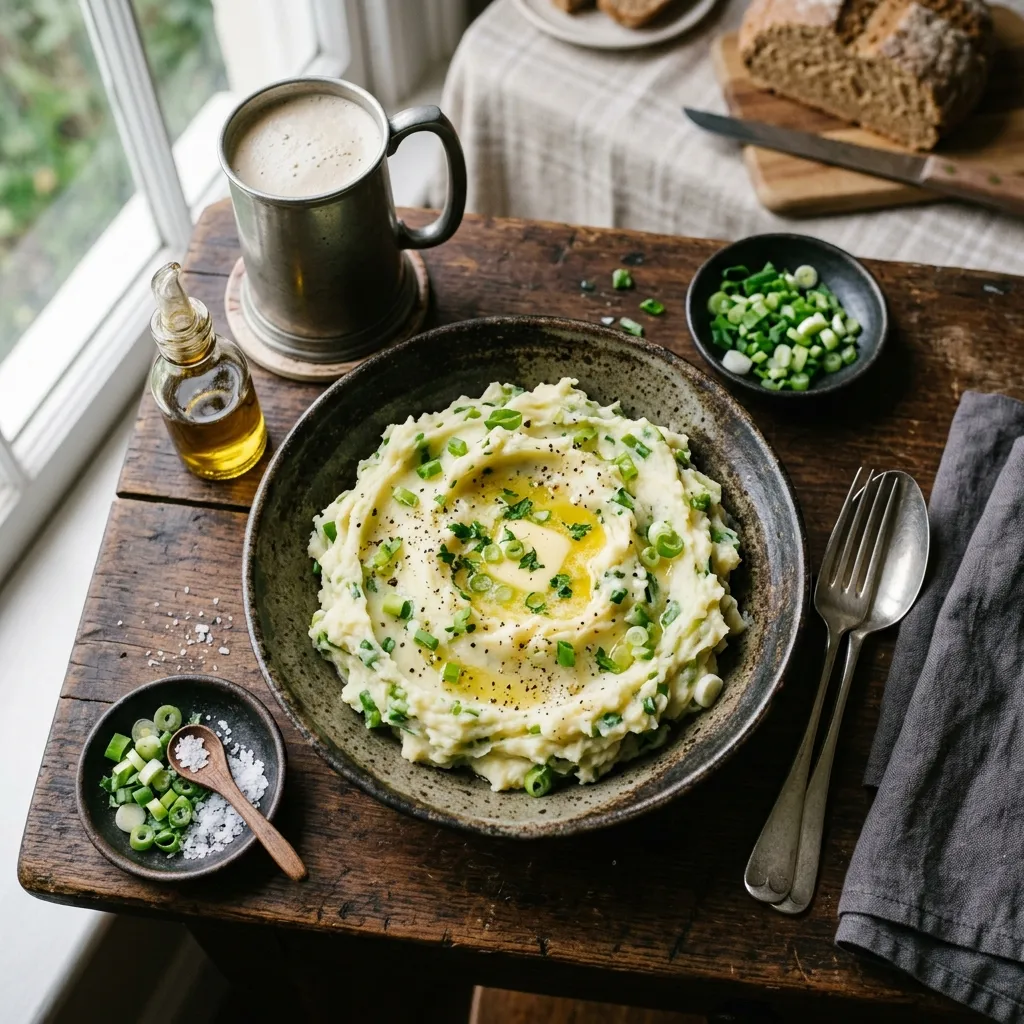
Champ — sometimes called 'poundies' in parts of Ulster — is Northern Ireland's answer to colcannon, and the distinction between them is a matter of both geography and ingredient. Where colcannon folds in cabbage or kale, champ uses only spring onions (scallions), stirred into hot mashed potato with generous amounts of butter and warm milk. The dish originates in Ulster (the northern province) and has been documented since at least the mid-18th century, when it was the daily supper of farm labourers across Counties Antrim, Down, Armagh, and Tyrone. The preparation is deceptively simple: floury potatoes mashed smooth, spring onions warmed gently in milk until softened, everything beaten together, and the whole mound served with a generous well of melting butter in the centre. Each forkful is scooped from the edges and dipped into the central butter pool. Despite — or because of — this simplicity, champ requires good ingredients to succeed. Waxy potatoes will not produce the right texture, old scallions taste harsh, and margarine has no place here. Ayurvedically, champ is a straightforward sweet, heavy, oily dish. The potato provides madhura rasa (sweet taste) and guru guna (heavy quality), the butter adds snigdha (oily), and the spring onions contribute a mild tikta-katu (bitter-pungent) note that keeps the dish from being entirely one-dimensional. The warming milk and melting butter make it more digestible than cold potato preparations.
Pacifies Vata effectively with warm, smooth, oily, sweet qualities. Largely neutral for Pitta. Increases Kapha due to heavy starch, dairy fat, and sweet-dominant taste profile.
Ingredients
- 1 kg Floury potatoes (peeled and quartered)
- 8 pieces Spring onions (scallions) (finely sliced, including green tops)
- 150 ml Whole milk
- 80 g Butter (plus extra for the well)
- 1 tsp Salt
- 1/4 tsp White pepper
Instructions
- Boil the potatoes in generously salted water for 15-18 minutes until completely tender when pierced with a knife. Drain thoroughly and return to the hot pot to steam-dry for 2 minutes over low heat.
- While the potatoes boil, warm the milk in a small saucepan over low heat. Add the sliced spring onions and cook gently for 3-4 minutes until softened. Do not boil the milk.
- Mash the potatoes until smooth — a potato ricer produces the lightest result. Add 60g of the butter and beat until fully incorporated.
- Pour in the warm milk-and-scallion mixture. Beat vigorously with a wooden spoon until the champ is light, fluffy, and the scallions are evenly distributed.
- Season with salt and white pepper. Transfer to a warm serving dish.
- Make a deep well in the centre and place a generous pat of the remaining butter in the hollow. Serve immediately while the butter melts into a golden pool.
Nutrition
These values are estimates calculated from the ingredient list and may vary based on brands, cooking methods, and serving size. Not a substitute for medical or dietary advice.
How This Recipe Affects Each Dosha
Vata
Champ is a pure expression of Vata-pacifying comfort food: warm, smooth, oily, and sweet. The butter provides deep oleation, the potato provides grounding heaviness, and the spring onions add a gentle pungent lift that keeps the dish from feeling leaden. The warm milk soothes Vata's dry, rough digestive tract. A deeply satisfying Vata side dish.
Pitta
Sweet potato, cooling butter, and mild scallions sit comfortably within Pitta's tolerance. The dish lacks the heating spices, sour elements, or fermented components that trigger Pitta aggravation. Pitta types can enjoy champ freely, particularly alongside cooling protein like fish or chicken.
Kapha
Heavy, starchy, and butter-laden — champ concentrates the sweet, oily, heavy qualities that Kapha metabolism struggles to process. The lack of any bitter, astringent, or strongly pungent element means there is no internal counterbalance. Kapha types should treat champ as an occasional accompaniment, not a regular feature.
The warm, soft consistency is easy for agni to process, and the spring onions provide mild digestive stimulation. The butter aids absorption. Overall, champ neither strongly kindles nor suppresses agni — it is digestively neutral, making it appropriate for most constitutions when served warm.
Nourishes: Rasa (plasma), Meda (fat)
Adjustments by Constitution
For Vata Types
Add a generous grinding of black pepper and a pinch of nutmeg. Use ghee instead of butter for even deeper oleation. Serve alongside warming stew or roasted root vegetables.
For Pitta Types
Use ghee instead of butter and replace spring onions with fresh chives stirred in at the end (milder, less pungent). Add a tablespoon of fresh parsley for cooling herbal notes. Keep portions moderate.
For Kapha Types
Replace half the potato with steamed, mashed cauliflower. Use goat milk and just 1 tablespoon of butter. Double the spring onions and add a generous amount of black pepper and a pinch of dry ginger. Skip the butter well; drizzle with a thin line of mustard oil instead.
Seasonal Guidance
A cold-weather side dish that provides warmth and caloric density when the body needs it. In spring, reduce butter and increase scallion proportion. In summer, champ is too heavy and starchy — switch to lighter preparations.
Best time of day: Dinner, as a side dish to meat or fish. The simplicity and warmth make it appropriate for evening eating when paired with protein.
Cultural Context
Champ belongs to Ulster as colcannon belongs to the rest of Ireland. The distinction is a genuine point of regional identity — asking for colcannon in a Belfast kitchen or champ in a Cork kitchen reveals you are not from there. Champ was the everyday supper of agricultural labourers in Northern Ireland for centuries: filling, cheap, and requiring only potatoes, scallions, milk, and butter — all available from the farm. The dish appears in the diary of Mrs. Jane Brownlow of County Armagh (1795), and similar preparations are documented even earlier. Modern champ is identical to these historical versions — a rare case where a recipe has remained essentially unchanged for over two hundred years.
Deeper Context
Origins
Champ traces to Ulster rural cookery and represents one of the simplest potato-based preparations in Irish tradition. The dish predates the famine era but became ubiquitous during the 19th century as potato dominated Irish diet. The Halloween silver-sixpence tradition preserved continuously in Ulster households, and modern Northern Irish bakeries and restaurants maintain the seasonal tradition.
Food as Medicine
Not therapeutically designed. The potato-and-spring-onion combination provides vitamin C (historically protecting Irish populations from scurvy despite limited fruit availability — a public-health role that contributed to the famine's catastrophic effects when potato crops failed), fiber, and allium sulfur compounds. Spring onion's medicinal reputation across European folk medicine for respiratory and cardiovascular support aligns with modern research on allium compounds.
Ritual & Seasonal Role
Halloween (All Hallows' Eve, October 31) divination dish. Year-round Ulster home cooking. Featured at Northern Irish Sunday lunches and traditional family meals. Not religiously ceremonial, but deeply tied to Ulster regional identity and to Halloween tradition specifically.
Classical Pairings & Cautions
A pat of additional butter melting into the well at the center of the serving (classical Ulster presentation). Roast meat, sausages, or rashers alongside. Tea to drink. Cautions: high potassium from potato contraindicates renal failure; dairy sensitivity; Kapha aggravation in winter; allium allergies; the classical recipe lacks nutritional diversity beyond starch-dairy-allium and should not anchor regular daily diet.
Cross-Tradition View
How other medical and food-wisdom traditions read this dish. Each tradition names the same physiological reality in its own language — the agreements across them are where universal principles live.
Traditional Chinese Medicine
Potato is Spleen-Qi-tonifying; spring onion is warm-pungent and disperses cold; butter is warm-moistening; milk is cool-Yin-building. A Qi-building gentle preparation with warming-dispersing onion corrective — TCM physicians would recognize champ as appropriate for weak-digestion Spleen-deficient constitutions, particularly in cold climates.
Greek Humoral
Hot-wet mild. Sanguine-building with mild choleric correction. Galenic peasant sustenance — the combination of starch, dairy, and warming allium matches classical working-class nutritional prescriptions for cold-wet labor environments.
Ayurveda
Neutral-to-warming virya, sweet vipaka. Pacifies Vata through unctuousness and warmth. Mild Kapha aggravation from potato-butter combination. Pitta-neutral. A gentle winter dish appropriate across most constitutions.
Ulster Irish
Champ is specifically an Ulster (northern Irish) regional tradition. The name derives from Gaelic 'cham' (to bash or beat), referring to the mashing technique. Traditional All Hallows' Eve (Halloween) divination dish — a silver sixpence was hidden in the champ, and the young woman who found it in her serving was predicted to marry within the year. The dish carries substantial cultural weight in Northern Irish Protestant and Catholic households alike, one of the few food traditions that cross the sectarian divide.
Chef's Notes
The quality of the potato matters more here than in any other dish — with only four ingredients, there is nowhere to hide. Floury varieties (Rooster, Kerr's Pink, Maris Piper) are essential; waxy potatoes produce a gluey, heavy result. The scallion milk should be warm, not hot — adding boiling milk to mashed potato creates a gummy texture. The butter well is not decorative; it is functional. Each bite is scooped from the mound's edge and rolled through the melted butter, creating a fresh coating with every forkful. In traditional Ulster households, leftover champ was shaped into small cakes and fried in butter the next morning for breakfast.
Frequently Asked Questions
Is Champ good for my dosha?
Pacifies Vata effectively with warm, smooth, oily, sweet qualities. Largely neutral for Pitta. Increases Kapha due to heavy starch, dairy fat, and sweet-dominant taste profile. Champ is a pure expression of Vata-pacifying comfort food: warm, smooth, oily, and sweet. Sweet potato, cooling butter, and mild scallions sit comfortably within Pitta's tolerance. Heavy, starchy, and butter-laden — champ concentrates the sweet, oily, heavy qualities that Kapha metabolism struggles to process.
When is the best time to eat Champ?
Dinner, as a side dish to meat or fish. The simplicity and warmth make it appropriate for evening eating when paired with protein. A cold-weather side dish that provides warmth and caloric density when the body needs it. In spring, reduce butter and increase scallion proportion. In summer, champ is too heavy and starchy — switch
How can I adjust Champ for my constitution?
For Vata types: Add a generous grinding of black pepper and a pinch of nutmeg. Use ghee instead of butter for even deeper oleation. Serve alongside warming stew or ro For Pitta types: Use ghee instead of butter and replace spring onions with fresh chives stirred in at the end (milder, less pungent). Add a tablespoon of fresh parsley
What are the Ayurvedic properties of Champ?
Champ has Sweet, Mildly Pungent taste (rasa), Neutral to Warming energy (virya), and Sweet post-digestive effect (vipaka). Its qualities (gunas) are Heavy, Oily, Smooth, Warm. It nourishes Rasa (plasma), Meda (fat). The warm, soft consistency is easy for agni to process, and the spring onions provide mild digestive stimulation. The butter aids absorption. Overall, champ neither strongly kindles nor suppresses agni — it is digestively neutral, making it appropriate for most constitutions when served warm.