Bouillabaisse
French Recipe
Overview
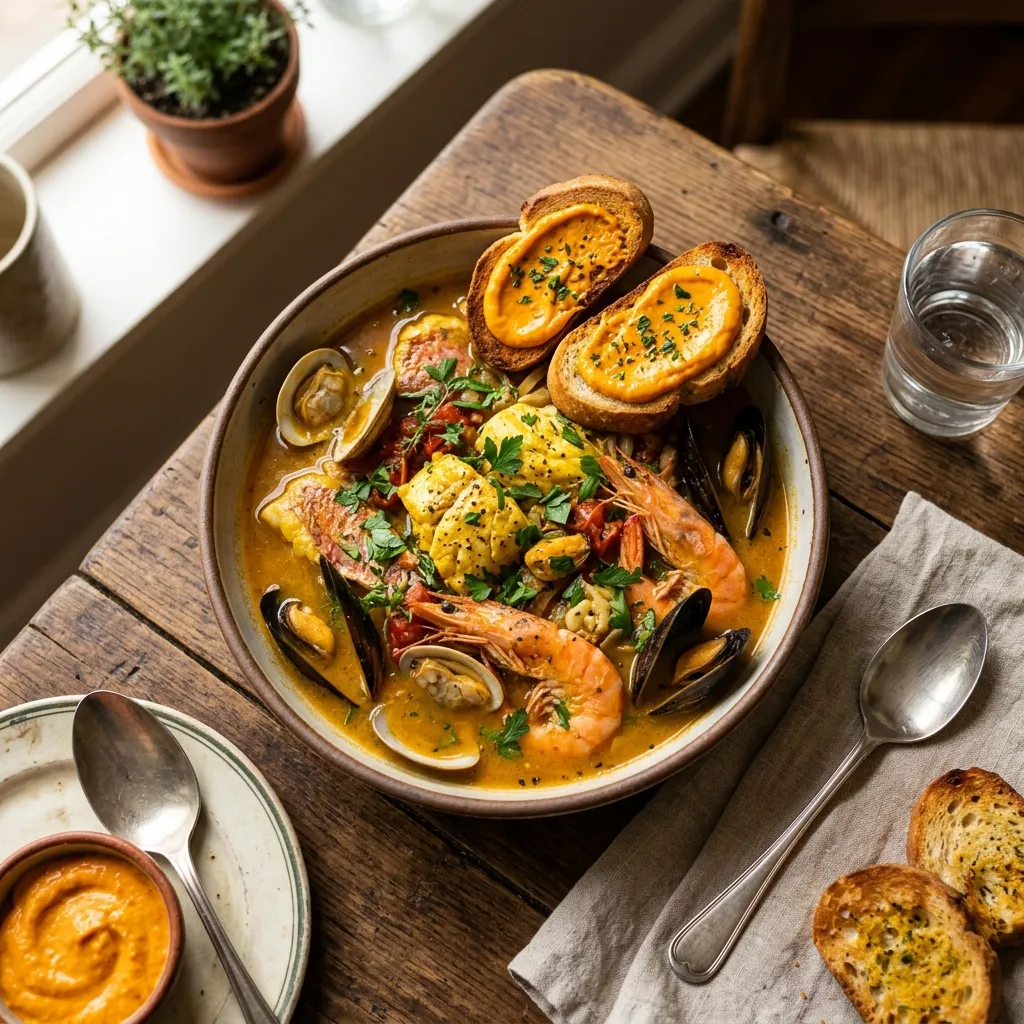
Bouillabaisse originated in the port of Marseille, where fishermen made a rough stew from the bony, unsellable rockfish left after the day's marketable catch was sold. The name comes from the Provençal words 'bolhir' (to boil) and 'abaissar' (to reduce) — a description of the cooking method rather than the ingredients. The 1980 Bouillabaisse Charter, signed by Marseille restaurateurs, specifies that an authentic bouillabaisse must contain at least four types of local Mediterranean fish, cooked in a broth flavored with olive oil, saffron, fennel, and garlic. The Ayurvedic properties of bouillabaisse center on its dual nature: the broth is light, warming, and intensely aromatic from saffron, fennel, and orange peel, while the fish provides lean protein with cooling-to-neutral virya depending on the species. Saffron (kesar) is among the most prized substances in Ayurveda, valued for its ability to balance all three doshas in small quantities while supporting blood quality, complexion, and emotional equilibrium. The fennel contributes its distinctive sweet-cooling digestive support. The traditional accompaniment of rouille — a fiery red pepper and garlic mayonnaise spread on toasted bread — adds a significant katu (pungent) and ushna (heating) component that stimulates digestion of the fish and provides the intensity that Provençal cuisine is known for. The combination of saffron, fennel, garlic, and orange peel in the broth represents a remarkably sophisticated digestive formula.
The saffron-fennel-garlic broth is tridoshic in moderate quantities, making bouillabaisse more balanced than most French main courses. The lean fish provides protein without excessive heaviness. The garlic, cayenne, and warming spices may increase pitta if consumed in large portions or with heavy rouille.
The saffron-infused broth supports blood quality (rakta dhatu) and emotional balance, while the variety of fish provides easily digestible protein. In Ayurvedic terms, this is a useful preparation for rebuilding strength during convalescence without overburdening digestive fire, particularly when the rouille is omitted and the broth is emphasized.
Ingredients
- 3 pounds Mixed firm white fish (such as monkfish, sea bass, snapper, halibut — cut into 2-inch chunks)
- 1 pound Shell-on shrimp (large, deveined)
- 1 pound Mussels (scrubbed and debearded)
- 1/4 cup Extra-virgin olive oil
- 1 large Yellow onion (diced)
- 1 large Fennel bulb (trimmed and diced, fronds reserved)
- 1 large Leek (white and light green parts, sliced)
- 6 cloves Garlic (minced)
- 1 14-ounce can Canned diced tomatoes
- 4 cups Fish stock (or clam juice mixed with water)
- 1 cup Dry white wine
- 1/2 teaspoon Saffron threads (steeped in 2 tablespoons warm water)
- 1 strip Orange peel (3-inch strip, pith removed)
- 1 whole Bay leaf
- 3 sprigs Fresh thyme
- 1/4 teaspoon Cayenne pepper
- 1 teaspoon Salt
- 1 whole Baguette (sliced and toasted, for serving)
Instructions
- Steep the saffron threads in 2 tablespoons of warm water for at least 15 minutes. Saffron releases its color, flavor, and medicinal compounds through soaking — adding dry threads directly to the pot wastes much of this expensive spice's potential.
- Heat the olive oil in a large, heavy pot or Dutch oven over medium heat. Add the diced onion, fennel, and leek. Cook for 8 minutes until softened and translucent, stirring occasionally. Add the garlic and cook for 1 minute.
- Add the canned tomatoes with their juice, the white wine, and the fish stock. Stir in the saffron with its soaking liquid, the orange peel strip, bay leaf, thyme sprigs, cayenne, and salt. Bring to a boil, then reduce to a simmer and cook uncovered for 20 minutes to develop the broth's depth.
- While the broth simmers, season the fish chunks and shrimp with salt. Sort the fish by thickness — thicker, denser pieces (monkfish, halibut) will need more cooking time than thinner, more delicate ones (snapper, sea bass).
- Add the thickest, firmest fish pieces to the broth first. Cook for 3 minutes, then add the medium-firm pieces. Cook for 2 more minutes, then add the most delicate fish and the shrimp.
- Nestle the mussels into the broth hinge-side down. Cover the pot and cook for 4-5 minutes until the mussels open and the shrimp are pink and curled. Discard any mussels that remain closed after 5 minutes — they are dead and potentially unsafe.
- Remove and discard the orange peel, bay leaf, and thyme sprigs. Taste the broth and adjust salt and cayenne — the broth should be aromatic, slightly spicy, and deeply flavored with saffron.
- Ladle the bouillabaisse into wide, shallow bowls, distributing the fish, shrimp, and mussels evenly. Pour the broth around and over the seafood. Garnish with reserved fennel fronds.
- Serve immediately with toasted baguette slices. Traditionally, the toast is spread with rouille (garlic-saffron-cayenne mayonnaise) and placed in the bowl to soak up the broth. The bread serves as both utensil and thickener.
Nutrition
These values are estimates calculated from the ingredient list and may vary based on brands, cooking methods, and serving size. Not a substitute for medical or dietary advice.
How This Recipe Affects Each Dosha
Vata
Bouillabaisse is very good for vata. The warm, aromatic broth with its saffron and fennel combination provides the warmth and moisture vata needs. Fish is lighter and easier to digest than red meat while still providing nourishing animal protein. The olive oil base adds the snigdha quality that vata requires. The fennel supports vata's often-variable digestion. Saffron is particularly beneficial for vata, helping to calm anxiety and support emotional balance. The only concern is that too many different types of seafood in one meal can scatter vata's digestion — vata does best with simplicity.
Pitta
The broth contains several pitta-increasing elements: garlic, cayenne, tomatoes, and the heating quality of saffron in larger amounts. However, the fish itself tends toward cooling or neutral virya, and the fennel is explicitly pitta-pacifying. The overall effect is moderately warming — acceptable for pitta in cool weather but potentially aggravating in summer or during pitta flare-ups. The rouille (garlic-cayenne mayonnaise) is significantly pitta-increasing and should be used sparingly by pitta types. The olive oil and orange peel provide mild cooling counterbalance.
Kapha
Bouillabaisse is among the best French dishes for kapha management. The broth is light and warming rather than heavy and creamy. The lean fish provides protein without the heaviness of meat or dairy. The aromatic spices — saffron, garlic, cayenne, fennel — all stimulate metabolism and circulation in ways that benefit kapha. The tomato and wine add sourness that cuts through kapha's stagnation. The only kapha concern is the bread accompaniment; kapha types should minimize or skip the baguette and rouille.
The saffron-fennel-garlic aromatic base is a powerful agni stimulant. These spices work synergistically to prepare the digestive system for the incoming protein, and the broth-based preparation makes the fish significantly easier to digest than fried or grilled preparations. This is one of the more agni-friendly ways to consume a substantial quantity of seafood.
Nourishes: rasaraktamamsa
Adjustments by Constitution
For Vata Types
Choose 2-3 types of fish rather than a large variety to reduce complexity for vata digestion. Increase the olive oil slightly and add a tablespoon of ghee to the finished broth for extra richness. Serve with plenty of toasted bread to add grounding weight. Add a pinch of asafoetida to the broth for additional vata-pacifying digestive support. Ensure the broth is piping hot when served.
For Pitta Types
Omit the cayenne entirely and reduce garlic to 2 cloves. Increase the fennel to 2 bulbs, making it a dominant flavor — fennel is one of the best pitta-cooling herbs. Skip the rouille or replace it with a cooling cucumber-yogurt sauce. Replace the tomatoes with roasted fennel purée for body without acidity. Add fresh cilantro and mint as finishing herbs. Choose the mildest, most cooling fish varieties — halibut and sole are excellent choices.
For Kapha Types
Increase the cayenne to 1/2 teaspoon and add 1/2 teaspoon of dried ginger to the broth. Skip the bread and rouille entirely. Add leafy greens like kale or chard to the broth in the last 5 minutes of cooking for additional lightness and bitterness. Use primarily shrimp and mussels, which are lighter than dense fish fillets. Squeeze fresh lemon juice over each bowl before serving. Keep the portion focused on broth and shellfish rather than large fish pieces.
Seasonal Guidance
Bouillabaisse works well across cooler months and transitions. In fall and winter, its warming broth and aromatic spices counter cold weather. In spring, its relative lightness compared to braised meat dishes makes it appropriate for the transition to warmer months. In summer, the heating garlic and cayenne may be excessive — reduce these elements or choose cooler preparations for seafood.
Best time of day: Dinner is traditional. The relatively light protein of fish makes this more suitable for evening consumption than heavier meat dishes. Allow 2-3 hours between eating and sleep to allow full digestion of the varied seafood.
Cultural Context
Bouillabaisse is Marseille's defining dish and a source of fierce local pride. The 1980 Bouillabaisse Charter was created specifically because the proliferation of tourist-oriented versions threatened to dilute the dish's identity. Traditional Marseillaise bouillabaisse requires specific Mediterranean rockfish species — rascasse, vive, saint-pierre, and congre — that are largely unavailable outside the region. Historically, the broth and fish were served as separate courses: the broth first with bread and rouille, followed by the fish on a platter. The dish descends from ancient Greek fish stews brought to Marseille when it was the Greek colony of Massalia, founded around 600 BCE.
Deeper Context
Origins
Bouillabaisse traces directly to the Greek colony of Massalia (founded around 600 BCE on the site of modern Marseille), making it one of the oldest continuously-prepared dishes in France. The name derives from the Provençal 'bolhabaissa' — 'when it boils, lower' — referring to the cooking technique of bringing the broth to a boil, then reducing to a simmer. The Marseille Charter of 1980 codifies the traditional recipe and protects the name's use in Marseille restaurants, recognizing the dish as regional heritage.
Food as Medicine
Saffron has substantial modern research for mood support and mild antidepressant effect, validating its classical Galenic, Unani, and Ayurvedic use. Omega-3 fatty acids in fish support cardiovascular and cognitive health. Fennel is a classical galactagogue and digestive stimulant. The combination is an accidental apothecary — fisherman's-catch dish that turned out to be substantially supportive for mood, cognition, and cardiovascular function.
Ritual & Seasonal Role
Summer Mediterranean dish, tied to Marseille fishing and tourism seasons. Not religiously ceremonial, but deeply tied to Marseille and Provençal regional identity. Featured at family reunions and celebrations in Provence; the preparation of true bouillabaisse is considered a multi-hour undertaking reserved for occasion rather than weeknight cookery.
Classical Pairings & Cautions
Rouille (saffron-garlic-oil sauce spread on toast), crusty sourdough bread, Bandol rosé or a dry white from Cassis. Cautions: shellfish allergies are severe and common; mercury accumulation in certain fish species (less concern with smaller reef fish used traditionally); pregnancy should favor lower-mercury fish; saffron at high doses is uterine-stimulating; fish-safety concerns for pregnancy and immunocompromised patients.
Cross-Tradition View
How other medical and food-wisdom traditions read this dish. Each tradition names the same physiological reality in its own language — the agreements across them are where universal principles live.
Traditional Chinese Medicine
Fish is Yin-building and builds Essence; saffron moves Heart Blood and opens the Heart meridian; fennel warms the Kidney and Spleen; garlic disperses cold; olive oil is cool-moistening; shrimp is warming and Yin-supporting. A comprehensive Yin-building Heart-and-Blood-moving preparation — TCM physicians would recognize this as appropriate restoration food for Yin-deficient patterns with Heart-Blood stagnation.
Greek Humoral
Hot-wet with aromatic balance. Classical Galenic Mediterranean — bouillabaisse emerged in the exact cultural context (ancient Greek Massalia, now Marseille) where Galenic medicine was born. The Hippocratic and Galenic prescription for fish-in-broth for convalescents survived continuously through the Byzantine and medieval Provençal transmissions.
Ayurveda
Heating virya, sweet vipaka. Mixed dosha picture — the fish and shrimp are heavy/tamasic; the saffron is rajasic-mood-elevating; the fennel is sattvic-digestive. Pacifies Vata through protein density and ghee-adjacent oil. Pitta mixed through the saffron-and-heat combination. Kapha aggravated through fish heaviness.
Provençal
Bouillabaisse originated in Marseille — the ancient Greek colony of Massalia (founded around 600 BCE). Marseille fishermen created the dish from unsold 'fish of the rocks' at the end of market day: rascasse, John Dory, conger eel, monkfish, and whatever else remained. The Marseille Charter (a 1980 local agreement) defines the protected traditional recipe and restricts what can be called true bouillabaisse in the city. Paul Bocuse and Roger Vergé formalized the modern haute-cuisine version in the 1960s and 1970s.
Chef's Notes
Bouillabaisse demands the freshest fish available — this is not a dish to make with day-old seafood. The original fishermen's version used whatever was on hand, so feel free to adapt to your local catch; the critical element is variety rather than specific species. The broth must be made first and allowed to develop before any fish is added; dropping raw fish into an undeveloped broth produces a flat, watery soup. The timing of fish addition by density is essential — overcooked fish falls apart and disappears into the broth, while undercooked fish is rubbery. Keep the boil gentle once fish is added; violent bubbling breaks delicate fillets apart.
Frequently Asked Questions
Is Bouillabaisse good for my dosha?
The saffron-fennel-garlic broth is tridoshic in moderate quantities, making bouillabaisse more balanced than most French main courses. The lean fish provides protein without excessive heaviness. The garlic, cayenne, and warming spices may increase pitta if consumed in large portions or with heavy rouille. Bouillabaisse is very good for vata. The broth contains several pitta-increasing elements: garlic, cayenne, tomatoes, and the heating quality of saffron in larger amounts. Bouillabaisse is among the best French dishes for kapha management.
When is the best time to eat Bouillabaisse?
Dinner is traditional. The relatively light protein of fish makes this more suitable for evening consumption than heavier meat dishes. Allow 2-3 hours between eating and sleep to allow full digestion of the varied seafood. Bouillabaisse works well across cooler months and transitions. In fall and winter, its warming broth and aromatic spices counter cold weather. In spring, its relative lightness compared to braised mea
How can I adjust Bouillabaisse for my constitution?
For Vata types: Choose 2-3 types of fish rather than a large variety to reduce complexity for vata digestion. Increase the olive oil slightly and add a tablespoon of For Pitta types: Omit the cayenne entirely and reduce garlic to 2 cloves. Increase the fennel to 2 bulbs, making it a dominant flavor — fennel is one of the best pitta
What are the Ayurvedic properties of Bouillabaisse?
Bouillabaisse has madhura,lavana,katu taste (rasa), ushna energy (virya), and madhura post-digestive effect (vipaka). Its qualities (gunas) are laghu,snigdha,ushna. It nourishes rasa,rakta,mamsa. The saffron-fennel-garlic aromatic base is a powerful agni stimulant. These spices work synergistically to prepare the digestive system for the incoming protein, and the broth-based preparation makes the fish significantly easier to digest than fried or grilled preparations. This is one of the more agni-friendly ways to consume a substantial quantity of seafood.