Blueberry Muffins
American Recipe
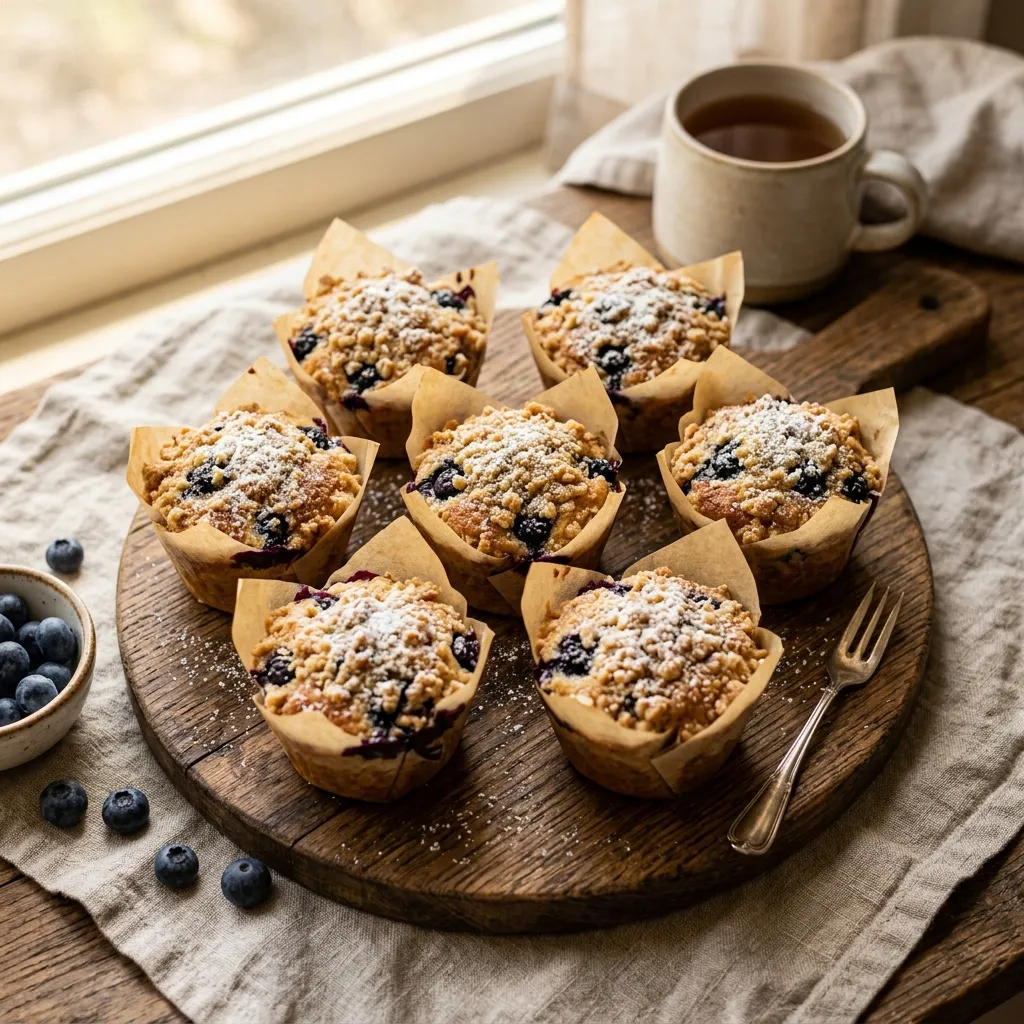
Overview
Blueberry muffins trace their American lineage to the early 19th century, when chemical leavening agents — first pearl ash, then baking soda and baking powder — replaced yeast in quick bread recipes. Wild blueberries grew abundantly in New England, and Maine cooks were among the first to fold them into muffin batter. The Jordan Marsh department store in Boston claims credit for popularizing the oversized, sugar-topped blueberry muffin in the 1950s — a version that became the template for commercial bakery muffins across the country. Maine designated the blueberry muffin as its official state treat in 2020. From an Ayurvedic standpoint, blueberry muffins present a complex profile. The wheat flour, sugar, butter, and eggs create a predominantly sweet, heavy, oily base, while the blueberries contribute astringent and mildly sour rasas with a cooling virya. The baking process transforms these ingredients through fire — the Maillard reaction on the muffin top and the steam expansion of the crumb represent agni acting on raw materials to create something more digestible than the sum of its parts. The difference between a great blueberry muffin and a mediocre one comes down to technique and restraint. Overmixing develops gluten in the wheat flour, producing a tough, bread-like crumb instead of the tender, cake-like texture that defines a muffin. The batter should look lumpy and slightly undermixed — visible streaks of flour are preferable to a smooth batter. Starting at a high oven temperature (425°F) for the first five minutes creates the domed top, then reducing to 375°F bakes the interior through without over-browning.
Blueberry muffins are strongly kapha-increasing due to their combination of wheat, sugar, butter, and dense structure. Vata benefits from the heavy, grounding, sweet qualities, particularly when eaten warm. Pitta types tolerate muffins moderately — the sweet rasa is soothing, but the heavy oiliness and heating virya can cause sluggishness and mild pitta aggravation in excess.
Ingredients
- 2 cups all-purpose flour
- 3/4 cup granulated sugar
- 2 teaspoons baking powder
- 1/4 teaspoon baking soda
- 1/2 teaspoon salt
- 2 large eggs
- 1/3 cup butter (melted and slightly cooled)
- 3/4 cup whole milk
- 1 teaspoon vanilla extract
- 1 teaspoon lemon zest (from one lemon)
- 1 1/2 cups blueberries (fresh preferred; if frozen, do not thaw)
- 2 tablespoons turbinado sugar (for topping, optional)
Instructions
- Preheat oven to 425°F. Line a 12-cup muffin tin with paper liners or grease thoroughly with butter.
- In a large bowl, whisk together the flour, sugar, baking powder, baking soda, and salt until evenly combined. Set aside.
- In a separate bowl, whisk the eggs until broken up, then add the melted butter, milk, vanilla, and lemon zest. Whisk until uniform.
- Toss the blueberries with 1 tablespoon of flour from the measured amount (this prevents them from sinking to the bottom during baking). If using frozen berries, keep them frozen — thawed berries bleed purple throughout the batter.
- Pour the wet ingredients into the dry ingredients. Fold with a spatula using no more than 15-20 strokes. The batter should be lumpy with visible flour streaks — this is correct. Overmixing is the primary cause of tough, dense muffins.
- Gently fold in the floured blueberries with 3-4 additional strokes, distributing them through the batter without crushing.
- Divide batter evenly among the 12 muffin cups, filling each about 3/4 full. Use an ice cream scoop for consistent sizing. Sprinkle turbinado sugar over the tops if desired — this creates a crunchy, sparkly crust.
- Bake at 425°F for 5 minutes, then reduce oven temperature to 375°F without opening the door. Continue baking for 15-18 minutes until the tops are golden and a toothpick inserted into the center of a muffin comes out clean or with a few moist crumbs.
- Cool in the pan for 5 minutes, then transfer to a wire rack. Muffins that sit in the hot pan too long develop soggy bottoms from trapped steam.
- Serve warm or at room temperature. Store in an airtight container at room temperature for up to 2 days, or freeze for up to 3 months.
Nutrition
These values are estimates calculated from the ingredient list and may vary based on brands, cooking methods, and serving size. Not a substitute for medical or dietary advice.
How This Recipe Affects Each Dosha
Vata
The heavy, moist, oily, sweet qualities of blueberry muffins pacify vata effectively. Wheat provides grounding earth element, butter adds unctuousness, and sugar delivers quick energy that vata's erratic metabolism appreciates. Eating a warm muffin with ghee or butter is deeply comforting for anxious, scattered vata states. The blueberries add antioxidants and vitamin C without disrupting the grounding quality. However, muffins lack protein, so vata types should pair them with eggs or nut butter to avoid a blood sugar crash two hours later.
Pitta
The sweet rasa of blueberry muffins is generally cooling for pitta, and the astringent quality of blueberries further pacifies pitta's sharp heat. However, the overall heaviness of the dish — wheat, butter, sugar — can create sluggish digestion for pitta types who tend toward loose, overactive digestion. The heating virya from the baking process and the eggs contributes mild pitta aggravation. Pitta types can enjoy muffins occasionally but should not rely on them as a dietary staple. One muffin is sufficient — the tendency to eat two compounds the heavy qualities.
Kapha
Blueberry muffins represent a significant kapha challenge. The combination of refined wheat flour, sugar, butter, and milk creates maximum density and sweetness — kapha's most aggravating taste. Regular consumption leads to weight gain, increased mucus production, and morning lethargy. The blueberries provide beneficial astringency, but their quantity relative to the flour-sugar-butter base is insufficient to counterbalance the heavy qualities. Kapha types should treat blueberry muffins as an occasional indulgence rather than a breakfast staple.
Blueberry muffins require strong agni to process due to their dense, heavy, oily structure. The refined flour and sugar are absorbed quickly, but the butter and egg create a rich matrix that takes longer to break down. Those with weak or variable agni may experience bloating, heaviness, or a food coma after eating muffins. Pairing with ginger tea or eating when agni is strongest (late morning) supports better assimilation. The baking process does improve digestibility compared to raw dough, as the heat breaks down some of the starch granules and develops flavor compounds.
Nourishes: Rasa (plasma), Mamsa (muscle), Meda (fat)
Adjustments by Constitution
For Vata Types
Serve muffins warm with a thin spread of ghee or almond butter. Add 1/2 teaspoon of cardamom and a pinch of ground ginger to the batter for additional digestive support. Replace some blueberries with chopped dates or raisins for more grounding sweetness. Pair with warm spiced milk rather than cold juice. The warmth and fat help vata's cold, dry digestion process the heavy flour and sugar more efficiently.
For Pitta Types
Substitute coconut oil for butter in the batter — it provides moisture with a cooling quality. Reduce sugar by 2-3 tablespoons and increase blueberries to 2 cups for more astringent, cooling fruit relative to sweet base. Add 1 teaspoon of ground cardamom instead of lemon zest. Use spelt flour instead of all-purpose for a lighter, less heating grain. Eat at room temperature rather than warm, and pair with a cooling mint tea rather than coffee.
For Kapha Types
Substitute half the all-purpose flour with millet flour or buckwheat flour for a lighter, drier grain base. Reduce butter by half and replace with unsweetened applesauce for moisture without added fat. Cut sugar to 1/3 cup and add 1 teaspoon of dried ginger powder and extra cinnamon to the batter. Increase blueberries to 2 cups. Eat no more than one muffin and pair with warm ginger tea to stimulate agni. Avoid adding butter or any spread to the finished muffin.
Seasonal Guidance
Best enjoyed during autumn and winter when the body welcomes dense, warming foods and digestive fire is naturally stronger. During spring, muffins compound seasonal kapha accumulation — save them for special occasions or apply significant kapha modifications. Summer is acceptable if eaten in moderation, particularly when made with extra berries and reduced sugar.
Best time of day: Eat as a mid-morning snack between 9-11 AM when agni is building toward its peak. Eating muffins first thing upon waking, when agni is still low, leads to heavy, sluggish digestion. Avoid as an evening snack — the heavy, sweet qualities consumed after sunset promote ama accumulation.
Cultural Context
The American muffin diverged from its English ancestor — a yeast-leavened griddle cake — in the early 1800s when chemical leaveners made quick batters possible. Blueberry muffins became associated with New England identity, particularly Maine, where wild lowbush blueberries grow prolifically in acidic, rocky soil. The Jordan Marsh department store in Boston elevated the blueberry muffin from homey breakfast bread to a retail product in the 1950s, selling thousands weekly from its bakery counter. The 1980s 'muffin craze' saw commercial muffins balloon to 5-6 ounces — nearly double the traditional size — and sugar content increased proportionally. The original New England blueberry muffin was modest in size and sweetness, closer to a biscuit than the cake-like confection sold in modern bakeries.
Deeper Context
Origins
Blueberry muffins as we know them stabilized in late 19th-century American cookbooks, as the muffin format (cake-quick-bread hybrid, baked in individual portions) merged with the native New World blueberry. The dish is credited at times to Fannie Farmer's influential 1896 Boston Cooking School Cookbook. The commercial blueberry industry in Maine and New Jersey scaled through the 20th century and standardized the muffin as a national breakfast dish.
Food as Medicine
Blueberry carries an unusually strong traditional and scientific medicinal record — Algonquin peoples used dried blueberries for gastrointestinal complaints, childbirth recovery, and eye health. Modern anthocyanin research has validated much of the traditional use. The dried form concentrates the medicinal compounds; the fresh and frozen forms retain most. The muffin format dilutes the medicine with sugar and flour, but the berries still carry value.
Ritual & Seasonal Role
Not ceremonial in American usage, though Native American blueberry festivals persist in the Northeast and Great Lakes regions. Peak-summer fresh-blueberry availability (July and August) aligns with the dish's strongest form. Year-round in frozen-berry form, particularly as a breakfast or brunch staple. Associated with New England café culture and diner breakfasts.
Classical Pairings & Cautions
Butter, coffee, tea, a glass of milk. Cautions: the refined flour and sugar load makes this a significant glycemic hit — diabetic restriction applies; gluten intolerance precludes standard preparations; blueberry allergies are rare but documented; Kapha types should limit to occasional consumption rather than daily morning fare.
Cross-Tradition View
How other medical and food-wisdom traditions read this dish. Each tradition names the same physiological reality in its own language — the agreements across them are where universal principles live.
Traditional Chinese Medicine
Blueberry is cool-sour-sweet, moves Liver Qi and builds Yin fluids; flour and butter are Spleen-tonifying; eggs build Yin and Blood; lemon zest disperses Qi stagnation. The muffin is a Yin-and-Qi-building breakfast with mild Liver-moving properties. TCM physicians recommend blueberry-family berries for vision support (Liver opens into the eyes), and the muffin form makes this a child-friendly delivery vehicle.
Greek Humoral
Hot-dry baking process on cold-wet blueberries and wet eggs produces a neutral-wet final temperament. Galenic reading: sanguine-building with mild phlegmatic accent. The lemon zest contributes a hot-dry corrective. Appropriate across most temperaments in moderation, though melancholic types particularly benefit from the moisture and the blood-moving aromatic lemon zest.
Ayurveda
Heating virya, sweet vipaka. Butter and baking heat create Vata-pacifying warmth; blueberries are cool and Pitta-pacifying; the sugar load aggravates Kapha. Mixed dosha effect. Lemon zest adds Pitta-friendly aromatic coolness (despite being technically sour, the zest is more aromatic than juice-sour). A seasonal breakfast food rather than daily fare in Ayurvedic terms.
Indigenous Northeast North American
Blueberries are native to northeastern North America and were central to Algonquin, Wampanoag, Abenaki, and Mi'kmaq food culture for at least 10,000 years. Indigenous preparations included dried blueberry cakes (arguably the world's first power bars), blueberry soups, and medicinal teas from dried berries for digestive complaints. European colonists learned the berry from Native neighbors; the blueberry muffin is a creolized post-Columbian descendant of that knowledge transfer.
Chef's Notes
Lemon zest is the secret ingredient in great blueberry muffins — it brightens the flavor without making the muffins taste like lemon. Use a microplane for the finest zest. The two-temperature baking method (425°F then 375°F) creates the bakery-style domed top by rapidly setting the outside while the inside continues to rise. If your muffins consistently sink in the center, your baking powder may be expired — it loses potency after 6-12 months. For even richer muffins, substitute 1/4 cup of the milk with sour cream or full-fat Greek yogurt, which adds tang and tenderness.
Frequently Asked Questions
Is Blueberry Muffins good for my dosha?
Blueberry muffins are strongly kapha-increasing due to their combination of wheat, sugar, butter, and dense structure. Vata benefits from the heavy, grounding, sweet qualities, particularly when eaten warm. Pitta types tolerate muffins moderately — the sweet rasa is soothing, but the heavy oiliness and heating virya can cause sluggishness and mild pitta aggravation in excess. The heavy, moist, oily, sweet qualities of blueberry muffins pacify vata effectively. The sweet rasa of blueberry muffins is generally cooling for pitta, and the astringent quality of blueberries further pacifies pitta's sharp heat. Blueberry muffins represent a significant kapha challenge.
When is the best time to eat Blueberry Muffins?
Eat as a mid-morning snack between 9-11 AM when agni is building toward its peak. Eating muffins first thing upon waking, when agni is still low, leads to heavy, sluggish digestion. Avoid as an evening snack — the heavy, sweet qualities consumed after sunset promote ama accumulation. Best enjoyed during autumn and winter when the body welcomes dense, warming foods and digestive fire is naturally stronger. During spring, muffins compound seasonal kapha accumulation — save them for
How can I adjust Blueberry Muffins for my constitution?
For Vata types: Serve muffins warm with a thin spread of ghee or almond butter. Add 1/2 teaspoon of cardamom and a pinch of ground ginger to the batter for additional For Pitta types: Substitute coconut oil for butter in the batter — it provides moisture with a cooling quality. Reduce sugar by 2-3 tablespoons and increase blueberrie
What are the Ayurvedic properties of Blueberry Muffins?
Blueberry Muffins has Sweet, Astringent, Sour taste (rasa), Heating energy (virya), and Sweet post-digestive effect (vipaka). Its qualities (gunas) are Heavy, Moist, Dense, Oily. It nourishes Rasa (plasma), Mamsa (muscle), Meda (fat). Blueberry muffins require strong agni to process due to their dense, heavy, oily structure. The refined flour and sugar are absorbed quickly, but the butter and egg create a rich matrix that takes longer to break down. Those with weak or variable agni may experience bloating, heaviness, or a food coma after eating muffins. Pairing with ginger tea or eating when agni is strongest (late morning) supports better assimilation. The baking process does improve digestibility compared to raw dough, as the heat breaks down some of the starch granules and develops flavor compounds.