Boxty
Irish Recipe
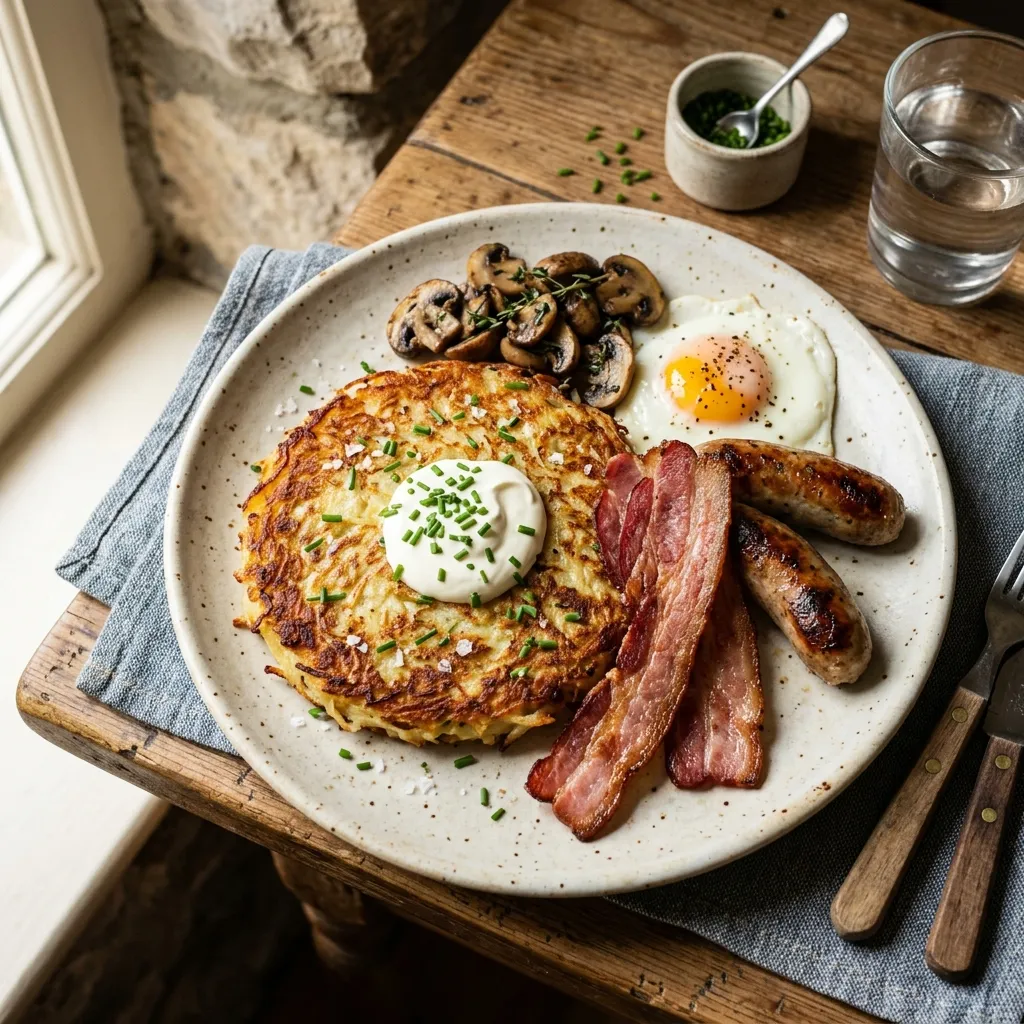
Overview
Boxty — from the Irish 'bacstaí,' possibly derived from 'arán bocht tí' meaning 'bread of the poor house' — is a traditional Irish potato pancake that combines both raw grated potato and mashed potato in a single batter. This dual-potato technique creates a texture unlike any other pancake: crisp and golden on the outside from the starch in the raw potato, soft and fluffy inside from the mashed. The dish originated in the midlands and northwest of Ireland, particularly Counties Leitrim, Cavan, Longford, and Roscommon, where it remains a point of local pride. The traditional rhyme captures its cultural importance: 'Boxty on the griddle, boxty in the pan, if you can't make boxty, you'll never get a man.' This was not merely a joke — in rural Ireland, the ability to make boxty well was a genuine measure of a young woman's kitchen skill. The preparation requires judgement: too much raw potato and the pancake falls apart, too much mashed and it loses its distinctive crispness. Ayurvedically, boxty is predominantly sweet, heavy, and starchy — traits shared by all potato dishes — but the pan-frying in butter adds oily warmth, and the raw potato component retains more of the potato's natural astringent quality than fully cooked preparations. The simplicity of ingredients (potato, flour, buttermilk, butter) means the energetic profile is clean and uncomplicated.
Pacifies Vata with warm, heavy, oily qualities from butter-frying. Neutral for Pitta in moderate amounts. Increases Kapha due to starchy heaviness and fried preparation.
Ingredients
- 300 g Raw potatoes (peeled and finely grated)
- 300 g Cold mashed potato
- 150 g Plain flour
- 100 ml Buttermilk
- 1/2 tsp Bicarbonate of soda
- 1 large Egg (beaten)
- 1 tsp Salt
- 1/4 tsp Black pepper
- 40 g Butter (for frying)
Instructions
- Grate the raw potatoes on the fine side of a box grater. Place in a clean tea towel and squeeze out as much liquid as possible over a bowl. Reserve the starchy liquid — the white starch will settle at the bottom.
- In a large bowl, combine the squeezed grated potato with the cold mashed potato. Mix until well combined.
- Sift in the flour and bicarbonate of soda. Add salt and pepper. Stir to distribute evenly.
- Pour off the clear water from the reserved potato liquid, keeping the white starch that settled at the bottom. Scrape this starch into the potato mixture — it helps binding and crispness.
- Add the beaten egg and enough buttermilk to form a thick, dropping batter — it should hold its shape on a spoon but spread slightly when dropped on the pan.
- Melt a knob of butter in a large, heavy skillet over medium heat. Drop generous spoonfuls of batter (about 8cm rounds) into the pan. Flatten slightly with the back of the spoon. Cook for 3-4 minutes per side until deeply golden and crisp.
- Keep cooked boxty warm in a low oven while you fry the remaining batter, adding more butter to the pan between batches.
- Serve hot with a pat of butter, alongside bacon and eggs for breakfast, or as a side to stews and braised meats.
Nutrition
These values are estimates calculated from the ingredient list and may vary based on brands, cooking methods, and serving size. Not a substitute for medical or dietary advice.
How This Recipe Affects Each Dosha
Vata
Pan-fried in butter, boxty delivers warmth and oiliness that Vata finds grounding. The starchy, sweet potato base provides the earthy heaviness that calms Vata's mobile, airy quality. The buttermilk adds a light, sour digestive stimulus. Served alongside eggs and bacon, this becomes a substantial Vata-pacifying breakfast.
Pitta
Potato is sweet and cooling, which Pitta tolerates well. The pan-frying adds moderate heat but not excessively. Pitta types can enjoy boxty in reasonable quantities, particularly with cooling accompaniments. The simplicity of the dish means there are no strongly Pitta-aggravating spices or fermented elements.
Kapha
Potato pancakes fried in butter concentrate the heavy, sweet, oily qualities that Kapha should limit. The starch and fat combination is slow to digest and promotes the damp, heavy congestion characteristic of Kapha aggravation. Best in small quantities or with significant modification.
The butter-frying and buttermilk provide mild digestive support, but the heavy starch base requires moderate agni to process. The bicarb-buttermilk reaction adds lightness to the batter that makes it somewhat easier to digest than a straight fried potato cake.
Nourishes: Rasa (plasma), Meda (fat)
Adjustments by Constitution
For Vata Types
Serve boxty warm with a fried egg, rashers of bacon, and a cup of strong tea with ginger. Add a pinch of cumin and black pepper to the batter for digestive warmth. The butter frying suits Vata — use generously.
For Pitta Types
Cook the boxty in ghee instead of butter for a cooler fat. Serve with a cool yoghurt-dill sauce and fresh salad greens. Add chopped fresh herbs — chives and parsley — to the batter for flavour without heat.
For Kapha Types
Replace half the potato with finely grated turnip or parsnip. Use a minimal amount of mustard oil instead of butter for frying. Add dried ginger, black pepper, and a pinch of turmeric to the batter. Serve alongside braised greens rather than bacon.
Seasonal Guidance
Best in cold weather when the body tolerates heavier, starchier foods and the warming pan-frying provides comfort. In spring and summer, reduce portion size or skip in favour of lighter preparations. The starchy heaviness compounds spring Kapha accumulation.
Best time of day: Breakfast or as a side dish at dinner. The warm, substantial quality makes it ideal morning food when the body needs fuel for the day ahead.
Cultural Context
Boxty is a dish of Ireland's rural midlands — the counties between the Atlantic coast and the eastern seaboard where flat, fertile farmland produced abundant potatoes. Each household had its own boxty tradition, and the skill was passed from mother to daughter. The dish nearly disappeared in the mid-20th century as rural populations declined and younger generations moved to cities. It was revived in the 1990s by restaurants celebrating Irish heritage cuisine, and boxty houses — restaurants specializing in the dish — now operate in Dublin and Leitrim. The annual Boxty Festival in Drumshanbo, County Leitrim, celebrates the dish as a symbol of regional identity and culinary resilience.
Deeper Context
Origins
Boxty traces to County Leitrim and County Fermanagh (north-central Ireland), where the grated-raw-potato-plus-cooked-potato-plus-flour technique became a regional signature. The name 'arán bocht tí' (poorhouse bread) marks the dish as famine-era economic stretching of limited flour through abundant potato. The midwinter and Halloween traditional-food positioning predates the famine itself — the dish's cultural role is older than its poorhouse economic function.
Food as Medicine
Not therapeutically designed. The raw-potato-and-cooked-potato combination in boxty retains some raw-starch resistant-starch benefit, which modern gut-health research has characterized for microbiome support. Buttermilk adds probiotic content. The egg provides complete protein. The whole dish is surprisingly nutritionally balanced for a poorhouse-origin food.
Ritual & Seasonal Role
Traditional Halloween (Samhain) dish in Leitrim and Fermanagh. Midwinter food. Saint Brigid's Day (February 1) in some households. Year-round in Irish diaspora and in Irish pubs globally as a regional specialty. Cultural weight exceeds actual preparation frequency in modern Irish households.
Classical Pairings & Cautions
Butter, rashers (Irish bacon), fried egg, or sour cream. Strong tea alongside. Cautions: nightshade-family sensitivity from potato; gluten intolerance precludes standard preparation; dairy sensitivity precludes buttermilk and butter; egg allergies; high glycemic load from potato plus flour; Kapha aggravation substantial.
Cross-Tradition View
How other medical and food-wisdom traditions read this dish. Each tradition names the same physiological reality in its own language — the agreements across them are where universal principles live.
Traditional Chinese Medicine
Potato is Spleen-Qi-tonifying; flour adds additional Spleen-Qi; buttermilk is Yin-and-Liver-supporting; butter is warm-moistening; egg builds Yin and Blood. A comprehensive Spleen-Qi-and-Yin tonic — TCM physicians would recognize boxty as a working-class restoration food, appropriate for cold-climate farm labor.
Greek Humoral
Hot-wet sanguine-building. A Galenic working-class griddle food — the egg-and-buttermilk binding of the potato-starch base reflects classical Hippocratic endorsement of bound-starch preparations for melancholic-phlegmatic laborers.
Ayurveda
Neutral-to-warming virya, sweet vipaka. Pacifies Vata substantially through unctuousness and warmth. Kapha mixed — the potato-butter combination is Kapha-aggravating but the buttermilk's sour quality partly corrects. Breakfast restoration food by Ayurvedic timing logic.
Irish (Leitrim & Fermanagh)
Boxty is a distinctly Irish potato-pancake traced to County Leitrim and County Fermanagh in north-central Ireland. The name derives from Gaelic 'arán bocht tí' (poorhouse bread), reflecting the dish's famine-era economic role. Traditional Halloween and midwinter food in these counties. The rhyme 'Boxty on the griddle, boxty on the pan, if you can't make boxty you'll never get a man' preserves the cultural weight of the dish in Irish marriage tradition.
Chef's Notes
The ratio of raw to mashed potato is critical. Too much raw potato makes the boxty heavy and starchy; too much mashed makes it fall apart when flipped. Equal parts by weight is the traditional ratio. Squeezing the liquid from the raw potato is essential — excess moisture creates a soggy, pale pancake that steams rather than crisps. The reserved potato starch (the white sediment in the squeezed liquid) is a traditional binding agent that improves texture. Leftover boxty reheats well in a hot, dry pan for 2 minutes per side.
Frequently Asked Questions
Is Boxty good for my dosha?
Pacifies Vata with warm, heavy, oily qualities from butter-frying. Neutral for Pitta in moderate amounts. Increases Kapha due to starchy heaviness and fried preparation. Pan-fried in butter, boxty delivers warmth and oiliness that Vata finds grounding. Potato is sweet and cooling, which Pitta tolerates well. Potato pancakes fried in butter concentrate the heavy, sweet, oily qualities that Kapha should limit.
When is the best time to eat Boxty?
Breakfast or as a side dish at dinner. The warm, substantial quality makes it ideal morning food when the body needs fuel for the day ahead. Best in cold weather when the body tolerates heavier, starchier foods and the warming pan-frying provides comfort. In spring and summer, reduce portion size or skip in favour of lighter preparations.
How can I adjust Boxty for my constitution?
For Vata types: Serve boxty warm with a fried egg, rashers of bacon, and a cup of strong tea with ginger. Add a pinch of cumin and black pepper to the batter for dige For Pitta types: Cook the boxty in ghee instead of butter for a cooler fat. Serve with a cool yoghurt-dill sauce and fresh salad greens. Add chopped fresh herbs — chiv
What are the Ayurvedic properties of Boxty?
Boxty has Sweet, Mildly Astringent taste (rasa), Neutral to Warming energy (virya), and Sweet post-digestive effect (vipaka). Its qualities (gunas) are Heavy, Oily (from frying), Warm. It nourishes Rasa (plasma), Meda (fat). The butter-frying and buttermilk provide mild digestive support, but the heavy starch base requires moderate agni to process. The bicarb-buttermilk reaction adds lightness to the batter that makes it somewhat easier to digest than a straight fried potato cake.