Beef Stew
American Recipe
Overview
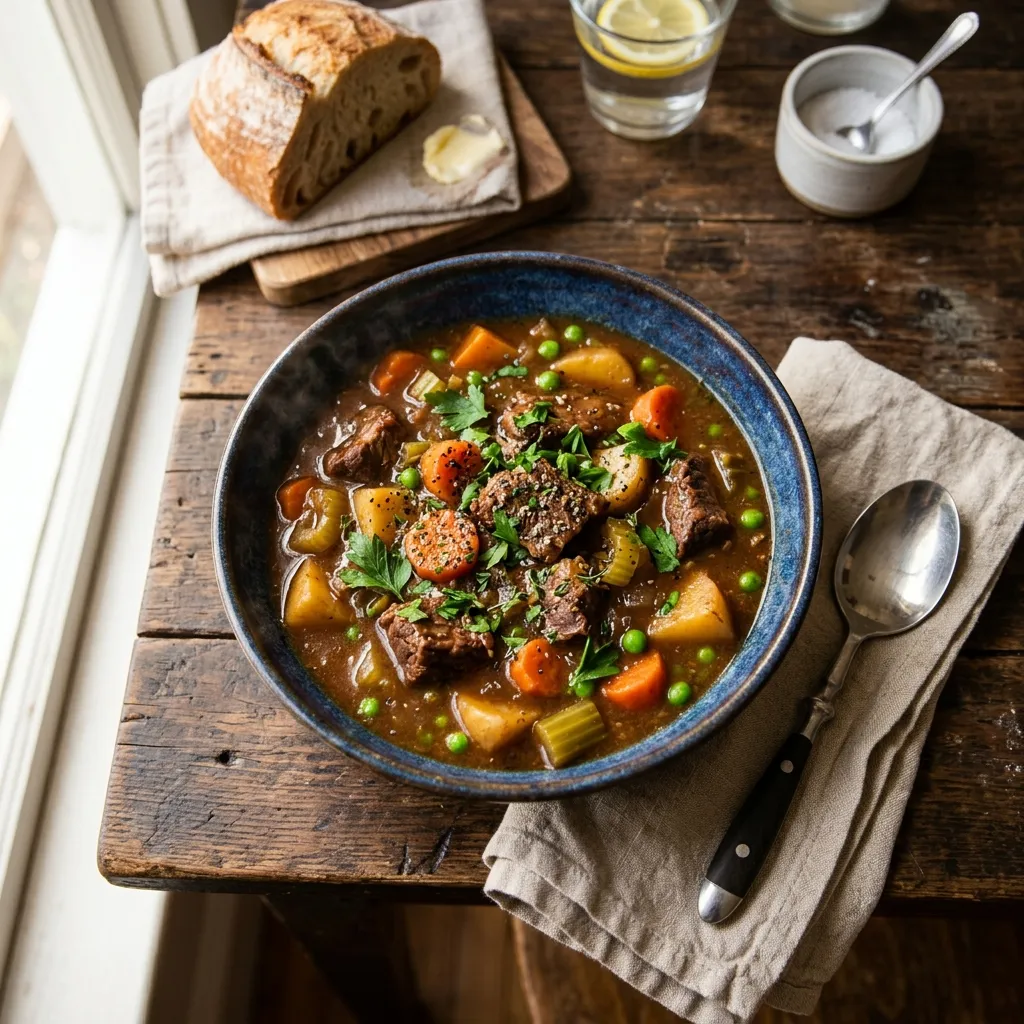
Beef stew entered American kitchens through English and Irish immigrant traditions in the 18th and 19th centuries, evolving into a cornerstone of home cooking across every region of the country. The dish combines tough cuts of beef — typically chuck — with root vegetables in a rich, slow-simmered broth thickened by the natural starches of potatoes and the gelatin released from connective tissue during long cooking. Onions, carrots, celery, and potatoes form the vegetable base, while tomato paste, Worcestershire sauce, and bay leaves layer depth into the braising liquid. From an Ayurvedic perspective, beef stew is a deeply nourishing, grounding preparation. The long cooking process breaks down heavy proteins into more digestible forms, while the combination of root vegetables and warm spices supports agni without overwhelming it. The predominant sweet and salty tastes, combined with the heavy, oily, and warm qualities of the finished dish, make this a powerful Vata-pacifying food. The broth itself acts as a vehicle for delivering nutrition to depleted tissues, functioning similarly to traditional meat broths used in Ayurvedic rasayana therapy for rebuilding strength after illness or exhaustion.
Strongly pacifies Vata through its heavy, warm, moist, and grounding qualities. The heating nature and richness may aggravate Pitta in excess, while Kapha types should consume moderate portions due to the heaviness and oiliness of the dish.
Traditionally used as a restorative food during recovery from illness, surgery, or prolonged fatigue. The gelatin-rich bone broth supports gut lining repair and joint health, while the combination of iron-rich beef and vitamin-C-containing vegetables enhances iron absorption for addressing anemia and blood deficiency.
Ingredients
- 2.5 pounds beef chuck roast (cut into 1.5-inch cubes)
- 0.25 cup all-purpose flour (for dredging)
- 3 tablespoons olive oil
- 1 large yellow onion (diced)
- 4 cloves garlic (minced)
- 2 tablespoons tomato paste
- 4 cups beef broth
- 1 cup red wine (dry, optional)
- 2 tablespoons Worcestershire sauce
- 4 medium carrots (peeled and cut into 1-inch pieces)
- 1.5 pounds Yukon Gold potatoes (cut into 1.5-inch chunks)
- 3 stalks celery (cut into 1-inch pieces)
- 2 whole bay leaves
- 4 sprigs fresh thyme
- 1.5 teaspoons salt
- 0.5 teaspoon black pepper
- 1 cup frozen peas (added at the end)
Instructions
- Pat the beef cubes dry with paper towels and season generously with salt and pepper. Toss the cubes in flour, shaking off excess. Proper drying ensures a good sear rather than steaming.
- Heat olive oil in a large Dutch oven over medium-high heat until shimmering. Working in batches to avoid crowding, sear the beef on all sides until deeply browned, about 3-4 minutes per side. Transfer browned beef to a plate. Do not skip browning — the Maillard reaction creates the flavor foundation for the entire stew.
- Reduce heat to medium. Add the diced onion to the pot and cook in the rendered fat for 4-5 minutes until softened and translucent. Add the garlic and cook for 30 seconds until fragrant.
- Stir in the tomato paste and cook for 1-2 minutes, allowing it to darken slightly and caramelize. This concentrates the tomato flavor and removes the raw, tinny taste.
- Pour in the red wine (if using) and scrape the bottom of the pot with a wooden spoon to release all browned bits. Let the wine reduce by half, about 2 minutes. Add the beef broth and Worcestershire sauce.
- Return the seared beef and any accumulated juices to the pot. Add bay leaves and thyme sprigs. Bring to a boil, then immediately reduce to a gentle simmer. Cover and cook for 1 hour.
- Add the carrots, potatoes, and celery to the pot. Stir to combine, return the lid, and continue simmering for 45-60 minutes until the vegetables are tender and the beef breaks apart easily with a fork.
- Remove bay leaves and thyme sprigs. Stir in the frozen peas and let them warm through for 3-4 minutes. Taste and adjust seasoning — the stew will likely need another pinch of salt at this stage.
- Let the stew rest off heat for 10 minutes before serving. This allows the broth to thicken slightly as it cools and lets the flavors settle. Serve in deep bowls with crusty bread.
Nutrition
These values are estimates calculated from the ingredient list and may vary based on brands, cooking methods, and serving size. Not a substitute for medical or dietary advice.
How This Recipe Affects Each Dosha
Vata
Beef stew is among the most effective dishes for pacifying elevated Vata. The combination of slow-cooked meat, root vegetables, and warm broth delivers exactly what Vata needs: heavy, warm, moist, and grounding nutrition. The sweet and salty rasas directly counter Vata's light, dry, cold, and mobile qualities. The gelatin-rich broth lubricates dry tissues and calms the nervous system. This is an ideal meal during cold, windy weather or periods of anxiety, insomnia, or physical depletion.
Pitta
The heating virya of beef combined with tomato paste, wine, garlic, and black pepper creates a preparation that can aggravate Pitta when consumed in large quantities or during hot weather. The sweet vipaka offers some balancing effect through its post-digestive cooling, and the root vegetables provide grounding without excessive heat. Pitta types may notice increased body heat, mild irritability, or acid reflux if portions are too large. Best consumed in moderation during cooler months rather than as a summer staple.
Kapha
The heavy, moist, and dense qualities of beef stew directly increase Kapha dosha. The substantial protein, starchy potatoes, and rich broth can promote sluggishness, congestion, and weight gain when consumed frequently by Kapha-dominant individuals. However, the heating virya and warming spices provide some counterbalance by stimulating digestive fire. Kapha types benefit from this dish most during cold, dry winter weather when extra grounding and warmth are needed, but should avoid it during damp spring months.
The long-cooked broth and soft vegetables are relatively easy to digest despite the heaviness of the dish. Warm temperature and aromatic spices like thyme, bay leaf, and black pepper kindle digestive fire. However, the overall heaviness of beef and starchy potatoes requires adequate agni — those with weak digestion should eat smaller portions and ensure the meat is thoroughly tender.
Nourishes: Rasa (plasma), Rakta (blood), Mamsa (muscle), Meda (fat), Asthi (bone)
Adjustments by Constitution
For Vata Types
This recipe is already well-suited for Vata. To enhance its Vata-pacifying properties, add a pinch of asafoetida (hing) to aid digestion of the heavy proteins. Stir in a tablespoon of ghee at the end for additional lubrication. Include parsnips alongside the carrots for extra sweetness. A small amount of fresh ginger grated into the stew during the last 20 minutes of cooking supports Vata's often variable digestive fire without adding excessive heat.
For Pitta Types
Omit the red wine and reduce the black pepper by half. Replace tomato paste with 2 tablespoons of sweet potato puree for body without acidity. Substitute the garlic with fennel bulb, which adds sweetness and is cooling. Add fresh cilantro as a garnish — its cooling quality helps offset the heating nature of the beef. Use coconut oil instead of olive oil for a slightly more cooling fat. Increase the proportion of sweet root vegetables like carrots and parsnips relative to the meat.
For Kapha Types
Replace half the potatoes with turnips and rutabaga, which are lighter and more drying. Add 1 teaspoon of ground cumin and 0.5 teaspoon of ground turmeric to stimulate agni and reduce the heavy quality. Use a leaner cut of beef or trim visible fat before cubing. Increase the black pepper to 1 teaspoon and add a pinch of cayenne. Reduce the broth by 1 cup for a thicker, less liquid stew that is easier for Kapha digestion. Skip the peas, which add additional heaviness.
Seasonal Guidance
Best suited to cold-weather months from October through March when the body craves dense, warming nourishment. The heavy and moist qualities counteract the dry, cold Vata season. Reduce portions in spring as Kapha accumulates, and avoid during hot summer months when Pitta is elevated and lighter foods are preferred.
Best time of day: Serve at lunch or early dinner when digestive fire is strongest. Avoid eating late in the evening — the heavy proteins require robust agni to process fully, and late consumption may lead to ama formation overnight.
Cultural Context
Beef stew has roots in European peasant cooking traditions, where tough, inexpensive cuts of meat were transformed through long braising into tender, flavorful meals. Irish immigrants brought their stew traditions to America in the 1800s, and the dish merged with English and French braising techniques already present in colonial kitchens. By the mid-20th century, beef stew had become a symbol of American comfort food and home cooking. It remains a weekly staple in many households, particularly in the Midwest and Northeast, often associated with Sunday dinners and cold-weather cooking.
Deeper Context
Origins
Beef stew descends from medieval European peasant cookery — French pot-au-feu, English pottage, Irish and Scottish stews, Hungarian gulyás all share the slow-simmered-meat-and-root format. The American beef stew stabilized in 19th-century cookbooks as an economical one-pot use of tough cuts. Canned beef stew (Dinty Moore, 1935) made the dish a Depression-and-WWII-era staple of American kitchens and helped it cross class lines.
Food as Medicine
Bone broth from beef cookery is documented across European folk medicine as a restorative for the ill, elderly, and postpartum. The long braise extracts gelatin, minerals, and fat-soluble vitamins from bone and connective tissue. Modern gut-health dietary movements (GAPS, Weston Price) have formalized what peasant cookery knew — slow-cooked meat broths support digestive repair and joint health. The collagen extraction during a proper 6-8 hour braise is substantial.
Ritual & Seasonal Role
Fall and winter dish; associated with cold-weather suppers, hunting season, and childhood comfort food memory. Irish-American St. Patrick's Day dinners sometimes feature a beef or lamb stew version. Not ceremonial in American usage, but carries strong nostalgic and hearth associations — one of the foods that signals Sunday supper, family gathering, or returning home in American domestic memory.
Classical Pairings & Cautions
Crusty bread for sopping, a side salad, red wine alongside. Mashed potato or buttered noodles underneath in some regional versions. Cautions: heavy and rich — cardiac and Kapha restrictions apply; gout patients should moderate beef frequency; the carrot and potato add substantial glycemic load; religious restrictions (Hindu, some Buddhist) preclude beef, and lamb or venison stew versions are the traditional substitutions.
Cross-Tradition View
How other medical and food-wisdom traditions read this dish. Each tradition names the same physiological reality in its own language — the agreements across them are where universal principles live.
Traditional Chinese Medicine
Beef strongly builds Blood and tonifies middle-warmer Qi; potato tonifies Spleen Qi; carrot is sweet-warm and moves Liver Qi while supporting Blood; thyme is warm-pungent and disperses cold; bay leaf warms and disperses. The dish is a classical Qi-and-Blood tonic — TCM physicians would prescribe an equivalent during post-illness weight recovery, after childbirth, or for cold-deficient elderly patients. Root-vegetable stews are considered the archetype of grounding winter food across East Asian therapeutic dietetics.
Greek Humoral
Hot-wet — sanguine-building, melancholic-dispelling. The long braise is specifically recommended in Galenic cookery for making hard meats digestible and for building robust blood. Appropriate for phlegmatic and melancholic types, cautious in choleric excess. A winter dish by classical temperament logic, and one of the few foreign preparations a Hippocratic physician would have endorsed without modification.
Ayurveda
Heating virya, sweet vipaka. Pacifies Vata through protein, warmth, and unctuousness; the carrot and thyme add additional Vata-friendly notes. Beef is considered heavy and tamas-promoting in classical Ayurveda and is prescribed only in specific constitutional or therapeutic contexts. Aggravates Kapha through heaviness; aggravates Pitta mildly through the beef heat.
Celtic / Irish Folk
Slow-simmered meat-and-root-vegetable stews are the core of Irish, Scottish, and Welsh peasant cookery from medieval times forward. Irish stew (lamb version) is the direct cousin; Welsh cawl another. These preparations were designed for hearth cookery where a single pot sat over the fire all day, and they represent a thousand-year-old tradition of nutrient-maximizing slow-extraction. The seasoning trio of thyme, bay, and black pepper reflects medieval monastic herbal practice across northern Europe.
Chef's Notes
The key to rich stew is patience with the sear — rushing this step produces gray, flavorless meat. Chuck roast is ideal because its marbling and connective tissue break down into gelatin during braising. For a thicker stew, mash a few potato chunks against the side of the pot. Leftovers improve overnight as flavors meld; refrigerate up to 4 days or freeze up to 3 months. Substitute sweet potatoes for Yukon Golds for a slightly sweeter variation. A splash of apple cider vinegar stirred in at the end brightens the flavor.
Frequently Asked Questions
Is Beef Stew good for my dosha?
Strongly pacifies Vata through its heavy, warm, moist, and grounding qualities. The heating nature and richness may aggravate Pitta in excess, while Kapha types should consume moderate portions due to the heaviness and oiliness of the dish. Beef stew is among the most effective dishes for pacifying elevated Vata. The heating virya of beef combined with tomato paste, wine, garlic, and black pepper creates a preparation that can aggravate Pitta when consumed in large quantities or during hot weather. The heavy, moist, and dense qualities of beef stew directly increase Kapha dosha.
When is the best time to eat Beef Stew?
Serve at lunch or early dinner when digestive fire is strongest. Avoid eating late in the evening — the heavy proteins require robust agni to process fully, and late consumption may lead to ama formation overnight. Best suited to cold-weather months from October through March when the body craves dense, warming nourishment. The heavy and moist qualities counteract the dry, cold Vata season. Reduce portions in sp
How can I adjust Beef Stew for my constitution?
For Vata types: This recipe is already well-suited for Vata. To enhance its Vata-pacifying properties, add a pinch of asafoetida (hing) to aid digestion of the heavy For Pitta types: Omit the red wine and reduce the black pepper by half. Replace tomato paste with 2 tablespoons of sweet potato puree for body without acidity. Substit
What are the Ayurvedic properties of Beef Stew?
Beef Stew has Sweet, Salty taste (rasa), Heating energy (virya), and Sweet post-digestive effect (vipaka). Its qualities (gunas) are Heavy, Moist, Warm. It nourishes Rasa (plasma), Rakta (blood), Mamsa (muscle), Meda (fat), Asthi (bone). The long-cooked broth and soft vegetables are relatively easy to digest despite the heaviness of the dish. Warm temperature and aromatic spices like thyme, bay leaf, and black pepper kindle digestive fire. However, the overall heaviness of beef and starchy potatoes requires adequate agni — those with weak digestion should eat smaller portions and ensure the meat is thoroughly tender.