Beef Wellington
British Recipe
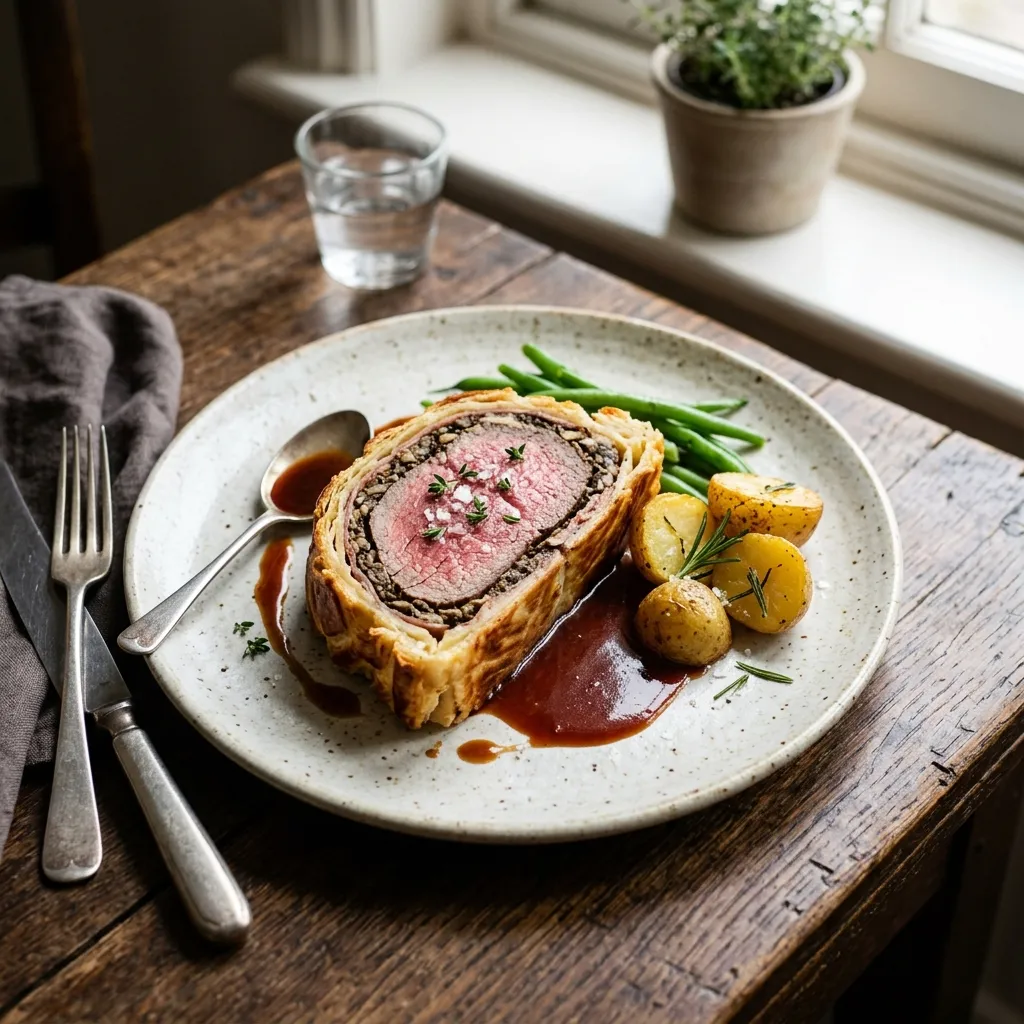
Overview
Beef Wellington — a whole beef tenderloin coated in mushroom duxelles and pate, wrapped in puff pastry, and baked until golden — is named after Arthur Wellesley, the 1st Duke of Wellington, who defeated Napoleon at Waterloo in 1815. Whether the Duke himself favoured the dish is debated by food historians, but the name stuck, and by the mid-20th century Beef Wellington had become the definitive centrepiece for formal British dinner parties. The dish fell out of fashion in the 1980s and 1990s before Gordon Ramsay revived it as his signature, reintroducing it to a new generation. The preparation is a test of technique. The tenderloin must be seared at extreme heat to develop a crust, then cooled completely before assembly. The duxelles — finely chopped mushrooms cooked down until all moisture has evaporated — functions as both a flavour layer and a moisture barrier, preventing the pastry from becoming soggy. A thin layer of Parma ham wraps the duxelles-coated beef, and the entire assembly is encased in butter-rich puff pastry. Ayurvedically, Beef Wellington is one of the most rajasic dishes in the Western canon. Red meat, rich pastry, butter, and concentrated mushroom flavour create a meal of extraordinary density and heating quality. Every component builds on the others to produce something heavy, stimulating, and energetically intense — a celebration food that should be approached with awareness of its impact on the body.
Strongly pacifies Vata with dense, warming, oily qualities. Strongly aggravates Pitta due to heating red meat, mustard, and concentrated richness. Aggravates Kapha due to extreme heaviness, pastry fats, and density.
Ingredients
- 1 kg Beef tenderloin (centre-cut, trimmed and tied)
- 500 g Chestnut mushrooms (finely chopped)
- 2 medium Shallots (finely diced)
- 3 cloves Garlic (minced)
- 1 tbsp Fresh thyme (leaves only)
- 8 slices Parma ham
- 500 g Puff pastry (all-butter, rolled to 3mm)
- 2 tbsp English mustard
- 2 large Egg yolk (beaten with 1 tbsp water)
- 2 tbsp Olive oil
- 30 g Butter
- 1.5 tsp Salt
- 1 tsp Black pepper
Instructions
- Season the tenderloin generously with salt and pepper. Heat olive oil in a large skillet over very high heat until smoking. Sear the beef on all four sides until a deep brown crust forms — about 90 seconds per side. Remove and brush with English mustard on all sides. Let cool completely.
- In the same skillet, melt butter over medium-high heat. Add shallots and cook for 2 minutes. Add the chopped mushrooms, garlic, thyme, and a pinch of salt. Cook for 12-15 minutes, stirring frequently, until all moisture has evaporated and the mixture is dry and paste-like. Season and cool completely.
- Lay a sheet of cling film on your work surface. Arrange the Parma ham slices in an overlapping rectangle large enough to wrap the tenderloin. Spread the cooled duxelles evenly over the ham.
- Place the seared, cooled tenderloin at one edge. Using the cling film to help, roll the ham and duxelles tightly around the beef, forming a compact cylinder. Twist the ends of the cling film tight and refrigerate for 20 minutes.
- Roll the puff pastry to 3mm thickness on a lightly floured surface. Unwrap the beef log and place it on the pastry. Brush the edges with egg wash. Roll the pastry around the beef, sealing the seam on the bottom. Trim excess pastry from the ends and fold them under neatly.
- Score the pastry surface lightly with the back of a knife in a diagonal crosshatch pattern. Brush the entire surface with egg wash. Refrigerate for at least 15 minutes (or up to 4 hours). Preheat the oven to 220°C (425°F).
- Place the Wellington seam-side down on a lined baking sheet. Bake for 25-30 minutes until the pastry is deep golden and an instant-read thermometer inserted through one end reads 52°C (125°F) for medium-rare.
- Rest for 10 minutes before slicing with a sharp, serrated knife into 2cm-thick rounds.
Nutrition
These values are estimates calculated from the ingredient list and may vary based on brands, cooking methods, and serving size. Not a substitute for medical or dietary advice.
How This Recipe Affects Each Dosha
Vata
Beef tenderloin is one of the most grounding and strengthening proteins available, and when wrapped in butter-rich pastry with savory mushroom and ham, the result is extraordinarily stabilizing for Vata's light, mobile nature. The warming quality penetrates deep tissues, and the density provides hours of sustained energy. A modest portion with a bitter green salad achieves excellent balance.
Pitta
Red meat is among the most heating proteins in Ayurvedic classification, and beef tenderloin — despite being leaner than other cuts — generates significant internal heat. The mustard, garlic, and butter-rich pastry compound the heating effect. Pitta types will experience increased body heat, possible skin reactions, and intensified emotions. This is a rare-occasion dish for Pitta at best.
Kapha
The concentrated richness — beef, ham, butter pastry, mushroom duxelles — creates one of the densest, most Kapha-increasing presentations in Western cuisine. Every component contributes heaviness, oiliness, and sweet taste. Kapha types should limit themselves to one thin slice and balance with abundant bitter and astringent side dishes.
Requires powerful agni to digest fully. The layers of protein, fat, and starch demand sustained digestive effort over several hours. The mustard and black pepper provide necessary pungent support, and thyme offers carminative properties. Without strong digestive fire, this meal will produce ama and heaviness lasting into the following morning.
Nourishes: Mamsa (muscle), Rakta (blood), Asthi (bone), Meda (fat)
Adjustments by Constitution
For Vata Types
Serve a moderate portion (one thick slice) with roasted root vegetables — parsnips, carrots, and beetroot — dressed with cumin-infused olive oil. Accompany with a warm glass of spiced red wine or a digestive tisane of fennel and ginger after the meal.
For Pitta Types
Replace the beef with a whole salmon fillet, which is cooler and less heavy. Omit the mustard, replacing it with a dill and lemon zest paste. Use the same duxelles and pastry technique. Serve with steamed asparagus and a watercress salad dressed in lime juice.
For Kapha Types
Replace the beef with turkey breast or lean venison. Replace puff pastry with phyllo dough brushed lightly with mustard oil — fewer butter layers, more crispness. Increase black pepper and add dried ginger to the duxelles. Serve one small slice with braised bitter greens — kale, radicchio, or endive — and a sharp Dijon vinaigrette.
Seasonal Guidance
A celebration dish for the coldest months of the year, when robust agni and cold ambient temperatures make the body receptive to dense, heating food. Never appropriate in summer. In early spring, it may be served at Easter as a special occasion but should be accompanied by light, bitter sides to offset the density.
Best time of day: Dinner — served as a formal evening meal. The richness is too much for midday, and the heating quality too intense for late-night dining. Allow at least 3 hours between eating and sleep.
Cultural Context
Beef Wellington occupies a unique place in British food culture as both a symbol of aristocratic dining and a technical challenge that separates accomplished home cooks from beginners. The dish peaked in popularity during the 1960s dinner party era, fell from favour during the lighter-eating 1980s and 1990s, and was resurrected by Gordon Ramsay, who made it his signature dish at Restaurant Gordon Ramsay and on television. It remains the centrepiece of Christmas dinner in many British households, rivalling the traditional roast turkey. The name's association with military victory gives it a celebratory connotation — this is food for triumph and special occasions.
Deeper Context
Origins
Named after the 1st Duke of Wellington in the wake of his 1815 victory at Waterloo, though the exact historical connection between the duke and the dish is tenuous. Early recipes appeared in late 19th-century cookbooks; Escoffier's turn-of-the-century work refined the technique to its modern form. The dish occupied a privileged position in mid-20th-century Anglo-American formal dining and was famously rehabilitated as a restaurant centerpiece by Gordon Ramsay in the 2000s television era.
Food as Medicine
Not designed as medicine. Beef is a Yin-and-Blood tonic in TCM terms; mushroom duxelles concentrates the Yin-essence-building properties of fungi that have extensive classical Chinese and Japanese medicinal literature. The dish is high-end nourishment for occasion eating rather than therapeutic cooking.
Ritual & Seasonal Role
Christmas dinner, New Year's Eve, wedding dinners, engagement celebrations, significant-anniversary meals. Winter peak. A restaurant-menu headline dish and home-celebration showpiece. The preparation skill required makes Beef Wellington a deliberate statement meal rather than incidental cooking.
Classical Pairings & Cautions
Red wine gravy, mashed potatoes, roasted vegetables, crisp green salad. Bordeaux or Cabernet Sauvignon alongside. Cautions: religious beef restrictions (Hindu, some Buddhist); gluten intolerance precludes puff pastry; high saturated fat and cholesterol load; Jewish kashrut restrictions on the beef-dairy combination apply depending on the specific preparation.
Cross-Tradition View
How other medical and food-wisdom traditions read this dish. Each tradition names the same physiological reality in its own language — the agreements across them are where universal principles live.
Traditional Chinese Medicine
Beef is a Blood-and-Qi tonic; mushrooms (especially the duxelles form) build Yin and Kidney Essence — mushroom preparations hold classical TCM tonic status; puff pastry is Spleen-Qi-supporting; parma ham is salty-warm and Yin-building; mustard is hot-dispersing. A comprehensive Qi-and-Blood tonic with full nourishment coverage. Royal and festival food by TCM standards.
Greek Humoral
Hot-wet luxe sanguine-building. A Galenic banquet food — the multi-layered composition (meat, fungi, pastry, cured ham) aligns with classical upper-class dining traditions where complexity and richness signaled health and abundance. Inappropriate for everyday eating across temperaments.
Ayurveda
Heating virya, pungent vipaka. Pacifies Vata substantially through multiple warming-unctuous ingredients. Aggravates Kapha substantially and aggravates Pitta notably. A festival or celebration dish only in Ayurvedic terms — the tamas and heaviness classifications place this well outside daily-eating recommendations.
French Haute Cuisine
Named after the Duke of Wellington (after his 1815 Waterloo victory), but heavily French in technique — pâté-en-croûte tradition. Escoffier-era refinement at the turn of the 20th century formalized it as a British dish of French technique. Not quite British, not quite French — an Anglo-French diplomatic dinner dish that embodies the 19th-century cross-channel culinary exchange between the two great European haute-cuisine traditions.
Chef's Notes
The three enemies of Beef Wellington are moisture, moisture, and moisture. Every component must be completely cool and dry before assembly. Warm beef will melt the pastry from inside. Wet duxelles will steam and create a soggy layer. The Parma ham serves as a moisture barrier between the duxelles and the pastry. For an even better seal, wrap the beef in a crepe (a thin French pancake) before the pastry layer — this is the technique professional kitchens use. Resting after baking is critical; cutting too early releases all the juices at once. A digital meat thermometer is the only reliable way to nail the internal temperature.
Frequently Asked Questions
Is Beef Wellington good for my dosha?
Strongly pacifies Vata with dense, warming, oily qualities. Strongly aggravates Pitta due to heating red meat, mustard, and concentrated richness. Aggravates Kapha due to extreme heaviness, pastry fats, and density. Beef tenderloin is one of the most grounding and strengthening proteins available, and when wrapped in butter-rich pastry with savory mushroom and ham, the result is extraordinarily stabilizing for Vata's light, mobile nature. Red meat is among the most heating proteins in Ayurvedic classification, and beef tenderloin — despite being leaner than other cuts — generates significant internal heat. The concentrated richness — beef, ham, butter pastry, mushroom duxelles — creates one of the densest, most Kapha-increasing presentations in Western cuisine.
When is the best time to eat Beef Wellington?
Dinner — served as a formal evening meal. The richness is too much for midday, and the heating quality too intense for late-night dining. Allow at least 3 hours between eating and sleep. A celebration dish for the coldest months of the year, when robust agni and cold ambient temperatures make the body receptive to dense, heating food. Never appropriate in summer. In early spring, it m
How can I adjust Beef Wellington for my constitution?
For Vata types: Serve a moderate portion (one thick slice) with roasted root vegetables — parsnips, carrots, and beetroot — dressed with cumin-infused olive oil. Acco For Pitta types: Replace the beef with a whole salmon fillet, which is cooler and less heavy. Omit the mustard, replacing it with a dill and lemon zest paste. Use the
What are the Ayurvedic properties of Beef Wellington?
Beef Wellington has Sweet, Salty, Pungent taste (rasa), Heating energy (virya), and Pungent post-digestive effect (vipaka). Its qualities (gunas) are Heavy, Oily, Warm, Dense. It nourishes Mamsa (muscle), Rakta (blood), Asthi (bone), Meda (fat). Requires powerful agni to digest fully. The layers of protein, fat, and starch demand sustained digestive effort over several hours. The mustard and black pepper provide necessary pungent support, and thyme offers carminative properties. Without strong digestive fire, this meal will produce ama and heaviness lasting into the following morning.