Barmbrack
Irish Recipe
Overview
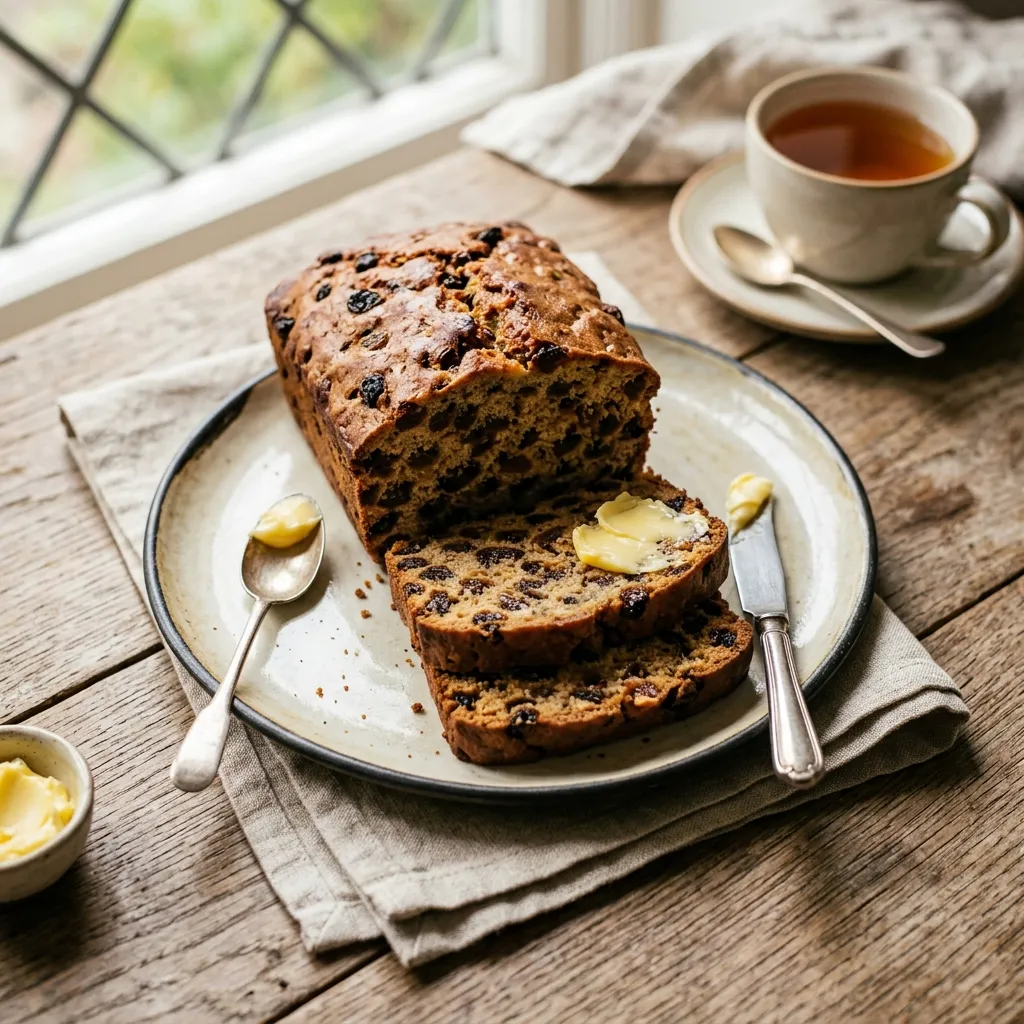
Barmbrack — from the Irish 'bairín breac' meaning 'speckled loaf' — is a traditional Irish fruit bread enriched with dried fruits that have been soaked overnight in strong black tea. The tea-soaking technique is the defining feature: it plumps the dried fruit, infuses it with tannins, and adds moisture to the crumb without using excessive butter or eggs. The result is a bread that sits between a yeasted loaf and a cake — lightly sweet, dense, and studded with raisins, sultanas, and mixed peel. Barmbrack has been baked in Ireland since at least the 18th century, but its cultural significance peaks on Halloween (Samhain, October 31), when it is baked with small objects hidden inside: a ring (marriage within the year), a coin (wealth), a piece of cloth (poverty), a pea (no marriage), and a stick (unhappy marriage). Each slice is examined with anticipation, and the discovery of a ring in your piece — however uncomfortable to bite into — is cause for celebration. Ayurvedically, barmbrack represents a moderately heavy, sweet, and warming bread. The dried fruits (raisins, sultanas) are among the most Vata-pacifying dried foods in Ayurveda — sweet, heavy, and oily — and the tea infusion adds mild astringent quality. The spices (cinnamon, nutmeg, mixed spice) contribute warming, carminative properties that aid digestion of the dense fruit-and-grain combination.
Pacifies Vata with sweet, heavy, moist, warming qualities from fruit and spices. Mildly increases Pitta due to warming spices and concentrated sugar. Increases Kapha due to heaviness, sweetness, and moisture.
Raisins soaked in warm liquid are an Ayurvedic remedy for Vata-type constipation and dryness. The iron content of dried fruits supports blood formation, and the warming spices aid assimilation.
Ingredients
- 300 ml Strong black tea (hot and freshly brewed)
- 150 g Raisins
- 150 g Sultanas
- 50 g Mixed peel
- 150 g Dark brown sugar
- 350 g Plain flour
- 1.5 tsp Baking powder
- 1.5 tsp Mixed spice
- 1/2 tsp Ground cinnamon
- 1/4 tsp Nutmeg (freshly grated)
- 1 large Egg (beaten)
- 1 tsp Orange zest
- 1/4 tsp Salt
- 20 g Butter (melted, for brushing)
Instructions
- The evening before baking, pour the hot tea over the raisins, sultanas, mixed peel, and brown sugar in a large bowl. Stir until the sugar dissolves. Cover and leave overnight at room temperature. The fruit will absorb the tea and swell.
- Preheat the oven to 170°C (325°F). Grease and line a 900g (2lb) loaf tin with baking parchment.
- Sift the flour, baking powder, mixed spice, cinnamon, nutmeg, and salt into a large bowl.
- Add the beaten egg and orange zest to the soaked fruit mixture. Stir to combine.
- Pour the wet ingredients into the dry and fold together gently until just combined. Do not overmix — a few streaks of flour are acceptable. The batter will be thick and heavy with fruit.
- Pour into the prepared loaf tin and smooth the top with the back of a wet spoon.
- Bake for 55-65 minutes until risen, dark golden, and a skewer inserted into the centre comes out clean. If the top browns too quickly, cover loosely with foil after 40 minutes.
- Brush the hot loaf with melted butter for a glossy finish. Cool in the tin for 15 minutes, then turn out onto a wire rack. Serve sliced, with or without butter.
Nutrition
These values are estimates calculated from the ingredient list and may vary based on brands, cooking methods, and serving size. Not a substitute for medical or dietary advice.
How This Recipe Affects Each Dosha
Vata
Dried fruits soaked to plumpness are among the best Vata-pacifying sweets in Ayurveda. Raisins in particular are prescribed for Vata-type constipation, anxiety, and tissue dryness. The warming spices (cinnamon, nutmeg, mixed spice) support Vata digestion, and the dense, moist crumb provides the heavy grounding that Vata needs. A slice with tea is deeply calming.
Pitta
The warming spices and concentrated sugar generate mild internal heat. The astringent tea component and the sweetness of the fruit provide some Pitta balance. In moderation, Pitta types can enjoy barmbrack, particularly during cooler weather. The lack of sour or fermented elements keeps it within Pitta's tolerance.
Kapha
Sweet taste, heavy density, and moist texture — barmbrack concentrates the qualities that Kapha digestion processes most slowly. The warming spices provide some counterbalance by stimulating metabolism, but the overall effect is Kapha-increasing. Small portions are advisable, preferably toasted to add a drying, light quality.
The warming spices (cinnamon, nutmeg, mixed spice) provide carminative digestive support that helps the body process the heavy, fruit-laden bread. The astringent tea component adds a mild digestive stimulus. Without the spices, the dense fruit-and-flour combination would be significantly harder to digest.
Nourishes: Rasa (plasma), Rakta (blood via iron in raisins), Shukra (reproductive)
Adjustments by Constitution
For Vata Types
Spread slices generously with butter or ghee and serve with a cup of spiced chai. Add a pinch of ground cardamom to the batter for enhanced Vata digestive support. The warming, sweet, heavy qualities are ideal for Vata — enjoy freely in cool weather.
For Pitta Types
Reduce the mixed spice and omit the cinnamon. Add a handful of dried cranberries (cooling, astringent) to the fruit mixture. Serve at room temperature rather than warm, and pair with a glass of cool milk or mint tea.
For Kapha Types
Toast slices until crisp and dry. Serve without butter — use a thin drizzle of raw honey instead. Replace half the wheat flour with barley flour for a lighter, more drying grain. Add extra ground ginger (1 tsp) and black pepper (1/4 tsp) to the batter.
Seasonal Guidance
Barmbrack belongs to autumn — specifically Halloween and the weeks surrounding it. The warming spices and dense fruit content are appropriate when the body needs extra caloric warmth as temperatures drop. In spring, the heaviness compounds Kapha accumulation. Not a summer food.
Best time of day: Mid-afternoon with tea, or as a post-dinner treat. The dense sweetness provides sustained energy without the spike of refined sugar desserts.
Cultural Context
Barmbrack occupies a singular place in Irish cultural life. It is the food of Halloween — Samhain — the ancient Celtic festival marking the end of harvest and the beginning of the dark half of the year. The practice of hiding charms in the bread connects to pre-Christian divination traditions, when the thinning of the veil between worlds at Samhain was believed to make the future more accessible. The ring, coin, cloth, and other tokens turned the slicing of bread into an act of prophecy. Every Irish bakery produces barmbrack in October, and supermarket versions with plastic-wrapped charms now outsell traditional homemade loaves. Despite this commercialization, the ritual of cutting the bread and discovering your fortune remains genuinely exciting — a living tradition that connects modern Irish families to their Celtic ancestors.
Deeper Context
Origins
Barmbrack takes its name from Irish 'báirín breac' (speckled loaf). The divination tradition is pre-Christian Celtic Samhain, absorbed into medieval Irish Catholic Halloween practice and preserved continuously through the modern era. The dried-fruit-and-black-tea soaking method is an 18th-19th century refinement — earlier versions used honey and local wild fruits. Modern Irish households continue the charm-baking tradition, with commercial bakeries selling barmbrack with charms included.
Food as Medicine
Not therapeutically designed, but accidentally dense in iron (dried fruit, black tea), potassium (raisins), and polyphenols (tea, dried fruit, spices). Classical European folk medicine used dried-fruit-and-spice breads for postpartum recovery and for convalescent energy supply. The dish is calorically and nutritionally dense per slice, making it appropriate occasional restoration food for cold-weather energy needs.
Ritual & Seasonal Role
Halloween (October 31) specifically — the charm-baking tradition is strongly tied to Samhain observance. Year-round availability in Irish bakeries, but cultural weight peaks around All Saints' Day. Tea-time food during autumn and winter months. Served sliced with butter and tea in the classical Irish tea-time format.
Classical Pairings & Cautions
Strong Irish breakfast tea, plenty of butter spread on sliced barmbrack. Cautions: substantial sugar load from dried fruit plus added sugar; gluten intolerance precludes traditional preparation; tree-nut allergies if walnuts are added (some regional versions); tea tannin affects iron absorption from other meal components; Kapha substantial aggravation in winter.
Cross-Tradition View
How other medical and food-wisdom traditions read this dish. Each tradition names the same physiological reality in its own language — the agreements across them are where universal principles live.
Traditional Chinese Medicine
Raisins and sultanas build Yin and Blood; black tea is Yin-moistening with mild Liver-Qi-moving action; cinnamon warms the middle and supports Kidney Yang; mixed spice (typically nutmeg, cloves, allspice, ginger) disperses and warms. A Yin-and-Blood-building preparation with Kidney-Yang-supporting spice accents — appropriate for winter and for depleted thin constitutions.
Greek Humoral
Hot-wet sanguine-building with melancholic-dispelling spice accents. A Galenic autumn-and-winter restoration bread — the Hippocratic endorsement of dried fruit preparations for convalescents specifically praised the combination of fruit-sugar concentration with warming spices.
Ayurveda
Heating virya, sweet vipaka. Pacifies Vata substantially through the dried-fruit-and-spice combination. Aggravates Kapha through sugar and heaviness. Mildly aggravates Pitta through the concentrated sweet-heat combination.
Celtic Samhain
Barmbrack is the traditional Irish Halloween (Samhain, October 31) divination bread — baked with a ring, a coin, a cloth, a pea, and a stick hidden inside. Each charm predicts fortune for the coming year: ring for marriage, coin for wealth, cloth for poverty, pea for spinsterhood, stick for an unhappy marriage. The divination tradition traces to pre-Christian Celtic Samhain practices, absorbed into medieval Irish Catholic Halloween observance and preserved through the modern era in Irish and Irish-diaspora households.
Chef's Notes
The overnight tea soak is non-negotiable — it is what makes barmbrack distinct from ordinary fruit bread. The tea's tannins penetrate the dried fruit, adding complexity and depth that sugar alone cannot provide. Use a strong Irish breakfast tea (Barry's or Lyons) for authenticity. The loaf improves over 2-3 days as the flavours meld and the crumb becomes more moist. Wrap tightly in cling film after cooling. Barmbrack toasts beautifully — slice and toast under a grill, then spread with salted butter. For Halloween, wrap small charms in greaseproof paper and push them into the batter before baking.
Frequently Asked Questions
Is Barmbrack good for my dosha?
Pacifies Vata with sweet, heavy, moist, warming qualities from fruit and spices. Mildly increases Pitta due to warming spices and concentrated sugar. Increases Kapha due to heaviness, sweetness, and moisture. Dried fruits soaked to plumpness are among the best Vata-pacifying sweets in Ayurveda. The warming spices and concentrated sugar generate mild internal heat. Sweet taste, heavy density, and moist texture — barmbrack concentrates the qualities that Kapha digestion processes most slowly.
When is the best time to eat Barmbrack?
Mid-afternoon with tea, or as a post-dinner treat. The dense sweetness provides sustained energy without the spike of refined sugar desserts. Barmbrack belongs to autumn — specifically Halloween and the weeks surrounding it. The warming spices and dense fruit content are appropriate when the body needs extra caloric warmth as temperatures d
How can I adjust Barmbrack for my constitution?
For Vata types: Spread slices generously with butter or ghee and serve with a cup of spiced chai. Add a pinch of ground cardamom to the batter for enhanced Vata diges For Pitta types: Reduce the mixed spice and omit the cinnamon. Add a handful of dried cranberries (cooling, astringent) to the fruit mixture. Serve at room temperature
What are the Ayurvedic properties of Barmbrack?
Barmbrack has Sweet, Mildly Astringent, Mildly Pungent taste (rasa), Warming energy (virya), and Sweet post-digestive effect (vipaka). Its qualities (gunas) are Heavy, Moist, Warm, Dense. It nourishes Rasa (plasma), Rakta (blood via iron in raisins), Shukra (reproductive). The warming spices (cinnamon, nutmeg, mixed spice) provide carminative digestive support that helps the body process the heavy, fruit-laden bread. The astringent tea component adds a mild digestive stimulus. Without the spices, the dense fruit-and-flour combination would be significantly harder to digest.