Bangers and Mash
British Recipe
Overview
Bangers and mash — pork sausages with mashed potatoes and onion gravy — is one of the simplest and most enduring dishes in British home cooking. The name 'bangers' dates to World War I, when sausages were made with so much water (due to meat rationing) that they frequently burst open in the pan with a loud bang. The dish itself predates the nickname by centuries; sausages and mashed root vegetables have been paired since the late 1700s when potatoes became a staple crop across the British Isles. The quality of the sausage is everything. Traditional British bangers use a coarser grind than Continental sausages and include breadcrumbs (called rusk) in the mixture, giving them a distinctive soft, almost crumbly interior texture. Seasoning varies by region: Cumberland sausages from the Lake District are coiled and flavoured with white pepper and herbs, Lincolnshire sausages feature sage, and Gloucester Old Spot sausages emphasize the pork's natural flavour. Ayurvedically, this is a warming, grounding, and heavy meal. Pork is classified as sweet and heating in Ayurvedic texts, and the combination with starchy potatoes, butter, and rich gravy produces a meal dominated by madhura (sweet) rasa and guru (heavy) guna. The onion gravy contributes pungent and heating qualities that aid digestion of the dense components.
Strongly pacifies Vata with its warm, heavy, unctuous qualities. Moderately increases Pitta due to heating pork, onion, and mustard. Increases Kapha due to heaviness, starch, butter, and dairy.
Ingredients
- 8 links Pork sausages (good-quality butcher sausages)
- 1 kg Potatoes (floury variety, peeled and quartered)
- 60 g Butter
- 100 ml Whole milk (warmed)
- 3 large Onions (thinly sliced)
- 1 tbsp Olive oil
- 1 tbsp Plain flour
- 400 ml Beef stock
- 1 tbsp Worcestershire sauce
- 3 sprigs Fresh thyme
- 1 tsp Dijon mustard
- 1 tsp Salt
- 1/2 tsp Black pepper
Instructions
- Place sausages in a cold, oven-safe skillet and set over medium heat. Cook for 15-18 minutes, turning every 3-4 minutes, until evenly golden-brown and cooked through. Transfer to a plate and tent with foil.
- Boil the potatoes in generously salted water for 15-18 minutes until completely tender when pierced with a knife. Drain well and let steam dry in the colander for 2 minutes.
- While potatoes boil, make the onion gravy. Add olive oil to the sausage skillet (with its rendered fat) over medium heat. Add the sliced onions, a pinch of salt, and the thyme sprigs. Cook for 12-15 minutes, stirring occasionally, until the onions are deeply golden and caramelized.
- Sprinkle the flour over the onions and stir for 1 minute. Pour in the beef stock and Worcestershire sauce, stirring constantly. Bring to a simmer and cook for 5-6 minutes until the gravy thickens to coat the back of a spoon.
- Stir the mustard into the gravy, season with salt and pepper, and remove the thyme sprigs.
- Mash the drained potatoes with butter and warm milk until smooth and fluffy. Season generously with salt and white pepper.
- Return the sausages to the gravy to rewarm briefly.
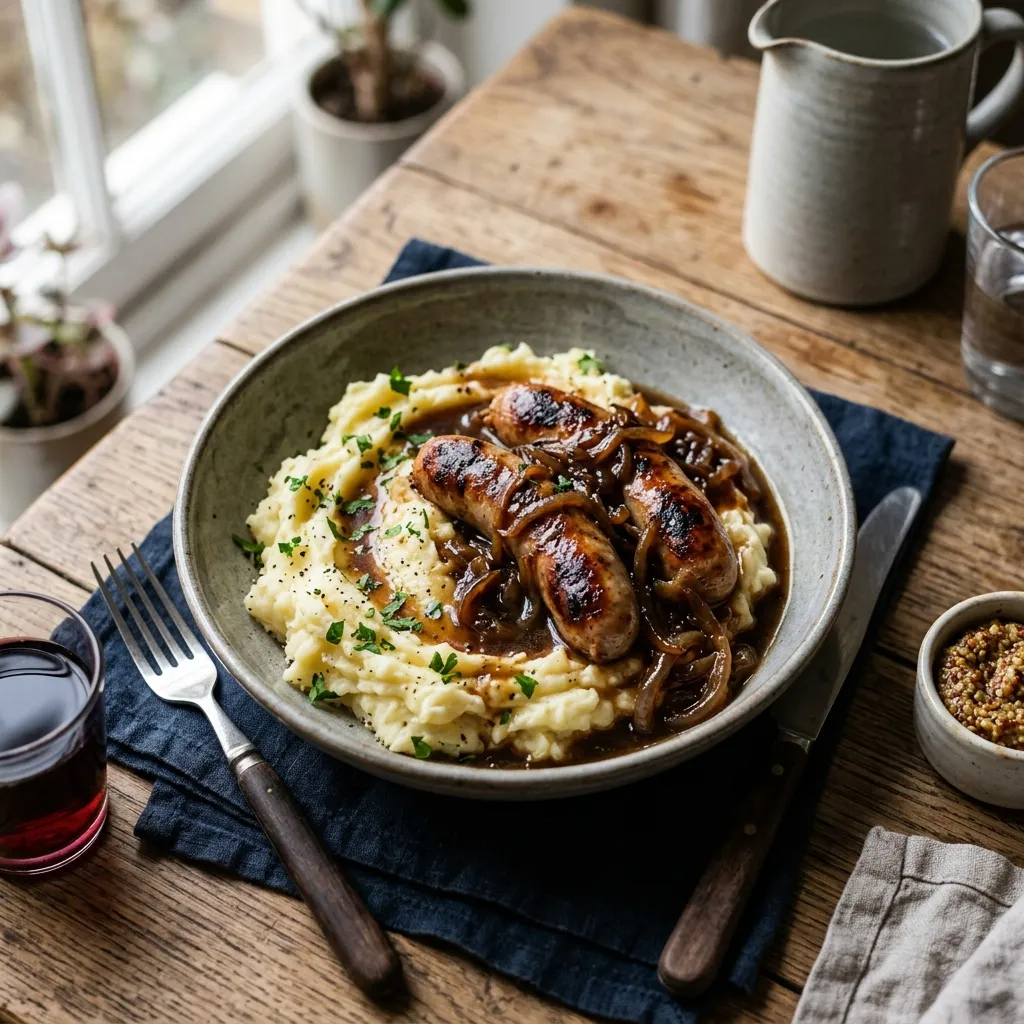
- Serve generous mounds of mash topped with sausages and blanketed in onion gravy.
Nutrition
These values are estimates calculated from the ingredient list and may vary based on brands, cooking methods, and serving size. Not a substitute for medical or dietary advice.
How This Recipe Affects Each Dosha
Vata
This dish delivers exactly what Vata needs in cold weather: warm, smooth, oily, and heavy qualities in a comforting format. The mashed potato provides grounding starch, the sausage delivers sustained protein and fat, and the onion gravy adds warmth and moisture. The overall effect is deeply calming to the Vata nervous system.
Pitta
Pork sausage generates internal heat, and the caramelized onions, mustard, and Worcestershire sauce add pungent, heating layers. Pitta types with strong digestion can tolerate this in cool weather but will notice increased heat, possible skin reactions, or digestive discomfort if consumed regularly or during summer.
Kapha
The combination of fatty sausage, butter-laden mash, and rich gravy concentrates every quality that slows Kapha metabolism. The sweet, heavy, and oily nature of the complete dish promotes mucus production, weight gain, and mental dullness. Kapha types should treat this as an occasional indulgence, not a weekly dinner.
The onion, thyme, mustard, and black pepper in the gravy provide moderate digestive support, but the overall meal is heavy enough to challenge weaker constitutions. The gravy functions as the digestive bridge — without its pungent warmth, the mash and sausage combination would sit heavily in the stomach.
Nourishes: Mamsa (muscle), Meda (fat), Rasa (plasma)
Adjustments by Constitution
For Vata Types
The dish suits Vata well as written. Add a pinch of black pepper and nutmeg to the mash for extra warmth. Serve with a side of steamed greens — chard or kale — to add some bitter taste and lightness to balance the heaviness. Keep the gravy generous.
For Pitta Types
Replace pork sausages with chicken or turkey sausages seasoned with fennel and sage. Omit mustard and Worcestershire sauce from the gravy, using vegetable stock and a splash of cream instead. Add fresh parsley to the mash. Serve with steamed broccoli dressed in lemon juice.
For Kapha Types
Use chicken sausages and reduce the quantity to one per person. Replace mashed potato with mashed cauliflower seasoned with black pepper, ginger, and a small amount of goat milk. Make the gravy thinner and add extra mustard and cracked pepper for digestive stimulation. Serve alongside roasted Brussels sprouts.
Seasonal Guidance
A cold-weather comfort classic. The heavy, warming qualities are ideal when ambient temperatures drop and the body seeks grounding nourishment. In spring, lighten the dish with chicken sausages and less butter. Avoid in summer entirely.
Best time of day: Dinner — traditionally a 6-7 PM meal in British households. The density requires an active day beforehand to have built adequate agni.
Cultural Context
Bangers and mash encapsulates the British philosophy of simple, honest food — no pretension, no exotic technique, just well-made sausages, proper mash, and a gravy that makes everything sing. The dish became embedded in national identity during the rationing years of World War II, when sausages stretched scarce meat rations with fillers. Today it appears on pub menus from village locals to London gastropubs, and debates over the best regional sausage variety generate genuine passion. Cumberland versus Lincolnshire versus Gloucester Old Spot is a conversation that can last an entire evening at a British dinner table.
Deeper Context
Origins
Pork sausage is ancient European — Roman tracta, Anglo-Saxon cased sausages, and medieval European regional variants all contributed to the British sausage tradition. Potato integration came in the 18th century after widespread adoption in British cookery. Bangers got their name from WWI and WWII rationing, when sausages contained so much water they would burst (bang) in the pan. Pub-food culture of the 20th century made bangers and mash a national comfort dish.
Food as Medicine
Calorie-dense labor food rather than therapeutically designed. Mustard functions as a classical digestive aid across European and Asian folk medicine — brown mustard carries particular stomach-warming reputation. Onion is classical European folk medicine for cold congestion and heart health, with its sulfur compounds and quercetin content now modernly validated. Thyme is a well-studied antimicrobial across European herbal tradition.
Ritual & Seasonal Role
Pub food, Sunday supper. Bonfire Night (November 5, Guy Fawkes) features sausages specifically as part of the traditional outdoor-bonfire menu alongside jacket potatoes. Year-round with autumn and winter peaks. Not religiously ceremonial but strongly tied to British working-class and pub-lunch traditions.
Classical Pairings & Cautions
Onion gravy, HP brown sauce, peas, sometimes pickled onions or chutney on the side. A pint of ale alongside. Cautions: high sodium in commercial sausages; religious restrictions on pork (Jewish, Muslim, Hindu, some Buddhist); nitrates and nitrites in cured sausages; Kapha and cardiovascular concerns in frequent consumption.
Cross-Tradition View
How other medical and food-wisdom traditions read this dish. Each tradition names the same physiological reality in its own language — the agreements across them are where universal principles live.
Traditional Chinese Medicine
Pork sausage is Yin-building and salty; potato is Spleen-Qi-tonifying; onion is warm-pungent and disperses cold; thyme is warm-pungent and disperses stagnation; mustard is hot-dispersing. A Yin-building Qi-tonic with strong cold-dispersing accent — a winter food archetype that TCM physicians would prescribe for cold-deficient labor workers needing substantial sustenance.
Greek Humoral
Hot-wet throughout. Sanguine-building English peasant sustenance food. Galenic physicians would have recognized the combination as well-constructed for melancholic-phlegmatic labor types — the sausage and potato providing substantial sanguine nourishment, the mustard and thyme preventing damp accumulation.
Ayurveda
Heating virya, sweet vipaka. Pacifies Vata substantially through warmth and unctuousness. Aggravates Kapha through pork fat and starch heaviness. Pork is heavy and tamasic in classical Ayurveda — used as a restoration dish for physical-labor types rather than as everyday household food.
Celtic & Anglo-Saxon Hearth
Sausage-and-mash is a direct descendant of Anglo-Saxon hearth cookery — ground meats stuffed into casings for preservation date to Iron Age across Celtic and Germanic Europe. The specific potato variant is post-Columbian (18th century onward). The dish lives in the British pub-food canon as a working-class Sunday supper and has crossed class lines to appear on gastropub menus in the last 40 years.
Chef's Notes
Never prick the sausages before cooking — the casing holds in moisture and fat, producing a juicier result. Start them in a cold pan; this renders the fat gradually and prevents the casing from splitting. For the smoothest mash, use a potato ricer rather than a masher — it eliminates lumps completely. The onion gravy can be made ahead and reheated; it deepens in flavor overnight. For extra richness, deglaze the gravy with a splash of stout or brown ale before adding the stock.
Frequently Asked Questions
Is Bangers and Mash good for my dosha?
Strongly pacifies Vata with its warm, heavy, unctuous qualities. Moderately increases Pitta due to heating pork, onion, and mustard. Increases Kapha due to heaviness, starch, butter, and dairy. This dish delivers exactly what Vata needs in cold weather: warm, smooth, oily, and heavy qualities in a comforting format. Pork sausage generates internal heat, and the caramelized onions, mustard, and Worcestershire sauce add pungent, heating layers. The combination of fatty sausage, butter-laden mash, and rich gravy concentrates every quality that slows Kapha metabolism.
When is the best time to eat Bangers and Mash?
Dinner — traditionally a 6-7 PM meal in British households. The density requires an active day beforehand to have built adequate agni. A cold-weather comfort classic. The heavy, warming qualities are ideal when ambient temperatures drop and the body seeks grounding nourishment. In spring, lighten the dish with chicken sausages and le
How can I adjust Bangers and Mash for my constitution?
For Vata types: The dish suits Vata well as written. Add a pinch of black pepper and nutmeg to the mash for extra warmth. Serve with a side of steamed greens — chard For Pitta types: Replace pork sausages with chicken or turkey sausages seasoned with fennel and sage. Omit mustard and Worcestershire sauce from the gravy, using veget
What are the Ayurvedic properties of Bangers and Mash?
Bangers and Mash has Sweet, Salty, Pungent taste (rasa), Heating energy (virya), and Sweet post-digestive effect (vipaka). Its qualities (gunas) are Heavy, Oily, Warm, Smooth. It nourishes Mamsa (muscle), Meda (fat), Rasa (plasma). The onion, thyme, mustard, and black pepper in the gravy provide moderate digestive support, but the overall meal is heavy enough to challenge weaker constitutions. The gravy functions as the digestive bridge — without its pungent warmth, the mash and sausage combination would sit heavily in the stomach.