Banana Bread
American Recipe
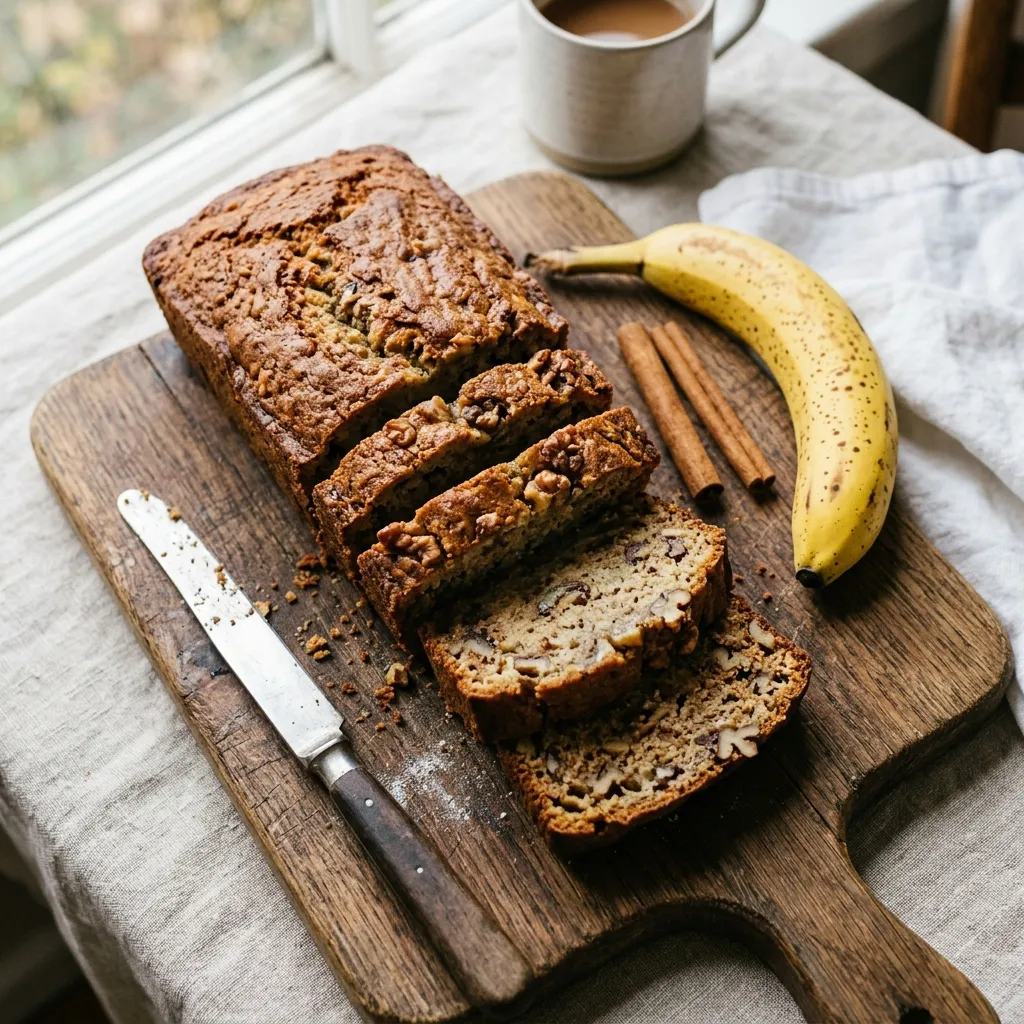
Overview
Banana bread belongs to the American tradition of quick breads — leavened with baking soda rather than yeast, mixed in minutes, and baked in a single loaf pan. It emerged during the Great Depression when resourceful home cooks found that overripe bananas, too soft to eat on their own, could sweeten and moisten a simple batter without expensive ingredients. By the 1930s, banana bread recipes appeared in nearly every community cookbook in the country. The dish sits at the intersection of bread and cake — not quite either, which is part of its appeal. A good banana bread is dense but not heavy, sweet but not cloying, and moist enough to eat without butter. The riper the bananas, the deeper the flavor: black-spotted fruit yields complex sweetness with notes of caramel and vanilla that no amount of added sugar can replicate. From an Ayurvedic perspective, banana bread is a study in the sweet rasa — ripe bananas, flour, and sugar all contribute madhura (sweet) taste, making this deeply grounding and satisfying. The addition of warming spices like cinnamon and nutmeg is not just tradition but intuitive balancing: they kindle agni against the heaviness of the grain and fruit.
Pacifies Vata strongly with sweet taste, heavy quality, and grounding energy. May aggravate Kapha due to heaviness, moisture, and sweet dominance. Generally neutral for Pitta — the cooling virya helps, but the density may slow Pitta digestion if eaten in excess.
Grounding and nourishing during periods of stress, anxiety, weight loss, or Vata derangement. The combination of sweet taste and heavy quality makes banana bread useful for rebuilding after illness or depletion, when the body needs caloric density in an easily digestible form.
Ingredients
- 3 large Ripe bananas (very ripe with brown spots)
- 1/3 cup Unsalted butter (melted)
- 3/4 cup Cane sugar
- 1 large Egg (beaten)
- 1 tsp Vanilla extract
- 1 tsp Baking soda
- 1 pinch Salt
- 1.5 cups All-purpose flour
- 1 tsp Cinnamon
- 1/4 tsp Nutmeg (freshly grated)
- 1/2 cup Walnuts (roughly chopped, optional)
Instructions
- Preheat the oven to 350F (175C). Grease a 9x5 inch loaf pan with butter or line with parchment paper.
- In a large bowl, mash the ripe bananas with a fork until mostly smooth with a few small chunks remaining. The bananas should be very ripe — brown spots on the peel indicate the starches have converted to sugars.
- Stir the melted butter into the mashed bananas. Mix in the sugar, beaten egg, and vanilla extract until well combined.
- Sprinkle the baking soda, salt, cinnamon, and nutmeg over the wet mixture and stir to incorporate.
- Add the flour and fold gently with a spatula until just combined. Do not overmix — a few streaks of flour are fine. Overmixing develops gluten and makes the bread tough.
- Fold in the walnuts if using. Pour the batter into the prepared loaf pan and smooth the top.
- Bake for 55 to 60 minutes, until the top is golden brown and a toothpick inserted into the center comes out clean or with just a few moist crumbs.
- Let the bread cool in the pan for 10 minutes, then turn out onto a wire rack to cool completely. Slice and serve at room temperature.
Nutrition
These values are estimates calculated from the ingredient list and may vary based on brands, cooking methods, and serving size. Not a substitute for medical or dietary advice.
How This Recipe Affects Each Dosha
Vata
Banana bread is one of the most Vata-pacifying baked goods available. The sweet rasa and cooling virya directly counter Vata dry, cold, and mobile qualities. Ripe bananas are themselves among the best fruits for Vata — heavy, sweet, and moistening. Combined with the grounding quality of wheat flour and the warmth of cinnamon and nutmeg, this creates a deeply stabilizing food. The oiliness from butter lubricates Vata dry tissues. Best eaten warm with a cup of spiced milk or chai.
Pitta
The cooling virya of bananas and the sweet post-digestive effect make banana bread reasonably suitable for Pitta types. It lacks the pungent and sour tastes that aggravate Pitta, and the sweetness is calming to Pitta intensity. However, the density of the loaf may challenge Pitta digestive fire if consumed in large portions. The warming spices (cinnamon, nutmeg) are present in small enough quantities to kindle digestion without overheating. Best for Pitta when eaten in moderate portions at breakfast or as an afternoon snack.
Kapha
This is a challenging food for Kapha constitutions. The dominant sweet rasa, heavy guna, and moist quality all increase Kapha directly. Wheat flour and sugar compound the issue by adding density and promoting mucus formation. The cooling virya further slows Kapha already sluggish metabolism. Kapha types should eat banana bread sparingly and only with the adjustments listed below — the standard recipe amplifies every quality Kapha already has in excess.
Mildly dampening to agni due to the heavy, sweet, and moist qualities. The cinnamon and nutmeg provide a counterbalance by kindling digestive fire, but the overall effect is cooling and grounding rather than stimulating. Best consumed when agni is strong — late morning or early afternoon.
Nourishes: Rasa (plasma), Mamsa (muscle), Meda (fat)
Adjustments by Constitution
For Vata Types
Already ideal for Vata. For maximum benefit, serve warm with a drizzle of ghee and a pinch of cardamom. Add soaked raisins or dates to the batter for extra sweetness and iron. Use whole milk in place of some butter for added nourishment. Eat as a mid-morning snack when Vata energy tends to scatter.
For Pitta Types
Reduce sugar to 1/2 cup and add 1/4 cup shredded coconut to the batter for additional cooling. Replace walnuts with sunflower seeds (less heating). Omit nutmeg and reduce cinnamon to 1/2 tsp — use cardamom instead, which is cooling and aromatic. Add a handful of ripe blueberries for antioxidants and additional cooling sweet taste.
For Kapha Types
Substitute half the all-purpose flour with millet flour or buckwheat flour for lighter, drier quality. Reduce sugar to 1/3 cup or replace with raw honey stirred in after baking (never heat honey in Ayurveda). Replace butter with a small amount of sunflower oil. Add 1 tsp dried ginger powder and increase cinnamon to 1.5 tsp to kindle agni. Omit walnuts — add pumpkin seeds instead. Eat only a thin slice, toasted, preferably before noon when digestive fire is building.
Seasonal Guidance
Best suited for Vata season (autumn) and early winter when the body craves grounding, warming, sweet foods. The heavy and moist qualities counter the dry, cold, and windy conditions of these seasons. In spring and summer, the heaviness may feel excessive — eat smaller portions or add more ginger and black pepper to keep digestion active. Avoid in late spring when Kapha is already elevated.
Best time of day: Late morning or early afternoon when digestive fire is strongest. Avoid in the evening when the heavy quality may impair sleep quality.
Cultural Context
Banana bread emerged in 1930s America as a practical solution to overripe fruit during the Depression era. It became one of the most searched recipes on the internet during the 2020 pandemic lockdowns, representing comfort baking at its most accessible. Nearly every American household has a family banana bread recipe, often passed through generations with subtle variations — some add chocolate chips, others sour cream, some use oil instead of butter. The dish transcends class and region in American food culture.
Deeper Context
Origins
Banana bread is an American Depression-era invention (late 1920s through early 1930s), created specifically to use overripe bananas that had begun to spoil. The dish crystallized in American community cookbooks of the 1930s and spread through the mid-20th-century rise of home baking soda products. Prior recipes using banana in baked goods exist in older European cookbooks, but the specific loaf form with its quick-bread leavening is an American creation.
Food as Medicine
Ripe banana is a universal folk medicine for diarrhea, for convalescent nutrition, and for potassium replacement — the classical BRAT diet (banana, rice, applesauce, toast) for pediatric gastroenteritis puts banana in the primary slot. The baked form concentrates the sugars and makes it less suitable for medicinal use than fresh banana. Walnuts add classical brain-and-memory support (their brain-resembling shape was noted in medieval doctrine-of-signatures medicine and has been validated by modern omega-3 research).
Ritual & Seasonal Role
Not ceremonial, but strongly associated with home and family — banana bread is arguably the most-baked American home quick bread, and its scent is culturally coded as warmth, grandmother, and childhood. Baked year-round with no seasonal peak. Rose sharply in pandemic-era home baking (March through June 2020) as a comfort-and-competence dish — the quarantine baking trend was disproportionately banana bread.
Classical Pairings & Cautions
Served plain, with butter, with cream cheese, or toasted. Coffee or black tea alongside. Cautions: the sugar and refined-flour load makes this a substantial glycemic hit — diabetic restriction applies; walnut tree-nut allergies contraindicate; banana allergies (rare but present) exclude entirely; Kapha imbalances in winter should avoid or substitute a smaller portion, and the whole-grain flour versions reduce but do not eliminate the sugar load.
Cross-Tradition View
How other medical and food-wisdom traditions read this dish. Each tradition names the same physiological reality in its own language — the agreements across them are where universal principles live.
Traditional Chinese Medicine
Banana is cool-sweet, moistens Lung and Intestine Yin; walnut warms Kidney Yang; cinnamon warms the middle; flour is neutral-sweet. The balance of cool-moistening banana with warming walnut-and-cinnamon makes this an unusual dish — it simultaneously moistens Yin and supports Yang, which TCM rarely gets from a single preparation. Useful for dry-constipation types with low back weakness and poor morning energy.
Greek Humoral
Banana cold-wet, walnut hot-dry, cinnamon hot-dry, flour hot-dry in baking. The cold-wet banana dominates the final temperament slightly — a cool-moist sanguine-building dish. Convalescent-appropriate, good for thin nervous types, cautious in phlegmatic or edematous patients. Galenic physicians would have found the combination well-constructed even without knowing its ingredients individually.
Ayurveda
Cooling virya (from banana), sweet vipaka. Banana is classically Kapha-aggravating and Pitta-pacifying; walnut is heating and Vata-pacifying; cinnamon is heating and tridoshic. The baked form mitigates some of banana's Kapha effect through drying. Moderate Vata-pacifier, strong Pitta-pacifier, notable Kapha-aggravator. Not an everyday Ayurvedic dish — celebration food.
Southeast Asian Traditional
Banana domestication traces to New Guinea roughly 7,000 years ago and to Southeast Asia independently. In Indonesian, Filipino, Vietnamese, and Pacific traditional medicine, banana is a cooling fever food and postpartum recovery staple. The walnut-cinnamon-banana combination is not ancient in Asia, but banana's medicinal use is — banana leaf plates, banana blossom cookery, and banana-based digestives remain central across these traditions, each predating the banana's arrival in the Americas.
Chef's Notes
The single most important factor is banana ripeness. Bananas with heavily brown-spotted or even fully black peels produce the best flavor — the starches have fully converted to sugars, and the fruit develops complex aromatic compounds absent in yellow bananas. If your bananas are not ripe enough, you can speed the process by baking whole unpeeled bananas at 300F for 15-20 minutes until the skins turn black and the fruit softens. For added moisture and richness, substitute half the butter with plain yogurt. Banana bread keeps well wrapped at room temperature for 3-4 days, or frozen for up to 3 months. Toast slices in a dry skillet for a warm breakfast.
Frequently Asked Questions
Is Banana Bread good for my dosha?
Pacifies Vata strongly with sweet taste, heavy quality, and grounding energy. May aggravate Kapha due to heaviness, moisture, and sweet dominance. Generally neutral for Pitta — the cooling virya helps, but the density may slow Pitta digestion if eaten in excess. Banana bread is one of the most Vata-pacifying baked goods available. The cooling virya of bananas and the sweet post-digestive effect make banana bread reasonably suitable for Pitta types. This is a challenging food for Kapha constitutions.
When is the best time to eat Banana Bread?
Late morning or early afternoon when digestive fire is strongest. Avoid in the evening when the heavy quality may impair sleep quality. Best suited for Vata season (autumn) and early winter when the body craves grounding, warming, sweet foods. The heavy and moist qualities counter the dry, cold, and windy conditions of these seasons.
How can I adjust Banana Bread for my constitution?
For Vata types: Already ideal for Vata. For maximum benefit, serve warm with a drizzle of ghee and a pinch of cardamom. Add soaked raisins or dates to the batter for For Pitta types: Reduce sugar to 1/2 cup and add 1/4 cup shredded coconut to the batter for additional cooling. Replace walnuts with sunflower seeds (less heating). Om
What are the Ayurvedic properties of Banana Bread?
Banana Bread has Sweet taste (rasa), Cooling energy (virya), and Sweet post-digestive effect (vipaka). Its qualities (gunas) are Heavy, Moist, Dense. It nourishes Rasa (plasma), Mamsa (muscle), Meda (fat). Mildly dampening to agni due to the heavy, sweet, and moist qualities. The cinnamon and nutmeg provide a counterbalance by kindling digestive fire, but the overall effect is cooling and grounding rather than stimulating. Best consumed when agni is strong — late morning or early afternoon.