Baklava
Turkish Recipe
Overview
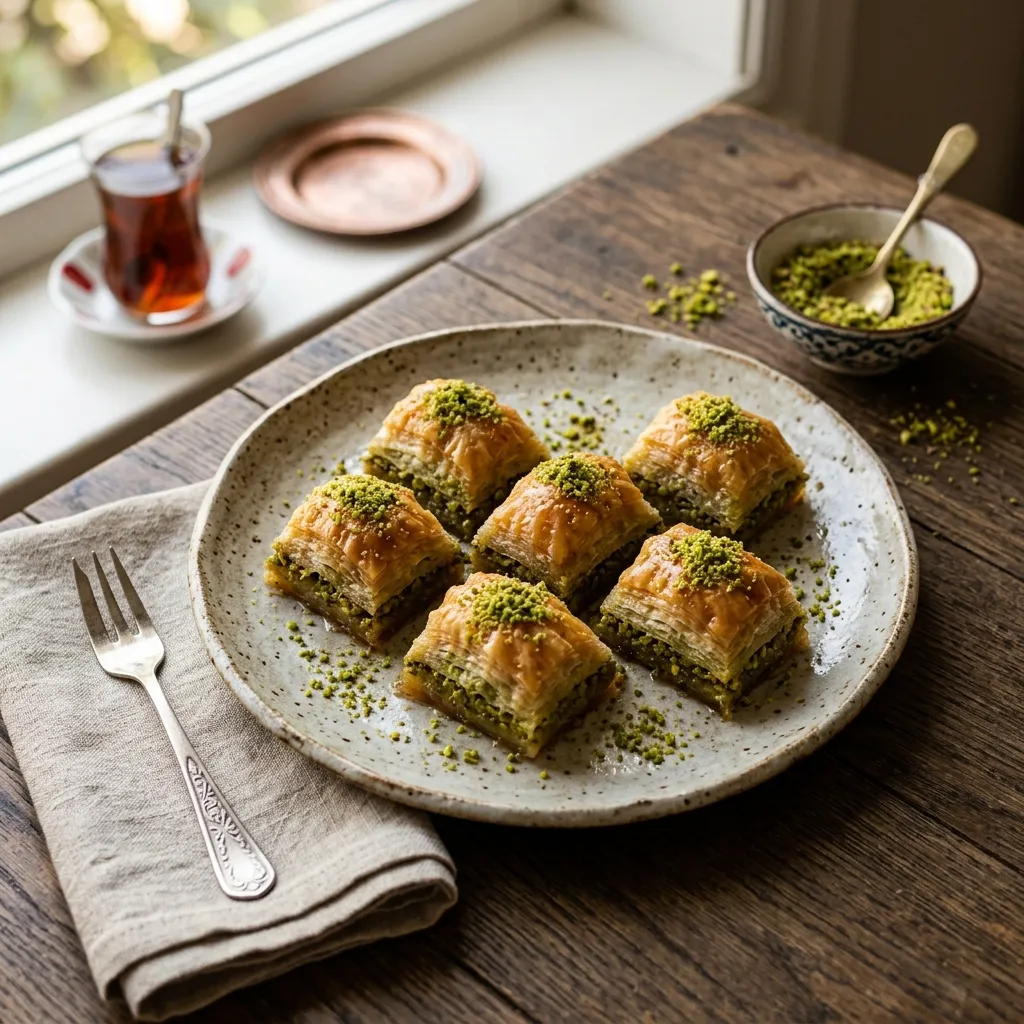
Baklava is layers of tissue-thin phyllo dough brushed with clarified butter, filled with ground pistachios, and soaked in a light sugar syrup scented with lemon. Turkish baklava — particularly the Gaziantep tradition — is distinguished from other regional variations by its emphasis on pistachios (rather than walnuts), the quality of its butter, and a syrup that is lighter and less cloying than its Middle Eastern counterparts. A single tray contains 30-40 layers of phyllo, each brushed individually. The technique demands precision. Phyllo sheets must be thin enough to see through, brushed with just enough butter to crisp without becoming greasy, and the pistachio filling must be ground to a specific texture — coarse enough to provide bite, fine enough to compact between layers. The syrup, made from sugar, water, and lemon juice, is cooled completely before being poured over the hot-from-the-oven pastry. This temperature differential — cold syrup on hot baklava — is essential for creating the characteristic crunch rather than sogginess. In Ayurvedic terms, baklava is intensely sweet, oily, and heavy — it increases Kapha powerfully and feeds Pitta's heat through the combination of sugar, butter, and nuts. Its redeeming quality is that pistachios are among the lightest and most cooling of nuts, and when eaten in small quantities, baklava can serve as a concentrated energy source for Vata constitutions during cold months.
Strongly increases Kapha through the combination of sugar, butter, and dense pastry layers. Increases Pitta mildly through heating butter and sugar. Pacifies Vata through sweet, oily, grounding qualities — but only in very small portions.
Ingredients
- 500 g Phyllo dough (about 30 sheets, thawed if frozen)
- 250 g Unsalted butter (clarified)
- 2 cups Pistachios (shelled, coarsely ground)
- 1.5 cups Sugar
- 1 cup Water
- 1 tbsp Lemon juice
- 1 tsp Rose water (optional)
Instructions
- Make the syrup first: combine sugar, water, and lemon juice in a saucepan. Bring to a boil, stirring until sugar dissolves. Reduce heat and simmer for 10 minutes until slightly thickened. Add rose water if using. Cool completely — refrigerate if needed. The syrup must be cold when it meets the hot baklava.
- Preheat oven to 175C (350F). Clarify the butter by melting it slowly and skimming the white foam, then pouring off the clear golden liquid, leaving the milk solids behind.
- Trim the phyllo sheets to fit your baking pan (approximately 23x33cm / 9x13 inches). Keep unused sheets covered with a damp towel to prevent drying.
- Brush the pan with clarified butter. Layer 10 sheets of phyllo, brushing each sheet with butter before adding the next. Spread half the ground pistachios evenly over the top.
- Add 8-10 more buttered phyllo layers, then spread the remaining pistachios. Top with 10 more buttered phyllo sheets, ensuring the top layer is generously buttered.
- Using a sharp knife, cut the baklava into diamond or square shapes, cutting all the way through to the bottom of the pan. This must be done before baking — cutting after baking shatters the layers.
- Bake for 35-40 minutes until deep golden brown and visibly puffed. The top should be a rich, even gold — not pale, not dark.
- Remove from oven and immediately pour the cold syrup evenly over the hot baklava. You will hear an aggressive sizzle. Let it sit undisturbed for at least 4 hours, ideally overnight, to absorb the syrup fully.
- Garnish each piece with a few whole or chopped pistachios. Serve at room temperature.
Nutrition
These values are estimates calculated from the ingredient list and may vary based on brands, cooking methods, and serving size. Not a substitute for medical or dietary advice.
How This Recipe Affects Each Dosha
Vata
The sweet taste, heavy quality, and generous butter make baklava grounding for Vata in small amounts. Pistachios are among the more Vata-appropriate nuts — lighter and less heating than cashews or almonds. One or two pieces provide concentrated, calming nourishment. Excess quickly becomes too heavy even for Vata.
Pitta
Sugar and butter are both heating in excess, and the concentrated sweetness can provoke Pitta's relationship with sugar and inflammation. However, pistachios have a cooling quality among nuts, and the lemon in the syrup provides a slight counterbalance. Pitta types should limit to one piece and avoid during Pitta flares.
Kapha
Baklava is the archetype of Kapha-aggravating food — sugar, butter, wheat, and nuts in concentrated form. Every quality increases Kapha: heavy, sweet, oily, dense, sticky. Kapha types should treat baklava as an occasional indulgence in very small portions, never a regular treat.
Suppresses agni through heavy, sweet, oily qualities. The concentrated sugar and fat require significant digestive fire to process. Eating baklava when agni is low leads to ama (metabolic waste) formation. Best consumed after a light meal, never on an empty stomach or after a heavy meal.
Nourishes: Rasa (plasma), Medas (fat), Shukra (reproductive)
Adjustments by Constitution
For Vata Types
Enjoy 1-2 pieces as an occasional treat, paired with warm cardamom tea to support digestion of the heavy sweetness. The standard recipe needs no modification for Vata beyond portion control.
For Pitta Types
Choose baklava made with rose water rather than plain syrup — rose is cooling and Pitta-balancing. Limit to one small piece. Pair with a cooling drink like mint tea. Avoid during summer or when Pitta symptoms are active.
For Kapha Types
If eating baklava at all, choose the smallest piece available. Follow immediately with a cup of strong black tea or ginger tea to kindle agni against the dense sweetness. Skip the syrup-soaked pieces from the edges of the tray, which absorb more syrup. Better yet, enjoy a single pistachio rather than the full pastry.
Seasonal Guidance
Most appropriate in winter when agni is naturally stronger and the body tolerates heavy, sweet foods. The concentrated energy serves as fuel during cold months. Avoid in spring when Kapha is already elevated, and limit in summer when Pitta's heat makes sugar and butter problematic.
Best time of day: After lunch, as a small dessert when agni is at its daily peak. Never late at night — the sugar and fat will disrupt sleep and create ama.
Cultural Context
Baklava's history spans the Ottoman Empire, with Gaziantep in southeastern Turkey claiming the definitive version. During the Ottoman period, baklava was prepared in the imperial palace kitchens for Ramadan celebrations — the sultan's procession to collect baklava trays from the kitchen became a formal ceremony called the Baklava Alayi. Gaziantep received Turkey's first geographical indication (GI) certification for its baklava in 2008, and the city's baklavaci families guard their recipes with intensity. The quality hierarchy is strict: Antep pistachios over all other nuts, clarified butter over margarine, handmade phyllo over machine-made.
Deeper Context
Origins
Baklava's modern form descends from Topkapi Palace Ottoman imperial cookery (15th-19th centuries). Byzantine, Assyrian, and Greek antecedents contributed to the layered-pastry-and-nut architecture. The Ottoman military Baklava Procession on the 15th of Ramadan involved imperial kitchens preparing baklava trays for distribution to the Janissary corps — a traditional military-civilian bonding ritual. Gaziantep baklava (made with distinctive Antep pistachios) received EU PDO status in 2013.
Food as Medicine
Pistachios provide monounsaturated fat, protein, fiber, vitamin B6, and lutein (eye-health compound). The nut content delivers genuine nutritional density alongside the sugar-and-butter indulgence. Classical Middle-Eastern use for convalescent and thin populations reflects the dish's calorie density and nut-protein value.
Ritual & Seasonal Role
Ramadan iftar tables, Eid celebrations, wedding meals, Christmas (in Greek Orthodox contexts). Not daily food; festival and celebration dessert. Gaziantep baklava tourism and the annual Gaziantep Baklava Festival draw substantial Turkish and international food tourism.
Classical Pairings & Cautions
Turkish coffee or black tea, dried fruit. Cautions: tree-nut allergies (major contraindication — pistachio, walnut family); substantial sugar load; gluten intolerance precludes phyllo (gluten-free phyllo is commercially available with variable quality); Kapha substantial aggravation; religious fast-compatibility requires checking specific preparation (some commercial versions use non-halal or non-kosher butter).
Cross-Tradition View
How other medical and food-wisdom traditions read this dish. Each tradition names the same physiological reality in its own language — the agreements across them are where universal principles live.
Traditional Chinese Medicine
Phyllo dough is Spleen-Qi-tonifying; clarified butter is warm-moistening; pistachios build Kidney essence and moisten Lung Yin; sugar syrup tonifies Spleen; lemon is cool-sour and moves Liver Qi. A Yin-Qi-and-Kidney-essence tonic dessert — TCM physicians would class baklava as appropriate restoration dessert for depleted populations.
Greek Humoral
Hot-wet sanguine-building aggressively. A Galenic feast dessert. Classical Byzantine medical texts endorse nut-and-honey preparations for convalescents and thin constitutions.
Ayurveda
Heating virya, sweet vipaka. Pacifies Vata substantially through unctuousness and warmth. Aggravates Kapha very substantially through sugar-butter-nut combination. Pitta mildly aggravated through the concentrated sweet-heat.
Ottoman Imperial Topkapi
Baklava's modern form crystallized at Topkapi Palace during the Ottoman Empire (15th-19th centuries), with palace kitchen records documenting elaborate refinement of the preparation. Assyrian and Byzantine antecedents likely contributed to the original technique. The Ottoman military Baklava Procession (15th-of-Ramadan) featured imperial kitchen preparing and distributing baklava to the Janissary corps. Modern Turkish baklava (with pistachios from Gaziantep) holds Protected Designation of Origin status in EU law.
Chef's Notes
The cold-syrup-on-hot-pastry rule is inviolable — reversing it (hot syrup on cooled baklava, or both hot) creates soggy, limp pastry rather than the shattering crunch that defines good baklava. Clarified butter is essential; whole butter contains water and milk solids that make the layers gummy. In Gaziantep, baklavaci (baklava makers) use a specific local pistachio variety called Antep fistigi — if you can source them, the flavor difference is remarkable. Store at room temperature, never refrigerated — cold hardens the butter and dulls the texture. Well-made baklava keeps for 10 days.
Frequently Asked Questions
Is Baklava good for my dosha?
Strongly increases Kapha through the combination of sugar, butter, and dense pastry layers. Increases Pitta mildly through heating butter and sugar. Pacifies Vata through sweet, oily, grounding qualities — but only in very small portions. The sweet taste, heavy quality, and generous butter make baklava grounding for Vata in small amounts. Sugar and butter are both heating in excess, and the concentrated sweetness can provoke Pitta's relationship with sugar and inflammation. Baklava is the archetype of Kapha-aggravating food — sugar, butter, wheat, and nuts in concentrated form.
When is the best time to eat Baklava?
After lunch, as a small dessert when agni is at its daily peak. Never late at night — the sugar and fat will disrupt sleep and create ama. Most appropriate in winter when agni is naturally stronger and the body tolerates heavy, sweet foods. The concentrated energy serves as fuel during cold months. Avoid in spring when Kapha is already e
How can I adjust Baklava for my constitution?
For Vata types: Enjoy 1-2 pieces as an occasional treat, paired with warm cardamom tea to support digestion of the heavy sweetness. The standard recipe needs no modif For Pitta types: Choose baklava made with rose water rather than plain syrup — rose is cooling and Pitta-balancing. Limit to one small piece. Pair with a cooling drink
What are the Ayurvedic properties of Baklava?
Baklava has Sweet taste (rasa), Heating energy (virya), and Sweet post-digestive effect (vipaka). Its qualities (gunas) are Heavy, Oily, Dense, Sweet. It nourishes Rasa (plasma), Medas (fat), Shukra (reproductive). Suppresses agni through heavy, sweet, oily qualities. The concentrated sugar and fat require significant digestive fire to process. Eating baklava when agni is low leads to ama (metabolic waste) formation. Best consumed after a light meal, never on an empty stomach or after a heavy meal.