Baked Potato
American Recipe
Overview
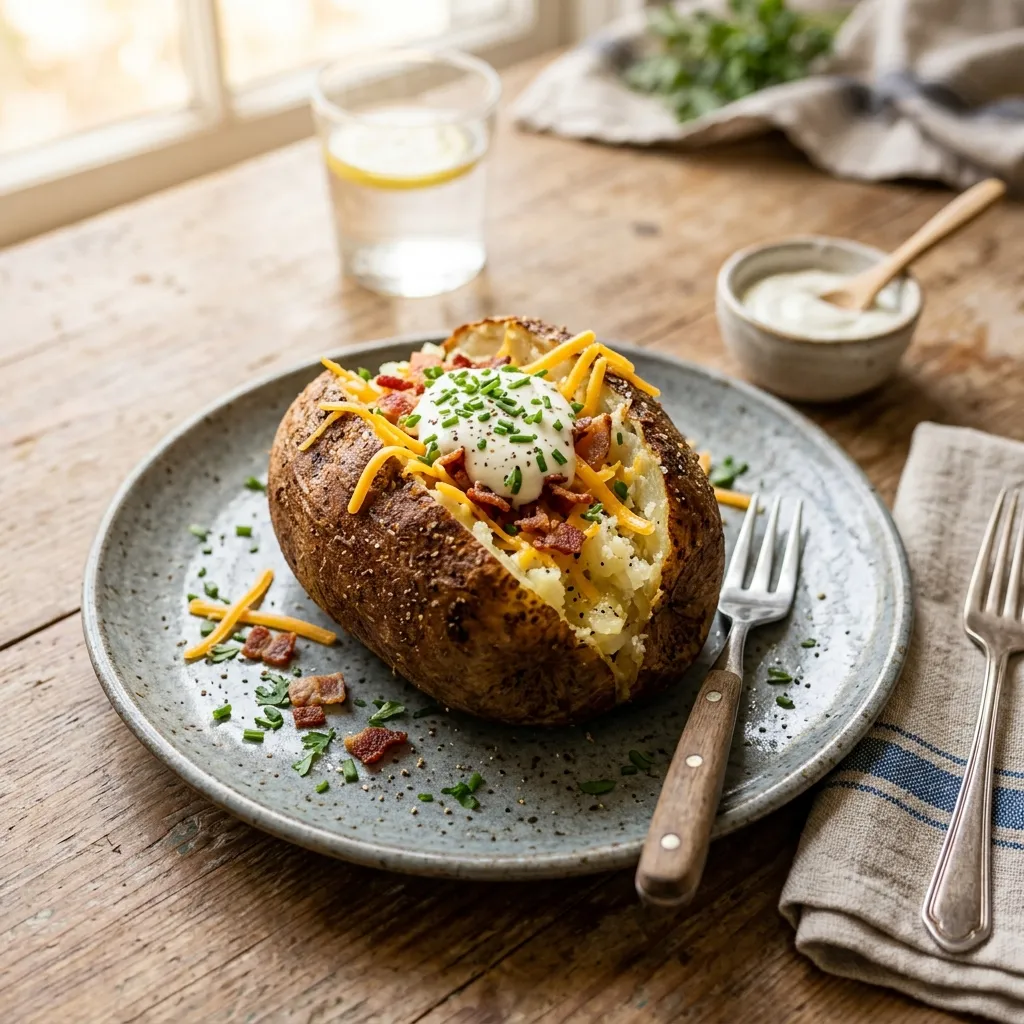
The baked potato is among the simplest and most nourishing preparations in American home cooking — a russet potato cooked in dry heat until the starch granules inside fully swell and separate, creating a fluffy interior that contrasts with a crisp, salted skin. Russet Burbanks, the standard baking potato developed by Luther Burbank in the 1870s, contain 20-22% starch content, which is what produces the characteristic mealy texture that absorbs butter and sour cream so readily. Ayurveda classifies potato as sweet in taste with a cooling energy and sweet post-digestive effect, making it fundamentally a vata- and pitta-pacifying food. The baking method transforms the potato's qualities significantly — dry heat reduces the inherent heaviness, adds a light crispness to the skin, and makes the starches more accessible to agni. Compared to boiled or mashed preparations, baked potatoes are lighter and less mucus-forming. The classic American toppings — butter, sour cream, chives, and salt — form a complete meal when combined with the potato. Butter adds oily and heating qualities that balance the potato's dryness after baking. Sour cream provides sour taste and cooling energy. Chives bring mild pungency that stimulates digestion. The result is a dish that touches five of the six tastes and offers a surprisingly balanced Ayurvedic profile.
Pacifies pitta through the potato's inherent cooling energy and sweet taste. Mildly increases kapha due to the heavy, starchy nature and sweet post-digestive effect. Vata effect is mixed — the warm preparation and butter help, but the potato's inherent dryness after baking can aggravate vata without adequate fat.
Baked potato with ghee is a useful vehicle for calming pitta-type digestive inflammation, including acid reflux and gastritis. The bland starch absorbs excess acid while the ghee coats and soothes the digestive lining. Also appropriate for weight gain protocols due to high caloric density.
Ingredients
- 4 large russet potatoes (about 8-10 ounces each)
- 1 tablespoon olive oil
- 2 teaspoons sea salt (coarse or flaky)
- 4 tablespoons unsalted butter
- 0.5 cup sour cream
- 2 tablespoons fresh chives (finely chopped)
- 0.5 teaspoon black pepper
Instructions
- Preheat the oven to 400°F (205°C). Scrub the potatoes thoroughly under running water — the skin will be eaten, so remove any dirt or eyes. Pat completely dry with a clean towel.
- Pierce each potato 6-8 times with a fork, spacing the holes around the entire surface. This allows steam to escape during baking, preventing the potato from bursting in the oven. The holes also allow dry heat to penetrate deeper into the flesh.
- Rub each potato with a thin coating of olive oil, then roll in coarse sea salt. The oil crisps the skin by conducting heat evenly across its surface, while the salt draws out moisture and adds flavor. Place the potatoes directly on the oven rack with a baking sheet on the rack below to catch any drips.
- Bake for 50-60 minutes, depending on size. The potato is done when a knife slides into the center with no resistance and the internal temperature reads 205-210°F (96-99°C). At this temperature, the starch granules have fully gelatinized and the interior will be fluffy rather than waxy or gummy.
- Remove from the oven and immediately cut a deep cross into the top of each potato, slicing about two-thirds of the way through. Press the ends inward to open the cross and push the fluffy interior upward. This step must happen while the potato is hot — the steam release is what creates the light, open texture.
- Place a tablespoon of butter into each opened potato, allowing it to melt into the hot flesh. Add a generous dollop of sour cream, a sprinkle of chopped chives, and fresh black pepper. Serve immediately while the interior is still steaming.
Nutrition
These values are estimates calculated from the ingredient list and may vary based on brands, cooking methods, and serving size. Not a substitute for medical or dietary advice.
How This Recipe Affects Each Dosha
Vata
Plain baked potato without toppings can aggravate vata due to the dry quality that baking imparts — the crisp skin and fluffy interior both lack the moisture and oiliness that vata needs. However, the sweet taste and heavy quality of potato starch are fundamentally vata-calming. The key is the toppings: generous butter and sour cream transform this into a vata-appropriate food by restoring the oily and moist qualities. Without adequate fat, a baked potato can cause bloating and gas in vata types. Always eat the skin — its fiber helps regulate vata's erratic digestion.
Pitta
Baked potato is a natural pitta-pacifying food. The sweet taste (both initial and post-digestive) and cooling energy directly counter pitta's hot, sharp qualities. The starchy carbohydrate provides sustained energy without the inflammatory response that protein-heavy meals can trigger in pitta types. Sour cream adds a small amount of pitta-increasing sour taste, but the overall effect remains cooling. This is one of the safest comfort foods for pitta constitutions, particularly during summer or periods of stress-related pitta aggravation.
Kapha
The heavy, starchy nature of potato is inherently kapha-increasing. A large russet potato provides 60+ grams of carbohydrate, most of which converts to glucose and supports tissue building — exactly what kapha types tend to accumulate in excess. Adding butter and sour cream compounds the problem with additional heaviness and oiliness. The dry quality from baking partially offsets this, as does the black pepper's stimulating effect, but a loaded baked potato remains a kapha-aggravating meal. Portion control is essential for kapha constitutions.
Baked potato has a mild, neutral effect on agni. The starch requires steady digestive fire to break down but does not actively stimulate or suppress it. The baking method improves digestibility compared to boiled preparation by reducing water content and making starches more accessible. Adding black pepper and chives provides mild agni support.
Nourishes: rasamamsameda
Adjustments by Constitution
For Vata Types
Use ghee instead of butter for deeper nourishment and easier digestion. Add a sprinkle of cumin and a pinch of hing (asafoetida) to prevent gas formation from the starch. Top with warm sauteed greens and extra sour cream. Eat as part of a warm meal rather than as a standalone side. A squeeze of lemon adds the sour taste that further pacifies vata and improves starch digestion.
For Pitta Types
This dish needs minimal adjustment for pitta. Use cooling toppings — fresh cilantro instead of chives, a squeeze of lime, and avoid excess black pepper. Ghee is preferable to butter for its cooling properties. Add fresh avocado for additional cooling fats. Avoid adding hot sauce, bacon, or sharp cheese, which are common American toppings that transform a pitta-friendly food into a pitta-aggravating one.
For Kapha Types
Choose a smaller potato (6 ounces) and eat only half the skin. Skip butter and sour cream entirely — top instead with steamed broccoli, a spoonful of salsa, and a generous amount of black pepper. Add mustard or horseradish for pungent stimulation. A sprinkle of turmeric and cayenne provides warmth that counteracts the potato's heavy, cool qualities. Pair with a bitter green salad rather than eating the potato as the main component of the meal.
Seasonal Guidance
Best suited to cooler months when the body benefits from grounding, starchy foods and agni runs strong enough to process heavy carbohydrates efficiently. Appropriate year-round for pitta types with light toppings in summer. Kapha types should limit consumption during spring when kapha naturally accumulates.
Best time of day: Ideal for lunch or early dinner when agni is strongest. The heavy starch content makes baked potatoes a poor choice for late evening meals, as incomplete digestion overnight produces ama.
Cultural Context
The baked potato became an American staple through the convergence of Idaho's volcanic soil producing ideal russet potatoes and the rise of steakhouse culture in the mid-20th century, where a baked potato became the standard accompaniment to beef. Wendy's popularization of the baked potato bar in the 1980s cemented it as an everyday American food. The potato itself arrived in North America from South America in the late 1600s, where Andean civilizations had cultivated over 3,000 varieties across altitudes — each adapted to specific microclimates. The simplicity of the preparation — salt, fat, heat — has remained unchanged for centuries.
Deeper Context
Origins
The potato was domesticated by Quechua-speaking farmers in the Lake Titicaca basin approximately 8,000 years ago, spread globally via Spanish colonial trade routes in the 16th century, and became a centerpiece of European and American cuisines only in the 18th and 19th centuries. The specific preparation of a baked russet with dairy toppings is an American creation of the 20th century, popularized by steakhouse menus of the 1950s and 1960s alongside the rise of large-format Idaho potato farming.
Food as Medicine
Andean folk medicine uses potato water (cooking liquid from boiled potatoes) for gastritis and ulcer symptoms, and raw potato slice poultices for burns and skin inflammation. Modern phytochemistry behind potato's glycoalkaloids validates some of the inflammation-related traditional uses. In classical Ayurveda, potato is classed with carbohydrates that build ojas quickly but aggravate Vata without fat — making the butter-and-sour-cream American form constitutionally more appropriate than the plain boiled version.
Ritual & Seasonal Role
Not ceremonial in American usage, though Andean peoples maintain potato-harvest festivals and specific ritual varieties used only in ceremonial cookery. In American home cooking the baked potato appears year-round, with a winter peak as a comfort food alongside roasts. The Sunday-dinner steak-and-baked-potato pairing is a mid-20th-century suburban American ritual with few parallels in earlier food cultures.
Classical Pairings & Cautions
Classical loaded toppings: butter, sour cream, chives, bacon bits, shredded cheddar, chili, steamed broccoli. Cautions: high glycemic index — diabetic and metabolic-syndrome restriction applies; kidney-stone patients limit oxalate intake; the starch-fat-dairy combination is Kapha-heavy and should be limited in winter weight-gain phases. Allergies to any dairy topping contraindicate the loaded form — plain baked potato with olive oil and salt remains a viable alternative.
Cross-Tradition View
How other medical and food-wisdom traditions read this dish. Each tradition names the same physiological reality in its own language — the agreements across them are where universal principles live.
Traditional Chinese Medicine
Potato is sweet-neutral, tonifies Spleen Qi and regulates the Stomach; butter is warm-wet and Yin-moistening; sour cream is cool-sour and builds Yin; chives are warm-pungent and disperse stagnation. The loaded baked potato reads as a Spleen-and-Stomach Qi tonic with enough Yin moistening to balance the starch's drying tendency. Used folk-medicinally in East Asian cuisines for convalescence and weak appetite.
Greek Humoral
Cold-wet potato becomes hot-wet when loaded with butter and sour cream. Sanguine-building, melancholic-correcting. The hot skin and the cool interior create a layered temperament that Galenic physicians would have called complex — neither fully balanced nor fully imbalanced. Appropriate year-round with seasonal topping adjustments, heavier in winter and plainer in summer.
Andean Indigenous
Potato was domesticated in the Peruvian Andes roughly 8,000 years ago and remains the center of Quechua and Aymara traditional cuisine. Pre-Columbian Andean healing used potato variants (thousands of distinct varieties at different altitudes) for fevers, digestive upset, and skin poultices. The russet baked potato of American tables is a single industrial variety descended from this ancient, enormously diverse Andean gene pool — a fragment of a much richer original.
Ayurveda
Cooling virya, sweet vipaka. Potato is classically Vata-aggravating through its drying-light quality, but butter and sour cream correct this almost completely in the loaded form. Pacifies Pitta through the cool-unctuous quality. Aggravates Kapha substantially — the combination of starch, butter, and sour cream is a textbook Kapha-provoker and should be limited in damp weather or in Kapha-imbalanced phases.
Chef's Notes
Do not wrap potatoes in foil — this traps steam and creates a steamed rather than baked texture, resulting in a dense, gummy interior and limp skin. Placing potatoes directly on the oven rack ensures even heat circulation. If your potatoes are very large (over 12 ounces), add 10-15 minutes to the baking time. Leftover baked potatoes can be halved, scooped, mashed with toppings, and re-baked as twice-baked potatoes.
Frequently Asked Questions
Is Baked Potato good for my dosha?
Pacifies pitta through the potato's inherent cooling energy and sweet taste. Mildly increases kapha due to the heavy, starchy nature and sweet post-digestive effect. Vata effect is mixed — the warm preparation and butter help, but the potato's inherent dryness after baking can aggravate vata without adequate fat. Plain baked potato without toppings can aggravate vata due to the dry quality that baking imparts — the crisp skin and fluffy interior both lack the moisture and oiliness that vata needs. Baked potato is a natural pitta-pacifying food. The heavy, starchy nature of potato is inherently kapha-increasing.
When is the best time to eat Baked Potato?
Ideal for lunch or early dinner when agni is strongest. The heavy starch content makes baked potatoes a poor choice for late evening meals, as incomplete digestion overnight produces ama. Best suited to cooler months when the body benefits from grounding, starchy foods and agni runs strong enough to process heavy carbohydrates efficiently. Appropriate year-round for pitta types with li
How can I adjust Baked Potato for my constitution?
For Vata types: Use ghee instead of butter for deeper nourishment and easier digestion. Add a sprinkle of cumin and a pinch of hing (asafoetida) to prevent gas format For Pitta types: This dish needs minimal adjustment for pitta. Use cooling toppings — fresh cilantro instead of chives, a squeeze of lime, and avoid excess black peppe
What are the Ayurvedic properties of Baked Potato?
Baked Potato has sweet,salty,sour taste (rasa), cooling energy (virya), and sweet post-digestive effect (vipaka). Its qualities (gunas) are heavy,dry,soft. It nourishes rasa,mamsa,meda. Baked potato has a mild, neutral effect on agni. The starch requires steady digestive fire to break down but does not actively stimulate or suppress it. The baking method improves digestibility compared to boiled preparation by reducing water content and making starches more accessible. Adding black pepper and chives provides mild agni support.