Anticuchos
Peruvian Recipe
Overview
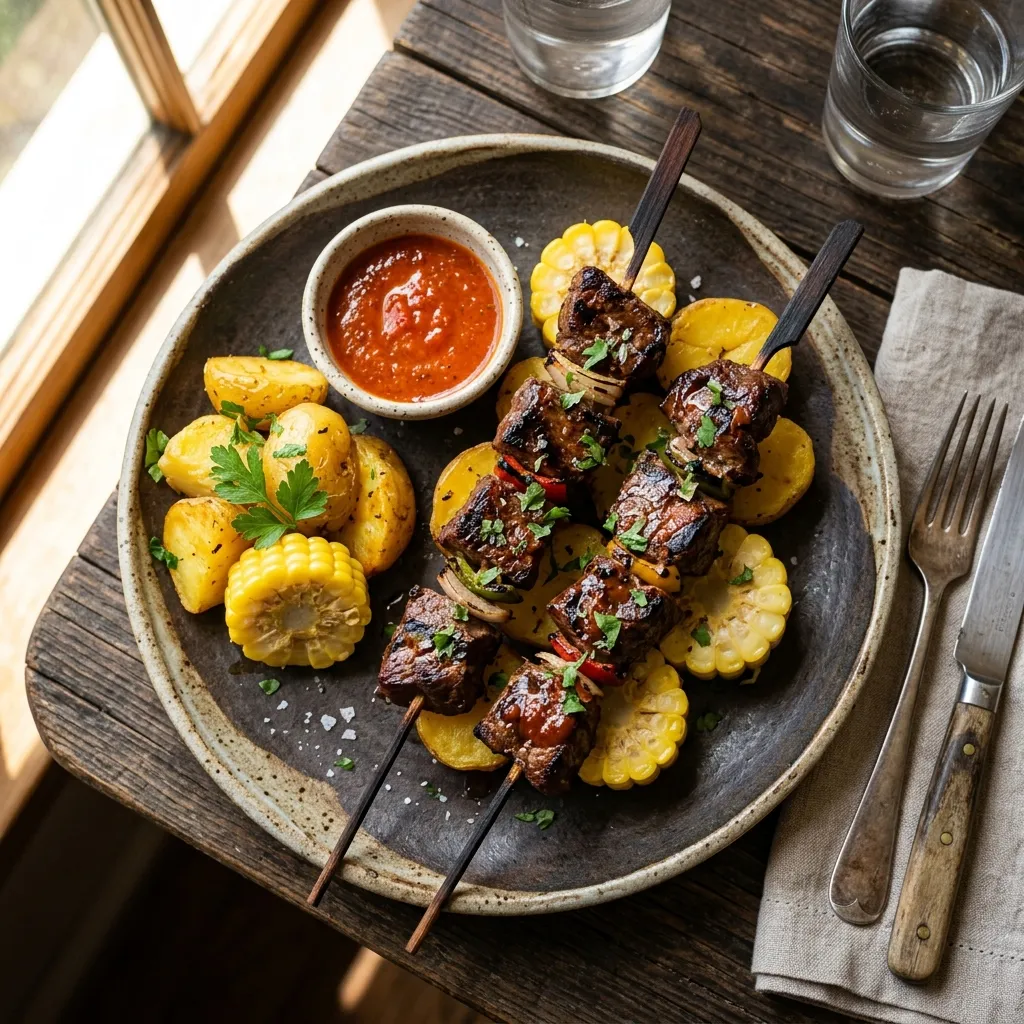
Anticuchos are grilled skewers of marinated beef heart — cubed, threaded on wooden sticks, and cooked over hot coals while basted with a sauce of aji panca (dried red Peruvian pepper), garlic, vinegar, cumin, and oil. The exterior chars and caramelizes while the interior remains tender, almost buttery — a texture unique to heart muscle, which is lean but incredibly smooth when properly cooked. Anticuchos are Peru's definitive street food, sold from pushcarts on every corner of Lima after dark. The marinade does the heavy lifting. Beef heart is soaked for hours — ideally overnight — in a paste of aji panca (a mild, smoky dried pepper), vinegar, garlic, cumin, oregano, and salt. The acidity of the vinegar tenderizes the dense heart muscle while the spices penetrate deeply. During grilling, the skewers are basted continuously with the same marinade, building layers of charred, spiced crust. Ayurvedically, organ meats occupy a unique position. Beef heart is one of the leanest cuts of any animal — almost pure muscle with minimal fat — and extremely dense in B vitamins, iron, CoQ10, and zinc. It is warming, building, and deeply nourishing to Rakta (blood) and Mamsa (muscle) dhatus. The vinegar and spice marinade adds strong agni stimulation, while the open-flame cooking introduces fire element directly.
Strongly heating and blood-building. The lean organ meat with pungent spices and sour marinade stimulates agni powerfully. Increases Pitta through heat, acid, and fire-element cooking. Balances Vata through warming, nourishing protein. Can benefit Kapha through lean, stimulating qualities.
Organ meats are among the most nutrient-dense foods available. Beef heart is exceptionally rich in CoQ10, B12, iron, and zinc — nutrients essential for blood formation, energy production, and immune function. Used traditionally to build blood and strength.
Ingredients
- 750 g Beef heart (trimmed of fat and sinew, cut into 3cm cubes)
- 3 tbsp Aji panca paste
- 3 tbsp Red wine vinegar
- 5 cloves Garlic (minced to a paste)
- 1.5 tsp Cumin
- 1 tsp Dried oregano
- 3 tbsp Vegetable oil
- 1.5 tsp Salt
- 1/2 tsp Black pepper
- 3 medium Boiled potatoes (halved, for serving)
- 2 ears Corn on the cob (boiled and cut into rounds, for serving)
Instructions
- Trim the beef heart of any exterior fat, valves, and tough sinew. Cut into 3cm (1.25 inch) cubes of uniform size.
- Combine aji panca paste, red wine vinegar, garlic, cumin, oregano, 2 tablespoons oil, salt, and pepper in a large bowl. Whisk into a smooth marinade.
- Add the heart cubes to the marinade, tossing to coat every piece. Cover and refrigerate for at least 4 hours, preferably overnight. Reserve 3 tablespoons of marinade for basting.
- Soak wooden skewers in water for 30 minutes if using. Thread 4-5 pieces of marinated heart onto each skewer.
- Heat a charcoal grill, grill pan, or broiler to very high heat. Brush the grate with oil.
- Grill the skewers for 2-3 minutes per side, basting generously with the reserved marinade during cooking. The exterior should be well-charred while the interior remains pink and tender — do not overcook or the heart becomes tough.
- Serve immediately with boiled potatoes, corn rounds, and a bowl of aji sauce (blend aji amarillo with oil, lime, and salt) for dipping.
Nutrition
These values are estimates calculated from the ingredient list and may vary based on brands, cooking methods, and serving size. Not a substitute for medical or dietary advice.
How This Recipe Affects Each Dosha
Vata
The warming spices, nourishing animal protein, and grounding potato side provide Vata-balancing qualities. However, heart meat is drier and lighter than other cuts, which can aggravate Vata's dryness. The oil in the marinade and basting provides necessary oleation.
Pitta
Strongly Pitta-provoking — vinegar, garlic, cumin, chili paste, and charcoal-grilled meat create a cascade of heating elements. The open flame adds fire element directly. Pitta types should avoid during summer and Pitta flares, or eat in small portions with cooling sides.
Kapha
The lean protein, minimal fat, strong spicing, and light texture make anticuchos surprisingly Kapha-appropriate. Heart is the leanest organ, and the pungent marinade cuts through Kapha stagnation. The dry, charred exterior quality opposes Kapha's wet, heavy tendencies.
Powerfully stimulates agni through the combination of vinegar acid, concentrated pungent spices, and fire-element cooking. This is one of the strongest agni-stimulating preparations in Peruvian cuisine. Heart muscle is also rich in CoQ10, which supports cellular energy production.
Nourishes: Rakta (blood), Mamsa (muscle), Asthi (bone), Majja (marrow)
Adjustments by Constitution
For Vata Types
Baste more generously with the oil-based marinade during cooking for extra oleation. Serve with warm, buttered potatoes and add a dollop of chimichurri (which adds cooling parsley). Eat alongside warm rice rather than corn to increase grounding quality.
For Pitta Types
Replace aji panca with sweet paprika for color without heat. Reduce vinegar to 1 tablespoon and add lime juice instead. Omit garlic or reduce to 1 clove. Serve with a cucumber-yogurt dip and cooling salad.
For Kapha Types
Increase the garlic, cumin, and black pepper in the marinade. Skip the potatoes — serve with grilled vegetables instead. Add a squeeze of lime and fresh arugula on the side for extra pungent, bitter quality.
Seasonal Guidance
A cold-weather street food by tradition and by energetic logic. The intensely heating qualities fuel the body during cold months. Too stimulating for summer. In spring, the pungent quality can help clear winter Kapha accumulation.
Best time of day: Evening snack or dinner. Traditional anticuchos carts appear at dusk — the charcoal smoke and warm skewers suit the cooling nighttime air.
Cultural Context
Anticuchos date to pre-Columbian Peru, when Andean peoples grilled llama hearts seasoned with local peppers. After the Spanish conquest, beef replaced llama as cattle became widespread. The dish was relegated to lower-class food during the colonial period — organ meats were given to enslaved Africans and Indigenous workers while the Spanish kept the prime cuts. Afro-Peruvian communities refined the marinades and grilling techniques, transforming anticuchos into the beloved street food they are today. Every October during Lima's Lord of Miracles procession, anticucho carts line the streets, and the fragrant smoke is inseparable from the festival's atmosphere.
Deeper Context
Origins
Anticuchos trace to pre-Columbian Incan cuisine where llama heart was prepared as ceremonial food. The Quechua name 'antiuchu' (Andean stew) reflects the pre-Columbian roots. Spanish colonial period introduced cattle and substituted beef heart, which became more widely available. Afro-Peruvian cooks in 19th-20th century Lima transformed anticuchos into the grilled-skewer street food format we recognize today — the dish became particularly associated with Lima's historic African-Peruvian street-vendor tradition.
Food as Medicine
Beef heart is among the most nutritionally-dense organ meats — extremely high in iron, B12, CoQ10, and complete protein. Classical Andean and modern nutritional-ancestral diets both emphasize organ meats as restoration food. The grilling technique preserves most nutrients while adding flavor. A substantially therapeutic traditional preparation for iron-deficiency and fatigue patterns.
Ritual & Seasonal Role
Lima street food and home cooking. Saint Rose of Lima celebration (August 30), Independence Day (July 28). Year-round but street-vendor anticuchos culture peaks at Peruvian celebration events. Featured globally at Peruvian restaurants as signature Andean-Afro-Peruvian dish.
Classical Pairings & Cautions
Grilled potato, choclo (Andean large-kernel corn), green ají sauce. Chicha morada or Inca Kola alongside. Cautions: high cholesterol in organ meats; gout patients should moderate the purine content; capsaicin aggravation from aji panca; the pre-marinating process (12+ hours) is required for texture — insufficient marinating produces tough anticuchos; beef religious restrictions rare but present.
Cross-Tradition View
How other medical and food-wisdom traditions read this dish. Each tradition names the same physiological reality in its own language — the agreements across them are where universal principles live.
Traditional Chinese Medicine
Beef heart is Blood-and-Qi-building substantially and specifically Heart-meridian-supporting; aji panca is warm-pungent and disperses cold; garlic is warm-pungent; cumin warms the middle; red wine vinegar is sour-warm and moves Liver Qi. A concentrated Heart-Blood-Qi tonic — TCM physicians would recognize organ-meat preparations as classical Blood-building restoration, with beef heart specifically supporting the Heart meridian by organ-resonance logic.
Greek Humoral
Hot-wet sanguine-building aggressively. Galenic-suitable restoration food — the heart-organ-meat preparation matches classical Mediterranean valuation of organ meats for thin-blooded populations.
Ayurveda
Heating virya, pungent vipaka. Pacifies Vata through protein density and warmth. Aggravates Pitta through organ-meat-heat combination. Kapha-reducing through the spice content. Organ meats are tamasic in classical Ayurveda.
Incan-Andean & Afro-Peruvian
Anticuchos are pre-Columbian Incan ceremonial food — llama heart was the original animal, prepared as ceremonial-and-ritual food in the Andean highlands. Spanish colonial period substituted beef heart after cattle were introduced. Afro-Peruvian influence in 19th-20th century Lima street-vendor tradition transformed anticuchos into the grilled-skewer street food globally recognized as Peruvian. The name derives from Quechua 'antiuchu' (Andean stew) meaning cut-and-cooked.
Chef's Notes
Beef heart must be cooked to medium at most — well-done heart is tough and chewy. The texture when properly cooked is remarkably tender, closer to filet mignon than to any other organ meat. If beef heart is unavailable, sirloin tips can substitute, but the flavor and nutritional profile will differ. The vinegar marinade is essential for both flavor and tenderization — do not skip the overnight soak. In Lima, anticucheros (street vendors) grill over charcoal and baste with a mop brush, producing intense smoky char that a home grill approximates but cannot replicate. Serve with aji amarillo dipping sauce, not ketchup.
Frequently Asked Questions
Is Anticuchos good for my dosha?
Strongly heating and blood-building. The lean organ meat with pungent spices and sour marinade stimulates agni powerfully. Increases Pitta through heat, acid, and fire-element cooking. Balances Vata through warming, nourishing protein. Can benefit Kapha through lean, stimulating qualities. The warming spices, nourishing animal protein, and grounding potato side provide Vata-balancing qualities. Strongly Pitta-provoking — vinegar, garlic, cumin, chili paste, and charcoal-grilled meat create a cascade of heating elements. The lean protein, minimal fat, strong spicing, and light texture make anticuchos surprisingly Kapha-appropriate.
When is the best time to eat Anticuchos?
Evening snack or dinner. Traditional anticuchos carts appear at dusk — the charcoal smoke and warm skewers suit the cooling nighttime air. A cold-weather street food by tradition and by energetic logic. The intensely heating qualities fuel the body during cold months. Too stimulating for summer. In spring, the pungent quality can help cl
How can I adjust Anticuchos for my constitution?
For Vata types: Baste more generously with the oil-based marinade during cooking for extra oleation. Serve with warm, buttered potatoes and add a dollop of chimichurr For Pitta types: Replace aji panca with sweet paprika for color without heat. Reduce vinegar to 1 tablespoon and add lime juice instead. Omit garlic or reduce to 1 clo
What are the Ayurvedic properties of Anticuchos?
Anticuchos has Pungent, Sour, Salty taste (rasa), Heating energy (virya), and Pungent post-digestive effect (vipaka). Its qualities (gunas) are Warm, Light, Dry. It nourishes Rakta (blood), Mamsa (muscle), Asthi (bone), Majja (marrow). Powerfully stimulates agni through the combination of vinegar acid, concentrated pungent spices, and fire-element cooking. This is one of the strongest agni-stimulating preparations in Peruvian cuisine. Heart muscle is also rich in CoQ10, which supports cellular energy production.