American Chili
American Recipe
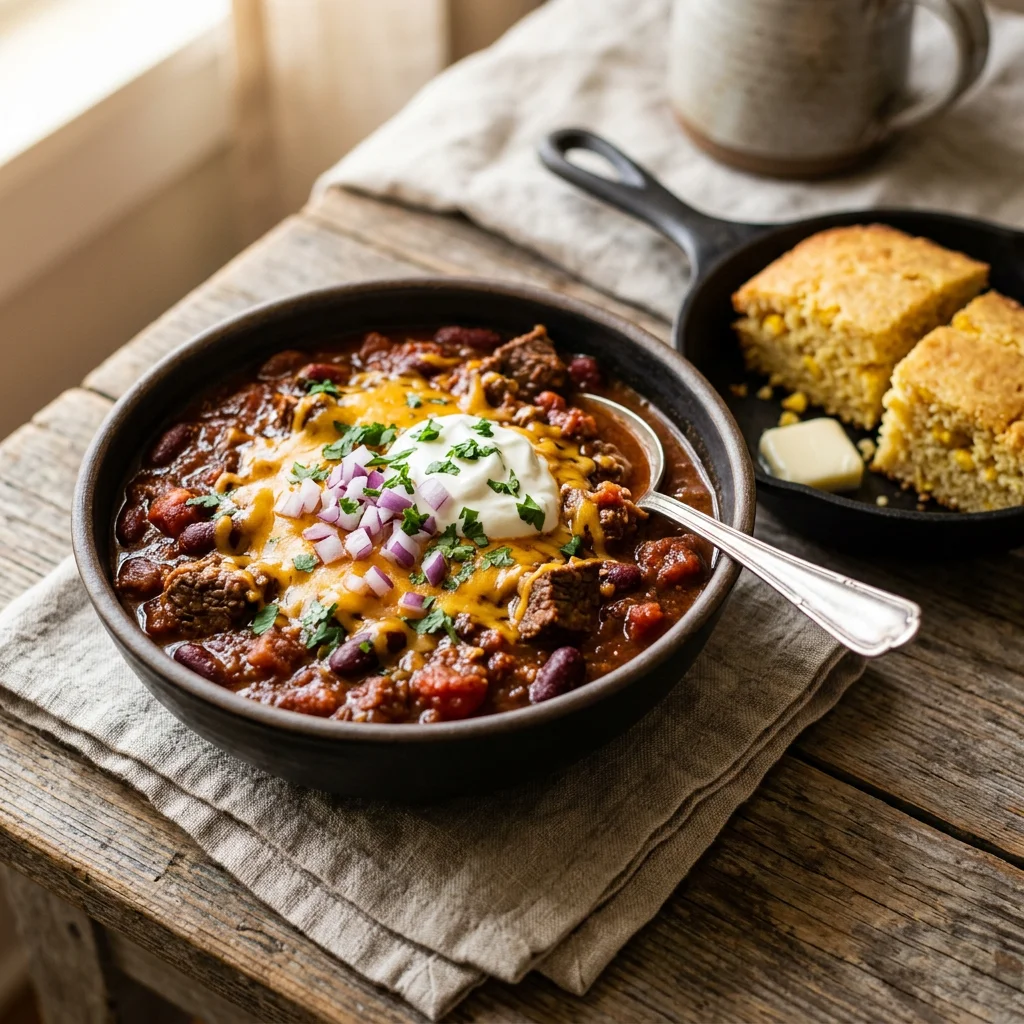
Overview
American chili is one of the most energetically complex dishes in the comfort food canon, and analyzing it through Ayurvedic principles reveals something surprising: it is far more balanced than most American comfort foods. Unlike mac and cheese or mashed potatoes, which are almost purely sweet and heavy, chili brings pungent, sour, and salty tastes alongside the sweet, and its ingredient list spans multiple doshic qualities. Tomatoes are sour and heating. Beans are sweet, astringent, and heavy. Ground beef is sweet, heavy, and strongly heating. Chili powder and cumin are pungent and warming. Onions and garlic are pungent and penetrating. The result is a dish that Ayurveda would recognize as having genuine complexity — not tridoshic, but multidimensional. The dominant energetic pattern in chili is heating. Almost every ingredient carries a warming or hot virya, from the meat to the tomatoes to the chili peppers. This makes American chili one of the most agni-stimulating comfort foods in the culture — it lights a fire in the belly in a very literal way. This is why people instinctively eat chili during cold weather, at football tailgates, and on winter nights. It is also why chili can cause heartburn, acid reflux, and digestive burning in Pitta-dominant individuals. The fire that warms you is the same fire that can scorch you, depending on your constitution. The beans add an interesting counterbalance. They are heavy, astringent, and sweet — grounding qualities that anchor the heat. Ayurveda has a complicated relationship with beans (most are considered vata-aggravating due to their gas-producing nature), but in chili, they are long-simmered with pungent spices that mitigate this effect. The extended cooking time breaks down the complex sugars responsible for gas, while cumin and chili powder are both classic carminatives (gas-reducing agents) in Ayurvedic pharmacy. American chili stumbled into sound Ayurvedic food combining through pure culinary instinct.
Strongly stimulates agni and pacifies Kapha. Increases Pitta due to heating spices, tomatoes, and meat. Can aggravate Vata if beans are undercooked or eaten in excess.
Ingredients
- 2 lbs Ground beef (80/20 blend)
- 1 large Onion (diced)
- 4 cloves Garlic (minced)
- 1 large Bell pepper (diced)
- 28 oz Canned crushed tomatoes
- 14 oz Canned diced tomatoes
- 2 tbsp Tomato paste
- 2 cans Kidney beans (15 oz each, drained and rinsed)
- 3 tbsp Chili powder
- 2 tsp Ground cumin
- 1 tsp Paprika
- 1 tsp Oregano (dried)
- 1/4 tsp Cayenne pepper (optional, adjust to heat preference)
- 2 tsp Salt
- 1 tsp Black pepper
- 2 tbsp Olive oil
Instructions
- Heat the olive oil in a large, heavy-bottomed pot or Dutch oven over medium-high heat. Add the ground beef, breaking it into small pieces with a wooden spoon. Cook until well browned, about 8-10 minutes. Do not drain the fat — it carries flavor and the long simmer will incorporate it into the dish.
- Push the meat to one side and add the onion and bell pepper to the cleared space. Cook for 4-5 minutes until softened. Add the garlic and cook for another 30 seconds until fragrant.
- Add the chili powder, cumin, paprika, oregano, and cayenne. Stir everything together and let the spices toast in the fat for about 1 minute — this blooms the spices and deepens their flavor dramatically.
- Add the tomato paste and stir it into the meat and spices, cooking for another minute. The paste will darken slightly and develop a concentrated sweetness.
- Pour in the crushed and diced tomatoes with their juices. Add the drained kidney beans, salt, and black pepper. Stir to combine and bring to a boil.
- Reduce heat to low, cover with the lid slightly ajar, and simmer for at least 45 minutes, stirring occasionally. The longer it cooks, the better the flavors meld — an hour is good, two hours is better if you have the time.
- Taste and adjust salt, pepper, and heat level. Chili thickens as it cools, so keep it slightly soupier than your target consistency. Serve in deep bowls topped with shredded cheese, sour cream, diced onion, or hot sauce — whatever your tradition dictates.
Nutrition
These values are estimates calculated from the ingredient list and may vary based on brands, cooking methods, and serving size. Not a substitute for medical or dietary advice.
How This Recipe Affects Each Dosha
Vata
Chili has a mixed relationship with Vata. The warmth, oiliness, and heaviness from the meat and beans are grounding and beneficial. However, beans are classically Vata-aggravating — they produce gas and distension in the large intestine, which is Vata's seat. Long simmering mitigates this significantly, and the carminative spices (cumin, chili powder) help, but Vata types with sensitive digestion may still experience bloating. The key for Vata is to eat chili well-cooked, in moderate portions, and with a carbohydrate like cornbread to cushion the digestive impact.
Pitta
This is the most Pitta-aggravating dish on this list. Chili powder, cayenne, garlic, tomatoes, onions, and red meat are all heating, and combining them creates a powerfully rajasic meal that stokes internal fire. Pitta types will feel the heat — literally — as flushed cheeks, acid reflux, or irritability after a large bowl. During Pitta season (summer) or when Pitta is already elevated, chili is best avoided or radically modified. In cold weather, moderate portions can actually be therapeutic for Pitta types who run cold and sluggish.
Kapha
This is one of the best American comfort foods for Kapha. The pungent, heating, penetrating qualities directly counter Kapha's cold, heavy, stagnant tendencies. Chili stimulates circulation, kindles sluggish agni, and cuts through congestion. The astringent quality of the beans helps reduce water retention. Kapha types often feel energized and lighter after eating chili — the opposite of how they feel after mac and cheese. This is a dish Kapha types can eat regularly and benefit from.
One of the strongest agni-stimulating dishes in American cuisine. The combination of chili powder, cumin, garlic, onion, and cayenne creates a potent digestive fire-stoking effect. People with strong agni will feel energized and warm after eating. People with inflamed or excess agni (Pitta types with acid reflux) will feel scorched. People with weak agni (Kapha or depleted Vata) will often find chili easier to digest than milder foods — the spices do the work their own agni cannot.
Nourishes: Rasa (plasma), Rakta (blood), Mamsa (muscle)
Adjustments by Constitution
For Vata Types
Use less beans (one can instead of two) and increase the meat for easier digestion. Add a tablespoon of ghee stirred in at the end for oleation. Reduce or eliminate cayenne, which can be too drying for Vata. Serve over rice or with buttered cornbread to provide grounding sweetness. A dollop of sour cream on top adds cooling moisture.
For Pitta Types
Replace ground beef with ground turkey, which is less heating. Cut the chili powder to 1.5 tablespoons and eliminate the cayenne entirely. Use sweet paprika instead of hot. Add cooling toppings: diced avocado, plain yogurt instead of sour cream, and fresh cilantro. Increase the beans for their cooling, astringent quality and reduce the tomato for less acidity.
For Kapha Types
Make it as spicy as you can handle — increase the cayenne and add fresh jalapenos. Use extra-lean ground beef or substitute ground turkey. Skip the sour cream and cheese toppings. Add extra vegetables: diced zucchini, corn, and leafy greens stirred in at the end. The more pungent and vegetable-dense you make it, the more therapeutic it becomes for Kapha.
Seasonal Guidance
Chili is winter food. It belongs to the cold months when the body craves internal heat and agni is naturally stronger. In autumn (Vata season), it provides warming energy, though Vata types should moderate the heat level. In winter (Kapha-Vata season), it is ideal — stoking agni and cutting through cold-weather lethargy. In spring, it helps clear accumulated Kapha. In summer, it is too heating for most people — eating a bowl of chili on a July afternoon is a recipe for Pitta aggravation, despite the popularity of summer chili cookoffs.
Best time of day: Lunch or early dinner. The strong agni-stimulating quality means it is best consumed when the body has hours to process it. Late-night chili will disturb sleep and cause digestive heat overnight.
Cultural Context
The origins of American chili are disputed with the intensity of a custody battle. Texas claims it as their state dish and insists real chili has no beans. New Mexico says it started with them and the Hatch chile. The Chili Queens of San Antonio were selling it from open-air stands in the 1880s. Cincinnati puts it on spaghetti with shredded cheese. The truth is that chili evolved from the convergence of Indigenous, Mexican, and frontier American food cultures — chili peppers and beans from Mexico, beef from cattle ranching, slow-cooking from necessity. The chili cookoff is an American institution unto itself, with competitions from the local fire station to the International Chili Society championships. In American culture, chili is communal food: it feeds a crowd, it feeds a team, it feeds a family on a budget. It is what you bring to the potluck because it is impossible to make a small batch and because it is better the next day.
Deeper Context
Origins
American chili (chili con carne) crystallized in 19th-century Texas as a labor-class preparation served by the chili queens of San Antonio plazas from the 1880s onward. The dish is Mesoamerican in every ingredient — chili peppers, tomatoes, common beans — adapted to beef instead of the turkey or small game of the pre-Columbian versions. The Texas state dish since 1977, though its taxonomy is thoroughly Mexican by ingredient genealogy.
Food as Medicine
Bean-chili-tomato combinations carry a long pre-Columbian history as medicine for cold-damp conditions, sluggish digestion, and post-winter fatigue. Curanderas in the Mexican-American borderlands prescribe spicy bean preparations for gastrointestinal weakness and for breaking mucus congestion. The beef addition (post-Columbian) adds blood-building capacity that the vegetarian Mesoamerican original lacked, making the modern chili a more complete tissue-builder than its ancestor.
Ritual & Seasonal Role
Not ceremonial in mainstream American usage, but strongly seasonal — a cold-weather dish that appears from October through March in home kitchens. Regional chili cook-offs remain a Western-US cultural institution, where the dish functions as community identity rather than ritual proper. Historically avoided in summer; the heating-drying profile is considered poorly suited to hot climates, and old Texas cowboy practice was to stop serving it when mesquite leafed out in spring.
Classical Pairings & Cautions
Classical pairings are cornbread, sour cream, shredded cheddar, raw onion, lime wedges, and Fritos. Mexican ancestors would have paired with corn tortillas and a mild salsa. Cautions: GERD and acid reflux aggravation from the capsicum-tomato-bean triad; legume gas in those with weak agni; Pitta imbalances in hot weather; beef allergies or religious restrictions (Hindu, some Buddhist) preclude the standard form — vegetarian three-bean chili is a common accommodation.
Cross-Tradition View
How other medical and food-wisdom traditions read this dish. Each tradition names the same physiological reality in its own language — the agreements across them are where universal principles live.
Traditional Chinese Medicine
Ground beef builds Blood and tonifies middle-warmer Qi; kidney beans enter the Kidney meridian and support Essence; tomato is cool-sour and moves Liver Qi; chili powder strongly disperses cold and descends Qi; cumin warms the middle burner. Chili functions as a Kidney Yang tonic through the beef-bean-chili synergy — the kind of dish TCM physicians would prescribe for cold extremities, low back ache, and morning fatigue. Damp-heat risk rises with excess tomato in hot climates.
Greek Humoral
Hot-dry overall, with the tomato contributing a wet-sour correction. Galenic reading: builds sanguine temperament and disperses phlegmatic stagnation. The combination of animal protein, legume, and capsicum heat is one of the highest Heat-generating preparations in everyday cookery. Melancholic types benefit most; choleric types should reduce the chili; sanguine types tolerate in winter but not summer.
Ayurveda
Heating virya, pungent vipaka. Pacifies Kapha strongly through the spice heat and pacifies Vata through the protein and warmth. Aggravates Pitta in sensitive types — chili powder plus tomato pushes most individual Pitta thresholds past tolerance. Cumin is genuinely supportive of agni, making the combination digestively more tolerable than the chili heat alone would suggest on paper.
Indigenous Mesoamerican
Chili, tomato, and common beans are all Mesoamerican domesticates — American chili is a northward adaptation of preparations that go back three millennia in what is now Mexico. The Aztec and Maya treated chile as medicine for sluggish digestion, common cold, and post-illness fatigue, and the bean-chile-tomato triangle is one of the most ancient nutritional formats in the Americas. The beef is the only post-Columbian addition.
Chef's Notes
Chili improves dramatically overnight. Make it the day before you want to eat it, refrigerate, and reheat — the flavors deepen and unify in a way that fresh chili cannot match. The key to deep, complex flavor is properly browning the meat (do not stir constantly — let it develop a crust) and blooming the spices in fat. If the chili tastes flat, it usually needs more salt, a splash of vinegar, or a tablespoon of brown sugar to balance the acidity of the tomatoes. For a thicker chili, mash some of the beans before adding. Texas purists will object to the beans entirely — the great chili debate is one of America's most passionate and least consequential arguments.
Frequently Asked Questions
Is American Chili good for my dosha?
Strongly stimulates agni and pacifies Kapha. Increases Pitta due to heating spices, tomatoes, and meat. Can aggravate Vata if beans are undercooked or eaten in excess. Chili has a mixed relationship with Vata. This is the most Pitta-aggravating dish on this list. This is one of the best American comfort foods for Kapha.
When is the best time to eat American Chili?
Lunch or early dinner. The strong agni-stimulating quality means it is best consumed when the body has hours to process it. Late-night chili will disturb sleep and cause digestive heat overnight. Chili is winter food. It belongs to the cold months when the body craves internal heat and agni is naturally stronger. In autumn (Vata season), it provides warming energy, though Vata types should mod
How can I adjust American Chili for my constitution?
For Vata types: Use less beans (one can instead of two) and increase the meat for easier digestion. Add a tablespoon of ghee stirred in at the end for oleation. Reduc For Pitta types: Replace ground beef with ground turkey, which is less heating. Cut the chili powder to 1.5 tablespoons and eliminate the cayenne entirely. Use sweet p
What are the Ayurvedic properties of American Chili?
American Chili has Pungent, Sweet, Sour, Salty taste (rasa), Heating energy (virya), and Pungent post-digestive effect (vipaka). Its qualities (gunas) are Heavy, Warm, Oily, Penetrating. It nourishes Rasa (plasma), Rakta (blood), Mamsa (muscle). One of the strongest agni-stimulating dishes in American cuisine. The combination of chili powder, cumin, garlic, onion, and cayenne creates a potent digestive fire-stoking effect. People with strong agni will feel energized and warm after eating. People with inflamed or excess agni (Pitta types with acid reflux) will feel scorched. People with weak agni (Kapha or depleted Vata) will often find chili easier to digest than milder foods — the spices do the work their own agni cannot.