Aloo Gobi
Indian Recipe
Overview
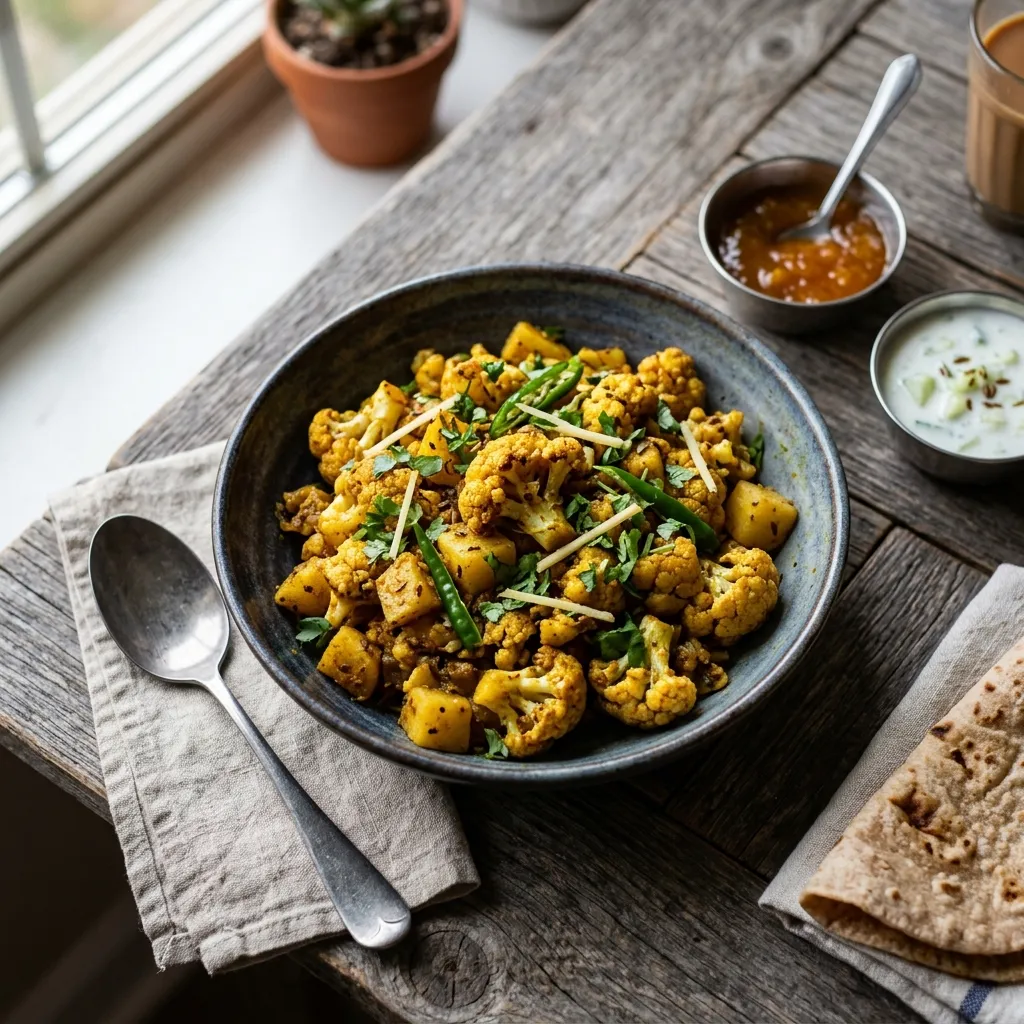
Aloo gobi is a dry-fried North Indian dish of potatoes (aloo) and cauliflower (gobi) cooked with cumin, turmeric, coriander, and green chilies until both vegetables develop golden-brown edges and a slightly crispy exterior. It is one of India's most universal vegetarian dishes — simple, inexpensive, and satisfying enough to anchor a meal alongside dal, roti, and yogurt. Every Indian household has a version, and the differences are subtle but passionately defended: some families add tomatoes, others consider this sacrilege; some cut the cauliflower into tiny florets, others keep them large. The dish belongs to the sabzi (vegetable preparation) tradition of Punjabi home cooking, where seasonal vegetables are quickly cooked with a minimal spice blend to serve as one component of a multi-dish meal. Aloo gobi's appeal lies in the textural interplay between potato's creamy density and cauliflower's fibrous crumble, unified by the warm spice coating. When cooked properly — in a hot pan with restrained stirring — both vegetables develop caramelized edges that add sweetness and complexity. From an Ayurvedic perspective, both potatoes and cauliflower are Vata-increasing vegetables — dry, light, and gas-producing. The cooking technique addresses this: frying in oil with Vata-pacifying spices (cumin, turmeric, asafoetida) transforms these otherwise problematic vegetables into something more digestible. This is a practical example of how Indian cooking traditions intuitively apply Ayurvedic principles through spice selection and preparation method.
Mildly heating and drying. The spice blend helps pacify the gas-producing quality of both vegetables. Best for Kapha and Pitta in moderation. Vata types need modifications due to the dry, light quality of both main vegetables.
Ingredients
- 3 medium Potatoes (peeled and cut into 1-inch cubes)
- 1 medium head Cauliflower (cut into small florets)
- 3 tbsp Vegetable oil
- 1 tsp Cumin seeds
- 1/2 tsp Turmeric powder
- 1 tsp Coriander powder
- 1/2 tsp Red chili powder
- 1/2 tsp Amchur (dry mango powder) (or substitute lemon juice at the end)
- 1/4 tsp Asafoetida (hing)
- 1 inch Fresh ginger (grated)
- 2 pieces Green chilies (slit lengthwise)
- 3 tbsp Fresh cilantro (chopped)
- 1 tsp Salt
Instructions
- Heat oil in a large, heavy skillet or kadhai over medium-high heat. Add cumin seeds and let them sizzle until they darken and become fragrant, about 30 seconds. Add asafoetida and stir once.
- Add the potato cubes and spread them in a single layer. Let them cook undisturbed for 3-4 minutes until the undersides develop a golden crust. Stir, then repeat — this browning step is essential for flavor and texture.
- Add the cauliflower florets, grated ginger, and green chilies. Stir to combine, then sprinkle turmeric, coriander powder, red chili powder, and salt over the vegetables. Toss to coat evenly.
- Reduce heat to medium-low. Cover the pan and cook for 12-15 minutes, stirring every 3-4 minutes. The steam trapped under the lid cooks the cauliflower through while the bottom-contact browning continues with each stir.
- Remove the lid for the final 5 minutes of cooking to let residual moisture evaporate. The vegetables should be tender when pierced with a knife but hold their shape — not mushy. The edges should be golden and slightly crispy.
- Sprinkle amchur (dry mango powder) over the finished dish and toss to distribute. The sour amchur brightens the flavors and aids digestion of the starchy potatoes.
- Garnish with fresh cilantro and serve hot alongside roti, dal, and a side of plain yogurt.
Nutrition
These values are estimates calculated from the ingredient list and may vary based on brands, cooking methods, and serving size. Not a substitute for medical or dietary advice.
How This Recipe Affects Each Dosha
Vata
Both potatoes and cauliflower are classified as Vata-increasing in Ayurveda — they are light, dry, and gas-producing. The oil and spices mitigate this somewhat, but the dish remains challenging for Vata constitutions. The dry cooking method (no sauce, no gravy) further accentuates the drying quality. Cumin and asafoetida help reduce gas formation, which is why they are traditionally included.
Pitta
Aloo gobi is moderate for Pitta. The potatoes are cooling and sweet, which Pitta tolerates well. The cauliflower is slightly bitter and astringent — also Pitta-friendly. The heating elements (chili, ginger) are present but not overwhelming. The amchur adds sour taste, which mildly increases Pitta. Overall, a well-balanced dish for moderate Pitta constitutions.
Kapha
Cauliflower is light, dry, and slightly astringent — qualities that reduce Kapha. The heating spice blend stimulates Kapha's sluggish digestion. However, potatoes are heavy and starchy, contributing qualities Kapha does not need. The dry cooking method helps by avoiding the heaviness of sauce-based preparations.
The cumin, asafoetida, ginger, and chili combination is specifically chosen to kindle agni and prevent the gas formation that both potatoes and cauliflower can cause. Asafoetida in particular is classified as a powerful vayu-nashaka (wind-destroyer) in Ayurvedic pharmacology. The dry cooking method concentrates these digestive benefits.
Nourishes: Rasa (plasma), Mamsa (muscle — from the mineral content of cauliflower)
Adjustments by Constitution
For Vata Types
Increase the oil to 4 tablespoons and add 1 tablespoon of ghee at the end. Reduce cauliflower and increase potato ratio (potato is more grounding). Add a splash of water during cooking to create some steam moisture. Serve with a generous dollop of warm ghee or alongside a soupy dal to offset the dryness.
For Pitta Types
Reduce green chilies and red chili powder. Add extra coriander powder, which is cooling. Increase the amchur for more sour-cooling balance. Cook at a slightly lower temperature to minimize browning (which adds heat). Serve with cooling cucumber raita.
For Kapha Types
Reduce potatoes and increase cauliflower ratio. Use only 2 tablespoons oil. Add extra ginger, black pepper, and a pinch of fenugreek seeds to the tempering. Skip the amchur and squeeze fresh lemon juice instead. Include mustard greens or spinach for additional lightness.
Seasonal Guidance
Aloo gobi works in cooler months when agni is stronger and the body can handle the drying, light quality of cauliflower. In winter, add extra oil and warming spices. In spring, the light quality helps clear residual Kapha. Less ideal in summer heat, when the dry, heating preparation can aggravate Pitta.
Best time of day: Lunch or dinner as part of a traditional Indian thali — pair with dal, roti, and yogurt for a complete, balanced meal
Cultural Context
Aloo gobi is one of the dishes that defines the Punjabi home kitchen — a region where vegetarian cooking reaches its highest expression out of necessity (large Sikh and Hindu populations) and pride. It is everyday food without pretension, made from two of the cheapest and most available vegetables on the subcontinent. The dish appears in countless Bollywood films as a marker of domestic normalcy, and it was name-dropped in the film Bend It Like Beckham as a cultural touchstone. In Indian restaurants abroad, aloo gobi often appears on the menu as a "starter" or side dish, though in India it serves as one of several components in a thali (full meal plate).
Deeper Context
Origins
Potato arrived in India via Portuguese traders in the 16th century; cauliflower entered through British colonial introduction in the 19th century. Aloo gobi is therefore a relatively young classic in Indian cookery — not ancient, but perfected by Punjabi home cooks over roughly 150 years who adapted existing north-Indian spice logic to two new-world ingredients. The dish represents a characteristic feature of Indian cuisine: the capacity to absorb foreign crops into an indigenous flavor architecture without visible seams.
Food as Medicine
Used in traditional Punjabi home medicine as a dry winter dish (sookhi sabzi) to warm the body without adding heaviness. The turmeric content makes it part of the seasonal arsenal against joint ache, and the cauliflower provides sulforaphane-family compounds that Ayurveda recognizes as liver-clearing under the category of tikta-katu (bitter-pungent) remedies. Used alongside ginger tea in folk treatment of damp-cold lung congestion.
Ritual & Seasonal Role
Winter dish par excellence — appears in cold-weather thalis and tiffin boxes from October through March in north India. Not tied to specific festivals, but closely associated with Punjabi winter feast tables alongside sarson da saag and makki di roti. Avoided in peak summer when both vegetables are considered too heavy for hot climates, and generally absent from South Indian menus, where it is treated as a visiting north-Indian dish.
Classical Pairings & Cautions
Classical pairing is chapati, a side of dal, and plain dahi or raita to soften the dryness. Adding ghee at serving plus sliced ginger corrects most of the vata-aggravating quality. Cautions: the dish is very drying for Vata types without added fat; potato restriction applies to kidney-stone and diabetic patients; cauliflower is notoriously gas-forming for weak agni and is contraindicated in IBS flares, colitis, and post-surgical recovery.
Cross-Tradition View
How other medical and food-wisdom traditions read this dish. Each tradition names the same physiological reality in its own language — the agreements across them are where universal principles live.
Traditional Chinese Medicine
Potato is classified sweet-neutral and tonifies Spleen Qi; cauliflower is cool and cruciferous, moving Liver Qi and descending Lung Qi. The cumin and turmeric in the spice mix are dispersing and warming, correcting the cold-dry tendency of the two main vegetables. TCM physicians would prescribe aloo gobi for Liver Qi stagnation coexisting with Spleen Qi deficiency, but would caution against the dry preparation in patients with Yin-deficient heat or chronic constipation.
Greek Humoral
Both vegetables sit in the cold-wet quadrant of Galenic theory — plain potato and raw cauliflower are considered poorly-tempered foods that thicken humors. The dry-roasting with cumin, turmeric, and coriander pulls the dish toward hot-dry, making it suitable for phlegmatic and sanguine constitutions. Melancholic types find the corrected dish still too drying and should add yogurt or ghee; choleric types find the spices overly stimulating in hot weather.
Unani Tibb
Mizaj is cold and wet in the base ingredients, shifted to hot-dry in the first degree by the spice blend. Kashmiri and Delhi hakims prescribe aloo gobi for balgham (phlegmatic) disorders — winter congestion, sluggish appetite, morning heaviness. The preparation is contraindicated in ghalaba-e-soda (melancholy) and in kidney-stone patients, where the potato's starch concentration can worsen mineral imbalance.
Tibetan Sowa Rigpa
Potato reads as sweet-heavy-cool and activates Wind (rLung) when eaten cold or raw. Cauliflower is light-rough-cool and also Wind-aggravating. The spice tempering shifts the dish toward Bile (mKhris-pa) activity, making it a proper mid-day meal for Bile-dominant constitutions. Tibetan physicians would add ginger and rock salt when prescribing for patients convalescing from cold Wind disorders (grang-ba'i nad).
Chef's Notes
The secret to restaurant-quality aloo gobi is fearless browning — the vegetables need direct, high-heat contact with the pan surface. Do not crowd the pan; cook in batches if needed. Watery, steamed aloo gobi is the most common failure mode. If your cauliflower releases a lot of water, remove the lid earlier and increase the heat. Amchur is the preferred souring agent in Punjabi dry sabzis because it adds acidity without adding liquid — lemon juice works as a substitute but changes the texture slightly. For extra crispiness, parboil the potatoes before frying.
Frequently Asked Questions
Is Aloo Gobi good for my dosha?
Mildly heating and drying. The spice blend helps pacify the gas-producing quality of both vegetables. Best for Kapha and Pitta in moderation. Vata types need modifications due to the dry, light quality of both main vegetables. Both potatoes and cauliflower are classified as Vata-increasing in Ayurveda — they are light, dry, and gas-producing. Aloo gobi is moderate for Pitta. Cauliflower is light, dry, and slightly astringent — qualities that reduce Kapha.
When is the best time to eat Aloo Gobi?
Lunch or dinner as part of a traditional Indian thali — pair with dal, roti, and yogurt for a complete, balanced meal Aloo gobi works in cooler months when agni is stronger and the body can handle the drying, light quality of cauliflower. In winter, add extra oil and warming spices. In spring, the light quality helps
How can I adjust Aloo Gobi for my constitution?
For Vata types: Increase the oil to 4 tablespoons and add 1 tablespoon of ghee at the end. Reduce cauliflower and increase potato ratio (potato is more grounding). Ad For Pitta types: Reduce green chilies and red chili powder. Add extra coriander powder, which is cooling. Increase the amchur for more sour-cooling balance. Cook at a
What are the Ayurvedic properties of Aloo Gobi?
Aloo Gobi has Sweet, Pungent, Astringent, Sour taste (rasa), Heating energy (virya), and Sweet post-digestive effect (vipaka). Its qualities (gunas) are Light, Dry, Warm. It nourishes Rasa (plasma), Mamsa (muscle — from the mineral content of cauliflower). The cumin, asafoetida, ginger, and chili combination is specifically chosen to kindle agni and prevent the gas formation that both potatoes and cauliflower can cause. Asafoetida in particular is classified as a powerful vayu-nashaka (wind-destroyer) in Ayurvedic pharmacology. The dry cooking method concentrates these digestive benefits.