Aji de Gallina
Peruvian Recipe
Overview
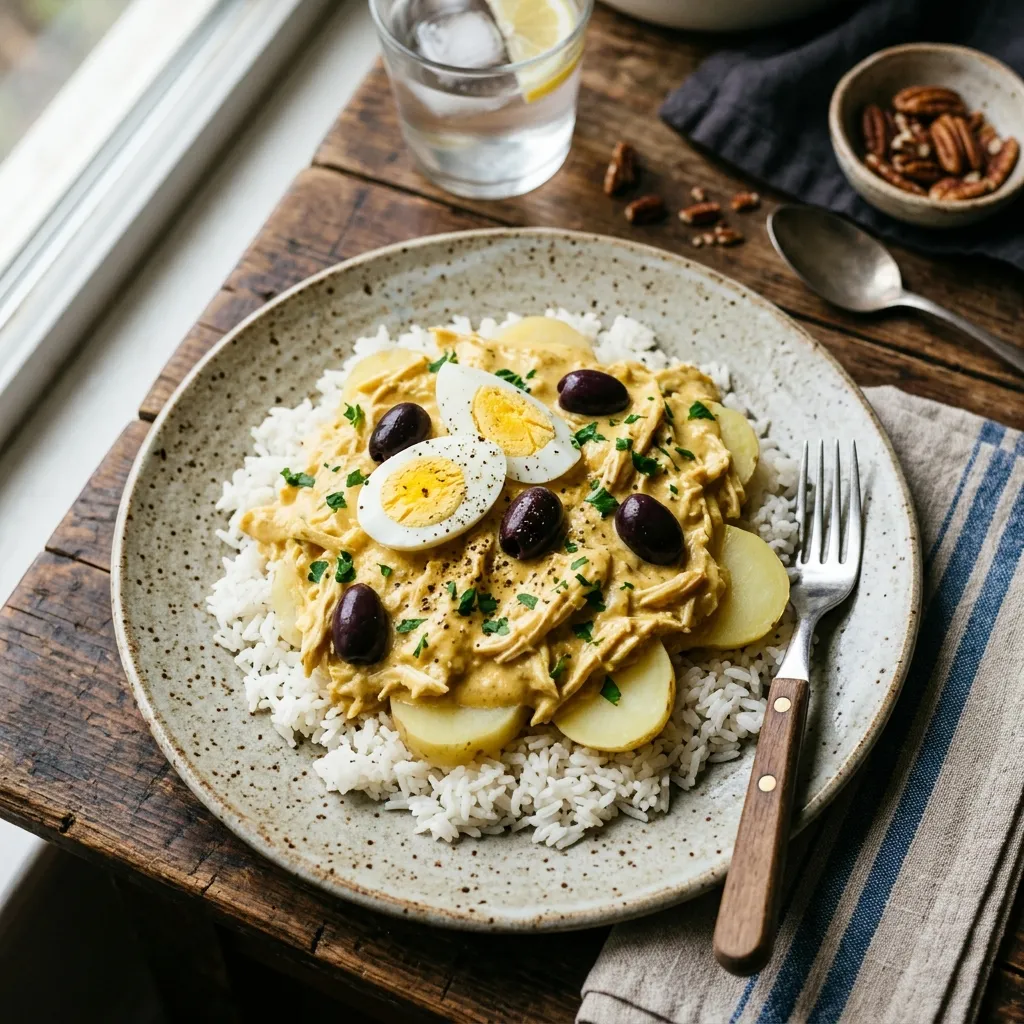
Aji de gallina is a creamy, golden stew of shredded chicken in a sauce built from aji amarillo peppers, bread, walnuts, evaporated milk, and Parmesan cheese, served over rice and garnished with boiled egg and black olives. The sauce — thick, velvety, and gently spiced — achieves its body from bread soaked in milk rather than from flour or cream, a technique with roots in medieval Spanish cooking that arrived in Peru with the conquistadors and was transformed by local ingredients. The preparation involves poaching a whole hen or chicken, shredding the meat, then building the sauce separately. Onion, garlic, and aji amarillo form the aromatic base, thickened with bread that has been soaked in the chicken broth and evaporated milk, and enriched with ground walnuts and grated Parmesan. The shredded chicken is folded into this golden sauce and simmered briefly. The finished dish is ladled over white rice with a halved boiled egg and a pair of Botija olives — the dark, wrinkled Peruvian olive — on each plate. Ayurvedically, aji de gallina is warming, building, and nourishing. The chicken provides lighter protein than red meat, the bread and milk add sweet, building quality, and the aji amarillo provides the pungent digestive spark that prevents the dish from becoming sluggish. Walnuts add heavy, oily nourishment to the tissues. This is a balanced, moderate dish — more heating than a simple chicken soup but less aggressive than a chili-heavy curry.
Nourishing and building for all tissues. Pacifies Vata through warmth, oleation, and protein-rich creaminess. Mildly increases Pitta through aji amarillo, garlic, and cheese. Increases Kapha through bread, milk, nuts, and overall heaviness.
Traditional comfort food for recovery from illness or exhaustion. The combination of easily digestible chicken protein, warming spices, and calorie-dense sauce provides concentrated nourishment for rebuilding strength.
Ingredients
- 600 g Chicken breast or thighs (bone-in preferred)
- 3 tbsp Aji amarillo paste
- 1 large Onion (finely diced)
- 4 cloves Garlic (minced)
- 4 slices White bread (crusts removed)
- 1 cup Evaporated milk
- 1.5 cups Chicken broth (reserved from poaching)
- 1/2 cup Walnuts (finely ground)
- 1/3 cup Parmesan cheese (finely grated)
- 2 tbsp Vegetable oil
- 1/2 tsp Cumin
- 1/4 tsp Turmeric
- 1 tsp Salt
- 3 whole Hard-boiled eggs (halved, for garnish)
- 12 pieces Black olives (Botija or Kalamata, for garnish)
- 3 cups Cooked white rice
Instructions
- Poach the chicken in salted water for 25-30 minutes until cooked through. Remove, let cool slightly, and shred into bite-sized pieces. Reserve 1.5 cups of the poaching broth.
- Soak the bread slices in the evaporated milk for 5 minutes until soft, then mash or blend into a smooth paste.
- Heat oil in a large saucepan over medium heat. Cook the onion for 5 minutes until softened. Add garlic, cumin, and turmeric, stirring for 1 minute.
- Add the aji amarillo paste and cook for 2 minutes, stirring constantly, until fragrant and the oil takes on a deep golden color.
- Add the bread-milk paste and reserved chicken broth. Stir until smooth, then add the ground walnuts and Parmesan. Simmer for 10 minutes, stirring frequently, until the sauce thickens to a creamy, pourable consistency.
- Fold in the shredded chicken and cook for 5 more minutes, allowing the meat to absorb the sauce. Adjust salt and add more broth if the sauce is too thick.
- Serve over white rice, garnishing each plate with half a boiled egg and 2-3 black olives.
Nutrition
These values are estimates calculated from the ingredient list and may vary based on brands, cooking methods, and serving size. Not a substitute for medical or dietary advice.
How This Recipe Affects Each Dosha
Vata
The warm, creamy, protein-rich sauce is deeply comforting for Vata. The combination of chicken, walnuts, milk, and bread provides layered nourishment that addresses Vata's depleted-tissue tendencies. The aji amarillo provides just enough heat to keep digestion engaged without overstimulating the nervous system.
Pitta
The aji amarillo, garlic, and Parmesan cheese add heating qualities that can aggravate Pitta in sensitive individuals. However, the evaporated milk and bread provide a cooling, sweet buffer. Pitta types can enjoy this in moderation during cooler months.
Kapha
Bread soaked in milk, ground walnuts, cheese, and oil create substantial heaviness that Kapha constitutions should monitor. The pungent aji provides some counterbalance, but the overall sweet, heavy, oily quality builds Kapha. Eat in smaller portions with extra pepper.
The aji amarillo and cumin stimulate agni, while the bread-milk-nut base requires moderate digestive fire to process. The balance works well — the spice kindles enough fire to handle the richness without the dish feeling overwhelming.
Nourishes: Rasa (plasma), Rakta (blood), Mamsa (muscle), Medas (fat), Asthi (bone), Majja (marrow)
Adjustments by Constitution
For Vata Types
Add a tablespoon of ghee to the sauce for extra oleation. Include a pinch of black pepper and extra cumin. Serve with warm, fresh rice and ensure everything is eaten hot — this dish loses its Vata-balancing quality when cold.
For Pitta Types
Reduce aji amarillo paste to 1 tablespoon and replace the rest with roasted red bell pepper puree for sweetness without heat. Omit garlic or reduce to 1 clove. Use coconut milk instead of evaporated milk for additional cooling.
For Kapha Types
Replace the bread thickener with cauliflower puree — steam cauliflower and blend smooth. Omit walnuts. Use light coconut milk instead of evaporated milk. Add extra aji amarillo and black pepper for stronger digestive stimulation. Serve over quinoa instead of rice.
Seasonal Guidance
Best in cooler months when the body benefits from warm, creamy, protein-rich foods. The building quality suits winter tissue maintenance. Too heavy for summer eating. In spring, lighten the sauce by reducing bread and increasing aji for stronger digestive stimulation.
Best time of day: Dinner, served warm. The creamy, settling quality makes it a good evening meal that satisfies without the heaviness of red meat.
Cultural Context
Aji de gallina traces its origins to the colonial-era dish manjar blanco de gallina, a Spanish preparation of chicken in a milk-and-bread sauce. Peruvian cooks added aji amarillo — the golden chile that defines Peruvian cooking — and walnuts, transforming a bland European dish into something vibrant. The use of bread as a thickener connects to medieval Spanish and Moorish cooking traditions. Today, aji de gallina is a Sunday lunch staple in Lima households and appears on nearly every Peruvian restaurant menu. The dish represents the mestizo character of Peruvian cuisine — a fusion of Spanish technique, Indigenous ingredients, and local improvisation.
Deeper Context
Origins
Aji de gallina is Criollo (Peruvian-Spanish creole) cuisine descending from Andalusian-Moorish muslimah gallina medieval Iberian preparations — chicken in nut-thickened sauce, reflecting Islamic Spain's food technology. Spanish colonizers brought the technique to Peru; Andean aji amarillo chile replaced European spices. The evaporated-milk-and-parmesan elements are 20th-century additions reflecting Italian-Peruvian immigrant influence and commercial dairy availability. The dish is one of the cleanest examples of Moorish-Andalusian-Andean-Italian fusion in Peruvian Criollo cookery.
Food as Medicine
Walnuts provide omega-3 alpha-linolenic acid with cardiovascular research support; chicken adds complete protein; aji amarillo capsaicin supports metabolic function. The combination delivers substantial calories and protein with nutritional depth. Classical Peruvian restoration food for working populations.
Ritual & Seasonal Role
Year-round Peruvian Criollo home food. Sunday family lunch. Featured at celebration meals in Limeño households. Not religiously ceremonial but deeply tied to Lima Criollo food identity.
Classical Pairings & Cautions
White rice (arroz blanco), yellow potato, black olives (aceitunas negras), hard-boiled egg quarters. Inca Kola or chicha morada alongside. Cautions: tree-nut allergies (walnut); capsaicin aggravation from aji amarillo; lactose sensitivity from evaporated milk and parmesan; gluten content in some bread-based thickeners; religious chicken restrictions rare.
Cross-Tradition View
How other medical and food-wisdom traditions read this dish. Each tradition names the same physiological reality in its own language — the agreements across them are where universal principles live.
Traditional Chinese Medicine
Chicken is Qi-building and warming; aji amarillo is hot-pungent and disperses cold; walnuts build Kidney essence substantially — classical TCM tonic for Kidney-Yang deficiency; evaporated milk is Yin-building; parmesan is Yin-building and Kidney-supporting. A comprehensive Qi-Yin-and-Kidney-essence tonic — TCM physicians would recognize aji de gallina as genuine restoration food, with specific Kidney-essence-building quality from the walnuts.
Greek Humoral
Hot-wet sanguine-building. Classical Galenic-suitable restoration preparation — the chicken-in-nut-sauce format matches Andalusian-Moorish muslimah gallina traditions that Spanish colonizers brought to Peru.
Ayurveda
Heating virya, sweet vipaka. Pacifies Vata substantially through protein density and unctuousness. Pitta aggravated through aji amarillo chile. Kapha-aggravating through the rich cream-nut-cheese combination.
Criollo Peruvian Colonial Fusion
Aji de gallina is Criollo (Peruvian-Spanish creole) cuisine — the chicken-in-nut-sauce reflects Moorish-Spanish-Andalusian influence (muslimah gallina, a medieval Iberian dish with Islamic-Moorish roots). Aji amarillo chile is Andean-Incan. The preparation reflects 300 years of Spanish colonial cuisine meeting Andean ingredients and Peruvian-Spanish creole kitchen innovation. Classical Lima-Criollo home cooking.
Chef's Notes
The bread is the key thickener — it gives the sauce its distinctive velvety body without the gluey texture that flour-based sauces can develop. Use soft white sandwich bread, not artisan bread with a hard crust. Ground walnuts should be fine but not powdered — a few seconds in a food processor or mortar. Evaporated milk is traditional and provides a richer, more concentrated dairy flavor than regular milk. The Parmesan should be finely grated so it melts invisibly into the sauce. If the sauce becomes too thick, thin with additional broth. Aji de gallina reheats well and tastes better the next day.
Frequently Asked Questions
Is Aji de Gallina good for my dosha?
Nourishing and building for all tissues. Pacifies Vata through warmth, oleation, and protein-rich creaminess. Mildly increases Pitta through aji amarillo, garlic, and cheese. Increases Kapha through bread, milk, nuts, and overall heaviness. The warm, creamy, protein-rich sauce is deeply comforting for Vata. The aji amarillo, garlic, and Parmesan cheese add heating qualities that can aggravate Pitta in sensitive individuals. Bread soaked in milk, ground walnuts, cheese, and oil create substantial heaviness that Kapha constitutions should monitor.
When is the best time to eat Aji de Gallina?
Dinner, served warm. The creamy, settling quality makes it a good evening meal that satisfies without the heaviness of red meat. Best in cooler months when the body benefits from warm, creamy, protein-rich foods. The building quality suits winter tissue maintenance. Too heavy for summer eating. In spring, lighten the sauce by r
How can I adjust Aji de Gallina for my constitution?
For Vata types: Add a tablespoon of ghee to the sauce for extra oleation. Include a pinch of black pepper and extra cumin. Serve with warm, fresh rice and ensure ever For Pitta types: Reduce aji amarillo paste to 1 tablespoon and replace the rest with roasted red bell pepper puree for sweetness without heat. Omit garlic or reduce to
What are the Ayurvedic properties of Aji de Gallina?
Aji de Gallina has Sweet, Pungent, Salty taste (rasa), Heating energy (virya), and Sweet post-digestive effect (vipaka). Its qualities (gunas) are Warm, Oily, Heavy, Smooth. It nourishes Rasa (plasma), Rakta (blood), Mamsa (muscle), Medas (fat), Asthi (bone), Majja (marrow). The aji amarillo and cumin stimulate agni, while the bread-milk-nut base requires moderate digestive fire to process. The balance works well — the spice kindles enough fire to handle the richness without the dish feeling overwhelming.