Tiramisu
Italian Recipe
Overview
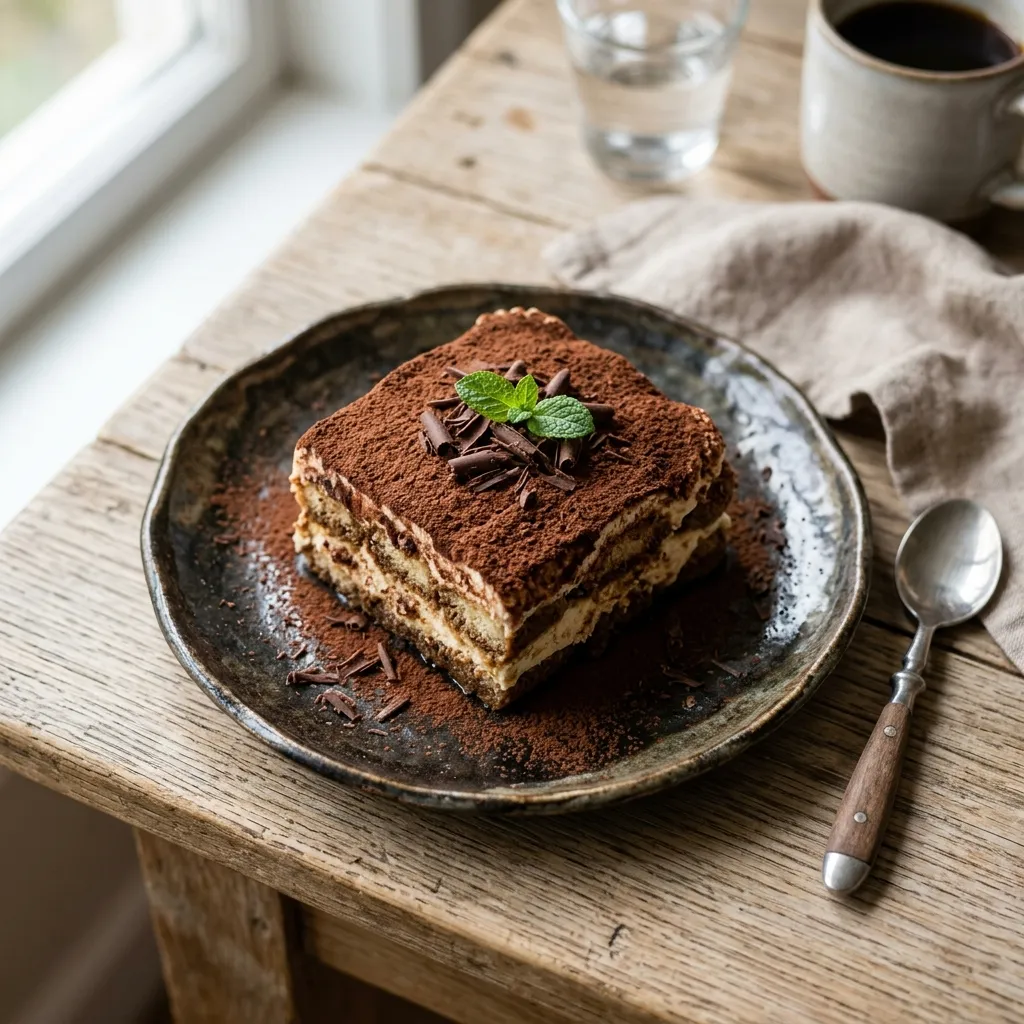
Tiramisu emerged in the Veneto region of northeastern Italy in the 1960s or 1970s, though several restaurants and individuals claim credit for its invention. The name translates to "pick me up" or "lift me up" — a reference to the energizing combination of espresso, sugar, and eggs. Le Beccherie restaurant in Treviso and Ado Campeol are most frequently cited as originators, and in 2017 the Veneto region applied for official EU recognition of tiramisu as a traditional product. The construction is deceptively simple: ladyfinger biscuits (savoiardi) are dipped briefly in strong espresso, then layered with a whipped mixture of mascarpone cheese, egg yolks, sugar, and sometimes egg whites beaten to stiff peaks. The assembled dessert rests in the refrigerator for several hours while the flavors meld and the biscuits soften, creating a texture that hovers between mousse and cake. A thick dusting of unsweetened cocoa powder finishes the surface. Ayurvedically, tiramisu is intensely sweet, heavy, and cold — qualities that strongly increase Kapha and soothe Vata. The caffeine from espresso provides a stimulating counterpoint, creating a push-pull between the sedating sweetness and the rajasic coffee energy. The raw eggs and mascarpone are nutritionally dense but demanding on digestive fire.
Strongly increases Kapha with its heavy, cold, sweet, dense qualities. Calms Vata through richness and sweetness. May aggravate Pitta through the stimulating properties of coffee and the density of the dairy.
Ingredients
- 6 large Egg yolks
- 3/4 cup Granulated sugar
- 500 g Mascarpone cheese (at room temperature)
- 300 ml Heavy cream (cold)
- 300 ml Strong espresso (cooled to room temperature)
- 2 tbsp Marsala wine or dark rum (optional)
- 300 g Savoiardi (ladyfinger biscuits) (about 30-36 biscuits)
- 3 tbsp Unsweetened cocoa powder (for dusting)
- 30 g Dark chocolate (finely grated, optional)
Instructions
- Brew the espresso and allow it to cool to room temperature. If using Marsala or rum, stir it into the cooled espresso.
- Whisk the egg yolks and sugar together in a large bowl until thick, pale yellow, and the mixture falls in ribbons when the whisk is lifted — about 4-5 minutes of vigorous whisking by hand or 3 minutes with an electric mixer.
- Add the mascarpone to the egg yolk mixture in two additions, folding gently with a spatula until smooth. Do not overmix or the mascarpone may break and become grainy.
- In a separate bowl, whip the cold heavy cream to medium-stiff peaks. Fold the whipped cream into the mascarpone mixture in two additions, using gentle, sweeping strokes to maintain as much volume as possible.
- Pour the espresso into a shallow dish. Working quickly, dip each ladyfinger into the espresso for 1-2 seconds per side — no longer. The biscuit should be moistened but not saturated. Soggy ladyfingers produce a collapsed, mushy tiramisu.
- Arrange a single layer of dipped ladyfingers in the bottom of a 9x13 inch dish or individual serving glasses. Spread half the mascarpone cream evenly over the biscuits.
- Repeat with a second layer of dipped ladyfingers and the remaining mascarpone cream. Smooth the top with an offset spatula.
- Cover tightly with plastic wrap and refrigerate for at least 4 hours, preferably overnight. The resting time is essential for the flavors to merge and the biscuits to achieve the proper soft-yet-structured texture.
- Just before serving, dust the surface generously with cocoa powder through a fine-mesh sieve. Add finely grated dark chocolate if desired.
Nutrition
These values are estimates calculated from the ingredient list and may vary based on brands, cooking methods, and serving size. Not a substitute for medical or dietary advice.
How This Recipe Affects Each Dosha
Vata
The sweet, heavy, and oily qualities of mascarpone, eggs, and cream are grounding for Vata. The smooth texture is soothing. However, the cold serving temperature and the stimulating quality of caffeine can disturb Vata's nervous system if consumed late in the day. Best in small portions for Vata types.
Pitta
Coffee is rajasic and heating to the blood, which can aggravate Pitta. The sugar and dairy are cooling, creating a mixed effect. The cocoa adds bitter taste, which is Pitta-favorable. Overall moderately tolerable for Pitta in small amounts, but not recommended during periods of acid reflux or inflammation.
Kapha
This is one of the most Kapha-aggravating desserts: mascarpone, cream, sugar, and egg yolks combine to create maximum sweetness, heaviness, and density. Every quality that increases Kapha — cold, heavy, oily, smooth, sweet — is present in abundance. Kapha types should enjoy this sparingly.
Dampens agni significantly due to the cold, heavy, dense qualities. The caffeine provides temporary stimulation but does not offset the overall digestive burden. Eating tiramisu on a full stomach or late at night is particularly taxing on agni.
Nourishes: Rasa (plasma), Meda (fat), Shukra (reproductive)
Adjustments by Constitution
For Vata Types
Serve at room temperature rather than cold from the refrigerator. Add a pinch of cardamom and cinnamon to the mascarpone mixture for warming digestive support. Use decaf espresso if eating in the evening to avoid disrupting sleep.
For Pitta Types
Substitute the espresso with chai made from cooling spices (cardamom, fennel, saffron) or with rooibos tea for a caffeine-free version. Reduce the sugar slightly and add rose water to the cream mixture for its cooling properties.
For Kapha Types
Replace mascarpone with a lighter whipped ricotta. Reduce sugar by half and add honey instead — honey is the only sweetener that does not aggravate Kapha. Add a generous amount of freshly grated ginger to the espresso soak. Use the smallest portion size.
Seasonal Guidance
The cold, refreshing quality makes tiramisu most appropriate in summer when the body welcomes cooling foods. In autumn and winter, the cold and heavy qualities compound the season's natural Kapha-Vata increase, making it harder to digest. If serving in cooler months, allow it to come to room temperature and keep portions small.
Best time of day: After a midday meal when agni is strong enough to handle the density, or as an afternoon treat. Avoid after dinner — the caffeine and heavy dairy disrupt sleep.
Cultural Context
The origin of tiramisu remains one of Italian food history's most contentious debates. Le Beccherie restaurant in Treviso, Ado Campeol's claim, and counter-claims from restaurants in Friuli Venezia Giulia and Piedmont have never been definitively resolved. What is certain is that the dessert exploded in popularity during the 1980s, becoming the most recognized Italian dessert worldwide alongside panna cotta and gelato. In Italy, tiramisu is a home dessert more than a restaurant one — made for Sunday lunch gatherings, birthdays, and holidays.
Deeper Context
Origins
Tiramisu originated in the Veneto region of Italy in the 1960s-70s, with Le Beccherie restaurant in Treviso most commonly credited. Pastry chef Roberto Linguanotto and owner Ada Campeol developed the recipe around 1972. The name translates from Venetian dialect as 'pick-me-up,' referring to the caffeine and sugar energy boost. Remarkably recent for a dish of its global cultural weight — tiramisu is less than 60 years old but has become one of the most internationally-recognized Italian desserts.
Food as Medicine
Not therapeutically designed. Coffee provides caffeine with modern research support for cognitive and metabolic effects; cocoa contributes flavonoids with cardiovascular and mood-supporting activity; mascarpone adds calcium and fat-soluble vitamins. The egg-yolk zabaglione base provides substantial choline. A mood-elevating dessert with accidental therapeutic accents.
Ritual & Seasonal Role
Year-round dessert across Italian restaurants and home cookery. Not religiously ceremonial but culturally Italian-feast positioned. Featured at celebration meals and as the default Italian-restaurant dessert globally. Classical ending to a substantial Italian dinner.
Classical Pairings & Cautions
Espresso or dessert wine (Vin Santo, Moscato) alongside. Cautions: raw egg in traditional preparation carries salmonella risk for pregnant, elderly, immunocompromised eaters — pasteurized egg versions are safer; caffeine content may affect sleep if consumed late; substantial sugar-and-fat load; dairy sensitivity; gluten intolerance precludes ladyfinger biscuits (gluten-free versions work reasonably).
Cross-Tradition View
How other medical and food-wisdom traditions read this dish. Each tradition names the same physiological reality in its own language — the agreements across them are where universal principles live.
Traditional Chinese Medicine
Mascarpone is Yin-building; espresso is warm and moves Heart Blood (coffee in TCM is classed as Heart-stimulating); ladyfinger biscuits are Spleen-Qi-supporting; cocoa powder is bitter-warming and moves Liver Qi stagnation; egg yolks build Yin. A Yin-building mood-elevating preparation — TCM physicians would recognize tiramisu as appropriate for Liver-Qi-stuck low-mood patterns.
Greek Humoral
Hot-wet sanguine-building with cold-wet cream balance. A Galenic melancholic-dispelling dessert — the coffee-and-chocolate combination is specifically heat-producing and mood-elevating in classical European medical reading.
Ayurveda
Cooling virya (cream-mascarpone), sweet vipaka. Pitta-neutral. Kapha-aggravating substantially through cream-sugar-cheese combination. Vata-pacifying through unctuousness. Coffee is rajasic-mind-stimulating in classical Ayurveda — tiramisu's caffeine content makes it an energizing evening dessert.
Venetian Trevisan
Tiramisu (literally 'pick-me-up' in Venetian dialect) originated in Treviso (Veneto region) in the 1960s-70s, with Le Beccherie restaurant widely cited as the specific origin. Some accounts credit pastry chef Roberto Linguanotto and Ada Campeol in 1972. The dish is remarkably recent — less than 60 years old — yet has become globally iconic Italian dessert. Veneto regional identity includes tiramisu as a canonical regional creation alongside risi e bisi and baccalà mantecato.
Chef's Notes
The espresso dip is the most common point of failure — too long and the ladyfingers dissolve into mush, too short and they remain dry and crunchy in the center. A quick 1-2 second dip per side is correct for Italian savoiardi, which are drier and more absorbent than some commercial brands. Use the best quality mascarpone available — cheap brands often have gums and stabilizers that affect texture. This recipe uses raw egg yolks; for food safety concerns, pasteurized eggs are an option. Tiramisu improves over the first 24 hours and holds well for up to 3 days refrigerated.
Frequently Asked Questions
Is Tiramisu good for my dosha?
Strongly increases Kapha with its heavy, cold, sweet, dense qualities. Calms Vata through richness and sweetness. May aggravate Pitta through the stimulating properties of coffee and the density of the dairy. The sweet, heavy, and oily qualities of mascarpone, eggs, and cream are grounding for Vata. Coffee is rajasic and heating to the blood, which can aggravate Pitta. This is one of the most Kapha-aggravating desserts: mascarpone, cream, sugar, and egg yolks combine to create maximum sweetness, heaviness, and density.
When is the best time to eat Tiramisu?
After a midday meal when agni is strong enough to handle the density, or as an afternoon treat. Avoid after dinner — the caffeine and heavy dairy disrupt sleep. The cold, refreshing quality makes tiramisu most appropriate in summer when the body welcomes cooling foods. In autumn and winter, the cold and heavy qualities compound the season's natural Kapha-Vata
How can I adjust Tiramisu for my constitution?
For Vata types: Serve at room temperature rather than cold from the refrigerator. Add a pinch of cardamom and cinnamon to the mascarpone mixture for warming digestive For Pitta types: Substitute the espresso with chai made from cooling spices (cardamom, fennel, saffron) or with rooibos tea for a caffeine-free version. Reduce the sug
What are the Ayurvedic properties of Tiramisu?
Tiramisu has Sweet, Bitter taste (rasa), Cooling energy (virya), and Sweet post-digestive effect (vipaka). Its qualities (gunas) are Heavy, Cold, Dense, Oily, Smooth. It nourishes Rasa (plasma), Meda (fat), Shukra (reproductive). Dampens agni significantly due to the cold, heavy, dense qualities. The caffeine provides temporary stimulation but does not offset the overall digestive burden. Eating tiramisu on a full stomach or late at night is particularly taxing on agni.