Sticky Toffee Pudding
British Recipe
Overview
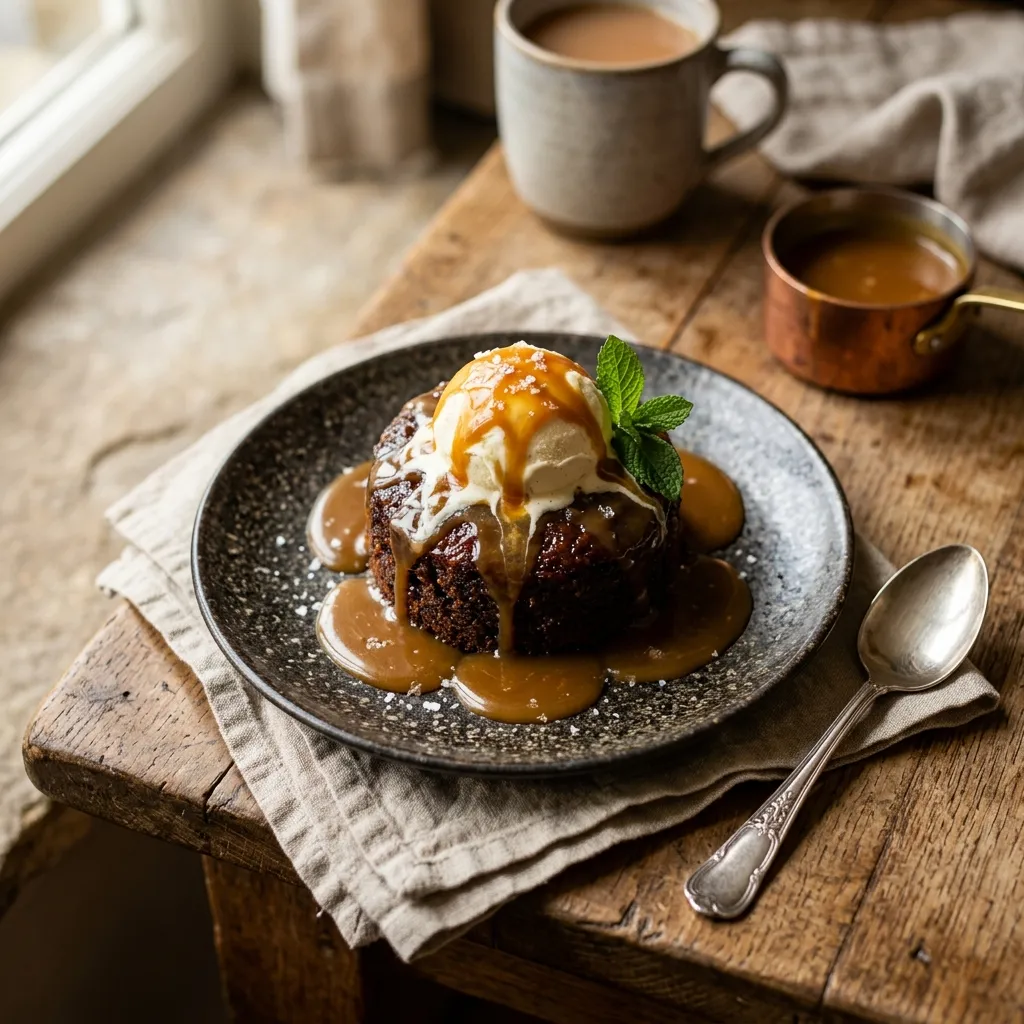
Sticky toffee pudding — a moist date sponge drenched in hot toffee sauce — was popularized in the 1970s by Francis Coulson at the Sharrow Bay Hotel in the Lake District, though earlier versions may have existed in wartime and post-war British cooking. The dish rose from regional obscurity to become Britain's most beloved dessert, now appearing on virtually every pub and restaurant menu across the country. Its success lies in the transformation of humble ingredients — dates, butter, brown sugar — into something that tastes far more sophisticated than the sum of its parts. The sponge relies on dates that have been soaked in hot water and bicarbonate of soda, which breaks down the fruit's fibres into a dark, jammy paste. This paste, folded into a simple butter-sugar-egg-flour batter, produces a cake of extraordinary moisture and depth. The toffee sauce is unapologetically rich: butter, brown sugar, and cream cooked together until the sugar dissolves and the sauce thickens into a dark, glossy pour that soaks into every pore of the sponge. Ayurvedically, this is concentrated madhura rasa — sweet taste in its most intense form. Dates, brown sugar, butter, and cream all carry sweet taste with heavy, oily, and warming qualities. The resulting dessert is deeply building and satisfying for depleted constitutions but overwhelming for anyone with a tendency toward heaviness, congestion, or excess Kapha.
Strongly pacifies Vata with sweet, heavy, warm, oily qualities. Mildly increases Pitta due to heating sugar and butter. Strongly increases Kapha due to extreme sweetness, heaviness, and moisture.
Dates are prescribed in Ayurveda for Vata-type insomnia, anxiety, and tissue depletion. The concentrated sweet taste nourishes ojas (vital essence) and calms the nervous system when consumed in appropriate quantities.
Ingredients
- 250 g Medjool dates (pitted and roughly chopped)
- 1 tsp Bicarbonate of soda
- 200 ml Boiling water
- 75 g Butter (softened, plus extra for greasing)
- 150 g Dark brown sugar
- 2 large Eggs
- 1 tsp Vanilla extract
- 175 g Self-raising flour
- 1/4 tsp Salt
- 100 g Butter (for toffee sauce)
- 175 g Dark brown sugar (for toffee sauce)
- 250 ml Double cream (for toffee sauce)
- 1 serving Vanilla ice cream or clotted cream (for serving)
Instructions
- Preheat the oven to 180°C (350°F). Butter and line the base of a 23cm square baking tin.
- Place the chopped dates in a bowl with the bicarbonate of soda. Pour over the boiling water, stir, and leave for 15 minutes. The dates will soften and the mixture will turn dark and pulpy. Mash roughly with a fork — some chunks are fine.
- Beat the softened butter and brown sugar together until light and fluffy — about 3 minutes with an electric mixer. Beat in the eggs one at a time, adding a tablespoon of flour with each to prevent curdling. Add the vanilla.
- Fold in the remaining flour and salt gently. Stir in the date mixture until evenly distributed. The batter will be quite wet — this is correct.
- Pour into the prepared tin and bake for 30-35 minutes until risen, firm to the touch, and a skewer comes out with just a few moist crumbs.
- While the pudding bakes, make the toffee sauce. Melt the butter in a saucepan over medium heat. Add the brown sugar and stir until dissolved. Pour in the cream, stir to combine, and bring to a gentle simmer. Cook for 3-4 minutes until the sauce is glossy and slightly thickened.
- When the pudding comes out of the oven, poke holes all over the surface with a skewer. Pour half the warm toffee sauce over the pudding and let it soak in for 5 minutes.
- Cut into portions and serve warm with the remaining toffee sauce poured over each piece. Accompany with vanilla ice cream or a spoonful of clotted cream.
Nutrition
These values are estimates calculated from the ingredient list and may vary based on brands, cooking methods, and serving size. Not a substitute for medical or dietary advice.
How This Recipe Affects Each Dosha
Vata
This dessert delivers concentrated Vata pacification. The dates are one of the best Vata-balancing fruits in Ayurveda — sweet, heavy, warming, and deeply nourishing to dry tissues. Combined with butter, cream, and brown sugar, the result is powerfully grounding for Vata's light, dry, mobile nature. A small portion provides genuine therapeutic benefit during Vata aggravation.
Pitta
The sweet taste generally calms Pitta, but the heating quality of concentrated sugar and butter creates internal heat that Pitta-dominant constitutions feel. The brown sugar is more heating than white sugar, and the butter adds oily heat. Pitta types should eat small portions and avoid combining with other rich foods in the same meal.
Kapha
This concentrates everything Kapha must limit: madhura rasa, guru guna, snigdha guna. The combination of dates (heavy, sweet), brown sugar (heavy, sweet, heating), butter (heavy, oily), and cream (heavy, cool, sweet) creates one of the most Kapha-aggravating desserts in the British repertoire. Even a small portion will increase congestion, heaviness, and lethargy.
The extreme sweetness and heaviness can suppress digestive fire in all but the strongest constitutions. The butter provides some digestive support through its oleating quality, but the overall density of the dish slows metabolism. Eating this after a heavy meal will compound the suppressive effect on agni.
Nourishes: Rasa (plasma), Meda (fat), Shukra (reproductive), Majja (nervous)
Adjustments by Constitution
For Vata Types
This dessert is ideal for Vata. Add a pinch of ground cardamom and cinnamon to the batter for enhanced digestive support. Serve with a scoop of saffron-infused ice cream or warm cream rather than cold ice cream. A cup of ginger tea afterward aids digestion of the sweetness.
For Pitta Types
Replace half the dates with ripe pears (cooling, sweet). Reduce sugar by a quarter. Make a lighter sauce with coconut cream and maple syrup instead of brown sugar and dairy cream. Serve with coconut milk ice cream.
For Kapha Types
Replace with a lighter date-spice preparation: stuff pitted dates with a sliver of fresh ginger and a pinch of cinnamon, warm in the oven, and drizzle with a thin honey-ginger sauce. Skip the sponge, butter, and cream entirely. Alternatively, reduce portion to a few tablespoons and pair with strong black coffee or chai to counteract heaviness.
Seasonal Guidance
A cold-weather dessert that provides warmth and caloric density when the body needs it. In autumn and winter, the warming dates and rich toffee sauce feel appropriate and nourishing. In spring, the heavy sweetness compounds Kapha-season accumulation. In summer, the heating quality is excessive.
Best time of day: After lunch when digestive fire supports heavy food, or as an early evening dessert. Never late at night — the sugar and density will disrupt sleep.
Cultural Context
Sticky toffee pudding embodies the British philosophy that a proper meal ends with a proper pudding. The word 'pudding' in British English refers to any dessert (not just the custard-set American definition), and a hot pudding with sauce or custard is the canonical ending to a British dinner. Francis Coulson's Sharrow Bay Hotel creation became so iconic that it spawned an entire genre of date-based British desserts. The dish is now so thoroughly British that finding a pub or restaurant without it on the menu requires effort. It represents the sweeter side of British cooking — a tradition that also produced treacle tart, bread-and-butter pudding, and spotted dick.
Deeper Context
Origins
Invented at the Sharrow Bay Hotel in the Lake District in the early 1970s by Francis Coulson, who allegedly adapted a wartime recipe. Cartmel Village Bakery claims earlier precedence for a closely related pudding. The dish went national through 1980s restaurant adoption and internationally through the 1990s television-cookery boom. A dessert whose regional origin is still remembered and contested in a way that most English regional dishes are not.
Food as Medicine
Dates are classical Middle Eastern and Indian convalescent food — mineral-rich, high-calorie, easily digested. Brown sugar (molasses-containing) retains mineral content that refined white sugar lacks. The overall dish is nutritionally dense despite its sweet indulgent positioning, which is why it functions as post-laboring-winter-shift recovery food in the Cumbrian tradition.
Ritual & Seasonal Role
Christmas dinner dessert, Sunday roast conclusion, pub-dinner winter specialty. Winter peak. The dish has become a canonical British pudding alongside older sticky puddings (spotted dick, treacle sponge, Christmas pudding) despite being less than 60 years old.
Classical Pairings & Cautions
Custard (the classical Cumbrian pairing), vanilla ice cream, clotted cream. Hot tea or dessert wine. Cautions: substantial sugar load — diabetic restriction applies; dairy sensitivity precludes the cream base; gluten intolerance precludes the pudding base; Kapha substantial aggravation; caloric density is considerable even in a small portion.
Cross-Tradition View
How other medical and food-wisdom traditions read this dish. Each tradition names the same physiological reality in its own language — the agreements across them are where universal principles live.
Traditional Chinese Medicine
Dates are a classical Blood-and-Qi tonic (the jujube-date family has extensive TCM materia medica status); brown sugar tonifies Spleen and warms the middle; butter is warm-wet; double cream is concentrated Yin-building; vanilla calms Shen. A concentrated Yin-and-Qi-Blood tonic — TCM physicians would recognize this as a winter dessert with genuine restoration value, though excessive in frequent consumption.
Greek Humoral
Hot-wet sanguine-building. A Galenic melancholic-dispelling dessert — the date content specifically aligns with classical Arab-Galenic (Avicenna) prescriptions for melancholy, and the cream and butter finish gives the dish the sustained sanguine quality Galenic physicians recommended for convalescence. Winter-appropriate across most temperaments.
Ayurveda
Heating virya, sweet vipaka. Pacifies Vata substantially through unctuousness and warmth; aggravates Kapha substantially through the sugar-cream-butter combination; Pitta-neutral to mildly-aggravating through the heated caramelization. A classical Vata-recovery dessert when portion-controlled.
Lake District English
Sticky toffee pudding originated in Cartmel Village, Cumbria (Lake District) in the 1970s. The Sharrow Bay Hotel under chefs Francis Coulson and Brian Sack claims the invention, though Cartmel Village bakers have disputed the precedence. Specifically Cumbrian in origin and now canonical British dessert — went national through 1980s and 1990s gastropub and restaurant adoption, spread internationally through Gary Rhodes and Delia Smith television cookery.
Chef's Notes
The bicarbonate of soda does two things: it softens the dates dramatically and it reacts with the natural acids in the fruit to create a darker colour and deeper flavour. Do not skip this step or reduce the soaking time. The sauce should be poured over the pudding while both are still warm — cold sauce on hot pudding doesn't penetrate properly. This dessert is best served within an hour of baking, but it reheats beautifully in a 160°C oven for 10 minutes with a fresh pour of warmed sauce. For individual portions, bake in greased dariole moulds or muffin tins for 20-25 minutes.
Frequently Asked Questions
Is Sticky Toffee Pudding good for my dosha?
Strongly pacifies Vata with sweet, heavy, warm, oily qualities. Mildly increases Pitta due to heating sugar and butter. Strongly increases Kapha due to extreme sweetness, heaviness, and moisture. This dessert delivers concentrated Vata pacification. The sweet taste generally calms Pitta, but the heating quality of concentrated sugar and butter creates internal heat that Pitta-dominant constitutions feel. This concentrates everything Kapha must limit: madhura rasa, guru guna, snigdha guna.
When is the best time to eat Sticky Toffee Pudding?
After lunch when digestive fire supports heavy food, or as an early evening dessert. Never late at night — the sugar and density will disrupt sleep. A cold-weather dessert that provides warmth and caloric density when the body needs it. In autumn and winter, the warming dates and rich toffee sauce feel appropriate and nourishing. In spring, the he
How can I adjust Sticky Toffee Pudding for my constitution?
For Vata types: This dessert is ideal for Vata. Add a pinch of ground cardamom and cinnamon to the batter for enhanced digestive support. Serve with a scoop of saffro For Pitta types: Replace half the dates with ripe pears (cooling, sweet). Reduce sugar by a quarter. Make a lighter sauce with coconut cream and maple syrup instead of
What are the Ayurvedic properties of Sticky Toffee Pudding?
Sticky Toffee Pudding has Sweet taste (rasa), Heating energy (virya), and Sweet post-digestive effect (vipaka). Its qualities (gunas) are Heavy, Oily, Warm, Dense, Moist. It nourishes Rasa (plasma), Meda (fat), Shukra (reproductive), Majja (nervous). The extreme sweetness and heaviness can suppress digestive fire in all but the strongest constitutions. The butter provides some digestive support through its oleating quality, but the overall density of the dish slows metabolism. Eating this after a heavy meal will compound the suppressive effect on agni.