Soba Noodle Bowl
Japanese Recipe
Overview
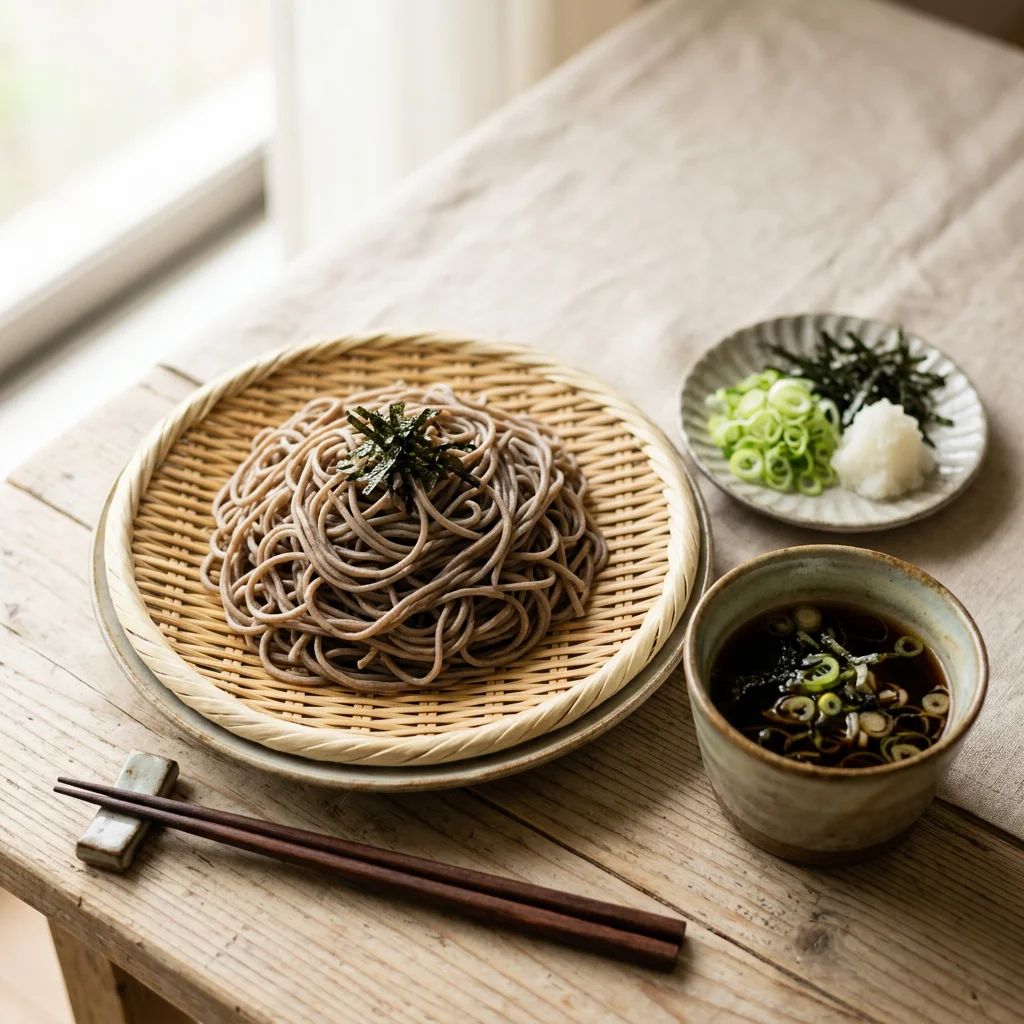
Soba noodles — thin, earthy buckwheat noodles — are one of Japan's most important staple foods, carrying a culinary tradition that stretches back to the Edo period. This preparation serves them cold (zaru-style) on a bamboo mat with a concentrated dipping sauce (tsuyu), grated daikon, wasabi, and sliced scallion. The noodles are cooked, shocked in ice water until firm and slippery, then served at room temperature or chilled. Buckwheat gives soba its distinctive nutty, mineral-rich flavor and its grey-brown color. Pure buckwheat soba (juwari soba) is naturally gluten-free, though many commercial varieties blend buckwheat with wheat flour for easier handling. The cold preparation highlights buckwheat's clean, slightly sweet taste — flavors that would be muted in a hot broth. Ayurvedically, buckwheat is a unique grain. Unlike most cereals, it is cooling in energy and light in quality, making it one of the few grains naturally suited to Pitta and Kapha constitutions. Its astringent, slightly bitter taste provides drying and clearing qualities that most grains lack. In a cold preparation like this, these cooling properties are amplified, making this an excellent summer dish but one that requires modification for Vata types.
Excellent for Pitta and Kapha due to cooling, light, drying qualities. May aggravate Vata due to cold temperature and dry, light quality of buckwheat.
Ingredients
- 200 g Dried soba noodles (100% buckwheat for gluten-free)
- 1 cup Dashi stock (for tsuyu)
- 1/4 cup Soy sauce
- 2 tbsp Mirin
- 3 tbsp Daikon radish (freshly grated)
- 2 stalks Scallion (thinly sliced)
- 1/2 tsp Wasabi (freshly grated or from tube)
- 1 sheet Nori seaweed (cut into thin strips)
- 1 tsp Sesame seeds (toasted)
Instructions
- Prepare the tsuyu dipping sauce: combine dashi, soy sauce, and mirin in a small saucepan. Bring to a brief boil, then remove from heat and allow to cool completely. Refrigerate until chilled.
- Bring a large pot of water to a rolling boil — use plenty of water, as soba releases starch quickly. Do not add salt.
- Add the soba noodles, stirring immediately to prevent sticking. When the water returns to a boil, add 1/2 cup of cold water (the "surprise water" method). Repeat when it boils again. Cook for 4-5 minutes total, checking a noodle — it should be firm but not chalky in the center.
- Drain the noodles and rinse thoroughly under cold running water, rubbing them gently between your hands to remove surface starch. This is essential — the starch makes soba gummy. Continue rinsing until the noodles feel smooth, springy, and the water runs clear.
- Drain well and arrange the noodles on a plate or bamboo mat (zaru). Scatter nori strips and sesame seeds on top.
- Serve with the chilled tsuyu in individual dipping cups, with grated daikon, wasabi, and sliced scallion arranged alongside for each person to add to their sauce as desired.
- To eat: mix a small amount of wasabi and daikon into the tsuyu, pick up a bite of noodles, dip (do not submerge) into the sauce, and slurp.
Nutrition
These values are estimates calculated from the ingredient list and may vary based on brands, cooking methods, and serving size. Not a substitute for medical or dietary advice.
How This Recipe Affects Each Dosha
Vata
Cold soba is challenging for Vata. The cool temperature, dry quality of buckwheat, and astringent taste all increase Vata's already dry, cold, light tendencies. Vata types who love soba should eat it warm (in hot broth) rather than cold, and modify the preparation significantly.
Pitta
Buckwheat's cooling energy and the cold preparation make this ideal for Pitta, especially in warm weather. The astringent and bitter tastes pacify Pitta's heat and sharpness. The clean, simple flavors suit Pitta's sensitive palate. This is one of the best grain-based meals for Pitta constitutions.
Kapha
Buckwheat is one of the lightest and most drying grains — qualities that directly counteract Kapha's heaviness and moisture. The cold preparation enhances these properties. The pungent wasabi and daikon further stimulate sluggish Kapha digestion. An excellent Kapha-clearing meal.
The cold preparation and astringent quality of buckwheat do not strongly kindle agni. The wasabi and daikon provide some digestive stimulation. Best eaten when agni is naturally strong (midday) or accompanied by warming condiments.
Nourishes: Rasa (plasma), Rakta (blood)
Adjustments by Constitution
For Vata Types
Serve warm in a hot dashi broth (kake soba) instead of cold. Add a beaten egg (tsukimi soba) for grounding protein and fat. Include tempura or fried tofu (aburaage) for oiliness. Increase sesame oil. Avoid wasabi, which is too drying, and use grated ginger instead.
For Pitta Types
This preparation is already well-suited to Pitta. Reduce or omit the wasabi if Pitta is aggravated. Add grated cucumber to the tsuyu for extra cooling. Garnish with shiso leaves. Use mild white soy sauce (shiro shoyu) if available, which is less heating than dark soy.
For Kapha Types
Increase the wasabi and grated daikon generously. Add shichimi togarashi (seven-spice powder) to the tsuyu for extra pungent stimulation. Serve the noodle portion slightly smaller and increase the grated daikon. The cold preparation is already ideal for Kapha.
Seasonal Guidance
Cold soba is quintessentially a summer food — its cooling energy, light quality, and refreshing temperature provide relief from heat. In spring, it helps clear accumulated Kapha with its drying, astringent properties. In autumn and winter, switch to warm soba in broth (kake soba) with warming toppings like tempura, duck, or a raw egg. Cold soba in winter aggravates Vata and leaves the body under-nourished for the cold season.
Best time of day: Lunch, when agni is strongest and can handle the cooling, light quality of cold buckwheat noodles
Cultural Context
Soba holds an almost spiritual status in Japanese food culture. The craft of making soba by hand (teuchi soba) is a lifelong discipline, with masters spending decades perfecting their technique. In Tokyo, specialized soba restaurants (soba-ya) have operated for centuries, and serious enthusiasts travel to taste a particular master's hand-cut noodles. Soba is the traditional food eaten on New Year's Eve (toshikoshi soba) — the long noodles symbolize longevity, and their tendency to break easily represents letting go of the old year's hardships. The soba-making regions of Nagano and Yamagata are as celebrated as wine regions in France.
Deeper Context
Origins
Buckwheat cultivation in Japan concentrates in Nagano, Hokkaido, Iwate, and Yamagata prefectures — the cold mountain climates where rice agriculture struggles. Shinshu (Nagano) soba is considered Japan's premier regional buckwheat. Buckwheat arrived from China and Korea approximately 2,000 years ago; the noodle form (soba) stabilized during the Edo period (1603-1868). Togakushi Shrine pilgrimage soba and Izumo Shrine's warigo-soba preserve specific regional traditions.
Food as Medicine
Buckwheat is complete protein — contains all essential amino acids, unusual for a grain. Rutin (a flavonoid in buckwheat) supports cardiovascular health. Gluten-free by botany. Dashi contributes iodine and trace minerals. A surprisingly therapeutic preparation whose Japanese regional mountain origin ensured its survival despite rice-dominant lowland Japanese culinary mainstream.
Ritual & Seasonal Role
Summer cold-soba dominates (June-August); winter hot-soba dominates (November-February). New Year's Eve features toshikoshi soba (year-crossing soba) as a traditional Japanese observance — the long thin noodles symbolize long life. Classical Nagano regional identity food.
Classical Pairings & Cautions
Tsuyu dipping sauce (dashi-soy-mirin), wasabi, grated daikon, scallion, nori. Sake or hojicha. Cautions: buckwheat allergies are severe and common (major contraindication); gluten-free by default but commercial soba often cut with wheat flour (certified 100% buckwheat required for celiac patients); soy allergies through tsuyu; sodium load substantial.
Cross-Tradition View
How other medical and food-wisdom traditions read this dish. Each tradition names the same physiological reality in its own language — the agreements across them are where universal principles live.
Traditional Chinese Medicine
Buckwheat soba is cool-sweet and Spleen-Qi-tonifying; dashi (kelp-and-bonito stock) builds Kidney Yin; daikon is cool-pungent and clears Lung Heat while moving Liver Qi; wasabi is hot-pungent and disperses cold; nori is salty-cool and softens hardness. A cool Yin-building preparation with dispersing wasabi correction — TCM physicians would class this as summer breakfast or post-drinking digestive.
Greek Humoral
Cool to neutral temperament. A Galenic-suitable summer dish — the cold buckwheat noodles in dashi-based broth match Hippocratic endorsement of cool grain preparations for choleric and sanguine types in hot weather.
Ayurveda
Cooling virya, sweet vipaka. Pacifies Pitta substantially. Mildly aggravates Kapha through noodle density. Vata mildly aggravated through cold preparation (warm soba variants exist for winter). Buckwheat in Ayurveda is less common but functionally similar to amaranth (rajgira).
Shinshu (Nagano) Mountain
Buckwheat cultivation in Japan is concentrated in the mountainous Shinshu (Nagano) prefecture, where the cold high-altitude soils suit buckwheat but defeat rice. Shinshu soba is considered Japan's highest-quality regional buckwheat, with PDO-equivalent protection. The Zaru soba (cold soba on a bamboo mat) format is classical Nagano mountain cuisine, developed as summer relief from hot rice preparations. Togakushi shrine-village soba is a specific regional tradition centered on the Togakushi Shrine complex.
Chef's Notes
Good soba should have a clean buckwheat fragrance and a firm, slightly chewy texture — not mushy, not rubbery. The "surprise water" method (sashimizu) controls the boil to prevent overcooking. Rinsing is the most critical step: inadequate rinsing leaves a starchy film that ruins the texture. For the best tsuyu, make it a day ahead — the flavors deepen overnight in the refrigerator. Save the soba cooking water (sobayu) — it is rich in nutrients and traditionally sipped mixed with leftover tsuyu at the end of the meal. If you want warm soba, serve in hot dashi broth (kake soba) instead.
Frequently Asked Questions
Is Soba Noodle Bowl good for my dosha?
Excellent for Pitta and Kapha due to cooling, light, drying qualities. May aggravate Vata due to cold temperature and dry, light quality of buckwheat. Cold soba is challenging for Vata. Buckwheat's cooling energy and the cold preparation make this ideal for Pitta, especially in warm weather. Buckwheat is one of the lightest and most drying grains — qualities that directly counteract Kapha's heaviness and moisture.
When is the best time to eat Soba Noodle Bowl?
Lunch, when agni is strongest and can handle the cooling, light quality of cold buckwheat noodles Cold soba is quintessentially a summer food — its cooling energy, light quality, and refreshing temperature provide relief from heat. In spring, it helps clear accumulated Kapha with its drying, astri
How can I adjust Soba Noodle Bowl for my constitution?
For Vata types: Serve warm in a hot dashi broth (kake soba) instead of cold. Add a beaten egg (tsukimi soba) for grounding protein and fat. Include tempura or fried t For Pitta types: This preparation is already well-suited to Pitta. Reduce or omit the wasabi if Pitta is aggravated. Add grated cucumber to the tsuyu for extra cooling
What are the Ayurvedic properties of Soba Noodle Bowl?
Soba Noodle Bowl has Sweet, Astringent, Bitter taste (rasa), Cooling energy (virya), and Sweet post-digestive effect (vipaka). Its qualities (gunas) are Light, Dry, Cool. It nourishes Rasa (plasma), Rakta (blood). The cold preparation and astringent quality of buckwheat do not strongly kindle agni. The wasabi and daikon provide some digestive stimulation. Best eaten when agni is naturally strong (midday) or accompanied by warming condiments.