Peanut Butter Banana Smoothie
American Recipe
Overview
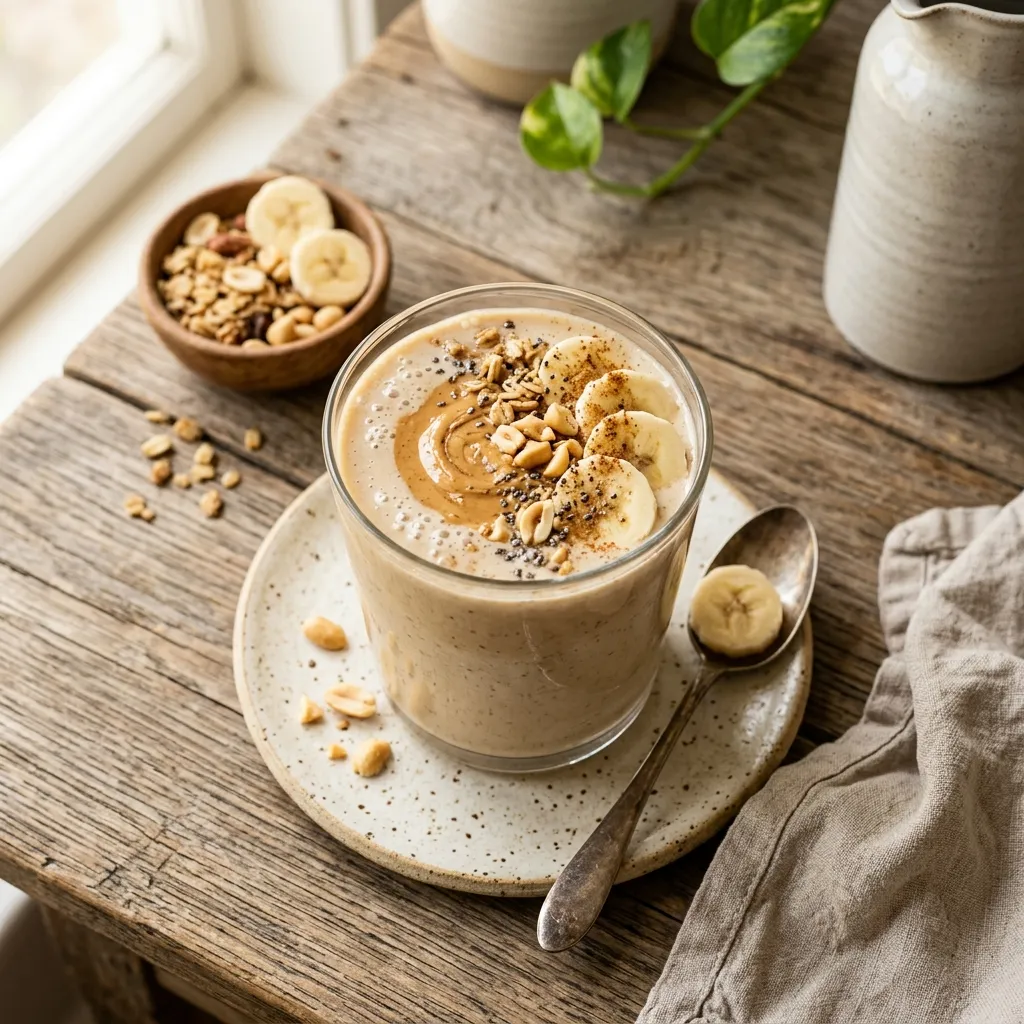
The peanut butter banana smoothie became a staple of American health-food culture in the 1970s and 1980s alongside the rise of blender technology and the fitness movement. The combination is chemically intelligent — banana's potassium and natural sugars provide rapid energy, while peanut butter's protein and fat slow the glycemic response, creating a sustained energy curve rather than a spike and crash. The result is a beverage that functions as a complete meal replacement with approximately 400-500 calories per serving. Peanut butter (ground roasted peanuts) is a uniquely American product — George Bayle began selling it as a paste in St. Louis in the 1890s, and by the mid-20th century it had become the country's most consumed nut butter. Commercially, it provides 7-8 grams of protein per 2-tablespoon serving, along with monounsaturated fats, vitamin E, and niacin. Combined with banana's B6, manganese, and resistant starch (in slightly green bananas), the smoothie covers a broad micronutrient range. From an Ayurvedic standpoint, this smoothie presents a common modern challenge: the combination of cold temperature, banana (heavy, sweet, cooling), and dairy creates a preparation that is deeply kapha-increasing and difficult for all but the strongest digestive fire. Ayurveda specifically cautions against combining bananas with milk — the two have conflicting digestive requirements and can create ama when consumed together. Understanding these dynamics allows for modifications that retain the nutritional benefits while improving digestive compatibility.
Strongly increases kapha through the combination of heavy, cold, sweet, and oily qualities from banana, peanut butter, and milk. Mixed effect on vata — the sweet taste and oily quality pacify, but the cold temperature aggravates. Mildly increases pitta through peanut butter's heating quality, though the overall cooling energy moderates this.
The high caloric density and complete macronutrient profile make this smoothie useful for weight gain protocols, post-workout recovery, and rebuilding after illness. The rapidly available carbohydrates from banana combined with slower-digesting peanut butter fat and protein provide both immediate and sustained nourishment. Best used therapeutically in warm, modified form rather than ice-cold.
Ingredients
- 2 large ripe bananas (frozen is ideal for thick texture)
- 3 tablespoons natural peanut butter (no added sugar or oil)
- 1.5 cups whole milk (or plant milk of choice)
- 1 tablespoon honey (optional, depending on banana ripeness)
- 0.5 teaspoon vanilla extract
- 0.25 teaspoon cinnamon
- 0.5 cup ice (omit if using frozen banana)
Instructions
- If using fresh bananas, peel, break into chunks, and freeze for at least 2 hours before making the smoothie. Frozen banana creates a thick, creamy texture without excess ice and provides a more concentrated sweetness as freezing breaks down cell walls and releases sugars.
- Add the milk to the blender first — placing liquid at the bottom ensures the blades engage properly and prevents the motor from straining against frozen ingredients. Add peanut butter, vanilla, cinnamon, and honey if using.
- Add the frozen banana chunks on top. If using fresh banana and ice, add both now. Frozen banana alone produces a thicker, more ice-cream-like consistency than the banana-plus-ice combination.
- Blend on high speed for 30-60 seconds until completely smooth. Stop and scrape down the sides once if needed. The smoothie should be uniformly thick with no visible chunks of banana or peanut butter. If it's too thick, add milk 1 tablespoon at a time. If too thin, add more frozen banana.
- Taste and adjust — if the bananas were very ripe (heavily spotted peel), you likely need no honey. If they were just ripe, a tablespoon of honey rounds out the flavor. A small pinch of salt enhances the peanut butter flavor significantly if your peanut butter is unsalted.
- Pour into glasses and serve immediately. Smoothies oxidize and separate within 20-30 minutes — the flavor and texture degrade noticeably if left standing. If you must prepare ahead, store in a sealed jar in the refrigerator and shake vigorously before drinking.
Nutrition
These values are estimates calculated from the ingredient list and may vary based on brands, cooking methods, and serving size. Not a substitute for medical or dietary advice.
How This Recipe Affects Each Dosha
Vata
This smoothie has a complex relationship with vata. The sweet taste, oily quality from peanut butter, and smooth texture are all vata-pacifying. However, the cold temperature is a direct vata aggravator — cold constricts the digestive tract and dampens agni, which is already variable in vata types. The combination of banana with milk is specifically cautioned against in Ayurveda as a viruddha ahara (incompatible food combination) that creates digestive toxins. The heaviness of the blended mixture can also overwhelm vata's light digestive capacity. Modifications are essential for vata types.
Pitta
Peanut butter is mildly heating and can irritate pitta's sensitive digestive tract, particularly when consumed in larger amounts. However, the cold temperature, sweet taste of banana, and cooling energy of milk all pacify pitta. The net effect is mildly pitta-pacifying in summer (when the cold temperature is appropriate) and neutral in winter. The banana-milk combination, while problematic from a digestive standpoint, does not specifically aggravate pitta. Pitta types with strong agni can handle this smoothie better than vata or kapha types.
Kapha
This is a strongly kapha-aggravating preparation. Every component contributes: banana is heavy, sweet, and cooling. Peanut butter is oily and heavy. Milk is heavy, sweet, and cool. The cold temperature further suppresses kapha's already sluggish digestion. The smooth, blended texture bypasses the chewing mechanism that signals satiety and stimulates digestive enzymes. Kapha types who drink this regularly will notice increased heaviness, congestion, and weight gain. The caloric density (400-500 calories) in liquid form is absorbed rapidly, contributing to kapha accumulation.
Cold, heavy, and sweet — this smoothie tends to suppress agni rather than stimulate it. The cold temperature constricts digestive secretion, the heavy qualities require significant effort to process, and the liquid format bypasses the cephalic phase of digestion (chewing, saliva production) that primes the stomach. Adding cinnamon and ginger helps counteract this suppressive effect. Individuals with strong agni (typically pitta types) handle this better than those with weak or variable agni.
Nourishes: rasamamsamedashukra
Adjustments by Constitution
For Vata Types
Make this smoothie warm instead of cold — use fresh banana (not frozen), warm milk heated with a pinch of saffron, and skip the ice entirely. Add 1/2 teaspoon each of cinnamon and cardamom plus a pinch of nutmeg to counteract the cold, heavy qualities. Replace milk with oat milk or almond milk to avoid the banana-milk incompatibility. Add 1 teaspoon of ghee for digestive lubrication. Drink at room temperature or slightly warm — never icy cold. This transforms the smoothie from vata-aggravating to vata-supportive.
For Pitta Types
Replace peanut butter with almond butter or sunflower seed butter for a cooler fat source. Use coconut milk instead of dairy for its pitta-pacifying cooling quality. Add 1 tablespoon of soaked dates instead of honey for gentle sweetness. Include a small handful of fresh mint leaves for additional cooling. Add 1/2 teaspoon of cardamom. This version can serve as a pitta-pacifying summer breakfast when agni is naturally lower and the body benefits from cooling hydration.
For Kapha Types
Replace banana with 1/2 cup of berries (astringent, lighter, less sweet). Use warm water or warm spiced almond milk instead of cold dairy. Reduce peanut butter to 1 tablespoon and add 1 teaspoon of raw honey (which is kapha-reducing when not heated). Add 1/2 teaspoon each of ginger powder, cinnamon, and a pinch of black pepper. Include 1 tablespoon of flaxseed for lighter fiber. Skip the ice entirely. This transforms the smoothie from a kapha bomb into a mildly stimulating, lighter breakfast beverage.
Seasonal Guidance
The cold, sweet, and heavy qualities are most appropriate during summer when the body seeks cooling and pitta needs pacifying. Less suitable in fall and winter when cold foods aggravate vata, and counterproductive in spring when kapha needs stimulation rather than further cooling and heaviness.
Best time of day: Best consumed in the morning between 8-10 AM when used as a breakfast replacement. The substantial caloric content provides energy for the morning. Avoid in the evening or late at night when agni is weakest — the cold, heavy qualities will sit undigested.
Cultural Context
The peanut butter banana smoothie sits at the intersection of American fitness culture and convenience eating. Its rise paralleled the jogging boom of the 1970s, the protein obsession of bodybuilding culture, and the American preference for meals that can be consumed while multitasking. Elvis Presley's famous affinity for peanut butter and banana sandwiches (fried in butter) predates the smoothie version and established the flavor combination in popular culture. The smoothie format reflects a distinctly modern American eating pattern — liquid meals consumed on the go, optimized for macronutrient ratios rather than the communal, multi-course meals of traditional food cultures.
Deeper Context
Origins
American smoothie tradition emerged from 1930s blender availability (Waring blender, 1937) and 1960s–70s health-food-movement popularization. Peanut-banana combinations on bread predate the smoothie — Elvis Presley's famous peanut-butter-and-banana sandwich (allegedly with bacon) is part of mid-20th-century American folk legend. The smoothie specifically is a post-blender phenomenon; its cultural peak is the 1990s and early 2000s fitness and wellness movements.
Food as Medicine
Functions effectively as a post-workout recovery drink — protein from peanut butter and milk, fast carbohydrates from banana and honey, electrolytes from the same sources. High potassium content supports cramp prevention for athletes. Used as a mass-gaining food for underweight athletes and as a meal-replacement smoothie across American fitness culture. The Ayurvedic concern about the banana-milk combination has not dampened its performance-nutrition popularity.
Ritual & Seasonal Role
Not ceremonial. Post-workout, breakfast-on-the-go, and pediatric nutrition. Year-round. Associated with gym culture, fitness brands, and millennial wellness branding. Rose sharply with the 2000s-2010s boom in home blender ownership (Vitamix, Blendtec) and the explosion of smoothie-bar chains during the same period.
Classical Pairings & Cautions
Pairs with oatmeal or toast as a complete breakfast; standalone as snack or post-workout recovery. Cautions: peanut allergies are severe and common; dairy sensitivity; the Ayurvedic viruddha ahara concern for habitual banana-milk consumption; banana allergies (rare); honey is contraindicated for infants under 12 months due to botulism risk; diabetic patients should watch the simple-sugar load.
Cross-Tradition View
How other medical and food-wisdom traditions read this dish. Each tradition names the same physiological reality in its own language — the agreements across them are where universal principles live.
Traditional Chinese Medicine
Peanut builds Yin and Lung fluids; banana is cool-sweet and moistens Lung and Intestine Yin; milk is cool-Yin-building; honey warms and tonifies Spleen. A Yin-moistening dish appropriate for dry-cough and weak-Lung patterns. The honey prevents the cold-dampness that plain banana-milk would generate. Post-workout and post-illness nutrition by TCM logic.
Greek Humoral
Cold-wet overall with honey providing the hot-wet corrective. Phlegmatic-leaning sanguine-building. Appropriate for hot-summer convalescent nutrition; less suited to winter use where the cold-dampness dominates and can aggravate phlegmatic-melancholic types.
Ayurveda
Cooling virya, sweet vipaka. A classical viruddha ahara concern — banana combined with milk is an incompatible pairing in traditional Ayurveda, where the cold-sweet qualities are believed to generate ama (toxins) through digestive stagnation. The honey does not fully correct this; Ayurvedic practitioners generally advise against the combination for habitual consumption. Acceptable as occasional post-workout food; problematic as daily fare.
Southeast Asian / Pacific
Banana, peanut, and coconut-milk combinations are common in Thai, Filipino, Indonesian, and Vietnamese dessert traditions. Pisang goreng (Indonesian fried banana with peanut sauce), chè chuối (Vietnamese banana pudding with peanut garnish), ginataang saging (Filipino banana in coconut milk) all use this ingredient triangle. The smoothie format is American post-blender (1930s–1950s), but the underlying ingredient combination is tropical Asian and predates the blender by centuries.
Chef's Notes
The quality of the peanut butter makes or breaks this smoothie. Use natural peanut butter with only peanuts and salt in the ingredient list — commercial brands with added sugar, hydrogenated oils, and stabilizers taste fundamentally different and add unnecessary processed ingredients. For an even richer smoothie, use almond butter or cashew butter. Adding 1 tablespoon of cocoa powder creates a chocolate peanut butter variation. A tablespoon of oats blended in adds fiber and makes the smoothie more satiating.
Frequently Asked Questions
Is Peanut Butter Banana Smoothie good for my dosha?
Strongly increases kapha through the combination of heavy, cold, sweet, and oily qualities from banana, peanut butter, and milk. Mixed effect on vata — the sweet taste and oily quality pacify, but the cold temperature aggravates. Mildly increases pitta through peanut butter's heating quality, though the overall cooling energy moderates this. This smoothie has a complex relationship with vata. Peanut butter is mildly heating and can irritate pitta's sensitive digestive tract, particularly when consumed in larger amounts. This is a strongly kapha-aggravating preparation.
When is the best time to eat Peanut Butter Banana Smoothie?
Best consumed in the morning between 8-10 AM when used as a breakfast replacement. The substantial caloric content provides energy for the morning. Avoid in the evening or late at night when agni is weakest — the cold, heavy qualities will sit undigested. The cold, sweet, and heavy qualities are most appropriate during summer when the body seeks cooling and pitta needs pacifying. Less suitable in fall and winter when cold foods aggravate vata, and coun
How can I adjust Peanut Butter Banana Smoothie for my constitution?
For Vata types: Make this smoothie warm instead of cold — use fresh banana (not frozen), warm milk heated with a pinch of saffron, and skip the ice entirely. Add 1/2 For Pitta types: Replace peanut butter with almond butter or sunflower seed butter for a cooler fat source. Use coconut milk instead of dairy for its pitta-pacifying c
What are the Ayurvedic properties of Peanut Butter Banana Smoothie?
Peanut Butter Banana Smoothie has sweet taste (rasa), cooling energy (virya), and sweet post-digestive effect (vipaka). Its qualities (gunas) are heavy,cold,oily,smooth. It nourishes rasa,mamsa,meda,shukra. Cold, heavy, and sweet — this smoothie tends to suppress agni rather than stimulate it. The cold temperature constricts digestive secretion, the heavy qualities require significant effort to process, and the liquid format bypasses the cephalic phase of digestion (chewing, saliva production) that primes the stomach. Adding cinnamon and ginger helps counteract this suppressive effect. Individuals with strong agni (typically pitta types) handle this better than those with weak or variable agni.