Margherita Pizza
Italian Recipe
Overview
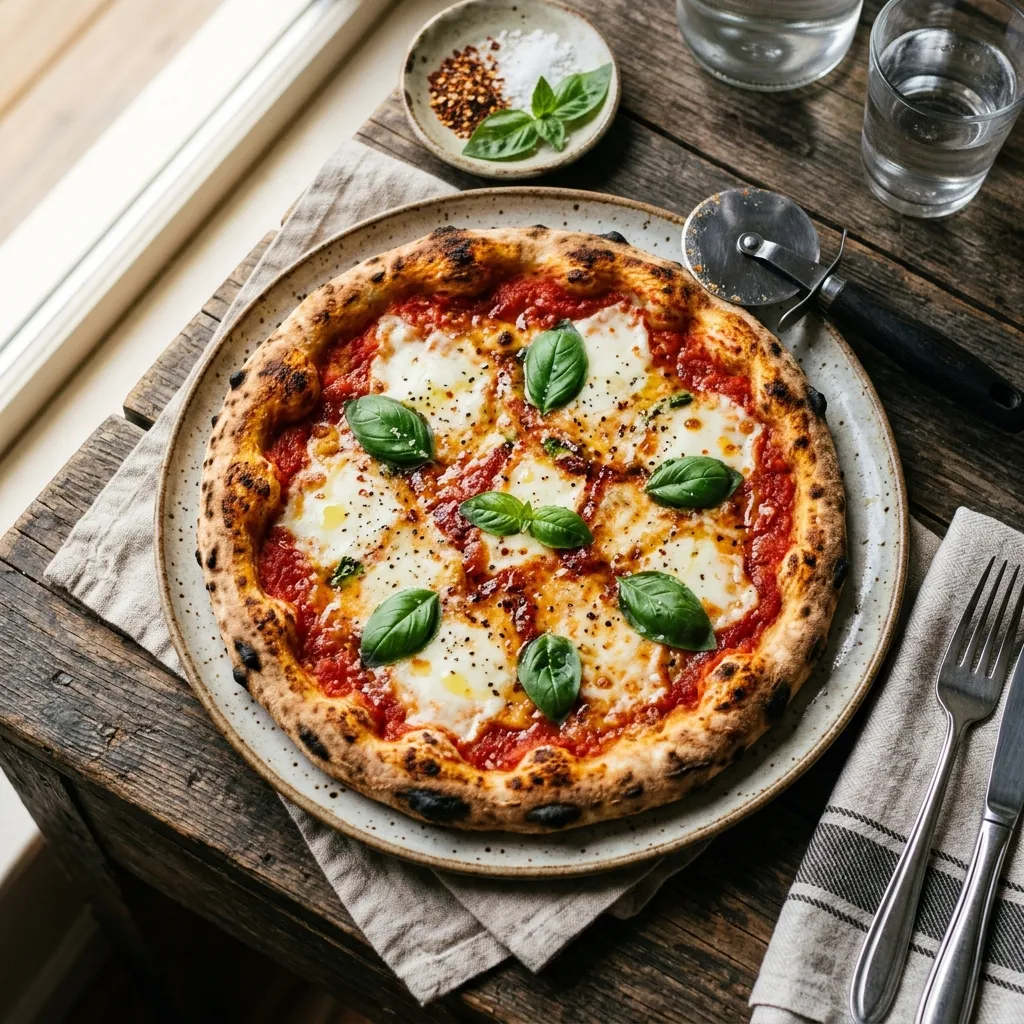
Margherita pizza was codified in Naples in 1889, when pizzaiolo Raffaele Esposito prepared three pizzas for Queen Margherita of Savoy. The version featuring tomato, mozzarella, and basil — mirroring the red, white, and green of the Italian flag — became the queen's favorite and took her name. Neapolitan pizza dough relies on a long, slow fermentation of high-protein flour, water, salt, and a small amount of yeast, producing a crust that is charred and blistered on the outside while remaining soft, pliable, and slightly chewy within. The brilliance of a Margherita lies in restraint. San Marzano tomatoes, crushed by hand and left uncooked, provide bright acidity. Fresh mozzarella di bufala or fior di latte melts into creamy pools. Basil leaves, torn and scattered after baking, contribute a peppery sweetness that ties the flavors together. There are no competing ingredients — each component must be excellent because there is nowhere to hide. Ayurvedically, this pizza combines the sweet and sour rasas of tomato with the heavy, cooling qualities of fresh cheese and the warm, pungent nature of basil and olive oil. The wheat crust adds grounding earth energy. The dish is moderately heavy and best enjoyed at midday when digestive fire peaks.
Balances Vata with its heavy, oily, warm qualities. Increases Kapha due to cheese and wheat. May increase Pitta if tomato and heat are excessive.
Ingredients
- 500 g Bread flour (tipo 00 if available) (high protein content)
- 325 ml Water (lukewarm)
- 10 g Fine sea salt
- 3 g Active dry yeast
- 2 tbsp Extra virgin olive oil
- 400 g San Marzano tomatoes (canned whole, crushed by hand)
- 300 g Fresh mozzarella (torn into pieces)
- 20 leaves Fresh basil leaves
- 1 clove Garlic (minced, optional)
- 1 pinch Flaky sea salt (for finishing)
Instructions
- Dissolve the yeast in lukewarm water and let it sit for 5 minutes until slightly foamy. Combine the flour and salt in a large bowl, pour in the yeast water, and mix until a shaggy dough forms. Turn out onto a clean surface and knead for 10-12 minutes until the dough is smooth, elastic, and springs back when poked.
- Coat the dough lightly with olive oil, place it in a bowl, and cover with a damp towel. Let it rise at room temperature for at least 2 hours, or refrigerate overnight for a slow fermentation that develops more complex flavor. If cold-proofed, bring the dough to room temperature 1 hour before shaping.
- Preheat your oven to its maximum temperature — 500-550F / 260-290C — with a pizza stone or inverted baking sheet on the middle rack for at least 30 minutes.
- Divide the dough into 4 equal balls. On a lightly floured surface, press each ball into a round, working from the center outward while leaving a slightly thicker rim. Stretch to about 10-12 inches. Do not use a rolling pin — hand-stretching preserves the air pockets in the crust.
- Crush the San Marzano tomatoes by hand into a bowl, discarding the hard core. Add a pinch of salt and the minced garlic if using. Do not cook the sauce — raw crushed tomatoes are traditional for Margherita.
- Spread a thin layer of the crushed tomato over each dough round, leaving a 1-inch border. Less is more — the pizza should not be swimming in sauce.
- Distribute torn mozzarella pieces evenly over the tomato. Drizzle lightly with olive oil.
- Transfer the pizza to the preheated stone (use a well-floured peel or parchment paper) and bake for 8-12 minutes until the crust is deeply golden with charred spots and the cheese is bubbling and beginning to brown.
- Remove from the oven, scatter fresh basil leaves over the top, finish with a drizzle of olive oil and a pinch of flaky salt. Slice and serve immediately.
Nutrition
These values are estimates calculated from the ingredient list and may vary based on brands, cooking methods, and serving size. Not a substitute for medical or dietary advice.
How This Recipe Affects Each Dosha
Vata
The combination of wheat dough, cheese, and olive oil provides the heavy, grounding, oily qualities that Vata craves. The warm temperature and soft interior texture are soothing. The sour quality of tomato stimulates appetite and digestion. This is a good Vata-calming meal when eaten warm at midday.
Pitta
Tomato is heating and sour, which can aggravate Pitta. Wheat and cheese are generally well tolerated, but the high oven temperature and the pungent nature of fresh basil add subtle heat. Pitta types should eat this in moderation, avoiding additional hot toppings.
Kapha
This is a challenging dish for Kapha — wheat creates heaviness, cheese increases mucus and congestion, and the overall density of the meal slows digestion. The lack of pungent or bitter tastes means there is little to counterbalance the heavy, sticky qualities.
Moderate — the simplicity of ingredients makes this easier to digest than heavily topped pizzas, but the combination of wheat and dairy is still demanding on agni. The olive oil and basil provide mild digestive support.
Nourishes: Rasa (plasma), Mamsa (muscle), Meda (fat), Asthi (bone)
Adjustments by Constitution
For Vata Types
Add roasted garlic and a drizzle of truffle oil for extra richness. Use a slightly thicker crust for more grounding energy. Pair with a warm soup like minestrone to create a more complete, balancing meal.
For Pitta Types
Replace tomato sauce with a pesto made from basil, pine nuts, and olive oil — this eliminates the heating sour element. Use less mozzarella. Add arugula after baking for its bitter, cooling quality. Avoid adding garlic.
For Kapha Types
Make the crust as thin as possible or substitute a cauliflower-based crust. Use goat cheese instead of mozzarella — it is lighter and less mucus-forming. Add plenty of peppery arugula, fresh cracked black pepper, and chili flakes to stimulate agni.
Seasonal Guidance
Best in cooler months when the body can handle heavier, denser foods and agni is naturally stronger. In summer, the heating tomato combined with dense cheese can create excess internal heat. During spring, the heavy and oily qualities may exacerbate Kapha congestion.
Best time of day: Lunch, when agni is at its peak and the body can fully process the wheat and dairy combination
Cultural Context
Neapolitan pizza has UNESCO Intangible Cultural Heritage status, recognized in 2017. The Associazione Verace Pizza Napoletana, founded in 1984, certifies pizzerias worldwide that adhere to traditional methods. In Naples, pizza was historically street food sold by vendors from open-air stalls — not the sit-down restaurant experience it became elsewhere. The Margherita's origin story, while possibly embellished, captures a real moment: the democratization of a peasant food through royal endorsement.
Deeper Context
Origins
Pizza Margherita was created in 1889 at Pizzeria Brandi in Naples by pizzaiolo Raffaele Esposito for Queen Margherita of Savoy during her visit to Naples. The story credits Esposito with creating three pizzas for the Queen, with the tricolore version winning her favor. The dish received EU Traditional Specialty Guaranteed (STG) protection in 2009, legally defining Pizza Napoletana's ingredients, preparation, and wood-fire baking requirements. UNESCO declared Neapolitan pizzaiolo art an Intangible Cultural Heritage in 2017.
Food as Medicine
The Mediterranean-diet ingredient architecture (flour, tomato, cheese, olive oil, basil) has accumulated substantial clinical research support through studies like Predimed (2013) and the Seven Countries Study (1958-1999). San Marzano tomatoes have particularly high lycopene concentration; fior di latte mozzarella provides calcium and probiotic content. The wood-fire baking method creates high-heat crust development that preserves more flavor compounds than lower-temperature baking.
Ritual & Seasonal Role
Year-round everyday food across Italy and globally. Not religiously ceremonial but deeply tied to Italian national identity and to Neapolitan regional culture. Certified Pizza Napoletana preparation remains the global gold standard for authentic Italian pizza, with certified pizzerias worldwide displaying STG credentials.
Classical Pairings & Cautions
A light Italian lager (Peroni, Moretti), Chianti or Aglianico, bottled water with lemon. Cautions: gluten intolerance precludes traditional wood-fire crust; lactose sensitivity; Kapha mild aggravation; tomato nightshade-family sensitivity; the commercial American pizza variant (high-sodium, processed cheese, refined crust) differs substantially from authentic Neapolitan preparation in both ingredients and nutritional profile.
Cross-Tradition View
How other medical and food-wisdom traditions read this dish. Each tradition names the same physiological reality in its own language — the agreements across them are where universal principles live.
Traditional Chinese Medicine
Bread flour is Spleen-Qi-tonifying; San Marzano tomatoes are cool-sour and move Liver Qi; fresh mozzarella is Yin-building; basil is warm-aromatic and disperses stagnation; olive oil is cool-moistening. A balanced Yin-and-Qi building preparation with Liver-Qi-moving accent — TCM physicians would class this as appropriate everyday food across constitutional types.
Greek Humoral
Hot-wet sanguine-building with cold-wet tomato balance. Classical Galenic Mediterranean food — the combination of baked grain, fresh cheese, tomato, and olive oil is precisely the Mediterranean-diet architecture that clinical research has validated for cardiovascular benefit.
Ayurveda
Heating virya, sweet vipaka. Mild Pitta aggravation from tomato-cheese-heat combination; Kapha mildly aggravated through cheese-and-bread heaviness; Vata-pacifying through warmth and unctuousness. A relatively balanced pizza variant by Ayurvedic standards — the Margherita is the dosha-gentlest pizza in the Italian canon.
Naples (1889)
Created in 1889 at Pizzeria Brandi in Naples by Raffaele Esposito for Queen Margherita of Savoy during her visit to Naples. The red-white-green color scheme (San Marzano tomato, fior di latte mozzarella, basil) deliberately echoes the Italian flag, and the pizza was named in the Queen's honor after she expressed approval. Pizza Napoletana received Specialità Tradizionale Garantita (STG) European protection in 2009, specifying wood-fired baking, San Marzano tomatoes, and Campanian mozzarella.
Chef's Notes
The single most important variable is oven temperature — the hotter, the better. A home oven at its maximum with a preheated stone will produce good results; a dedicated pizza oven reaching 800F+ produces the authentic 90-second Neapolitan char. If your mozzarella is very wet, slice it and drain on paper towels for 20 minutes before topping. Use the best olive oil you have for finishing — its flavor is fully exposed on the hot pizza. Dough can be made in bulk and frozen after the first rise; thaw overnight in the refrigerator.
Frequently Asked Questions
Is Margherita Pizza good for my dosha?
Balances Vata with its heavy, oily, warm qualities. Increases Kapha due to cheese and wheat. May increase Pitta if tomato and heat are excessive. The combination of wheat dough, cheese, and olive oil provides the heavy, grounding, oily qualities that Vata craves. Tomato is heating and sour, which can aggravate Pitta. This is a challenging dish for Kapha — wheat creates heaviness, cheese increases mucus and congestion, and the overall density of the meal slows digestion.
When is the best time to eat Margherita Pizza?
Lunch, when agni is at its peak and the body can fully process the wheat and dairy combination Best in cooler months when the body can handle heavier, denser foods and agni is naturally stronger. In summer, the heating tomato combined with dense cheese can create excess internal heat. During sp
How can I adjust Margherita Pizza for my constitution?
For Vata types: Add roasted garlic and a drizzle of truffle oil for extra richness. Use a slightly thicker crust for more grounding energy. Pair with a warm soup like For Pitta types: Replace tomato sauce with a pesto made from basil, pine nuts, and olive oil — this eliminates the heating sour element. Use less mozzarella. Add arugu
What are the Ayurvedic properties of Margherita Pizza?
Margherita Pizza has Sweet, Sour, Pungent taste (rasa), Heating energy (virya), and Sweet post-digestive effect (vipaka). Its qualities (gunas) are Heavy, Oily, Warm. It nourishes Rasa (plasma), Mamsa (muscle), Meda (fat), Asthi (bone). Moderate — the simplicity of ingredients makes this easier to digest than heavily topped pizzas, but the combination of wheat and dairy is still demanding on agni. The olive oil and basil provide mild digestive support.