Kisir
Turkish Recipe
Overview
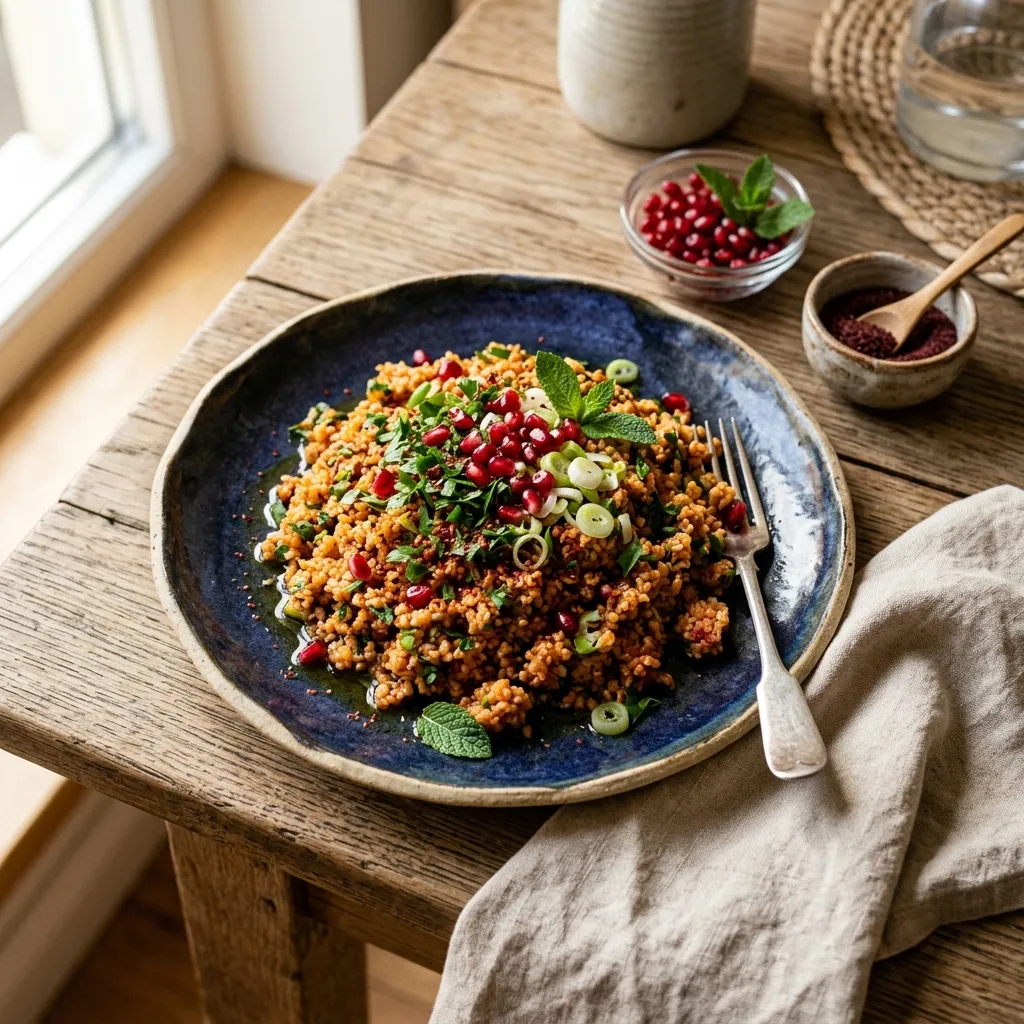
Kisir is Turkey's bulgur salad — fine-grain bulgur wheat rehydrated with hot water and tomato-pepper paste, then tossed with fresh herbs, spring onions, pomegranate molasses, and lemon juice. It is the Turkish cousin of Lebanese tabbouleh, but denser, more robustly spiced, and centered on the grain rather than the herbs. Where tabbouleh is a parsley salad with some bulgur, kisir is a bulgur salad studded with herbs and vegetables. The technique relies on the bulgur absorbing flavored liquid rather than plain water. Hot water mixed with tomato paste and pepper paste (biber salcasi) is poured over fine bulgur, covered, and left to steam until the grains swell and turn red-tinged. Once cooled, the dressed bulgur is combined with handfuls of chopped parsley, mint, scallions, tomatoes, and cucumber. Pomegranate molasses provides a sweet-tart depth that distinguishes kisir from every other grain salad. Ayurvedically, bulgur wheat is warming, heavy, and sweet — a Kapha-increasing grain for most people. However, the generous acid from lemon and pomegranate molasses, the pungent spices, and the fresh herbs lighten the overall effect considerably. This is a dish of contrasts: the heavy grain balanced by sharp, cutting flavors.
The grain base builds Kapha mildly, but the generous acid, pungent spices, and raw herbs counterbalance substantially. Most suitable for Vata and Pitta when fresh herbs and lemon dominate, and for Kapha when the spice level is increased.
Ingredients
- 1.5 cups Fine bulgur wheat
- 1.5 cups Boiling water
- 2 tbsp Tomato paste
- 1 tbsp Red pepper paste (biber salcasi)
- 3 tbsp Olive oil
- 2 tbsp Pomegranate molasses
- 3 tbsp Lemon juice
- 1 cup Flat-leaf parsley (finely chopped)
- 1/2 cup Fresh mint (finely chopped)
- 4 stalks Spring onions (thinly sliced)
- 1 medium Tomato (finely diced)
- 1/2 medium Cucumber (finely diced)
- 1 tsp Aleppo pepper flakes
- 1/2 tsp Cumin
- 1 tsp Salt
Instructions
- Dissolve the tomato paste and red pepper paste in the boiling water. Pour over the fine bulgur in a large bowl. Stir once, cover tightly with plastic wrap or a plate, and let steam for 15 minutes until all liquid is absorbed.
- Uncover and fluff the bulgur with a fork, breaking up any clumps. Let cool to room temperature.
- Add the olive oil, pomegranate molasses, lemon juice, Aleppo pepper, cumin, and salt. Mix thoroughly, ensuring the dressing coats every grain.
- Add the chopped parsley, mint, spring onions, diced tomato, and cucumber. Toss gently to combine without crushing the vegetables.
- Taste and adjust seasoning — it should be tangy, slightly spicy, and herbaceous. Add more lemon juice or pomegranate molasses as needed.
- Let the kisir rest for at least 10 minutes before serving to allow flavors to meld. Serve at room temperature, scooped onto lettuce leaves or alongside grilled meats.
Nutrition
These values are estimates calculated from the ingredient list and may vary based on brands, cooking methods, and serving size. Not a substitute for medical or dietary advice.
How This Recipe Affects Each Dosha
Vata
Bulgur is warming and nourishing, but its dry quality can aggravate Vata. The olive oil provides some oleation, and the lemon juice aids nutrient absorption. Vata types should eat this at room temperature rather than cold and in moderate portions alongside something warm and moist.
Pitta
The sour notes from pomegranate molasses, lemon, and tomato can provoke Pitta, but the cooling fresh herbs — particularly mint — and the cucumber provide counterbalance. Moderate the Aleppo pepper and increase the mint for Pitta constitutions.
Kapha
The light, dry, pungent qualities of the dressing work in Kapha's favor, cutting through the inherent heaviness of the wheat. The fresh herbs and vegetables add lightness. This is one of the more Kapha-appropriate grain dishes when the spice level is generous.
The combination of sour and pungent tastes activates digestive secretions. The bulgur's pre-processing (parboiling and cracking during manufacture) makes it easier to digest than whole wheat berries, and the acid dressing further aids breakdown.
Nourishes: Rasa (plasma), Mamsa (muscle)
Adjustments by Constitution
For Vata Types
Increase olive oil to 4 tablespoons and add a tablespoon of toasted sesame oil. Include diced avocado for creaminess and oleation. Serve at room temperature rather than cold, alongside warm soup or cooked vegetables.
For Pitta Types
Reduce Aleppo pepper to 1/4 teaspoon and omit cumin. Increase the mint to 3/4 cup and add fresh dill. Replace some of the lemon juice with lime juice for a slightly less sour profile. Add extra cucumber for cooling.
For Kapha Types
Add extra Aleppo pepper and black pepper. Include raw radishes for extra pungency. Reduce olive oil to 1 tablespoon. Serve as a small side rather than a main course, and pair with grilled lean protein.
Seasonal Guidance
Best during warmer months when room-temperature grain salads are appealing and fresh herbs and tomatoes are at peak quality. In winter, the cold serving temperature makes it less appropriate — switch to warm bulgur pilafs instead.
Best time of day: Lunch or as a meze alongside dinner. Suitable as a light standalone lunch with lettuce wraps.
Cultural Context
Kisir originates in the southeastern Anatolian and Hatay regions, where bulgur is the daily grain and pomegranate molasses is a pantry staple. It shares roots with the broader Levantine tradition of bulgur salads but has developed distinctly Turkish characteristics through the use of biber salcasi (pepper paste) and the pomegranate-heavy dressing. In Turkish communal eating culture, kisir is a fixture of meze spreads, picnics, and celebrations. Every household has a preferred ratio of acid to spice, and family recipes are passed through generations with the same seriousness as a grandmother's soup recipe.
Deeper Context
Origins
Kisir is Turkish Southeastern cuisine (Gaziantep, Şanlıurfa, Antakya-Hatay regions) with close relationships to Lebanese tabbouleh and broader Levantine grain-salad tradition. Distinction from tabbouleh: Turkish kisir is bulgur-dominant (where Lebanese tabbouleh is parsley-dominant), uses pomegranate molasses and tomato paste, and features Aleppo pepper prominently. The dish reflects the shared Turkish-Syrian-Lebanese cultural continuity of the greater Levant before modern national boundaries.
Food as Medicine
Bulgur is whole-grain (higher fiber and B-vitamins than refined wheat). Pomegranate molasses concentrates punicalagin and other polyphenols with cardiovascular-supporting research. Parsley provides vitamin K, iron, and folate. Aleppo pepper offers capsaicinoids with metabolic support. Lemon vitamin C. A therapeutically-dense Mediterranean-diet template salad.
Ritual & Seasonal Role
Meze-array staple year-round. Ramadan iftar tables. Turkish Southeastern celebration meals. Not religiously ceremonial but deeply tied to Southeastern Turkish regional identity.
Classical Pairings & Cautions
Romaine leaves (for scooping), additional Turkish meze, grilled meat or chicken. Ayran or Turkish tea. Cautions: gluten intolerance precludes bulgur (quinoa or millet substitutions work imperfectly); citric aggravation in GERD and peptic ulcer; capsaicin sensitivity from Aleppo pepper; FODMAP issues from onion and garlic (if included).
Cross-Tradition View
How other medical and food-wisdom traditions read this dish. Each tradition names the same physiological reality in its own language — the agreements across them are where universal principles live.
Traditional Chinese Medicine
Bulgur wheat is Spleen-Qi-tonifying; pomegranate molasses is sour-cool and moves Liver Qi; parsley is cool and supports Liver; lemon moves Liver Qi; Aleppo pepper is warm-pungent. A Qi-building Liver-Qi-moving preparation — TCM physicians would class kisir as appropriate everyday salad across constitutional types.
Greek Humoral
Neutral temperament with balanced warming-cooling accents. Galenic-suitable complete-salad.
Ayurveda
Neutral virya, sweet vipaka. Pacifies Pitta through the herbs-and-sour combination. Mild Kapha aggravation through bulgur density. Vata mildly aggravated through raw herb content, balanced by the cooked-bulgur base.
Turkish Southeastern Levantine
Kisir is Turkish Southeastern (Gaziantep, Şanlıurfa, Hatay) cuisine, closely related to Levantine tabbouleh but with distinct regional character. Where Lebanese tabbouleh is parsley-dominant with minimal bulgur, Turkish kisir is bulgur-dominant with substantial tomato paste and pomegranate molasses. The pomegranate-molasses (nar ekşisi) and Aleppo pepper (pul biber) together mark the distinctly Southeastern Turkish character — both ingredients are PDO-adjacent regional specialties.
Chef's Notes
Fine bulgur is essential — medium or coarse grades will not absorb the liquid properly and the texture will be gritty rather than fluffy. The pomegranate molasses is non-negotiable; it provides the sweet-sour backbone that defines the dish. Kisir improves over several hours and is an ideal make-ahead dish for gatherings. In southeastern Turkey, cooks wrap spoonfuls of kisir in individual lettuce or grape leaves for elegant meze presentations. Store refrigerated for up to 3 days — the flavor deepens as it sits.
Frequently Asked Questions
Is Kisir good for my dosha?
The grain base builds Kapha mildly, but the generous acid, pungent spices, and raw herbs counterbalance substantially. Most suitable for Vata and Pitta when fresh herbs and lemon dominate, and for Kapha when the spice level is increased. Bulgur is warming and nourishing, but its dry quality can aggravate Vata. The sour notes from pomegranate molasses, lemon, and tomato can provoke Pitta, but the cooling fresh herbs — particularly mint — and the cucumber provide counterbalance. The light, dry, pungent qualities of the dressing work in Kapha's favor, cutting through the inherent heaviness of the wheat.
When is the best time to eat Kisir?
Lunch or as a meze alongside dinner. Suitable as a light standalone lunch with lettuce wraps. Best during warmer months when room-temperature grain salads are appealing and fresh herbs and tomatoes are at peak quality. In winter, the cold serving temperature makes it less appropriate — switch
How can I adjust Kisir for my constitution?
For Vata types: Increase olive oil to 4 tablespoons and add a tablespoon of toasted sesame oil. Include diced avocado for creaminess and oleation. Serve at room tempe For Pitta types: Reduce Aleppo pepper to 1/4 teaspoon and omit cumin. Increase the mint to 3/4 cup and add fresh dill. Replace some of the lemon juice with lime juice
What are the Ayurvedic properties of Kisir?
Kisir has Sour, Pungent, Sweet, Astringent taste (rasa), Neutral energy (virya), and Sweet post-digestive effect (vipaka). Its qualities (gunas) are Light, Dry, Warm. It nourishes Rasa (plasma), Mamsa (muscle). The combination of sour and pungent tastes activates digestive secretions. The bulgur's pre-processing (parboiling and cracking during manufacture) makes it easier to digest than whole wheat berries, and the acid dressing further aids breakdown.