Kimchi Jjigae
Korean Recipe
Overview
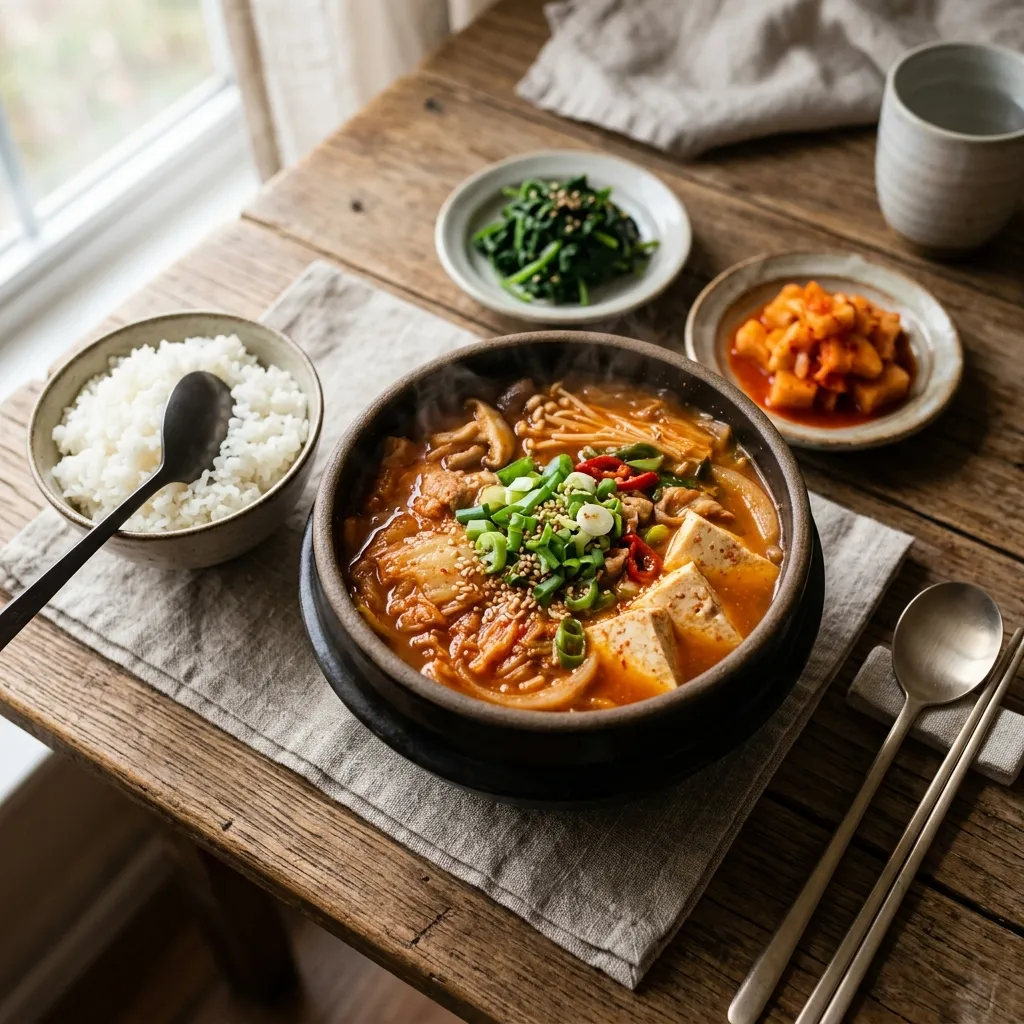
Kimchi jjigae is a fiery Korean stew built from aged kimchi, pork belly, tofu, and gochugaru (Korean red pepper flakes), simmered in an anchovy or kelp broth until the flavors meld into something greater than its components. The dish is Korean home cooking at its most fundamental — every household has its own version, and the quality depends almost entirely on the kimchi itself. Well-fermented kimchi (3+ months old, sour and funky) produces a markedly better stew than fresh kimchi because the lactic acid and complex fermentation byproducts create depth that no amount of seasoning can replicate. Kimchi jjigae is the logical answer to what Koreans do with kimchi that has aged past its prime for eating raw. As kimchi ferments and becomes increasingly sour, it transitions from banchan (side dish) to cooking ingredient. The stew emerged as a way to extract maximum value from this preserved food, and it remains among the top three meals eaten weekly in Korean households — surveys consistently rank it among the top three dishes Koreans eat weekly. Ayurvedically, this is a complex, heating stew. Fermented kimchi introduces the sour taste in its most potent form — lacto-fermented vegetables carry probiotic organisms alongside their sour rasa. The gochugaru provides pungent heat, pork belly adds heavy, oily nourishment, and the soft tofu contributes sweet, cooling balance. The broth base ties everything together with salty depth. Five of six tastes are present, with pungent and sour dominating.
Strongly kindles agni and stimulates digestion. Pacifies Kapha with intense pungency and heat. May aggravate Pitta due to sour fermented kimchi and chili heat. Mildly pacifies Vata through warmth and oiliness.
Fermented kimchi provides probiotic organisms that support gut health, while the intensely heating spice profile makes this stew effective for clearing congestion, stimulating sluggish digestion, and warming the body during cold weather.
Ingredients
- 2 cups Aged kimchi (well-fermented and sour, roughly chopped)
- 200 g Pork belly (thinly sliced)
- 1 block Soft tofu (300g, cut into large cubes)
- 1/4 cup Kimchi brine (from the kimchi jar)
- 1 tbsp Gochugaru (Korean red pepper flakes)
- 1 tbsp Gochujang (Korean red pepper paste)
- 4 cloves Garlic (minced)
- 3 stalks Scallions (cut into 2-inch pieces)
- 1 tbsp Sesame oil
- 2 cups Anchovy-kelp stock (or plain water)
- 1 tsp Sugar (to balance acidity)
- 4 cups Steamed rice (for serving)
Instructions
- Heat sesame oil in a heavy pot or Korean ttukbaegi (stone pot) over medium-high heat. Add the pork belly slices and cook until the fat renders and the edges begin to brown, about 3-4 minutes.
- Add the chopped kimchi to the pork and stir-fry together for 3-4 minutes. The kimchi should soften slightly and absorb the rendered pork fat — this step deepens the flavor dramatically compared to adding raw kimchi to broth.
- Add minced garlic, gochugaru, and gochujang. Stir for 1 minute until the paste coats everything and becomes fragrant.
- Pour in the anchovy-kelp stock and kimchi brine. Bring to a boil, then reduce to a vigorous simmer. Cook uncovered for 15-18 minutes until the broth concentrates and the pork is fully tender.
- Gently slide the tofu cubes into the stew without breaking them. Push them below the surface so they absorb the broth. Simmer for another 5 minutes.
- Taste the broth and adjust: add sugar if too sour, fish sauce or salt if not savory enough, more gochugaru if not spicy enough. The stew should be assertively sour, spicy, and deeply savory — it is meant to be bold.
- Add the scallion pieces in the last minute of cooking. Serve the jjigae bubbling hot — ideally still boiling in the stone pot — alongside steamed white rice.
Nutrition
These values are estimates calculated from the ingredient list and may vary based on brands, cooking methods, and serving size. Not a substitute for medical or dietary advice.
How This Recipe Affects Each Dosha
Vata
The warm, oily, heavy qualities from pork belly and sesame oil provide grounding for Vata. The sour kimchi stimulates appetite and digestion. However, the intense sourness of well-fermented kimchi can aggravate Vata's tendency toward anxiety and overstimulation if consumed in large quantities. The tofu adds cooling, stabilizing sweet rasa.
Pitta
Kimchi jjigae is challenging for Pitta on multiple fronts: the fermented sourness increases Pitta directly, the gochugaru and gochujang add heating pungency, and the pork belly's rich fat can trigger inflammation. Pitta types will often experience heartburn, skin flushing, or irritability after eating this stew, particularly in warm weather.
Kapha
This stew is medicinal for Kapha. The intense pungency of gochugaru and gochujang cuts through congestion and stagnation. The sour fermented kimchi stimulates sluggish Kapha digestion. The warm broth and heating spices mobilize stagnant fluids. Even the pork belly's richness is partially offset by the metabolic fire the spices generate.
Kimchi jjigae is one of the most powerful agni-kindling dishes in Korean cuisine. The combination of fermented sour (kimchi), pungent heat (gochugaru), and aromatic compounds (garlic, sesame) stimulates every aspect of digestive fire. The fermented vegetables also support gut flora, which modern nutrition links to efficient nutrient absorption.
Nourishes: Rasa (plasma), Rakta (blood), Mamsa (muscle), Meda (fat)
Adjustments by Constitution
For Vata Types
Use less-aged kimchi (1-2 weeks old) for milder sourness. Increase the tofu and reduce pork belly. Add a tablespoon of ghee or butter for additional unctuousness that Vata needs. Serve with an extra portion of warm rice to buffer the intensity. Eat slowly and in moderate quantity.
For Pitta Types
Replace pork belly with chicken breast or shrimp for a less heating protein. Use mild kimchi and reduce gochugaru by half. Increase the tofu, which cools the overall stew. Add sliced zucchini or mushrooms for bulk without heat. Serve with cooling cucumber banchan on the side.
For Kapha Types
Omit the pork belly entirely and use extra-firm tofu or lean chicken. Increase gochugaru and add fresh garlic generously. Use water instead of rich stock to keep the broth light. Reduce the rice serving or substitute with barley. Add mushrooms and leafy greens for lightness.
Seasonal Guidance
Kimchi jjigae thrives in the cold months — Korean families eat it most frequently between November and March when the heating qualities are welcome and necessary. In spring, lighter versions with less pork are appropriate. Avoid in summer heat, when the stew's thermal intensity compounds seasonal Pitta aggravation.
Best time of day: Lunch or dinner — the robust flavors and heavy broth pair best with a full meal accompanied by rice and banchan
Cultural Context
Kimchi jjigae is the edible center of Korean domestic life. It appears on the table more often than any other cooked dish, and it is the first thing many Korean university students learn to cook when living alone. The stew's existence is inseparable from the kimjang tradition — the annual autumn kimchi-making ritual where families prepare hundreds of pounds of kimchi for the winter. As that kimchi ages through the cold months, increasingly sour batches get routed into jjigae. The dish is comfort food in the deepest sense: warm, familiar, unchanging, and connected to the rhythm of Korean seasonal food preservation.
Deeper Context
Origins
Kimchi-jjigae crystallized as a distinct dish during the 20th century as surplus aged kimchi became a starting ingredient for warming winter stews. The Korean kimjang tradition (annual autumn kimchi-making) produces substantial kimchi storage that eventually becomes too sour for eating plain — kimchi-jjigae repurposes this aged kimchi into a Korean winter staple. The dish became globally recognized through 2000s-2010s Korean restaurant expansion and Korean Wave (hallyu) cultural export.
Food as Medicine
Fermented kimchi provides substantial lactobacillus probiotic content with modern research support for gut-microbiome, metabolic, and immune benefits. Pork belly contributes fat-soluble vitamins and complete protein. Tofu adds complete plant protein and calcium. Gochugaru capsaicin content supports metabolic rate and mucus clearing. A genuinely therapeutic winter preparation, particularly for cold-damp climates.
Ritual & Seasonal Role
Winter peak, though year-round in Korean households. Kimjang (autumn kimchi-making, November) produces kimchi that eventually becomes kimchi-jjigae by late winter/early spring. Not religiously ceremonial but deeply tied to Korean seasonal food-preservation cycle.
Classical Pairings & Cautions
Rice, banchan side dishes, soju. Cautions: religious pork restrictions; substantial sodium load from kimchi and pork; Pitta aggravation substantial in sensitive or hot-weather contexts; soy allergies through tofu; capsaicin for GERD and peptic ulcer; histamine content in aged kimchi may affect histamine-intolerant patients.
Cross-Tradition View
How other medical and food-wisdom traditions read this dish. Each tradition names the same physiological reality in its own language — the agreements across them are where universal principles live.
Traditional Chinese Medicine
Kimchi is warming and dispersing through fermentation and chili content, providing substantial probiotic density; pork belly is Yin-building and fatty-nourishing; tofu builds Yin; gochugaru (Korean chili flakes) is hot-pungent and disperses cold; sesame oil is warm-moistening. A Qi-moving Yin-building preparation with aggressive dispersing heat — TCM physicians would class this as winter cold-damp-clearing restoration food.
Greek Humoral
Hot-wet with hot-dry correction. Choleric-sanguine balance. A Galenic winter-warming preparation — the fermented-chili-plus-pork-plus-tofu architecture provides Hippocratic-endorsed warming substantial nutrition for cold-damp climates.
Ayurveda
Heating virya, pungent vipaka. Pacifies Vata through warmth, protein, and unctuousness. Aggravates Pitta substantially through the fermented-chili and pork combination. Kapha-reducing strongly through the dispersing-warming heat. A classical Vata-restoration dish with Pitta caution.
Sasang Korean Medicine
Korean Sasang constitutional medicine (founded by Lee Je-ma in 1894) classifies four body types (Tae-yang, Tae-eum, So-yang, So-eum) and recommends specific foods for each. Fermented kimchi-jjigae suits Tae-eum (phlegm-damp) and So-eum (cold-deficient) constitutions particularly well, providing warming-dispersing support. So-yang (fire-excess) types are specifically cautioned against this dish. Sasang medicine's explicit constitutional food guidance makes Korean traditional cookery unusually systematic among East Asian cuisines.
Chef's Notes
The single most important variable is the kimchi. Freshly made kimchi will produce a bland, one-dimensional stew. You need kimchi that has fermented for at least 3 weeks, ideally 2-3 months — it should smell strongly sour and funky. Many Korean cooks deliberately set aside kimchi specifically for jjigae-making, aging it past the point of pleasant raw eating. If cooking in a ttukbaegi (stone pot), the stew stays boiling at the table for several minutes after being removed from heat, which is the traditional presentation. Leftover jjigae is even better the second day after the flavors have fully melded.
Frequently Asked Questions
Is Kimchi Jjigae good for my dosha?
Strongly kindles agni and stimulates digestion. Pacifies Kapha with intense pungency and heat. May aggravate Pitta due to sour fermented kimchi and chili heat. Mildly pacifies Vata through warmth and oiliness. The warm, oily, heavy qualities from pork belly and sesame oil provide grounding for Vata. Kimchi jjigae is challenging for Pitta on multiple fronts: the fermented sourness increases Pitta directly, the gochugaru and gochujang add heating pungency, and the pork belly's rich fat can trigger inflammation. This stew is medicinal for Kapha.
When is the best time to eat Kimchi Jjigae?
Lunch or dinner — the robust flavors and heavy broth pair best with a full meal accompanied by rice and banchan Kimchi jjigae thrives in the cold months — Korean families eat it most frequently between November and March when the heating qualities are welcome and necessary. In spring, lighter versions with less
How can I adjust Kimchi Jjigae for my constitution?
For Vata types: Use less-aged kimchi (1-2 weeks old) for milder sourness. Increase the tofu and reduce pork belly. Add a tablespoon of ghee or butter for additional u For Pitta types: Replace pork belly with chicken breast or shrimp for a less heating protein. Use mild kimchi and reduce gochugaru by half. Increase the tofu, which co
What are the Ayurvedic properties of Kimchi Jjigae?
Kimchi Jjigae has Sour, Pungent, Salty, Sweet taste (rasa), Heating energy (virya), and Pungent post-digestive effect (vipaka). Its qualities (gunas) are Warm, Oily, Heavy. It nourishes Rasa (plasma), Rakta (blood), Mamsa (muscle), Meda (fat). Kimchi jjigae is one of the most powerful agni-kindling dishes in Korean cuisine. The combination of fermented sour (kimchi), pungent heat (gochugaru), and aromatic compounds (garlic, sesame) stimulates every aspect of digestive fire. The fermented vegetables also support gut flora, which modern nutrition links to efficient nutrient absorption.