Hummus
Middle Eastern Recipe
Overview
Hummus is a puree of cooked chickpeas, tahini (sesame paste), lemon juice, garlic, and salt — five ingredients that, when properly balanced, produce one of the world's great dips. The word comes from the Arabic for chickpea, and the full name of the dish — hummus bi tahina (chickpeas with tahini) — clarifies its two essential components. Hummus appears across the Levant, Egypt, Turkey, and Greece, with each region claiming origin. The earliest written recipes resembling modern hummus appear in 13th-century Egyptian cookbooks, though chickpea preparations are documented in ancient Mesopotamian and Roman sources. The quality of hummus depends on three factors: the chickpeas must be cooked until extremely soft (undercooked chickpeas produce gritty hummus regardless of blending time), the tahini must be high-quality (dark-roasted tahini tastes bitter, while raw or lightly-roasted tahini brings nutty sweetness), and the proportions must be generous with tahini — commercial hummus uses too little, producing a beany paste instead of the silky, tahini-forward spread found in Levantine kitchens. Ayurvedically, hummus combines the heavy, sweet quality of chickpeas with the oily, heating quality of sesame (tahini). Chickpeas are one of the more Vata-increasing legumes due to their dry, astringent nature, but the tahini and olive oil used in preparation counterbalance this significantly. The lemon and garlic add sour and pungent elements that stimulate agni. The result is heavier and more nourishing than most legume preparations, approaching the tissue-building quality of nuts and seeds.
Nourishing and tissue-building. The tahini and olive oil pacify Vata's dryness. The heavy quality may increase Kapha. Pitta types should moderate due to the garlic and sesame heat.
Ingredients
- 2 cups Cooked chickpeas (from dried (soaked overnight, boiled 1-2 hours until very soft) or canned and drained)
- 1/2 cup Tahini (stir well before measuring — quality matters)
- 3 tbsp Lemon juice (fresh)
- 1 clove Garlic (small, or half a large clove)
- 3-4 tbsp Ice water (for achieving silky texture)
- 3/4 tsp Fine sea salt
- 1/2 tsp Cumin (ground)
- 2 tbsp Extra virgin olive oil (for serving)
- 1/2 tsp Paprika (for garnish)
- 1 tbsp Fresh parsley (chopped, for garnish)
Instructions
- If using dried chickpeas: soak overnight in water with 1/2 teaspoon baking soda. Drain, cover with fresh water, and boil for 1-2 hours until the chickpeas crush effortlessly between two fingers. Overcooked is better than undercooked for hummus.
- For the smoothest hummus, remove the chickpea skins: place the cooked chickpeas in a bowl of water and rub gently between your hands. The skins float to the surface and can be skimmed off. This step is optional but transforms the texture from good to extraordinary.
- Process the tahini, lemon juice, garlic, salt, and cumin in a food processor for 2 minutes until the mixture turns pale, fluffy, and lightened. This step whips air into the tahini and emulsifies the lemon juice, creating the base texture.
- Add the chickpeas and process for 3-4 minutes, scraping the sides as needed. With the processor running, drizzle in ice water one tablespoon at a time until the hummus is completely smooth, light, and creamy — it should hold soft peaks when scooped.
- Taste and adjust: add more lemon juice for brightness, more salt for depth, more tahini for richness. The hummus should taste of tahini first and chickpeas second — if it tastes beany, add more tahini.
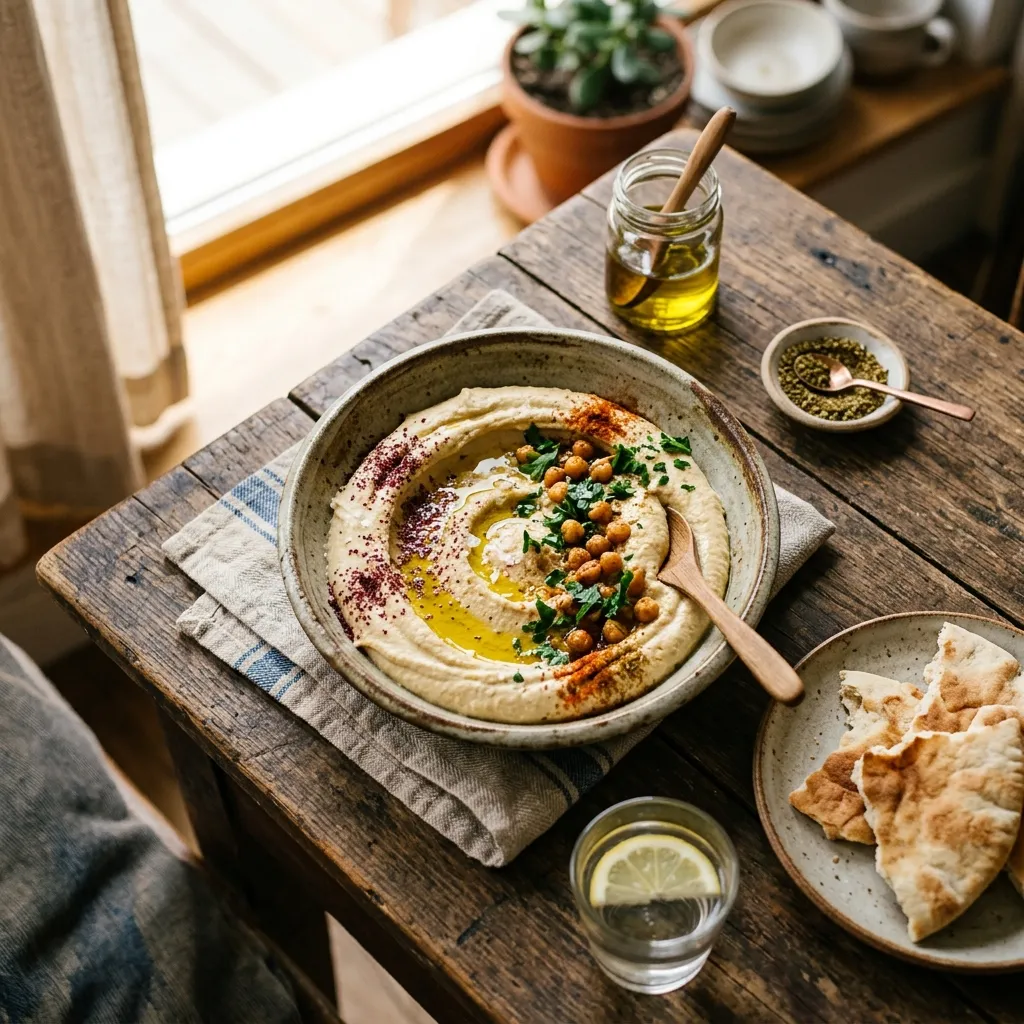
- Spread on a plate using the back of a spoon, creating a shallow well with swooping edges. Drizzle generously with olive oil, dust with paprika, and scatter fresh parsley. Serve with warm pita bread.
Nutrition
These values are estimates calculated from the ingredient list and may vary based on brands, cooking methods, and serving size. Not a substitute for medical or dietary advice.
How This Recipe Affects Each Dosha
Vata
Chickpeas alone are Vata-aggravating (dry, astringent, gas-producing), but the generous tahini, olive oil, and lemon juice transform hummus into something far more Vata-friendly. The oily, smooth quality of well-made hummus counteracts Vata's dryness. The cumin and garlic support digestion. However, large quantities can still produce gas in Vata-dominant individuals.
Pitta
Tahini is mildly heating, garlic adds pungent heat, and lemon juice contributes sour taste — all of which mildly increase Pitta. In small quantities as a dip or condiment, most Pitta types tolerate hummus well. In larger quantities or hot weather, the heating elements may trigger acid symptoms.
Kapha
Hummus is heavy, oily, and dense — qualities that directly increase Kapha. The chickpeas and tahini together create a thick, protein-rich food that Kapha digests slowly. The oil garnish adds further unctuousness. Kapha types should limit portions and use hummus as a condiment rather than a main food.
The garlic, lemon juice, and cumin provide digestive support, making hummus easier to process than plain cooked chickpeas. Tahini's oil content lubricates the digestive tract. However, the overall heaviness still requires moderate agni — those with weak digestion should eat small portions.
Nourishes: Rasa (plasma), Mamsa (muscle), Asthi (bone — from sesame calcium), Majja (nervous — from B vitamins in chickpeas)
Adjustments by Constitution
For Vata Types
Add extra cumin and a pinch of black pepper to the blend for digestive warmth. Increase the lemon juice slightly — the sour taste improves Vata digestion. Serve with warm pita rather than cold vegetables. Use ghee instead of olive oil for the garnish for additional Vata-pacifying quality.
For Pitta Types
Reduce garlic to a tiny amount or omit entirely. Replace some tahini with peeled zucchini for a lighter, cooler version. Increase the lemon juice (sour, but its post-digestive effect is cooling). Garnish with fresh mint instead of paprika. Use cucumber slices as dippers instead of bread.
For Kapha Types
Reduce tahini by half and increase lemon juice. Add extra garlic, cumin, and a generous pinch of cayenne pepper. Thin the hummus with more ice water so it is lighter. Use only a light drizzle of oil. Serve with raw vegetable crudites rather than pita bread.
Seasonal Guidance
Hummus is eaten year-round across the Middle East with minimal seasonal variation. In winter, increase garlic and cumin for warming effect. In summer, lighten the hummus with extra lemon and serve with cooling vegetables. The dish's room-temperature serving tradition makes it adaptable to any season.
Best time of day: Lunch or as a mid-afternoon snack — the protein-fat combination provides sustained energy without the heaviness of a full cooked meal
Cultural Context
Hummus is among the most politically charged foods on earth — Lebanese, Israeli, Palestinian, Syrian, Turkish, and Egyptian cooks all claim it as their national dish, and the question of origin sparks genuine diplomatic tension. In 2010, Lebanon set a Guinness World Record for the largest hummus plate (10,452 kg) specifically to assert cultural ownership after Israel had set the previous record. Setting politics aside, hummus occupies the same cultural space across all these cuisines: it is the mezze table's foundation, the first thing prepared when guests arrive, and the dish most tightly bound to concepts of home and hospitality.
Deeper Context
Origins
The earliest written hummus recipe appears in the 13th-century Egyptian Kitab al-Tabikh (Book of Dishes), predating modern national-identity claims by many centuries. The chickpea-and-sesame preparation has been continuous across the Levant for at least 800 years and likely much longer (chickpea cultivation in the Levant extends at least 10,000 years). The modern Israeli-Palestinian-Lebanese-Syrian-Egyptian dispute over hummus cultural-heritage ownership is a 20th-21st century political phenomenon; the dish itself predates all of these national identities.
Food as Medicine
Chickpea-plus-sesame (tahini) provides complete protein with high bioavailability. Substantial folate, iron, calcium (from tahini), and fiber content. Garlic contributes well-documented cardiovascular and antimicrobial support. Olive oil provides polyphenol content with Mediterranean-diet cardiovascular benefits. One of the most nutritionally complete vegetarian preparations in Middle Eastern cuisine.
Ritual & Seasonal Role
Year-round Levantine everyday food. Ramadan iftar tables feature hummus prominently. Orthodox Christian fasting-day food (dairy-free, meat-free compatible). Global vegetarian-and-vegan staple since 1990s-2000s Middle-Eastern cuisine expansion in Western countries.
Classical Pairings & Cautions
Pita bread, olives, fresh vegetables (cucumber, carrot, bell pepper), tabbouleh, falafel. Tea or arak. Cautions: sesame allergies through tahini; FODMAP issues from chickpeas and garlic; gluten intolerance affects pita (gluten-free options work); commercial hummus often contains high sodium; garlic FODMAP sensitivity substantial for IBS patients.
Cross-Tradition View
How other medical and food-wisdom traditions read this dish. Each tradition names the same physiological reality in its own language — the agreements across them are where universal principles live.
Traditional Chinese Medicine
Chickpeas build Kidney essence and tonify Spleen Qi; tahini is Yin-building and Kidney-essence-supporting; lemon is cool-sour and moves Liver Qi; garlic is warm-pungent and disperses cold; olive oil is cool-moistening. A comprehensive Kidney-essence-and-Yin tonic — TCM physicians would recognize hummus as functionally therapeutic everyday protein preparation.
Greek Humoral
Hot-dry chickpea base with cold-wet lemon correction. Galenic-suitable preparation — Byzantine and medieval Levantine medical texts reference similar chickpea-based preparations for convalescent populations.
Ayurveda
Heating virya, sweet vipaka. Pacifies Vata substantially through protein density and unctuousness. Mildly aggravates Kapha through the tahini-olive-oil-chickpea combination. Pitta mildly aggravated through garlic-and-lemon combination. A classical Vata-pacifying preparation.
Levantine (Disputed Origin)
Hummus ownership is heavily disputed among Lebanon, Israel, Greece, Palestine, Turkey, Syria, and Egypt. The earliest written recipe appears in the 13th-century Egyptian Kitab al-Tabikh (Book of Dishes) manuscript, predating modern national boundaries by many centuries. Modern hummus is widespread across the entire Levant as everyday food. UNESCO listed hummus as Palestinian Intangible Cultural Heritage in 2011, which Israel and Lebanon disputed. The dish's cultural-political weight exceeds its simple three-ingredient preparation.
Chef's Notes
The single greatest upgrade for homemade hummus is processing the tahini and lemon juice first, before adding chickpeas. This creates a whipped base that the chickpeas integrate into smoothly. If you add everything at once, the chickpeas prevent the tahini from emulsifying properly. Ice water (not room temperature) creates a lighter, fluffier texture due to the cold causing the oils to emulsify more tightly. Hummus keeps refrigerated for 5 days but loses its airy texture — stir in a splash of water and a drizzle of olive oil before serving leftovers.
Frequently Asked Questions
Is Hummus good for my dosha?
Nourishing and tissue-building. The tahini and olive oil pacify Vata's dryness. The heavy quality may increase Kapha. Pitta types should moderate due to the garlic and sesame heat. Chickpeas alone are Vata-aggravating (dry, astringent, gas-producing), but the generous tahini, olive oil, and lemon juice transform hummus into something far more Vata-friendly. Tahini is mildly heating, garlic adds pungent heat, and lemon juice contributes sour taste — all of which mildly increase Pitta. Hummus is heavy, oily, and dense — qualities that directly increase Kapha.
When is the best time to eat Hummus?
Lunch or as a mid-afternoon snack — the protein-fat combination provides sustained energy without the heaviness of a full cooked meal Hummus is eaten year-round across the Middle East with minimal seasonal variation. In winter, increase garlic and cumin for warming effect. In summer, lighten the hummus with extra lemon and serve wit
How can I adjust Hummus for my constitution?
For Vata types: Add extra cumin and a pinch of black pepper to the blend for digestive warmth. Increase the lemon juice slightly — the sour taste improves Vata digest For Pitta types: Reduce garlic to a tiny amount or omit entirely. Replace some tahini with peeled zucchini for a lighter, cooler version. Increase the lemon juice (sou
What are the Ayurvedic properties of Hummus?
Hummus has Sweet, Astringent, Sour, Pungent taste (rasa), Heating energy (virya), and Sweet post-digestive effect (vipaka). Its qualities (gunas) are Heavy, Oily, Smooth. It nourishes Rasa (plasma), Mamsa (muscle), Asthi (bone — from sesame calcium), Majja (nervous — from B vitamins in chickpeas). The garlic, lemon juice, and cumin provide digestive support, making hummus easier to process than plain cooked chickpeas. Tahini's oil content lubricates the digestive tract. However, the overall heaviness still requires moderate agni — those with weak digestion should eat small portions.