Fish and Chips
British Recipe
Overview
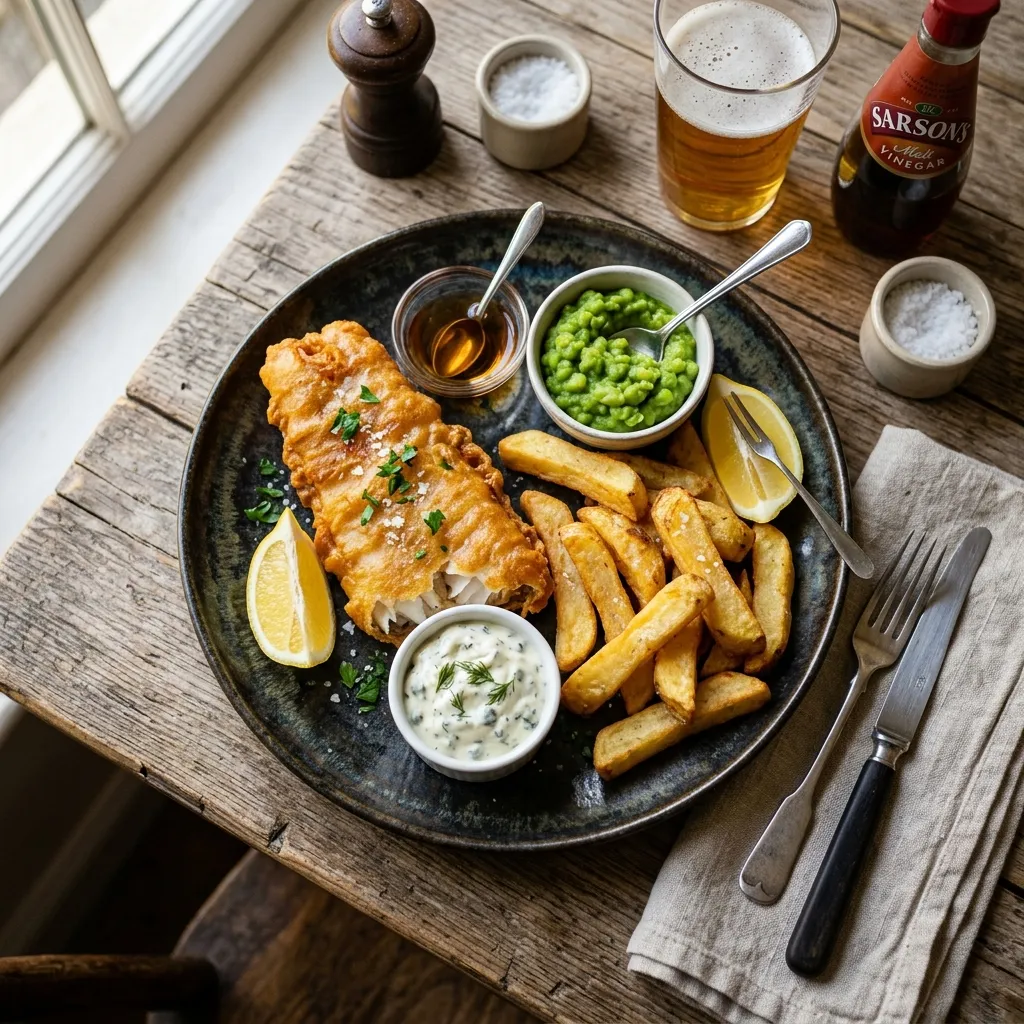
Fish and chips emerged in the 1860s when fried fish shops in London's East End merged with chip vendors in the industrial North of England. By 1910 there were over 25,000 fish and chip shops across Britain, and during both World Wars the dish was one of the few foods never rationed — the government considered it essential to morale. The combination of battered cod or haddock with thick-cut fried potatoes remains the country's most iconic takeaway meal. The batter is the heart of a good fish and chips. A proper British batter uses plain flour, baking powder, and cold beer or sparkling water, mixed until just combined — overworking develops gluten and makes the coating tough rather than crisp. The fish goes from batter to hot oil in one motion, puffing into a golden shell that shatters at first bite to reveal steaming white flakes within. From an Ayurvedic standpoint, deep-fried food is inherently heavy, oily, and heating. The white fish itself is relatively light and sweet, but the frying process transforms its energetic profile entirely. The combination of fried starch and fried protein creates a meal that demands strong agni and is best reserved for occasional enjoyment rather than daily consumption.
Pacifies Vata with heavy, oily, warm qualities. Aggravates Pitta due to deep-frying and heating oil. Significantly aggravates Kapha due to heaviness, oil saturation, and starchy carbohydrate load.
Ingredients
- 4 pieces Cod or haddock fillets (about 180g each, skin-on, pin-boned)
- 200 g Plain flour (plus extra for dusting)
- 50 g Cornflour
- 1 tsp Baking powder
- 250 ml Cold beer or sparkling water
- 1 tsp Salt
- 1 kg Potatoes (Maris Piper or King Edward, peeled and cut into thick chips)
- 2 liters Vegetable oil (for deep frying)
- 4 pieces Lemon wedges
- 4 tbsp Malt vinegar (for serving)
- 1/2 tsp Black pepper
Instructions
- Cut potatoes into chips roughly 1.5cm thick. Rinse in cold water to remove surface starch, then soak in cold water for at least 30 minutes. Drain and pat thoroughly dry with clean towels.
- Heat the oil in a deep fryer or heavy pot to 130°C (265°F). Blanch the chips in batches for 6-8 minutes until cooked through but still pale. Remove and drain on a wire rack. Increase oil temperature to 180°C (350°F).
- While the oil heats, prepare the batter. Whisk the flour, cornflour, baking powder, and salt together. Pour in the cold beer and whisk briefly until just combined — a few lumps are fine. The batter should be the consistency of thick cream.
- Pat the fish fillets completely dry and season with salt and pepper. Dust each fillet lightly in plain flour, shaking off the excess.
- Holding one end, dip each fillet into the batter, letting excess drip off for 3 seconds. Carefully lower into the 180°C oil, laying it away from you to avoid splashing. Fry 2 fillets at a time for 7-8 minutes, turning once, until deep golden and the fish flakes easily.
- Remove fish to a wire rack set over a baking sheet and keep warm in a 120°C oven.
- Return the blanched chips to the hot oil (still at 180°C) and fry for 3-4 minutes until golden and crisp. Drain on the wire rack and season immediately with salt.
- Serve the fish and chips together with lemon wedges, malt vinegar, and mushy peas or tartare sauce on the side.
Nutrition
These values are estimates calculated from the ingredient list and may vary based on brands, cooking methods, and serving size. Not a substitute for medical or dietary advice.
How This Recipe Affects Each Dosha
Vata
The warmth, oil, and density of fried food can ground Vata effectively, and the white fish provides gentle protein that Vata digestion handles better than red meat. However, the heaviness of a full portion may overwhelm Vata's variable digestive fire. A half portion with extra lemon juice aids assimilation.
Pitta
Deep-fried foods generate excess heat and can trigger acid reflux, skin inflammation, and loose stools in Pitta types. The oil itself undergoes oxidative changes during high-heat cooking that create ama. The malt vinegar adds sour taste, further increasing Pitta. This is an occasional indulgence at best for Pitta constitutions.
Kapha
This is one of the most Kapha-aggravating dishes in the British repertoire. The combination of oil-saturated batter, starchy fried potato, and heavy protein creates a meal dominated by earth and water elements. Kapha types will experience sluggishness, water retention, and foggy thinking after a full serving.
Deep-fried food places significant demand on agni. The oil-laden batter and chips require robust digestive fire to break down without producing ama. People with weak or variable digestion will feel heavy and sluggish afterward. The lemon and vinegar provide minimal digestive stimulation relative to the meal's density.
Nourishes: Rasa (plasma), Meda (fat), Mamsa (muscle)
Adjustments by Constitution
For Vata Types
Serve a smaller portion with generous lemon juice and a sprinkle of ground cumin over the fish. Add a warm side salad with cooked beetroot and a ginger dressing. Choose haddock over cod — it is slightly lighter. A cup of ginger tea alongside the meal supports digestion.
For Pitta Types
Bake the fish instead of frying — coat in a light breadcrumb crust and bake at 220°C until golden. Replace malt vinegar with fresh lemon juice. Oven-bake the chips with a light brush of coconut oil rather than deep-frying. Add fresh dill and a cucumber raita on the side for cooling balance.
For Kapha Types
Use a lighter fish like sole or plaice. Replace the beer batter with a thin coating of chickpea flour (besan) seasoned with black pepper, ginger, and turmeric, then bake rather than fry. Swap potatoes for turnip or parsnip chips, baked with a light mist of mustard oil. Serve with a sharp, pungent horseradish sauce.
Seasonal Guidance
Best suited to cold, damp British weather when the body can tolerate heavier, oilier food. In spring and summer, the heavy oils and dense starch compound Pitta and Kapha aggravation. If eaten in warmer months, choose a smaller portion and accompany with a green salad dressed in lemon.
Best time of day: Midday when digestive fire peaks. Eating fried food in the evening when agni is waning promotes ama accumulation and disrupted sleep.
Cultural Context
Fish and chips is inextricable from British working-class identity. The first combined fish and chip shop likely opened in the 1860s — Joseph Malin in East London and John Lees in Mossley near Manchester both claim the honour. During World War II, Prime Minister Winston Churchill referred to fish and chips as 'the good companions,' and the dish was strategically exempted from rationing. The chippy (chip shop) became a neighbourhood institution, with families developing fierce loyalties to their local. The traditional wrapping in newspaper — discontinued for hygiene reasons in the 1980s — remains a powerful nostalgic image.
Deeper Context
Origins
The first fish-and-chip shop in England is traditionally attributed to Joseph Malin, a Jewish immigrant in London's East End in the 1860s. The dish combined Sephardic-Jewish pescado frito (cold-fried fish, brought from Portugal via the Netherlands) with the industrial-era Lancashire chip-frying tradition. WWII ration-exempt status for fish and chips (one of the few foods Churchill's government refused to ration) cemented the dish as a national British identity food during the 1940s.
Food as Medicine
Cod has extensive classical use as a convalescent food across North Atlantic fishing cultures; cod liver oil emerged from the same preparation as a vitamin-D and omega-3 tonic that shaped 19th and 20th century pediatric medicine. Working-class protein nutrition historically relied on fish-and-chips as affordable complete-meal food. Malt vinegar contributes acetic acid with documented modest blood-sugar-modulating effects.
Ritual & Seasonal Role
Friday-night working-class tradition, seaside holiday food (every British seaside town has its iconic chip shop), post-pub late-night meal. Not religiously ceremonial, though its Friday-night pattern traces to pre-Vatican-II Catholic meatless Friday observance and to Anglican residual practice. Summer peak during coastal holiday seasons.
Classical Pairings & Cautions
Mushy peas (classical northern), tartar sauce, battered sausage, curry sauce (northern), gravy (in some regions). Cautions: deep-fried oxidized fat concerns in frequent consumption; cod mercury content is relatively low but present; gluten intolerance precludes standard batter (gluten-free chip shops increasingly available); fish allergies; Kapha substantial aggravation; sodium load from salt-finishing and vinegar.
Cross-Tradition View
How other medical and food-wisdom traditions read this dish. Each tradition names the same physiological reality in its own language — the agreements across them are where universal principles live.
Traditional Chinese Medicine
Cod is cool-salty and Yin-building; potato is Spleen-Qi-tonifying; the batter fried crisp adds hot-dry penetration; lemon is cool-sour and moves Liver Qi; malt vinegar is sour-warm and moves Liver Qi. A Yin-building preparation with Qi-moving accent. Summer-appropriate; winter consumption requires additional hot-dry accompaniments to prevent damp accumulation.
Greek Humoral
Hot-dry frying on a cold-wet fish base — mixed temperament that Galenic physicians would have called complex. Classical British working-class sustenance. The frying technique is what makes fish digestively accessible to populations with weak fire, while the lemon and vinegar provide the acid balance that prevents the fat from becoming phlegmatic.
Ayurveda
Heating virya, sweet vipaka. Pacifies Vata through the fat and protein; Kapha-aggravating through the fried-starch combination; Pitta-neutral. Fish is classically heavy and tamasic in Ayurvedic categorization, and deep-fried preparations compound this — occasion food rather than daily fare.
Sephardic Jewish & Portuguese
Fried fish was introduced to England by Portuguese-Sephardic Jewish immigrants in the 16th and 17th centuries after their expulsion from the Iberian Peninsula. Pescado frito (cold-fried fish eaten at room temperature on the Sabbath) was the direct ancestor. The English chip-shop tradition combined this with the chip-frying tradition that developed during 19th-century Lancashire industrial expansion, creating a hybrid dish from two immigrant food cultures.
Chef's Notes
The two-stage chip frying is essential — the first low-temperature fry cooks the interior, the second high-temperature fry crisps the exterior. If you skip the first fry, you get chips that are brown outside and raw inside. Cold beer produces a lighter, crispier batter than water because the carbonation creates air pockets and the alcohol evaporates faster than water during frying. Use the freshest fish you can find — the quality of the fish matters more than anything else in this dish. If mushy peas are served alongside, they add a sweet, starchy contrast that traditional fish and chip shops have paired since the early 1900s.
Frequently Asked Questions
Is Fish and Chips good for my dosha?
Pacifies Vata with heavy, oily, warm qualities. Aggravates Pitta due to deep-frying and heating oil. Significantly aggravates Kapha due to heaviness, oil saturation, and starchy carbohydrate load. The warmth, oil, and density of fried food can ground Vata effectively, and the white fish provides gentle protein that Vata digestion handles better than red meat. Deep-fried foods generate excess heat and can trigger acid reflux, skin inflammation, and loose stools in Pitta types. This is one of the most Kapha-aggravating dishes in the British repertoire.
When is the best time to eat Fish and Chips?
Midday when digestive fire peaks. Eating fried food in the evening when agni is waning promotes ama accumulation and disrupted sleep. Best suited to cold, damp British weather when the body can tolerate heavier, oilier food. In spring and summer, the heavy oils and dense starch compound Pitta and Kapha aggravation. If eaten in warme
How can I adjust Fish and Chips for my constitution?
For Vata types: Serve a smaller portion with generous lemon juice and a sprinkle of ground cumin over the fish. Add a warm side salad with cooked beetroot and a ginge For Pitta types: Bake the fish instead of frying — coat in a light breadcrumb crust and bake at 220°C until golden. Replace malt vinegar with fresh lemon juice. Oven-b
What are the Ayurvedic properties of Fish and Chips?
Fish and Chips has Sweet, Salty, Sour (with vinegar) taste (rasa), Heating energy (virya), and Sweet post-digestive effect (vipaka). Its qualities (gunas) are Heavy, Oily, Warm, Dense. It nourishes Rasa (plasma), Meda (fat), Mamsa (muscle). Deep-fried food places significant demand on agni. The oil-laden batter and chips require robust digestive fire to break down without producing ama. People with weak or variable digestion will feel heavy and sluggish afterward. The lemon and vinegar provide minimal digestive stimulation relative to the meal's density.