Fattoush
Middle Eastern Recipe
Overview
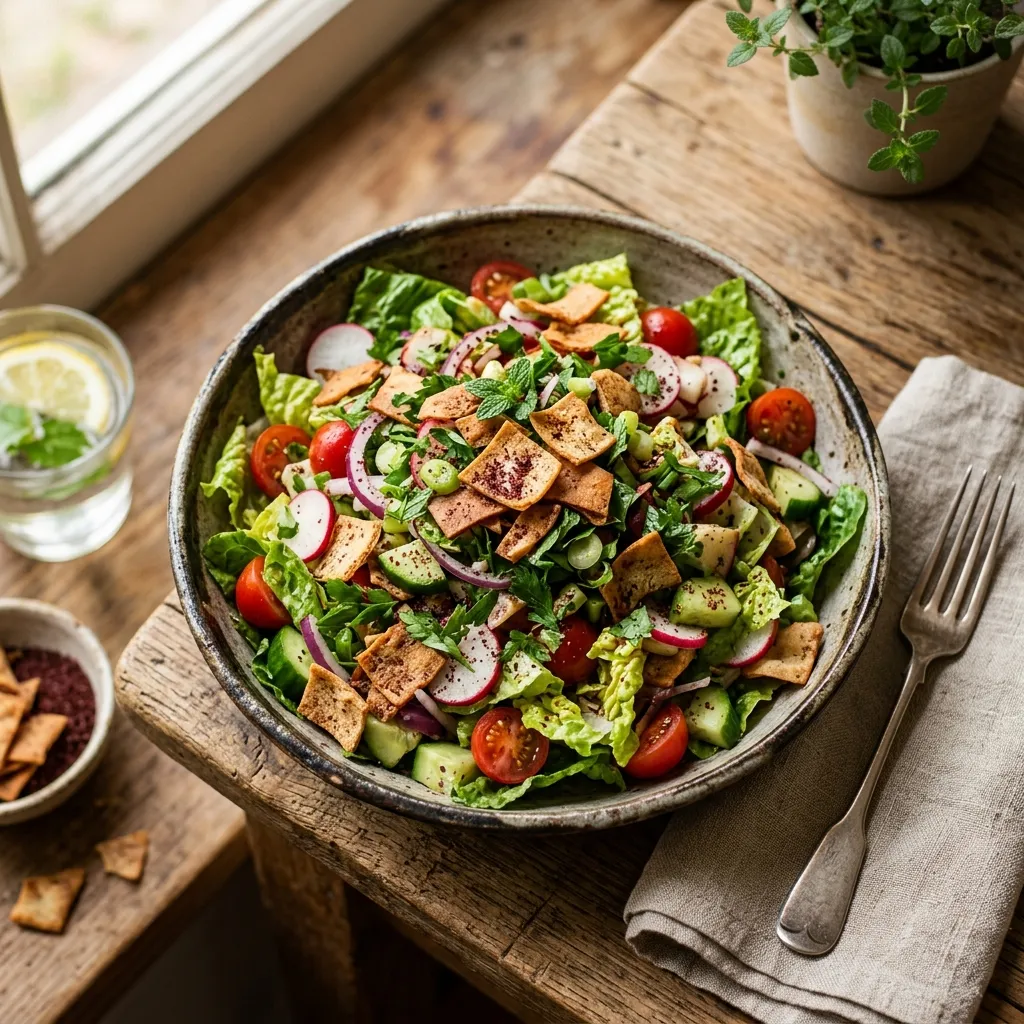
Fattoush is a Levantine bread salad — mixed vegetables and herbs tossed with pieces of toasted or fried pita bread and dressed with a sumac-lemon vinaigrette. The name derives from the Arabic "fatteh" (to crumble), referring to the broken bread that distinguishes this salad from tabbouleh and other Levantine salads. Fattoush is fundamentally a resourcefulness dish: yesterday's stale pita, transformed through frying or toasting into crispy shards, becomes the textural backbone of a vibrant, tangy salad. The salad appears across Lebanon, Syria, Palestine, and Jordan, with each region's version reflecting local preferences — more purslane in some areas, more radish in others. The common thread is sumac, the deep-red dried berry that provides fattoush's distinctive sour, fruity tang. Sumac's sourness is more complex than lemon alone — it carries an almost wine-like acidity that merges with olive oil to create a dressing that tastes simultaneously bright and earthy. Ayurvedically, fattoush is one of the lighter salad preparations in Middle Eastern cuisine. The raw vegetables provide fresh prana (life force), the herbs add aromatic and medicinal qualities, and the sumac contributes sour taste that stimulates agni. The fried bread adds a heavy, oily element that grounds the otherwise light, dry salad. The olive oil dressing provides unctuousness. Overall, this is a Pitta-season food — refreshing, light, slightly sour, and made primarily of raw ingredients.
Cooling and light — ideal for reducing excess Pitta and Kapha. The raw vegetables and sumac increase lightness. May aggravate Vata due to cold, dry, rough qualities.
Ingredients
- 2 rounds Pita bread (day-old is ideal — split open)
- 3 cups Romaine lettuce (torn into pieces)
- 2 medium Tomatoes (diced)
- 1 large Cucumber (diced)
- 4 pieces Radishes (thinly sliced)
- 1 small Green bell pepper (diced)
- 3 stalks Scallions (thinly sliced)
- 1/4 cup Fresh mint (torn leaves)
- 1/2 cup Fresh parsley (chopped)
- 1/2 cup Purslane (if available — optional but traditional)
- 2 tbsp Sumac (ground — the defining spice)
- 3 tbsp Lemon juice (fresh)
- 1/4 cup Extra virgin olive oil
- 1 clove Garlic (minced)
- 1 tsp Pomegranate molasses (optional but traditional)
- 1/2 tsp Salt
- 3 tbsp Vegetable oil (for frying the pita)
Instructions
- Tear the pita bread into irregular pieces about 2-3cm across. Heat vegetable oil in a pan over medium-high heat and fry the pita pieces until golden and crispy on both sides, about 2-3 minutes total. Alternatively, brush with olive oil and bake at 190C (375F) for 8-10 minutes. Drain on paper towels.
- Prepare the dressing: whisk together olive oil, lemon juice, minced garlic, sumac (reserve 1 teaspoon for garnish), pomegranate molasses, and salt. The dressing should taste assertively sour and earthy from the sumac.
- In a large bowl, combine the romaine lettuce, tomatoes, cucumber, radishes, bell pepper, and scallions. Add the fresh mint, parsley, and purslane (if using).
- Pour the dressing over the vegetables and toss thoroughly, coating every piece. The raw vegetables should glisten with the sumac-olive oil mixture.
- Add the crispy pita chips to the salad and toss once more — gently, so the chips remain in distinct pieces rather than crumbling into the dressing.
- Transfer to a serving platter and sprinkle the reserved sumac over the top for color and an extra hit of tartness. Serve immediately — fattoush waits for no one. The pita absorbs dressing within minutes and turns from crispy to soggy.
Nutrition
These values are estimates calculated from the ingredient list and may vary based on brands, cooking methods, and serving size. Not a substitute for medical or dietary advice.
How This Recipe Affects Each Dosha
Vata
Fattoush is challenging for Vata on nearly every axis: raw vegetables are cold, dry, and rough; the salad is light and airy; and the sour dressing, while stimulating, does not compensate for the overall lack of warmth and unctuousness. The fried bread provides some grounding heaviness, but the dish remains predominantly Vata-increasing.
Pitta
Fattoush is well-suited for Pitta. The cooling raw vegetables — cucumber, lettuce, radish — reduce heat. The fresh herbs (mint, parsley) are cooling and aromatic. Sumac's sour taste mildly increases Pitta, but the overall cooling quality of the salad dominates. This is refreshing Pitta-season food at its best.
Kapha
The light, dry, rough qualities of raw salad are generally Kapha-reducing. The astringent vegetables and pungent radish help stimulate Kapha's sluggish metabolism. The fried bread adds some unwanted heaviness, but as a component within a raw salad, the impact is limited. The sumac and lemon also stimulate digestion.
Sumac and lemon juice are both agni-stimulating — they kindle appetite and prepare the digestive system for heavier courses. In Levantine meal structure, fattoush serves this purpose explicitly: it appears at the beginning of a meal alongside other mezze, its tartness opening the appetite for the main dishes to follow.
Nourishes: Rasa (plasma — from hydrating vegetables), Rakta (blood — from vitamin C in lemon and sumac)
Adjustments by Constitution
For Vata Types
Add avocado or crumbled feta cheese for creaminess and grounding. Increase the olive oil in the dressing by 2 tablespoons. Include roasted vegetables (bell pepper, eggplant) alongside the raw ones for warmth. Serve as a side with a warm main course rather than as a standalone meal. Eat at midday, not evening.
For Pitta Types
This salad is already Pitta-friendly. Increase the cucumber and mint for extra cooling. Reduce garlic. Bake the pita chips instead of frying for less heat. Add pomegranate seeds for their sweet-astringent Pitta-calming quality.
For Kapha Types
Bake the pita chips with minimal oil or omit the bread entirely for an even lighter salad. Increase the radishes and add raw red onion for pungent kick. Use less olive oil in the dressing and more lemon juice. Add a pinch of black pepper or a diced fresh chili for metabolic stimulation.
Seasonal Guidance
Fattoush is peak-summer food — the cooling raw vegetables, refreshing herbs, and tart dressing are designed for hot weather eating. It works well in late spring through early autumn. In winter, the cold, raw quality becomes Vata-aggravating and offers no warming benefit. Levantine cooks prepare fattoush most frequently during the warmer months when garden vegetables are abundant.
Best time of day: Lunch as part of a mezze spread — the light, raw quality works best at midday when agni is active
Cultural Context
Fattoush belongs to the Levantine tradition of frugal, seasonal cooking — it was originally a way to use stale bread and whatever vegetables the garden offered. In Lebanese cuisine, fattoush appears alongside tabbouleh as one of the two defining national salads, though they are structurally different (tabbouleh is herb-forward, fattoush is vegetable-forward). The dish appears at every Lebanese gathering and family meal during the summer months. Sumac, the spice that defines fattoush, grows wild across the Levantine hillsides, and families often harvest and dry their own — a practice that connects modern fattoush to the same landscape that has produced this salad for centuries.
Deeper Context
Origins
Fattoush descends from Levantine peasant cookery as stale-bread rescue food — the name literally refers to crumbled bread. Similar bread-salad traditions exist across the Mediterranean (Italian panzanella, Turkish ekmek salatası, Greek dakos) reflecting shared peasant food-waste-prevention logic. Sumac (Rhus coriaria) is ancient Anatolian-Levantine food technology predating the widespread availability of lemon in the region — sumac's tart-fruity character defines authentic Levantine fattoush.
Food as Medicine
Sumac contains substantial antioxidant compounds (gallic acid, quercetin) with modern research support for blood-sugar modulation. Cucumber and tomato provide summer hydration. Olive oil contributes cardiovascular-supporting polyphenols. Parsley adds vitamin K and iron. The combination is a model Mediterranean-diet composition validated by modern nutritional research.
Ritual & Seasonal Role
Summer Levantine food. Ramadan iftar tables (breaking the dawn-to-dusk fast at sunset) — fattoush and fattoush-family salads are traditional iftar starters across Syrian, Lebanese, and Palestinian households. Year-round but peak summer. Classical Levantine home cooking.
Classical Pairings & Cautions
Grilled meats, kebabs, hummus, additional Levantine salads. Tea or arak. Cautions: gluten intolerance precludes pita (gluten-free flatbread substitutions work); nightshade sensitivity from tomato; sumac allergies (rare but rising recognition); raw tomato and cucumber Vata aggravation in sensitive types; vinegar or sumac aggravation in GERD.
Cross-Tradition View
How other medical and food-wisdom traditions read this dish. Each tradition names the same physiological reality in its own language — the agreements across them are where universal principles live.
Traditional Chinese Medicine
Pita bread is Spleen-Qi-tonifying; sumac is sour-cooling and moves Liver Qi; cucumber is cool and builds Yin fluids; tomato is cool-sour and moves Liver Qi; olive oil is cool-moistening. A cool Liver-Qi-moving summer preparation — TCM physicians would class this as ideal Summer Heat food with Liver-Qi stagnation.
Greek Humoral
Cold-wet summer salad with mild hot-dry corrections. Classical Galenic Mediterranean summer food — the vinegar-and-bread architecture matches Byzantine bread-salad preparations and Italian panzanella.
Ayurveda
Cooling virya, pungent vipaka. Pacifies Pitta substantially. Kapha-neutral. Vata mildly aggravated through rawness and cold preparation.
Levantine Peasant & Egyptian
Fattoush is Levantine peasant bread-salad — the name derives from Arabic 'fatt' (to crumble or break up), referring to the broken pita component. Classical cucina povera of Syrian, Lebanese, and Palestinian village cooking — a technology for using day-old pita. Sumac is the classical Levantine souring agent, made from dried Rhus coriaria berries (native to Anatolia and the Middle East). Sumac predates lemon as the primary Levantine acidifier and represents an ancient Anatolian-Levantine food-technology.
Chef's Notes
Sumac is non-negotiable in fattoush — without it, you have a different salad entirely. Source it from a Middle Eastern grocery; the supermarket spice-aisle version is often stale and flavorless. Good sumac should smell almost fruity, with a deep burgundy color. The bread must be added at the last possible moment — some cooks bring the crispy pita to the table separately and let each person add their own. Day-old pita fries better than fresh because the lower moisture content produces crispier results with less oil absorption. For a lighter version, bake the pita chips instead of frying.
Frequently Asked Questions
Is Fattoush good for my dosha?
Cooling and light — ideal for reducing excess Pitta and Kapha. The raw vegetables and sumac increase lightness. May aggravate Vata due to cold, dry, rough qualities. Fattoush is challenging for Vata on nearly every axis: raw vegetables are cold, dry, and rough; the salad is light and airy; and the sour dressing, while stimulating, does not compensate for the overall lack of warmth and unctuousness. Fattoush is well-suited for Pitta. The light, dry, rough qualities of raw salad are generally Kapha-reducing.
When is the best time to eat Fattoush?
Lunch as part of a mezze spread — the light, raw quality works best at midday when agni is active Fattoush is peak-summer food — the cooling raw vegetables, refreshing herbs, and tart dressing are designed for hot weather eating. It works well in late spring through early autumn. In winter, the co
How can I adjust Fattoush for my constitution?
For Vata types: Add avocado or crumbled feta cheese for creaminess and grounding. Increase the olive oil in the dressing by 2 tablespoons. Include roasted vegetables For Pitta types: This salad is already Pitta-friendly. Increase the cucumber and mint for extra cooling. Reduce garlic. Bake the pita chips instead of frying for less
What are the Ayurvedic properties of Fattoush?
Fattoush has Sour, Astringent, Pungent, Sweet taste (rasa), Cooling energy (virya), and Pungent post-digestive effect (vipaka). Its qualities (gunas) are Light, Dry, Rough, Cool. It nourishes Rasa (plasma — from hydrating vegetables), Rakta (blood — from vitamin C in lemon and sumac). Sumac and lemon juice are both agni-stimulating — they kindle appetite and prepare the digestive system for heavier courses. In Levantine meal structure, fattoush serves this purpose explicitly: it appears at the beginning of a meal alongside other mezze, its tartness opening the appetite for the main dishes to follow.