Chocolate Chip Cookies
American Recipe
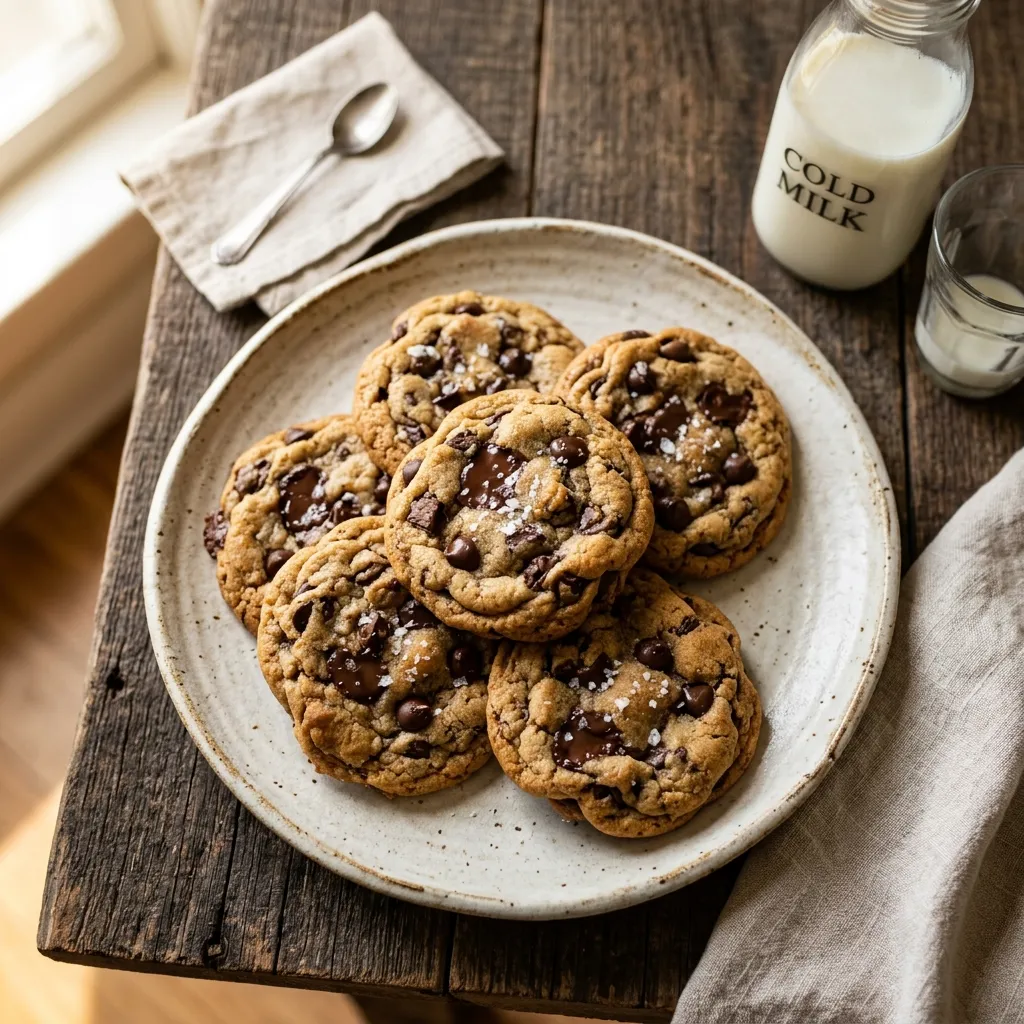
Overview
Ruth Graves Wakefield invented the chocolate chip cookie in 1938 at the Toll House Inn in Whitman, Massachusetts, when she chopped a bar of Nestle semi-sweet chocolate into her butter cookie dough expecting it to melt uniformly. Instead, the chocolate pieces held their shape, creating pockets of melted chocolate within a crisp-edged, chewy-centered cookie. Nestle acquired the recipe in exchange for a lifetime supply of chocolate and printed it on every bag of their chocolate chips — where it remains today, largely unchanged. The chemistry of a good chocolate chip cookie hinges on the ratio of brown sugar to white, the type of fat, and the resting time. Brown sugar's molasses content contributes moisture and chewiness through hygroscopic properties — it attracts and holds water. White sugar promotes spread and crispness. Butter provides flavor and creates a tender crumb through its water content (about 15%), which generates steam during baking. Resting the dough for 24-72 hours allows the flour to fully hydrate and enzymes to break down starches into sugars, producing deeper flavor and better texture. Ayurvedically, chocolate chip cookies combine several powerful taste elements — the sweet taste of sugar, butter, flour, and chocolate, the bitter quality of cacao, and the salty taste from added salt. The overall effect is heavily sweet-dominant with grounding, heavy, and oily qualities. Chocolate (cacao) is one of the more pharmacologically active foods in Western cuisine, containing theobromine, phenylethylamine, and anandamide — compounds that affect mood, energy, and the nervous system.
Strongly pacifies vata through the combined sweet, heavy, oily, and warm qualities of butter, sugar, and chocolate. Moderately increases pitta through sugar's heating processing and chocolate's stimulating compounds. Strongly increases kapha through concentrated sweetness, heaviness, and oiliness.
The sweet, heavy, and oily qualities of chocolate chip cookies can serve as emergency grounding food for acute vata aggravation — anxiety, ungroundedness, or post-shock trembling. The rapid delivery of sugar, fat, and warm texture settles vata's upward-moving energy. Not a therapeutic food for regular use, but genuinely useful in acute moments.
Ingredients
- 2.25 cups all-purpose flour
- 1 teaspoon baking soda
- 1 teaspoon sea salt
- 16 tablespoons unsalted butter (softened to room temperature)
- 0.75 cup brown sugar (packed)
- 0.75 cup granulated sugar
- 2 large eggs
- 2 teaspoons vanilla extract
- 2 cups semi-sweet chocolate chips
- 1 pinch flaky sea salt (for topping, optional)
Instructions
- Whisk flour, baking soda, and salt in a bowl and set aside. The baking soda serves two functions: it's the leavening agent that causes the cookies to puff and spread, and it raises the pH of the dough, which accelerates Maillard browning and produces a deeper golden color and more complex flavor.
- In a large bowl or stand mixer, beat the softened butter with both sugars on medium speed for 3-4 minutes until light and fluffy. This creaming step incorporates air into the fat, creating the cookie's lift. Under-creaming produces dense, flat cookies. The butter must be truly room temperature (65-70°F / 18-21°C) — too cold and it won't aerate, too warm and the dough will be greasy.
- Add the eggs one at a time, beating well after each addition. The first egg emulsifies into the butter-sugar mixture; the second adds additional moisture and structure. Add the vanilla and mix until combined.
- Add the flour mixture in two additions, mixing on low speed just until the last streak of flour disappears. Overmixing at this stage develops gluten and produces tough, cakey cookies rather than chewy ones. Fold in the chocolate chips with a spatula.
- For the best results, cover the dough and refrigerate for at least 2 hours, or up to 72 hours. During this rest, the flour absorbs moisture from the eggs and butter, proteins break down, and the dough develops a richer, more toffee-like flavor. Rested dough also spreads less during baking, producing thicker cookies with better texture contrast between crisp edges and chewy centers.
- When ready to bake, preheat the oven to 375°F (190°C) and line baking sheets with parchment paper. Scoop rounded tablespoons of dough (about 2 tablespoons each for large cookies) and place them 2 inches apart on the prepared sheets. If the dough has been refrigerated overnight, let it sit at room temperature for 10 minutes before scooping.
- Bake for 10-12 minutes until the edges are golden brown but the centers still look slightly underdone and puffy. The cookies will continue to set on the hot baking sheet for several minutes after removal — pulling them at the right moment is the difference between chewy and dry. If desired, sprinkle a few flakes of sea salt on top immediately after removing from the oven.
- Let the cookies cool on the baking sheet for 5 minutes before transferring to a wire rack. The residual heat finishes cooking the center while the exterior crisps. Store in an airtight container — add a slice of bread to the container to keep cookies soft for several days, as the bread's moisture transfers to the cookies.
Nutrition
These values are estimates calculated from the ingredient list and may vary based on brands, cooking methods, and serving size. Not a substitute for medical or dietary advice.
How This Recipe Affects Each Dosha
Vata
Chocolate chip cookies deliver many of vata's needed qualities — sweet taste, warm temperature (when fresh), heavy substance, and oily texture from butter. The combination of wheat flour, sugar, eggs, and butter creates a dense, grounding package that can settle vata's lightness and instability. Chocolate's theobromine provides a gentle mood lift that counteracts vata's tendency toward anxiety. The crunchy-chewy texture is satisfying without being as dry as crackers or chips. A warm cookie with milk is a genuine vata-calming combination.
Pitta
Chocolate contains heating compounds (theobromine, caffeine) that mildly aggravate pitta, and concentrated sugar has a heating vipaka that contributes further. However, the predominant sweet taste and the grounding quality of butter and flour provide some pitta-calming effect. The net result is a mildly pitta-aggravating food. Pitta types with strong agni can metabolize 1-2 cookies without noticeable effect. Overconsumption — especially of very dark chocolate varieties — can manifest as skin breakouts, irritability, or acid reflux in pitta-dominant individuals.
Kapha
Chocolate chip cookies concentrate nearly every quality that aggravates kapha: sweet taste, heavy density, oily texture, and cold (post-digestive) quality from sugar. The combination of white flour, butter, and sugar is the classic Ayurvedic formula for kapha accumulation — building tissues that kapha types already have in excess. The stimulating compounds in chocolate provide temporary energy that kapha types crave, but the crash afterward reinforces the cycle of lethargy and craving. Even small portions have a noticeable kapha-increasing effect.
Chocolate chip cookies have a mildly suppressive effect on agni. The concentrated sugar, butter, and flour create a heavy mass that requires significant digestive effort. The bitter quality of chocolate provides slight agni stimulation, and the baking soda alkalinity can neutralize some stomach acid. Eating warm cookies is more digestible than room-temperature ones, as the heat pre-activates the fats and makes them more accessible to digestive enzymes.
Nourishes: rasamedashukra
Adjustments by Constitution
For Vata Types
Use dark chocolate (70%+) for its higher bitter content, which aids digestion without significantly increasing dryness. Add 1/2 teaspoon of cardamom to the dough for sweet, warming digestive support. Use ghee instead of half the butter for improved assimilation. Eat cookies warm from the oven with a glass of warm milk spiced with nutmeg — this is a deeply nourishing vata combination. Limit to 2-3 cookies per sitting to avoid overwhelming agni.
For Pitta Types
Use milk chocolate instead of semi-sweet — its higher milk content is more cooling. Reduce total sugar by 1/4 cup and add 1/4 cup of shredded coconut for cooling sweetness. Replace half the butter with coconut oil. Add a pinch of cardamom and skip any coffee or espresso additions (which some recipes include). Eat at room temperature rather than warm. Pair with a glass of cool milk rather than hot beverages to moderate the heating effect.
For Kapha Types
Reduce the recipe by half for smaller yield. Replace half the flour with oat flour for lighter texture. Cut both sugars by 1/3 and increase vanilla to compensate in flavor. Use only 1 cup of dark chocolate (85%+) for its bitter, kapha-reducing quality. Add 1 teaspoon of ground ginger and 1/2 teaspoon of cinnamon to the dough for metabolic stimulation. Make cookies smaller — 1 tablespoon each — and eat no more than 2, paired with ginger tea rather than milk.
Seasonal Guidance
The heavy, oily, and warming qualities are most appropriate for cold months when agni is strong and the body benefits from calorie-dense foods. Avoid as a regular snack in spring when kapha needs clearing, and limit in summer when the heating compounds in chocolate compound ambient pitta.
Best time of day: Best enjoyed as an afternoon treat between 2-4 PM when agni still has several active hours to process the dense, sweet food. Avoid eating cookies late at night — the sugar disrupts sleep onset, and the heavy dough creates ama when digested during the body's rest period.
Cultural Context
The chocolate chip cookie's rapid spread across American culture after 1938 reflects the mid-century convergence of affordable sugar, industrialized chocolate production, and the American home-baking tradition. It became the default homemade cookie — the first recipe many children learn, the standard offering at bake sales, and the benchmark comfort food. The Toll House recipe's placement on the Nestle bag created one of the most successful recipe marketing campaigns in food history, embedding a single preparation into the national consciousness. The cookie's simplicity — butter, sugar, flour, chocolate — and its forgiving nature (it's difficult to make a truly bad chocolate chip cookie) contribute to its enduring dominance.
Deeper Context
Origins
The chocolate chip cookie was invented in 1938 by Ruth Wakefield at the Toll House Inn in Whitman, Massachusetts. Wakefield was making a chocolate butter cookie and cut up a Nestlé semi-sweet bar expecting it to melt evenly; the chocolate held its shape in chips and the cookie stabilized as a new form. Nestlé subsequently printed her recipe on their chocolate bar packaging in exchange for a lifetime supply, which is why the recipe is printed on the Nestlé chocolate chip bag to this day.
Food as Medicine
Dark chocolate has substantial modern scientific evidence for cardiovascular benefit, mood support (via phenylethylamine and theobromine), and antioxidant content. The traditional Mesoamerican uses for depression, fatigue, and heart sorrow correspond loosely to what modern research calls mood-supportive phytochemistry. The milk chocolate and sugar of standard chocolate chips dilute but do not eliminate the underlying therapeutic content — darker chip varieties retain more of it.
Ritual & Seasonal Role
Not religiously ceremonial but heavily ritualized in American domestic life — the chocolate chip cookie is a central dish of American childhood, used in after-school welcome, cookie exchanges, holiday gift plates, and bake-sale fundraisers. Year-round with slight peaks at Christmas (cookie exchanges) and back-to-school September. The warm-cookies-from-the-oven scent carries unusually potent nostalgic weight in American domestic memory.
Classical Pairings & Cautions
Milk (classical), tea, coffee. Served warm from the oven in traditional preparation. Cautions: the sugar-butter-flour combination is a significant glycemic hit — diabetic restriction applies; dairy-free adaptations work with oil substitutes; chocolate contains theobromine (toxic to dogs — a common pediatric household concern); gluten intolerance precludes standard preparations; caffeine content in chocolate is modest but present for caffeine-sensitive eaters.
Cross-Tradition View
How other medical and food-wisdom traditions read this dish. Each tradition names the same physiological reality in its own language — the agreements across them are where universal principles live.
Traditional Chinese Medicine
Chocolate (cacao) is classically bitter-warming-dry and disperses Liver Qi stagnation, particularly effective for Liver-Qi-stuck mood states. Butter and sugar tonify Spleen and build middle-warmer Qi. Eggs build Yin and Blood. Flour is neutral-sweet. The chocolate is the therapeutically interesting ingredient — used traditionally in Mesoamerica for Liver-and-Heart disharmonies that map closely to TCM Liver-Qi-and-Blood patterns.
Greek Humoral
Hot-dry cacao, hot-wet butter, hot-wet sugar, hot-dry flour, wet eggs. Overall hot-wet — sanguine-building, choleric-aggravating in excess. The chocolate pulls toward choleric more than the sugar-butter-flour baseline would on its own. Warm from the oven, the cookie is at peak temperament for a quick spirit-lift; hours later, it shifts toward melancholic-aggravating.
Ayurveda
Heating virya, sweet vipaka. Pacifies Vata through unctuousness and warmth; aggravates Pitta through cacao's inherent heat; aggravates Kapha through sugar and heaviness. Chocolate is classically rajasic in guna terms — stimulates the mind and passions. Used occasionally rather than daily by traditional Ayurvedic standards.
Mesoamerican Sacred Food
Cacao (Theobroma cacao) was domesticated in Mesoamerica roughly 4,000 years ago and was a sacred-and-medicinal substance before it was a food. The Olmec, Maya, and Aztec used it ceremonially — as a drink for nobility, a sacrifice to the gods, and a medicine for depression and fatigue. Aztec healers prescribed cacao for wasting diseases, heart complaints, and post-battle recovery. The chocolate chip cookie is a 20th-century American reformulation of an ancient sacred food.
Chef's Notes
Use a mix of chocolate chip sizes for textural variety — standard chips for reliable pockets of chocolate, plus a roughly chopped chocolate bar for larger, irregular shards that create thin streaks of melted chocolate throughout the dough. The 72-hour rest produces the most complex flavor, but even 2 hours makes a noticeable improvement over unbaked dough. Brown butter (cooking the butter until the milk solids toast) is a popular variation that adds nutty depth — cool it completely and re-solidify before creaming.
Frequently Asked Questions
Is Chocolate Chip Cookies good for my dosha?
Strongly pacifies vata through the combined sweet, heavy, oily, and warm qualities of butter, sugar, and chocolate. Moderately increases pitta through sugar's heating processing and chocolate's stimulating compounds. Strongly increases kapha through concentrated sweetness, heaviness, and oiliness. Chocolate chip cookies deliver many of vata's needed qualities — sweet taste, warm temperature (when fresh), heavy substance, and oily texture from butter. Chocolate contains heating compounds (theobromine, caffeine) that mildly aggravate pitta, and concentrated sugar has a heating vipaka that contributes further. Chocolate chip cookies concentrate nearly every quality that aggravates kapha: sweet taste, heavy density, oily texture, and cold (post-digestive) quality from sugar.
When is the best time to eat Chocolate Chip Cookies?
Best enjoyed as an afternoon treat between 2-4 PM when agni still has several active hours to process the dense, sweet food. Avoid eating cookies late at night — the sugar disrupts sleep onset, and the heavy dough creates ama when digested during the body's rest period. The heavy, oily, and warming qualities are most appropriate for cold months when agni is strong and the body benefits from calorie-dense foods. Avoid as a regular snack in spring when kapha needs clea
How can I adjust Chocolate Chip Cookies for my constitution?
For Vata types: Use dark chocolate (70%+) for its higher bitter content, which aids digestion without significantly increasing dryness. Add 1/2 teaspoon of cardamom t For Pitta types: Use milk chocolate instead of semi-sweet — its higher milk content is more cooling. Reduce total sugar by 1/4 cup and add 1/4 cup of shredded coconut
What are the Ayurvedic properties of Chocolate Chip Cookies?
Chocolate Chip Cookies has sweet,bitter,salty taste (rasa), heating energy (virya), and sweet post-digestive effect (vipaka). Its qualities (gunas) are heavy,oily,warm. It nourishes rasa,meda,shukra. Chocolate chip cookies have a mildly suppressive effect on agni. The concentrated sugar, butter, and flour create a heavy mass that requires significant digestive effort. The bitter quality of chocolate provides slight agni stimulation, and the baking soda alkalinity can neutralize some stomach acid. Eating warm cookies is more digestible than room-temperature ones, as the heat pre-activates the fats and makes them more accessible to digestive enzymes.